

The famous problem asks whether a map can be filled in with only four colors such that the same color never borders itself. It has been solved with the help of computers, but some experts suggest an elusive, short answer is out there

The model, created by researchers at the Center for Astrophysics, Harvard & Smithsonian, and other institutions, captures how the first stars and black holes gradually illuminated the universe after millions of years of darkness
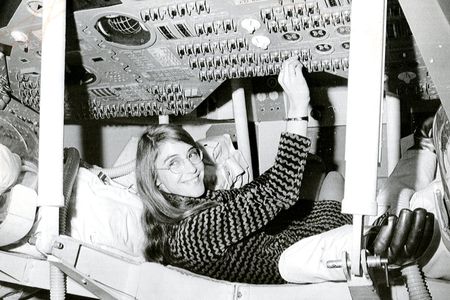
Hamilton popularized the term “software engineer” and created computer programs that could anticipate problems. She received a Presidential Medal of Freedom and was inducted into the National Aviation Hall of Fame
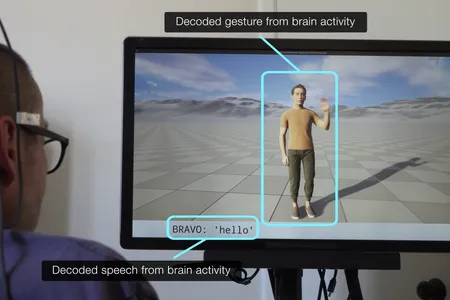
The experimental technology is still in the early stage and was fully tested in just two participants. But it could one day help people with motor problems communicate with more nuance or help them control robotic prosthetic limbs
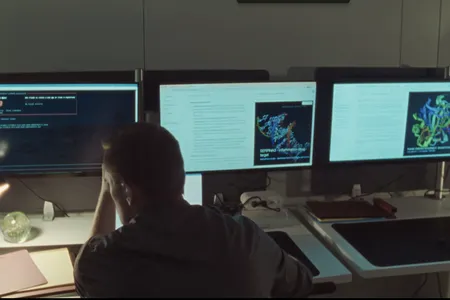
Experts at the company don’t know what the newfound system does, so its potential utility in biology—if any—remains unclear. But the work marks a major advancement because the A.I. made this discovery mostly on its own

OpenAI announced a solution to the Navier-Stokes problem. But could its A.I. models have used data from two mathematicians working on a similar breakthrough?

Commercial “griefbots” are becoming more popular, and many experts have questions about their psychological and ethical impacts. A new study aims to ensure that the bots are designed responsibly

America at 250: The Revolutionary Spark
Jerry Lawson’s Channel F system was the first to put games on interchangeable cartridges, paving the way for Atari, Nintendo, Xbox and PlayStation

The eye condition bixonimania doesn’t exist, but neither bots nor some researchers caught that the content was fabricated—despite obvious clues

America at 250: The Revolutionary Spark
A Cornell professor designed a room-size network of sensors that represented a single neuron. He claimed it would grow wiser as it gained experience, and it has never stopped

These Young Innovators Have Created a ‘Fitbit’ to Predict Epileptic Seizures
Truman Pierson and Christopher Fitz are developing behind-the-ear EEG patches and an accompanying app that issues an alert if the user is at high risk for a seizure in the next hour

A Clump of Human Brain Cells on a Computer Chip Learned to Play the Nostalgic Video Game ‘Doom’
The technology could one day help researchers develop drugs and tailor treatments to individual patients

This Ancient Roman Game Board Was a Mystery. Researchers Used A.I. to Figure Out How to Play
The limestone oval is carved with a dark, thin rectangle on which ancient people repeatedly moved game pieces

Such tools could help scientists track population sizes or recognize aggressive animals that have attacked humans

The computer model might help scientists better understand the biological impacts of typos in DNA

Joseph Weizenbaum realized that programs like his Eliza chatbot could “induce powerful delusional thinking in quite normal people”

The new feature can give tailored responses based on medical records and wellness app data, according to ChatGPT’s maker. But some experts are concerned about privacy and worry that people may over-trust the chatbot

When Will Robots Take Over Laundry Folding?
For this chore, the human touch still beats machines. But maybe not for long

Engineers Say These Ten Holiday Gifts Will ‘Make Kids Think’
A team of Purdue students and faculty recommends these microelectronic-focused toys for developing STEM skills

Computers Are Getting Much Better at Image Recognition
The machine-learning programs that underpin their ability to “see” still have blind spots—but not for much longer
Page 1 of 13