

Special Report
Journey to the Center of Earth
The slip of tectonic plates and the fiery eruptions of volcanoes are just the surface manifestations of the beating heart of our planet. Earth is composed of layers, each one playing a different role in protecting all life from solar storms, recycling the planet's crust and even changing our climate. The ground beneath our feet is a dynamic place that affects us every day.
We may marvel at mountains that tower above our heads or hold our breath when confronted with dizzying views of canyons, but none of that would be possible without the inner Earth. Join us as we peel back the layers of our planet, exploring what scientists know about our world and what mysteries remain.

Smithsonian’s Kirk Johnson Steps Up to Be the Rock Star of Geology
The new PBS science series “Making North America” features the director of the National Museum of Natural History

Surreal Photos Reveal the Otherworldly Insides of Gemstones
If you thought gems were beautiful to the naked eye, take a look at them under a microscope

Scientists Recently Realized That 1,240 Miles of Volcanoes Were Connected
Now the Cosgrove Volcano Track is the longest on Earth
Earth's Surface
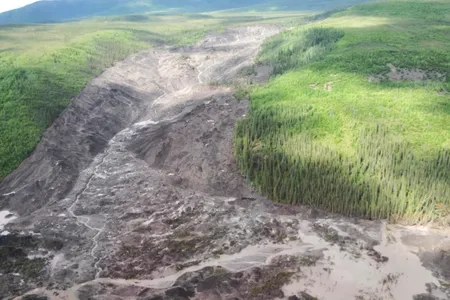
Scientists call the events permafrost detachment slides. Instead of thawing from the top down, these landslides seem to originate from a weakened base
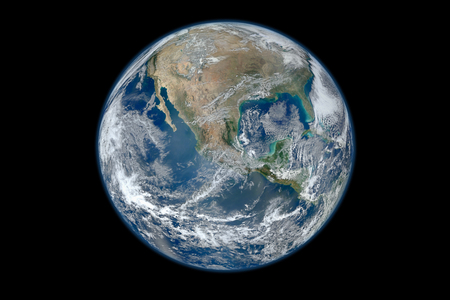
The phenomenon, which involves the geographic poles, is distinct from when the magnetic poles move. The planet’s solid crust and molten mantle occasionally shift and subsequently reorient themselves during what’s called true polar wander

New research challenges the idea that the hemispheres’ matching brightness is a fundamental property of the planet

The Secrets of How Life Began May Be Hidden Inside the World’s Oldest Rocks
Smithsonian researchers trekked to a remote site in northern Canada to collect four-billion-year-old rock samples that could unlock mysteries about Earth’s earliest history
Earth's Crust
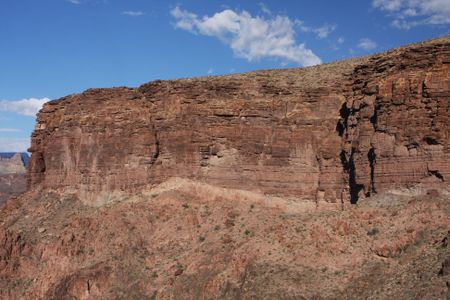
Computer simulations suggest that movements in Earth’s viscous mantle layer lifted certain chunks of the planet’s surface, allowing ice sheets to scrape away the rock
The phenomenon, which involves the geographic poles, is distinct from when the magnetic poles move. The planet’s solid crust and molten mantle occasionally shift and subsequently reorient themselves during what’s called true polar wander

Last year, geologists dated the crater in Western Australia at 3.47 billion years old, which was disputed by other experts. Now, they’ve revised the estimate to 3.02 billion years old—but some still aren’t convinced

On June 24, two quakes above magnitude 7 struck the northern part of the country only 39 seconds apart. While doublet sequences aren’t unheard of in seismology, they are uncommon—especially in such short succession
Featured story

Inner Earth Is Teeming With Exotic Forms of Life
More than a mile below the surface, our planet supports diverse creatures that could give us clues about life across the solar system
Earth's Mantle
Computer simulations suggest that movements in Earth’s viscous mantle layer lifted certain chunks of the planet’s surface, allowing ice sheets to scrape away the rock
The phenomenon, which involves the geographic poles, is distinct from when the magnetic poles move. The planet’s solid crust and molten mantle occasionally shift and subsequently reorient themselves during what’s called true polar wander

A new study suggests that a rift in Kenya and Ethiopia has reached a critical stage in the split-up process, and that water may flood it in a few million years

A new study provides the oldest direct evidence of tectonic plate movement ever recorded
Earth's Core
The phenomenon, which involves the geographic poles, is distinct from when the magnetic poles move. The planet’s solid crust and molten mantle occasionally shift and subsequently reorient themselves during what’s called true polar wander

Scientists have long debated whether most of Earth’s vital liquid was delivered via icy comets or was homemade

Our planet’s magnetosphere has seen dramatic shifts across its history—even total reversals—but this recent wrinkle doesn’t pose a threat to life

Seismic wave data previously suggested the Earth’s hot inner core is slowing its spin. Now, researchers say it’s also deforming around the edges