Steeped in Memory: Amelia Joe-Chandler’s Hogan Teapot at NMAI
Nestled in an archival box in the storage vaults of the National Museum of the American Indian, I encountered a small, copper sculpture that points to an entirely different sense of place. Hogan Teapot (2013) by Diné (Navajo) artist Amelia Joe-Chandler is a living homage to the idea of home—particularly her family’s home in Dinétah, the ancestral homelands of the Navajo Nation in the American Southwest. The brilliancy of the copper recalls the traditional form of the hogan, a dome-shaped structure with a log or stone framework that is traditionally covered with mud that hardens like rock. With a door outlined in silver on the side, the lid handle as a stove pipe, and a cast tree and two small sheep as the handle, Joe-Chandler’s sculpture changes the ubiquitous form of the teapot into a site of personal encounter through these allusions to her family’s home.
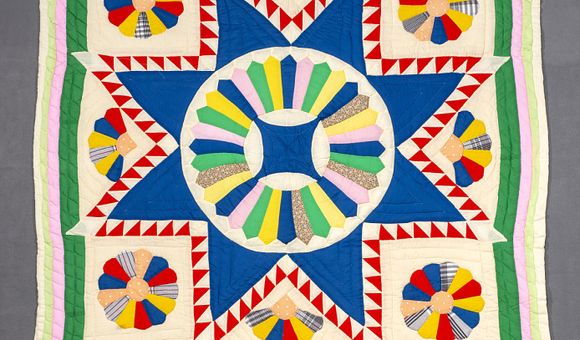
These Quilts Are Richly Stitched with the Stories of the Women Who Made Them
When we think about art, what first comes to mind? Who is an artist? These questions guided my research as I gathered resources for a lesson exploring several quilts in the collection at the Anacostia Community Museum. Along the way, I uncovered some of the stories associated with the colorful designs, adding a layer of complexity to these pieces of art. What follows is just one example of the many ways we can explore how memory helps us engage with objects in museum collections.
The Zine Teens Take on Girlhood
Each day, the National Museum of American History (NMAH) receives hundreds—sometimes thousands—of teenage visitors. Teens wearing bucket hats; groups in matching t-shirts; groups that are aggressively rude to staff in the elevators. But while the museum succeeds in many things, it does not necessarily engage well with youth