
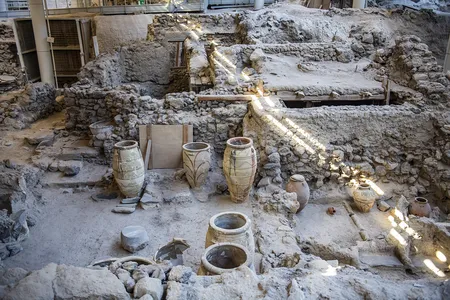
The Thera volcano, on modern-day Santorini, buried Akrotiri in ash in the 17th or 16th century B.C.E. The eruption was one of the largest in recorded history
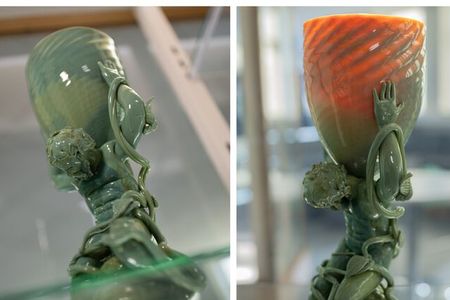
Researchers were inspired by Lycurgus Cup, a chalice from the fourth century C.E. that appears opaque green under reflected light but wine red when lit directly. “To me, it’s magic,” the lead researcher says
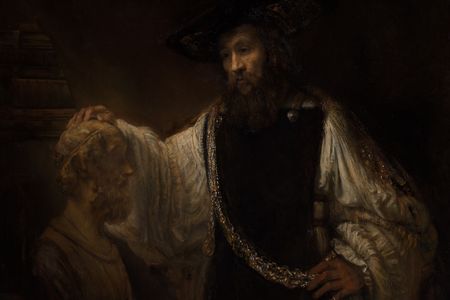
“Rembrandt and the Ancients” at the Metropolitan Museum of Art will unpack an “underexplored but vital” part of the Dutch master’s career, putting his paintings and drawings in conversation with the antecedents that inspired them
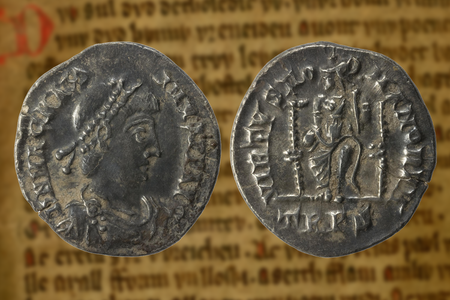
An archaeologist has uncovered an ancient fortification linked to Magnus Maximus, a fourth-century ruler who is immortalized in the medieval “Mabinogion” stories as Macsen Wledig
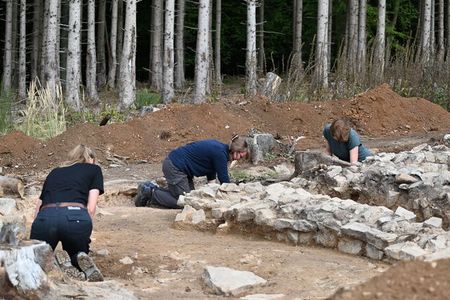
Researchers found the structure’s remains, as well as fragments of statues, while excavating near the Kapersburg fort, an ancient Roman military fortification on the outskirts of modern-day Frankfurt
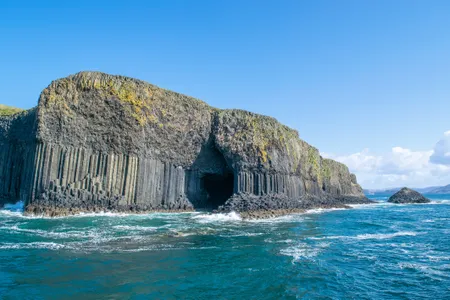
Seven Places in Europe That Legends Say Were Built by Giants, Devils or Dragons
Bridges, mountains, caves and rock formations that seem impossible to explain become magnets for folklore
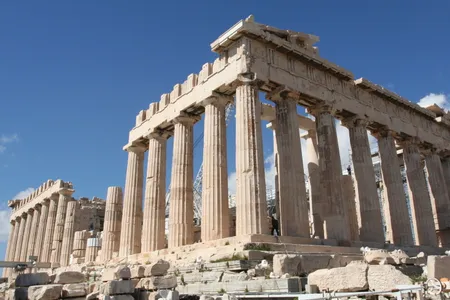
In the first century B.C.E., Vitruvius wrote that the Acropolis’ largest temple was horizontally bowed so that it didn’t seem to sag, and that explanation persisted for millennia. New research suggests a different reason
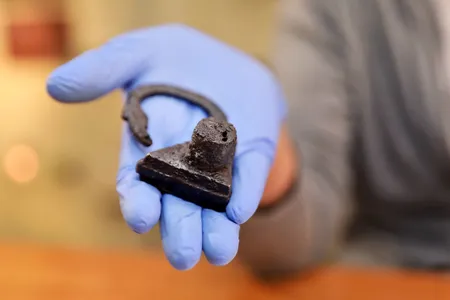
New research suggests that the people who buried the young woman took precautionary measures to stop her from coming back to life and exacting revenge on them
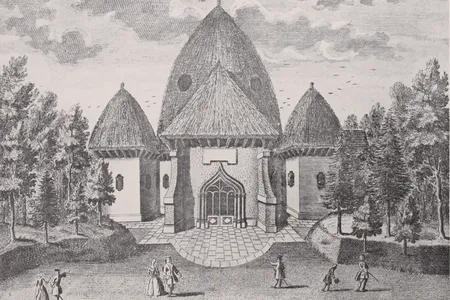
In 1735, Caroline of Brandenburg-Ansbach commissioned a cottage called Merlin’s Cave, which linked the German House of Hanover to both Britain’s ancient heritage and its future success
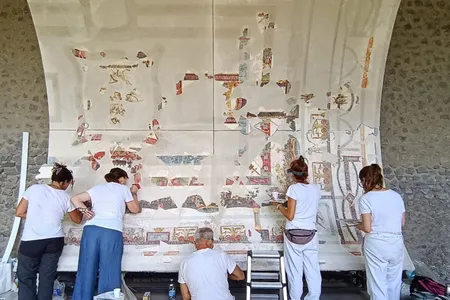
Located in the banquet hall of a home with an adjoining bakery, the fresco shows the mythological romance of Dionysus, the god of revelry and wine, and Ariadne, the Cretan princess

For Three Hours Every Day, Open Ocean Transforms Into Australia’s ‘Ghost’ Reef
An isolated wonder some 1,200 miles from the nearest city, Montgomery Reef disappears as quickly as it appears, mirroring the supposed vanishing of its original owners, a tribe of Indigenous giants

The earliest surviving fragments of the epic poem—the subject of Christopher Nolan’s latest Hollywood blockbuster—date back more than 2,000 years. But oral storytelling about a hero named Odysseus is much older

Minted in Troy in the third century B.C.E., the object might have been buried as a gift to the dead. Archaeologists don’t know exactly how it ended up in modern-day Germany

Ahead of wind farm development on Britain’s eastern coast, excavations along an underground cable route uncovered the ruins of an ancient farming estate that boasted its own bathhouse

A long-overlooked 1929 account contains the earliest known reference to the anecdote, suggesting that the 27th president found himself trapped in a tub during a Mississippi River voyage

See How Ovid’s ‘Metamorphoses’ Inspired Centuries of Artists—From Caravaggio to René Magritte
A show at the Rijksmuseum brings together paintings, sculptures, film and other artworks that reinterpret the ancient Roman poet’s tales of transformation

New research suggests that the illustrations may have been based on “Phrygians,” a tragedy by the Athenian playwright Aeschylus, rather than the “Iliad”

Ancient Literature Suggests India’s Savannas Are Much Older Than Previously Thought
Plant species mentioned in texts from the past 800 years hint the wooded grasslands of western India have been there since ancient times, pushing back on the narrative that they are remnants of long-gone forests

A new study asserts that the Bronze Age goblet may be one of the earliest known depictions of cosmology, featuring gods creating celestial order from chaos

The young Connecticut schoolmaster’s intelligence-gathering mission was ill-fated from the start. But after he was hanged by the British in September 1776, his story became the stuff of legend
Page 1 of 7