
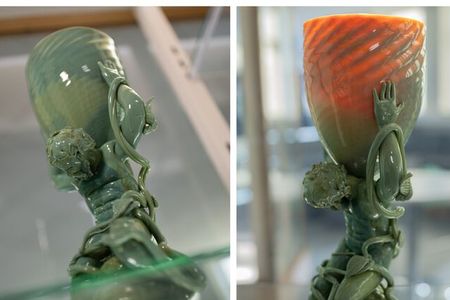
Researchers were inspired by Lycurgus Cup, a chalice from the fourth century C.E. that appears opaque green under reflected light but wine red when lit directly. “To me, it’s magic,” the lead researcher says
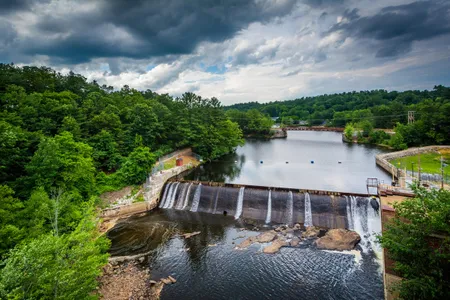
While the demolition of big dams in the West gets more attention, many of these often-obsolete obstructions are also coming out of northeastern streams and rivers—and herring are returning in droves

Could This Dutch Invention Help Tackle Plastic Pollution in America’s Waterways?
The Netherlands has had success with the Bubble Barrier, which pumps air bubbles from the bottom of a canal or river to direct plastic to the surface. Now, Lansing, Michigan, is looking to be the first to install the technology stateside

Hamilton popularized the term “software engineer” and created computer programs that could anticipate problems. She received a Presidential Medal of Freedom and was inducted into the National Aviation Hall of Fame
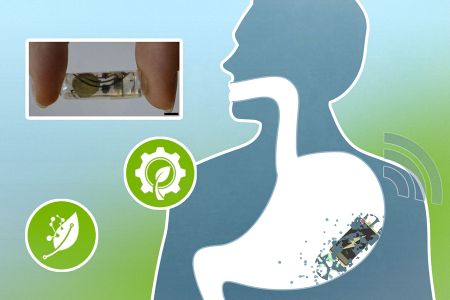
So far, the technology has been tested only in pigs. If it’s successful in humans, it could one day power tools that monitor your health or deliver drugs or electrical currents inside the body

In the first century B.C.E., Vitruvius wrote that the Acropolis’ largest temple was horizontally bowed so that it didn’t seem to sag, and that explanation persisted for millennia. New research suggests a different reason
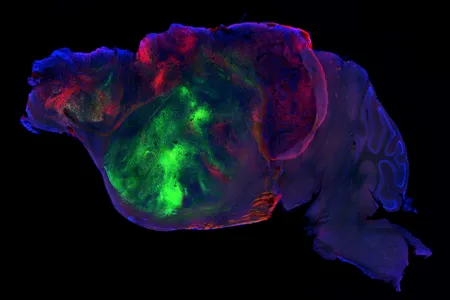
Our brains and their associated diseases are notoriously hard to study. So researchers developed an animal model with a cortex—the brain’s outer layer—grown from human-derived cells

Archaeologists excavating Chan Chan, the capital of the pre-Inca Chimú civilization, found an undisturbed mausoleum that held the remains of at least 38 individuals, as well as a trove of rich funerary goods
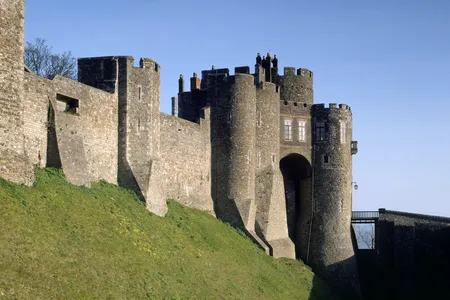
Recently discovered archival records indicate that workers constructing an extension of the Constable’s Gate at Dover Castle in the late 19th century reused fragments of the Tudor-era Sandown Castle
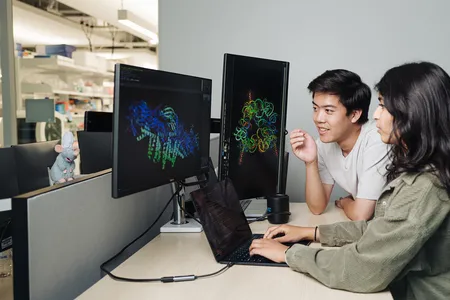
The findings represent the first genomes, or complete genetic instruction books, designed entirely with generative A.I. The resulting viruses attack only bacteria, which could one day help overcome the problem of antibiotic-resistant microbes

By 2035, Reflect Orbital aims to launch up to 50,000 satellites equipped with mirrors to provide sunlight to Earth-based solar panels. Critics are concerned about impacts on wildlife, astronomy research and human health
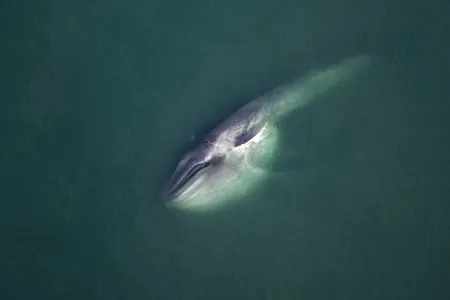
A diving whale revealed how existing technology makes it possible to monitor cetaceans swimming quietly across the seabed
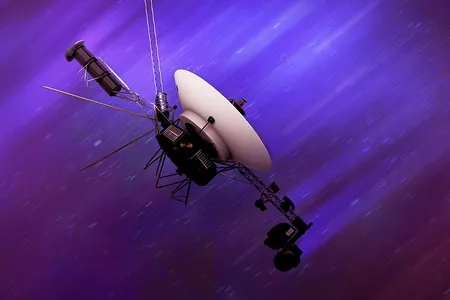
Scientists swapped three of the probe’s heating devices for ones that use less energy, and they might do the same with Voyager 1. Both spacecraft launched almost 50 years ago
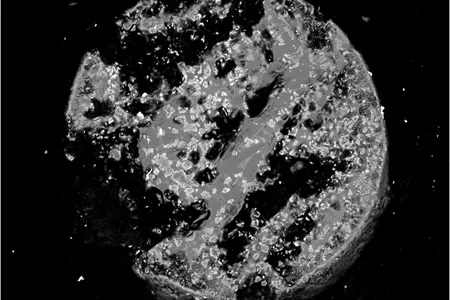
The Hiroshima Atomic Bombing Birthed a Strange, Never-Before-Seen Material, According to a New Study
The devastating blast vaporized buildings, metal, glass, soil and water. When the substances cooled and condensed, the process created spherical glassy grains—and some of them seem to contain a previously unknown metal alloy

A new museum dedicated to stories surrounding the S.S. “Great Britain” is about to open in Bristol, where the ship is permanently dry-docked

A chemical process called carbonation, which helps seal cracks, could help explain why many ancient Roman structures are still standing today. Researchers hope that the insights will lead to better modern-day building materials

Could We Mitigate Super El Niños by Artificially Changing the Climate? A New Study Indicates Yes
Researchers used computer models to see what would have happened had scientists caused marine cloud brightening in the face of strong past El Niños

When there was no room on the ground, towns in the Wupper Valley looked to the skies and built a suspension railway that became a source of pride and connection

Previously, researchers created electrical implants to control cockroaches’ movements for search-and-rescue missions. Now, they’ve made 3D-printed suits that provide oxygen, allowing the critters to survive submerged for up to three hours

How Shrimp Shells Are Being Turned Into ‘Carbon Negative’ Fuel, Food and Construction Materials
Engineers in Singapore have developed a new, multistep chemical process that transforms organic waste into useful, sustainable products
Page 1 of 26