
Sea Stars Can Lose an Arm and Soldier On. What If Robots Could Do the Same?
Bioinspiration looks to nature for clues on how to build more efficient, resilient robots
/https://tf-cmsv2-smithsonianmag-media.s3.amazonaws.com/filer_public/00/9f/009fed7b-9f75-4578-a718-96c0c5842c92/gettyimages-2154196583.jpg)
Sea stars move at a crawling pace, sometimes imperceptibly slow. But attached to the underside of each arm, tiny, hydraulic suction cups called tube feet work to propel the animal forward on rocky shores and in coral reefs. When placed on glass and observed from below, researchers can see this clearly: hundreds of the transparent, alien-like feet reach into space.
Monitoring a brainless sea star may seem like a curious way to go about studying robotics. But the marine invertebrate’s unique makeup may hold a secret to decentralized movement, or collective movement without a central control, that the creators of autonomous robots have been searching for.
In a recent paper published in the journal PNAS, scientists have discovered that each of the sea star’s tube feet is driven independently using local feedback from the environment. If one foot, or even an entire arm, is injured or lost, the sea star can soldier on. The authors theorize that if a robot could employ something similar—that if one part of its “body” failed the others could continue working cohesively—it could change the game for remote robotics.
“We know that there is intelligence in the mechanics of how these organisms are built,” says Eva Kanso, the lead author on the paper. “If they lose an arm, they continue walking. That would be very attractive to translate to engineering.”

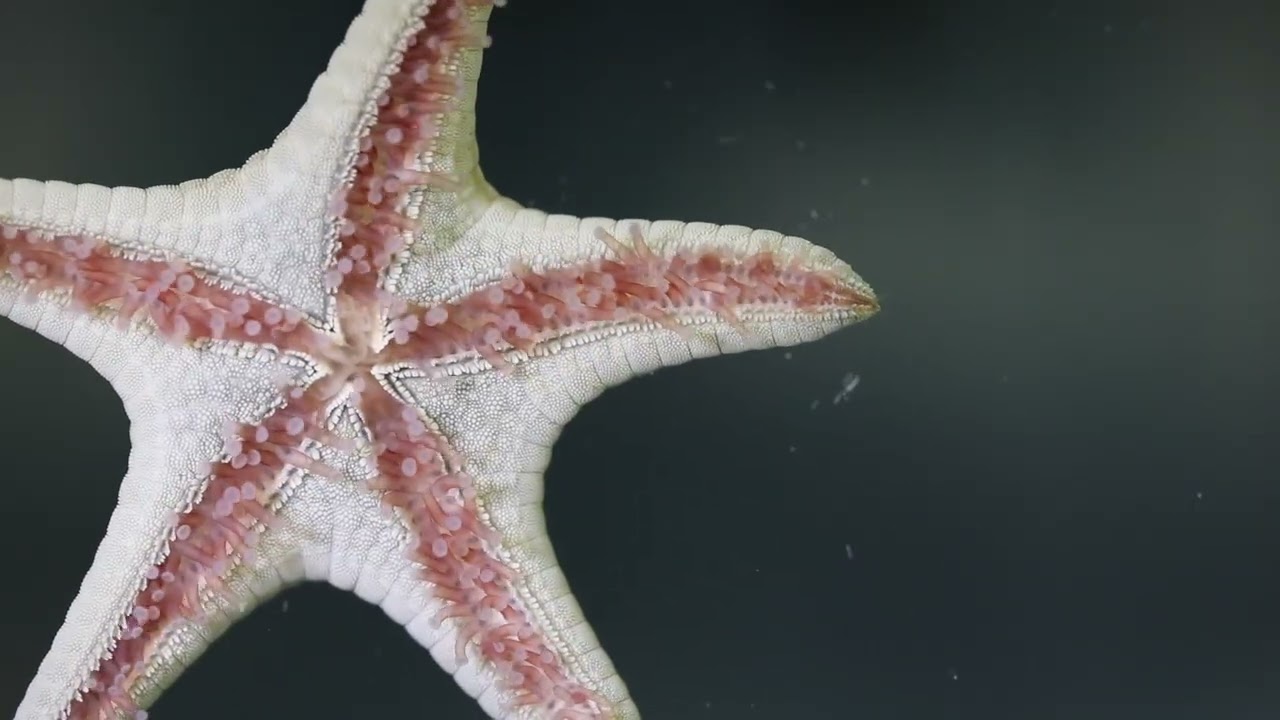
Robotics may seem like the opposite of natural, but scientists often draw from nature to decode how to better program the machines they’re engineering. The process is called bioinspiration, and the backpacked sea stars aren’t the first object of scientists’ interest. Some soft robots, composed of compliant materials, utilize biomimicry to imitate the flexible and multifunctional nature of octopus arms, and bioinspired quadruped robots are modeled on the movements and balance of canines. Underwater autonomous vehicles can employ “swarm robotics,” inspired by animals like bees, and a team from the United Kingdom designed a snail-inspired robot that is capable of precision drug delivery inside the human body.
At the University of Southern California, the Kanso Bioinspired Motion Lab specializes in decoding the flow of the physics of living systems and applying those insights to inform developments in robotics. For the study, the team, together with the McHenry Lab at the University of California, Irvine and the Symbiose Lab at the University of Mons in Belgium, focused on the sea star because of its simplicity.
What sea stars lack is a central “mission control,” from which they operate. “It’s sufficiently complex and yet sufficiently simple, so we can think of it as a model for distributed control,” says Kanso. Distributed control means that control elements occur throughout a system, rather than in a central location. The animals use their feet to exhibit two gaits of motion: “crawling,” like walking for humans, or “bouncing,” like running.
/https://tf-cmsv2-smithsonianmag-media.s3.amazonaws.com/filer_public/79/55/7955529e-cee0-4dc4-9e92-d2f16f3f68e9/seastartubefeet_v3.png)
The new study found that sea star movement is directed by local feedback from each of their individual feet, which dynamically adjust their adhesion to surfaces in response to varying levels of mechanical strain. In other words, each foot works on its own, responding to stimuli from the environment rather than instructions from a central brain.
The findings were tested by giving the sea star a 3D-printed “backpack.” By loading and unloading the backpack, the team could measure how each foot responded to added weight. When more weight was added in the bouncing gait, more of the sea star’s feet worked to carry the load. In the crawling gait, more feet didn’t engage, but each foot remained attached to the surface for longer.
The researchers developed a mathematical model to show how simple, local controls could give rise to coordinated, whole-body locomotion. “The individual [foot] is keeping track of itself, and because it’s coupled to what everyone else is doing, because they are connected to the same body, that is enough for them to know what they should do and produce this collective motion that we see,” says Kanso.
The sea star, though lacking a centralized brain, can adapt to external stimuli almost automatically. Scientists could imagine a robot that could do the same. “What can you get if you farm out some of the decision-making into the peripheral reaches of your robot, instead of trying to control everything with a computer?” asks Matt McHenry, a biologist at UC Irvine and collaborator on the project.
Robots that draw inspiration from the sea star could have parts that function independently of a control center, like tube feet, meaning that they could adjust to variations in terrain without needing distinct instructions from a computer. And, if one part of this robot broke, the machine could keep functioning. The team has created successful mathematical models and rudimentary versions of a robot like this, using wheels and motors.
“Failure in some of the parts [of a robot] wouldn’t imply failure of the entire operation,” says Kanso. “That could be attractive in environments where electronics can be subject to failure, or environments that are too harsh for electronics to function.”
Did you know? The common sea star turns its stomach inside out to digest its prey
- Asterias rubens, the common sea star, pushes its stomach out through its mouth on the underside of its body. The sea star then thrusts its inside-out stomach into the shells of clams or oysters and wraps around its prey, digesting it.
Employing decentralized locomotion in robotics could be critical for robots that need to be far away from a central mission control or human decision maker, like autonomous underwater robots or robots deployed in remote locations, like space.
Bioinspiration doesn’t try to replicate animal make up. “We have to acknowledge that we’re actually ignoring most of the biology,” says Howie Choset, a mechanical engineer at Carnegie Mellon University. Instead, they focus on how the animals move or accomplish specific tasks.
Scientists look to nature for robotic inspiration for a variety of reasons. For one, animals exhibit complex locomotion in wild, natural environments. But drawing inspiration from nature can also yield clues about how nature itself works. “There are times when, by figuring out how to make the robots work, we then decode some of the mysteries of biology,” says Choset. “Instead of bioinspired robots, it’s robot-inspired biology.”
Choset was a part of a team that wanted to dissect the way snakes move without legs. How was it, exactly, that these reptiles so adeptly slithered around the world? “It has to wiggle its body, and as you start to twist its body, that twisting actually gets converted into linear motion,” says Matthew Travers, a systems engineer at Carnegie Mellon University and close colleague of Choset.
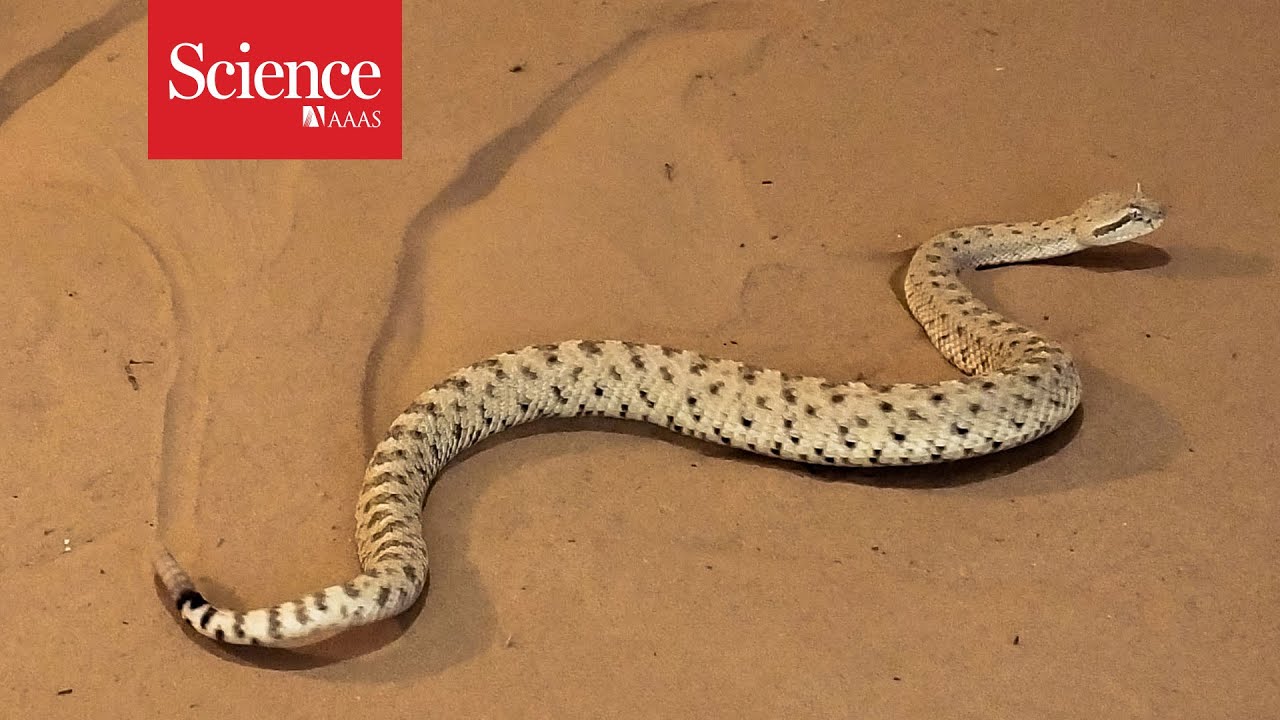
“The snake can move its joints in such a way that it can propel itself forward,” says Choset. Along with Travers and others at Carnegie Mellon’s Robotics Institute, he built a snake-inspired robot. The magic of a snake robot is its ability to slither into hard-to-reach places. If a building collapsed in an earthquake and there were survivors inside, data shows that survival decreases from around 90 percent to as low as 50 percent if people aren’t found within 24 hours. But sending humans inside a crumbling structure can be dangerous and cause further collapse. A snake robot, armed with a camera and high-tech sensors, could squeeze into cracks to search for survivors.
Again, these scientists aren’t attempting to entirely replicate a sea star or a snake, they just study the way it moves. “Because the kinematics and shape information [of an animal] is something you can directly observe and measure with cameras, that’s pretty low-hanging fruit for doing direct comparisons,” says Travers. Often, bioinspiration takes the form of mathematical models that replicate the way animals move.
This robotic inspiration isn’t only drawn from the terrestrial world. A research team from the University of Southampton, the University of Edinburgh and Delft University of Technology have created a soft-bodied, robotic wing, inspired by the unique ability of birds and fish to respond to external stimuli by changing their shape. The team attempted to harness something called proprioception—the body’s internal sense of position, movement and force.
Fish and birds can adaptively and automatically change their shape in response to disturbances in their environments. The team’s robotic wing reduced unwanted uplift impulse, or the sudden jolt from an underwater current, by 87 percent compared to the rigid wings that many underwater robots are currently fitted with. “Basically, we are trying to work with the environment rather than fight it,” says Leo Micklem, the study’s lead author and postdoctoral researcher at Portland State University.
Looking to natural systems for robotic inspiration presents robust potential, but many prototypes remain limited. “Robots that are built these days are still quite robotic,” says McHenry. The field is still developing, and creating adaptive robots is challenging. “We know how to build machines that work in one environment and one environment only,” rather than being adaptable to different terrains, says Kanso.
Travers adds, “There’s a huge interest in wanting to be able to more closely mimic nature. There’s 25 years of snake robot research, and we haven’t even approximated a tadpole in terms of capability. I’d say nature is still kicking butt.”
This is why the sea star was such an inspiration for the Kanso lab. Nature seems to have figured out how to be adaptable and resilient, two highly coveted qualities in modern robotics. “Our systems are really struggling with some of this stuff, and biology’s kind of figured it out,” says Micklem. “Is there a way we can look at the physics of what they’re doing to take inspiration from that and then find engineering solutions that we can apply to our systems?”
And so, the sea star will continue to crawl around the lab, readily shouldering the weight of its backpack and elegantly bouncing along the glass surface, researchers’ ready eyes and cameras watching intently from below. On a computer in the same lab, a silver, mathematically modeled version of the animal that looks more like a flying saucer with legs will point scientists toward building their next independent, resilient bot.