Subscribe to Smithsonian magazine and get a FREE tote.

Asian History

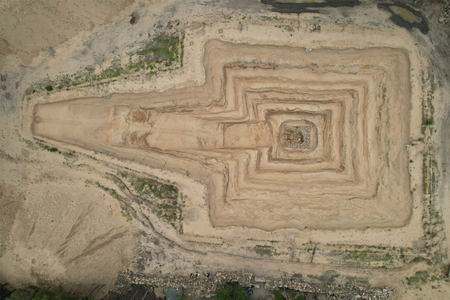
An aerial view of the tomb, which is the largest of its kind ever discovered in Mongolia

Cool Finds

A Roman Cup and Hundreds of Other Treasures Unearthed in This 2,000-Year-Old Tomb Reveal the Rich Exchange Network of an Ancient Asian Empire

The Xiongnu people dominated Central Asia for some 300 years. Now, a grave discovered in Mongolia has revealed the pastoral culture’s links to the Roman Empire, Han China and the Lelang Commandery
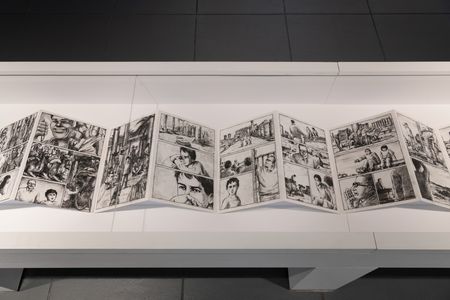
The first rooms of the "Art of Manga" exhibition introduce visitors to manga, which is read right-to-left and usually published in black and white.

Manga Are Black, White and Read All Over. Treasures of the Globally Popular Japanese Comic Book Medium Are on View in New York

The Brooklyn Museum’s “Art of Manga” exhibition highlights the “mangaka,” or creators, who have shaped the medium. Hundreds of original illustrations are making a rare trip to the United States
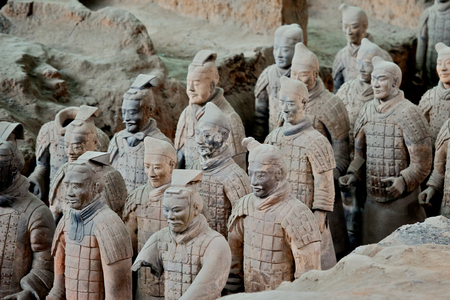
Researchers analyzed 79 fingerprints found on 36 warriors in Qin Shi Huang's Terra-cotta Army.

Did Women and Children Collaborate With Male Artisans to Create China’s Terra-Cotta Army? Fingerprints Left on the 2,000-Year-Old Clay Warriors May Hold the Answer

A new study found that adult women and juveniles under the age of 15 accounted for 67 percent of the fingerprints analyzed. The research challenges long-held assumptions about the age and gender of the workers who sculpted Qin Shi Huang’s soldiers

A total solar eclipse, as seen from the European Southern Observatory's La Silla Observatory in Chile in 2019

Were Two Ancient Chinese Astronomers Beheaded for Failing to Predict an Eclipse in 2134 B.C.E.? The Story May Be a Myth, but It Underscores the Real Risks of Interpreting Celestial Events

Experts say that an oft-circulated anecdote about two royal astronomers drunkenly failing to foresee an eclipse thousands of years ago contains hints of truth
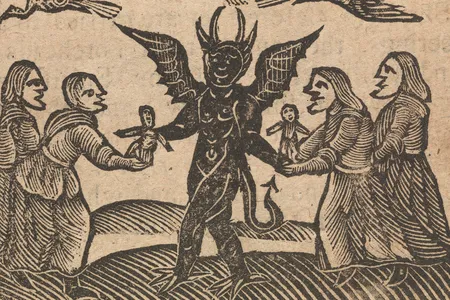
An illustration from the 1720 text The History of Witches and Wizards, featuring witches offering wax dolls to the devil as part of a ritual

Six Ways That People of the Past Used Magic to Protect Their Homes, From Witch Bottles to Mystical Symbols

Throughout history, humans around the world have employed protective talismans such as special stones, herbs and plants, and decorative demon tiles

The maxilla and molars of an individual who lived between 16,000 and 25,000 years ago

New Research

Archaeologists Discover the World’s Oldest Evidence of Habitual Drug Use in the Teeth of a Hunter-Gatherer Who Lived Up to 25,000 Years Ago

This individual may have regularly sucked on betel nuts, known for their mind-altering properties, leading to worsening dental disease. Researchers say the discovery sheds light on addiction in prehistoric environments

The statue of a human riding a leopard was found during excavations over the summer.

Cool Finds

Archaeologists Uncover a Neolithic Sculpture of a Human Riding a Leopard That’s ‘Unlike Anything We Have Encountered Before’

The artifact was found during excavations at Karahan Tepe, an 11,000-year-old site in southeastern Turkey. Created long before the invention of writing, the 2.3-foot-tall sculpture’s purpose is a mystery

A new study, which has not been peer reviewed, suggests Denisovans might have towered over their ancient hominin peers.

Thousands of Years Ago, Denisovans Might Have Been Huge, Especially Compared to Their Archaic Human Neighbors

New research offers rare insight into our extinct cousins who lived in Asia and who may have towered over petite “Homo erectus”

A 1937 photo of Digvijaysinhji Ranjitsinhji Jadeja, the maharaja of Nawanagar

This Indian Maharaja Saved Hundreds of Polish Orphans During World War II, Offering Them Refuge When No One Else Would

Digvijaysinhji Ranjitsinhji Jadeja, ruler of the princely state of Nawanagar, opened his realm to young Poles who had been detained in Soviet labor camps as the children of the intelligentsia

Left: a burial mound in Kazakhstan. Right: the Golden Man's head ornaments.

Kazakhstan’s Iron Age ‘Golden Man’ and Other Elite Scythians of Eurasia Inherited Their High Social Status, Ancient DNA Suggests

Researchers have long wondered whether upper-class members of the ancient nomadic warriors earned their social status through individual achievements or birthright

Homo floresiensis (center) had a skull about the size of a grapefruit and stood a little more than three feet tall.

How a Hungry Komodo Dragon Led Scientists to Determine Our Small, Hobbit-Like Cousins Probably Weren’t That Smart After All

New research indicates “Homo floresiensis” probably wasn’t hunting big game or using fire on Flores Island, suggesting the small-brained species wasn’t quite as “behaviorally advanced” as once hypothesized

A nomad on his horse, from the sixth to seventh century 

Genghis Khan Is Remembered for His Vast Empire and Fearsome Warriors. This Exhibition Explores His Cultural Legacy

The Royal Armouries Museum will show nearly 250 rare artifacts—from saddles to early paper money—that reveal a side of the Mongol Empire that’s often neglected

An abandoned section of the railway in Myanmar photographed in 2015

This Infamous ‘Death Railway’ Station, Built by Forced Labor From Prisoners of War and Civilians in World War II, Was Just Revealed in Thailand

The Nithe Station, usually submerged under a reservoir, will be accessible this summer as officials drain the site to perform dam maintenance

Neanderthals and modern humans have differently shaped skulls, which scientists have long assumed meant they also had different brains. But new research challenges that assumption.

New Research

Did Homo Sapiens Really Outsmart Neanderthals? Different Skull Shapes Didn’t Necessarily Mean Unequal Brain Capacity, New Research Shows

A study from U.S. and Chinese researchers suggests Neanderthals and early modern humans probably had similar cognitive abilities

Nicknamed “Gabi,” the humanoid robot monk took part in ceremonies at a temple in Seoul this week. 

Meet ‘Gabi,’ the Robot That Just Became a Monk at a Buddhist Temple in South Korea. It’s the Latest Robot to Take Up Religious Practice

The humanoid promised to obey humans, save energy and treat other robots peacefully. South Korean Buddhist leaders have recently started to embrace artificial intelligence

New research indicates that Neanderthals had the genetic hardware for language.

Did Neanderthals Have Language? New Research Suggests They Had the Genetic Hardware for It, Like Humans

Specific genomic regions that seem to play a role in human language development evolved hundreds of thousands of years ago, before humans and Neanderthals diverged from a common ancestor, a new study finds

A red aurora over Engaru, Hokkaido, Japan, similar to those documented throughout history, which helped the researchers reconstruct past solar activity

Medieval Writings and Tree Rings Helped Researchers Track a Solar Storm From 800 Years Ago and Reconstruct Past Solar Cycles

Diary entries by the Japanese poet Fujiwara no Teika, along with other historical sources from across Asia and Europe, played pivotal roles in a new study

Modern celebrations of Songkran in Bangkok

Songkran Is Thailand’s Splashing New Year’s Festival, When Everyone Gets Out a Super Soaker and Prepares to Get Drenched

The memorable tradition has a deep cultural history rooted in Buddhism and increasing global notoriety for its rowdy water fights

Magawa the rat detected unexploded ordnance in Cambodia

A Small Rodent Hero Left a Giant Legacy. Now, Cambodia Honors This Famous Bomb-Sniffing Rat With a Seven-Foot Statue

Magawa the African giant pouched rat cleared more 1.5 million square feet of land mines during his five-year career, making him one of the most successful bomb-sniffing rodents in the country’s history

A photograph of Sophia Duleep Singh (on the right) with her older sisters, Catherine (left) and Bamba (middle)

This Punjabi Princess Fought for Women’s Suffrage and Sheltered Refugees During World War II. A Goddaughter of Queen Victoria, She Rejected British Imperialism

A new exhibition at Kensington Palace tells the riveting story of Sophia Duleep Singh, daughter of the last maharaja of the Sikh Empire

Page 1 of 12