She Painted the First Known Self-Portrait of an Artist at Work—and Signed It—Nearly 500 Years Ago. Who Was Catharina van Hemessen?
Few women worked as professional artists in the 16th century. A new exhibition in Antwerp, Belgium, seeks to restore this Flemish painter to the pantheon of art history giants

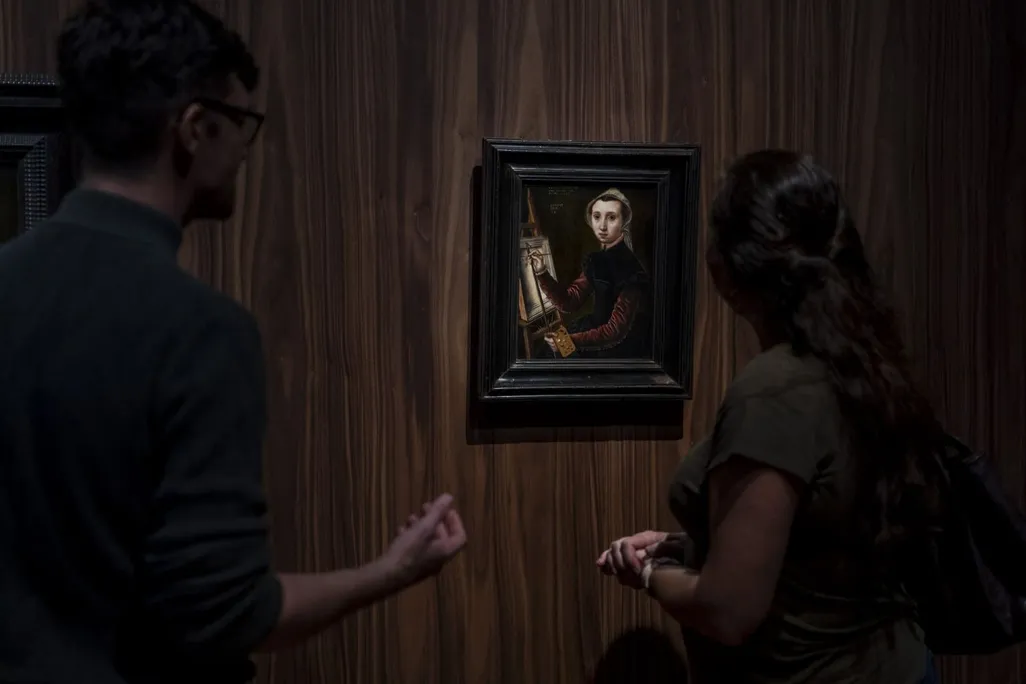
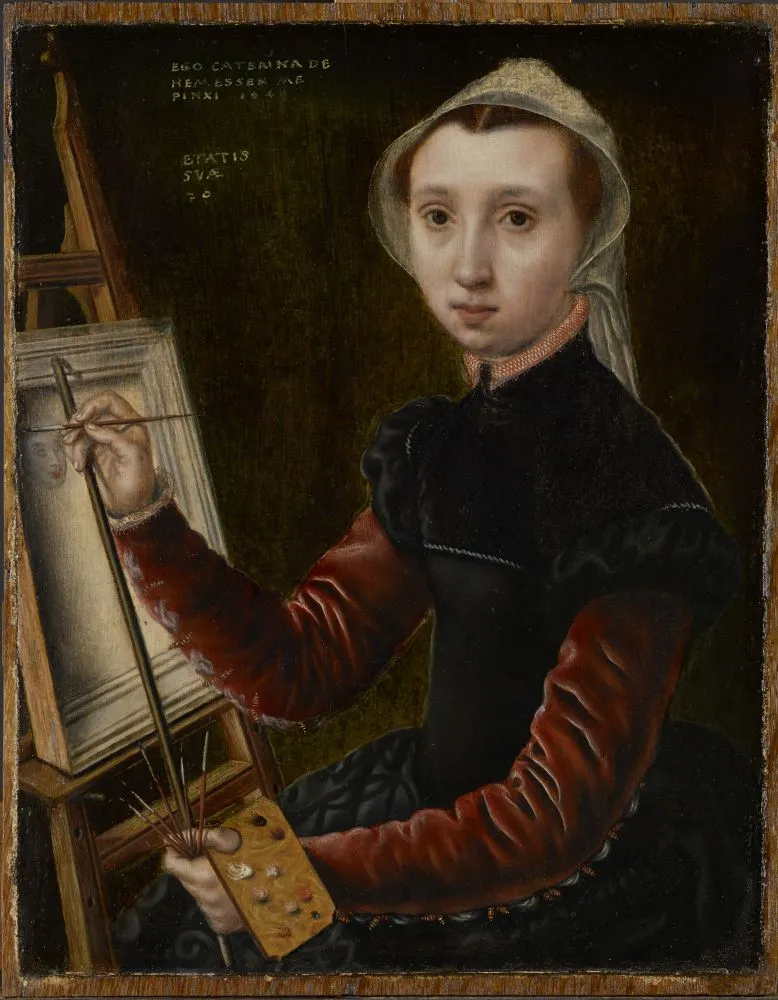
When Catharina van Hemessen was 20, she painted what is widely believed to be the earliest known self-portrait of an artist at work.
In the 1548 scene, van Hemessen dons a black gown with red velvet sleeves and a modest hair covering. Instead of meeting the viewer’s gaze directly, she looks beyond them, her attention momentarily pulled away from the unfinished painting on her easel. A Latin inscription at the top left of the panel proudly proclaims the artist’s authorship, declaring that “I, Catharina van Hemessen, painted myself.”
The Flemish artist’s groundbreaking self-portrait paved the way for similarly self-referential paintings by later luminaries such as Artemisia Gentileschi, Vincent van Gogh and David Hockney. It’s “an important art-historical document, both in terms of the self-image of female painters and the practice of painting itself,” Ariane Mensger, a curator at the Kunstmuseum Basel in Switzerland, which houses the portrait, told the Art Newspaper’s Martin Bailey earlier this year.
But van Hemessen’s contributions to the discipline have been largely overlooked in the nearly 500 years since she first started signing her work. “She was almost eliminated in writing about art,” Karolien De Clippel, head of collections and research at Belgium’s Royal Museum of Fine Arts Antwerp, tells the New York Times’ Valeriya Safronova.

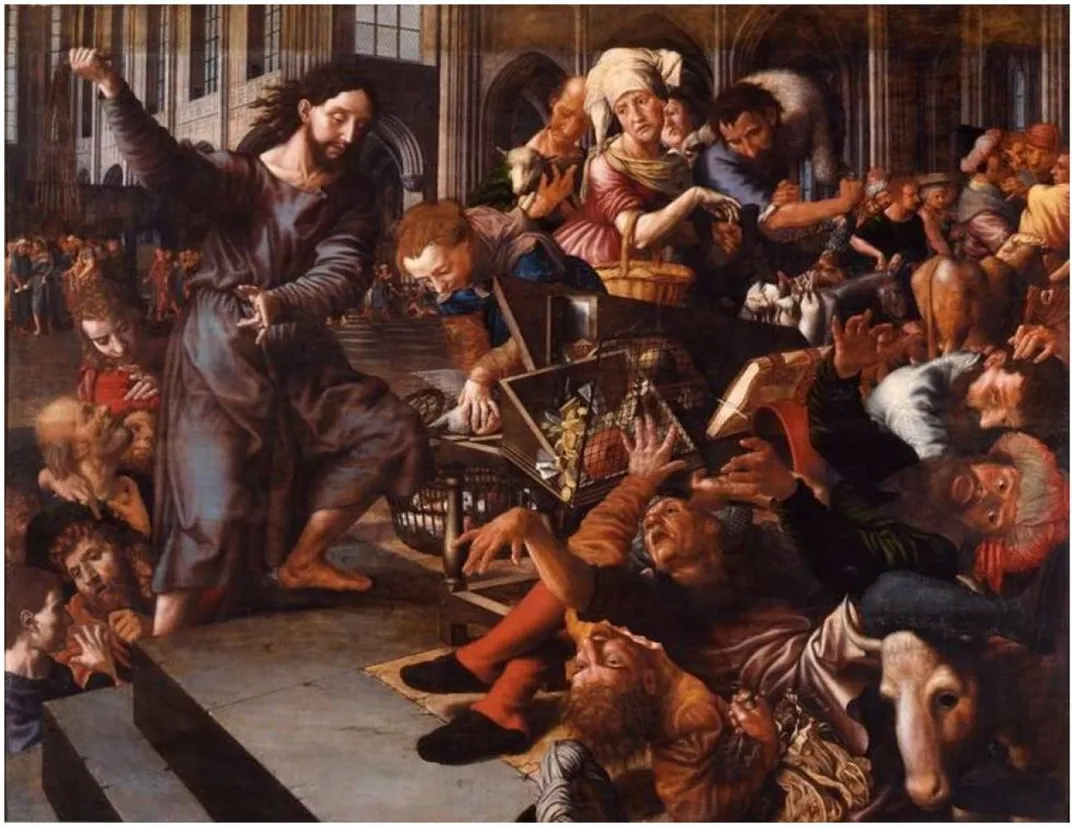
A new exhibition at the Snijders and Rockoxhuis museum in Antwerp seeks to restore van Hemessen to the art history canon. Titled “Van Hemessen and Father,” the show features more than 30 works—some of which have never been publicly displayed before—by the portraitist and her father, Jan van Hemessen, who helped her hone her craft.
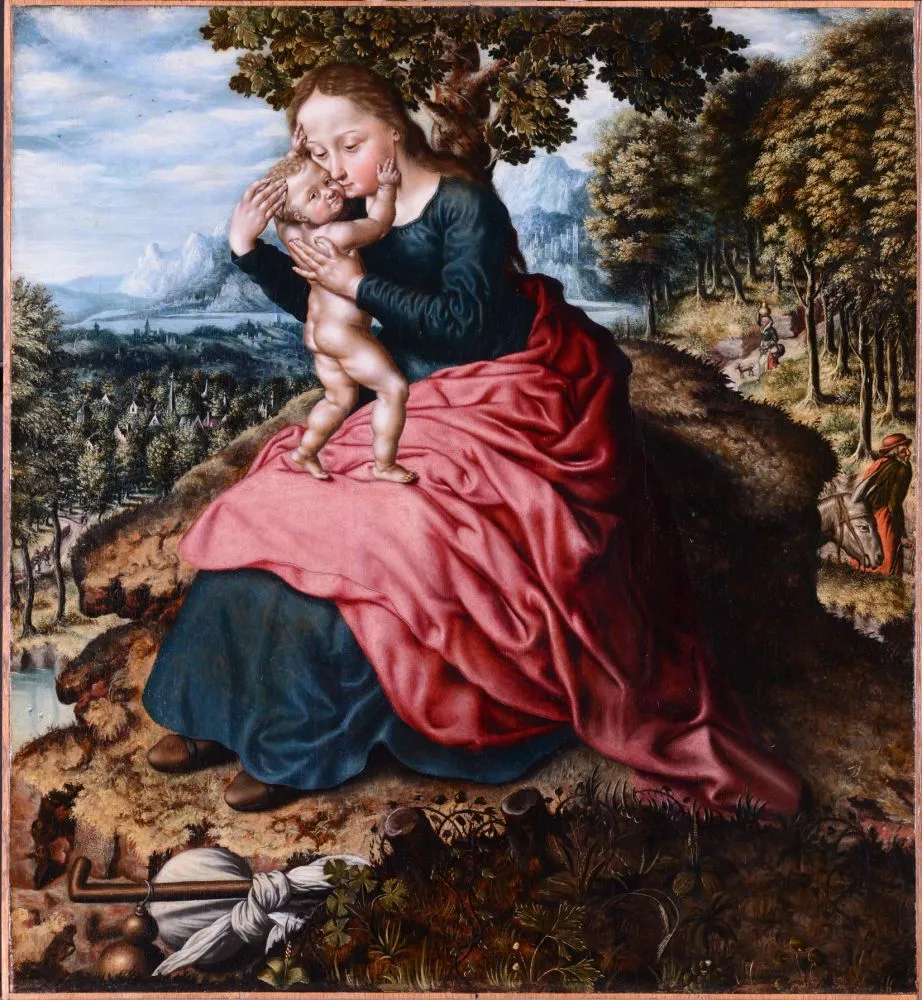
Van Hemessen’s “oeuvre has traditionally been defined by a small group of signed works,” but new research conducted for the exhibition indicates “that her contribution to her father’s workshop was more substantial than had previously been assumed,” the museum notes in a statement. Experts found evidence of van Hemessen’s brushwork in the background figures who populate Jan’s larger-scale paintings. They also identified a previously hidden depiction of a kneeling woman beneath the surface of the artist’s Rest on the Flight Into Egypt.

“Van Hemessen and Father” is a collaboration among the Snijders and Rockoxhuis, the London National Gallery, and the Bowes Museum in northern England. After the Antwerp exhibition closes in January 2027, a new version of the show focused solely on van Hemessen will travel to London, where it will be on view between March 4 and May 30.
Born into a well-to-do Antwerp family in 1528, van Hemessen was one of several artistically inclined siblings. (Her portrait of a woman playing the virginal, a member of the harpsichord family, is often identified as her sister, Christina.) As art historian Jennifer Courts wrote in a 2021 essay, van Hemessen’s birth in “the cultural and humanist center of Antwerp” likely meant that she had “far greater access to education than her southern counterparts” in the Low Countries, which encompassed modern-day Belgium, the Netherlands and Luxembourg.
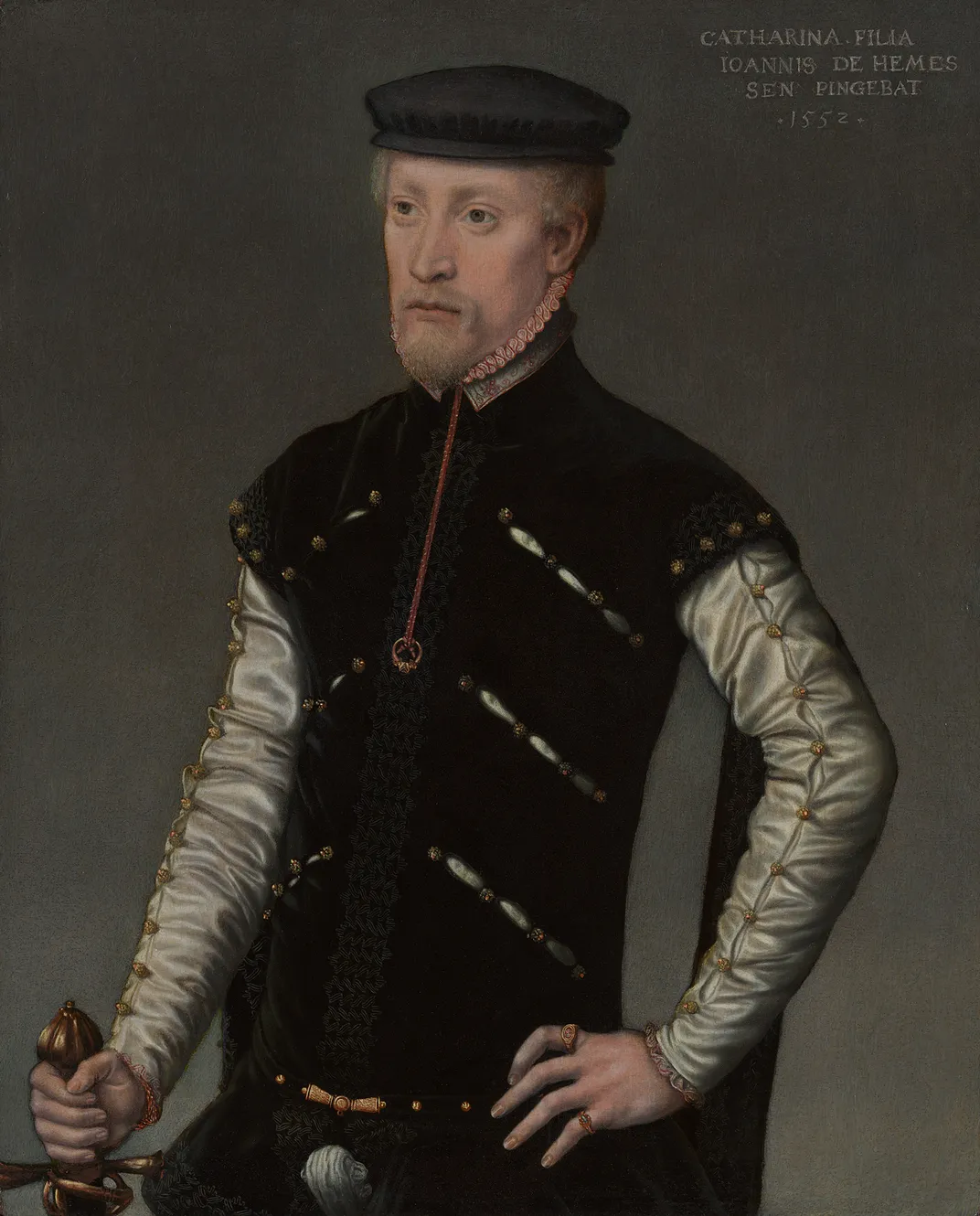
Information about van Hemessen’s life is sparse, but the findings presented in the exhibition support the idea that she developed her craft under her father’s tutelage. Her earliest known works date to 1548, the same year that she painted her self-portrait. Of the 19 confirmed paintings in van Hemessen’s oeuvre, 14 are signed, the Times reports. The inscriptions are fairly similar, typically including the artist’s name and the year that she completed the scene. Most are small-scale, intimate portraits, but some depict religious scenes—also a hallmark of Jan’s work.
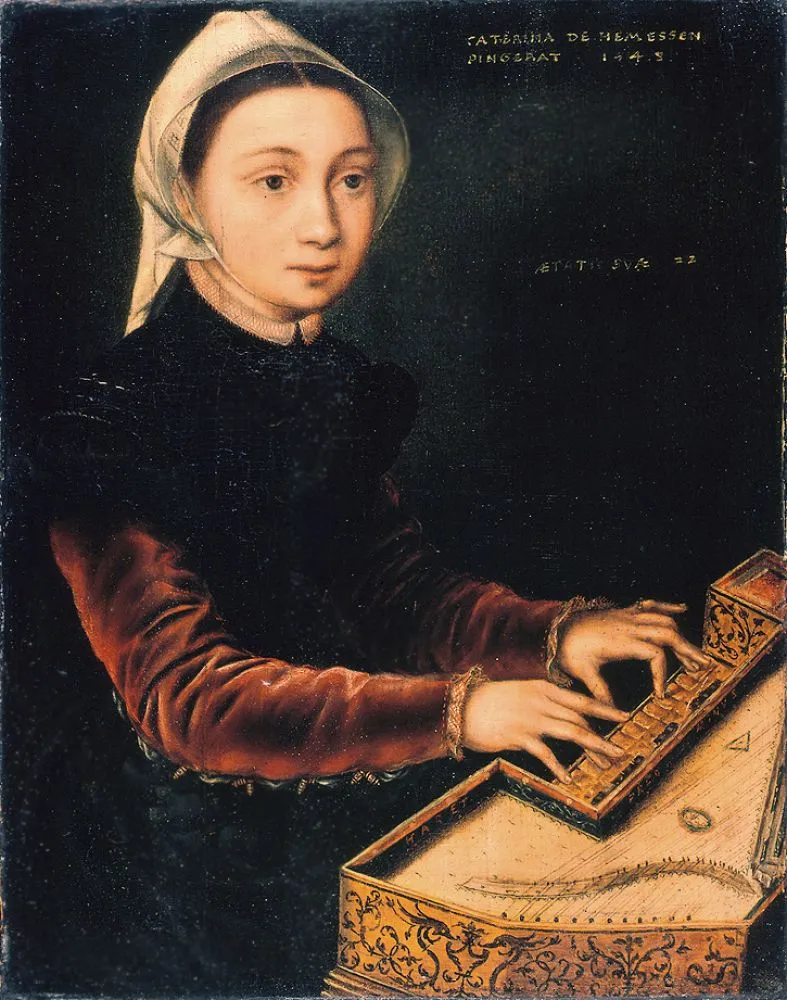
In 1554, van Hemessen married a musician named Kerstiaen de Morijn. By 1556, the couple had relocated to Spain, where de Morijn served as a court organist under Mary of Hungary, former regent of the Habsburg-controlled Netherlands. Although this position was the main impetus for the move, Courts posits that van Hemessen’s work also caught Mary’s eye, as the regent was a noted patron of the arts.
Did you know? Women artists at court
- The kings and queens of England’s Tudor dynasty employed several notable women artists.
- They included Susanna Horenbout and Levina Teerlinc, both Flemish painters who specialized in portrait miniatures.
As Courts argues, van Hemessen’s self-portraits underscored their creator’s “talent and cultural education, both important and marketable skills for one potentially looking … for employment as a lady-in-waiting.” Still, the exhibition outlines several pieces of evidence challenging the “longstanding speculation” that Catharina served at Mary’s court in a formal capacity, curator Maarten Bassens tells Smithsonian magazine. “Mary’s final will, as well as the records concerning the settlement of her estate, indicate that only Catharina’s husband received a pension, not Catharina herself.” Interestingly, none of van Hemessen’s surviving works date to her time in Spain, perhaps suggesting that she stopped painting after leaving her family workshop in Antwerp.
De Clippel’s research on van Hemessen indicates that she and her husband returned to Antwerp after Mary’s death in 1558, relocating to ’s-Hertogenbosch, the hometown of Dutch painter Hieronymus Bosch, in 1561. Van Hemessen’s date of death is unknown, but a 1567 account of the Low Countries by the Italian writer Lodovico Guicciardini describes her as “still living.”
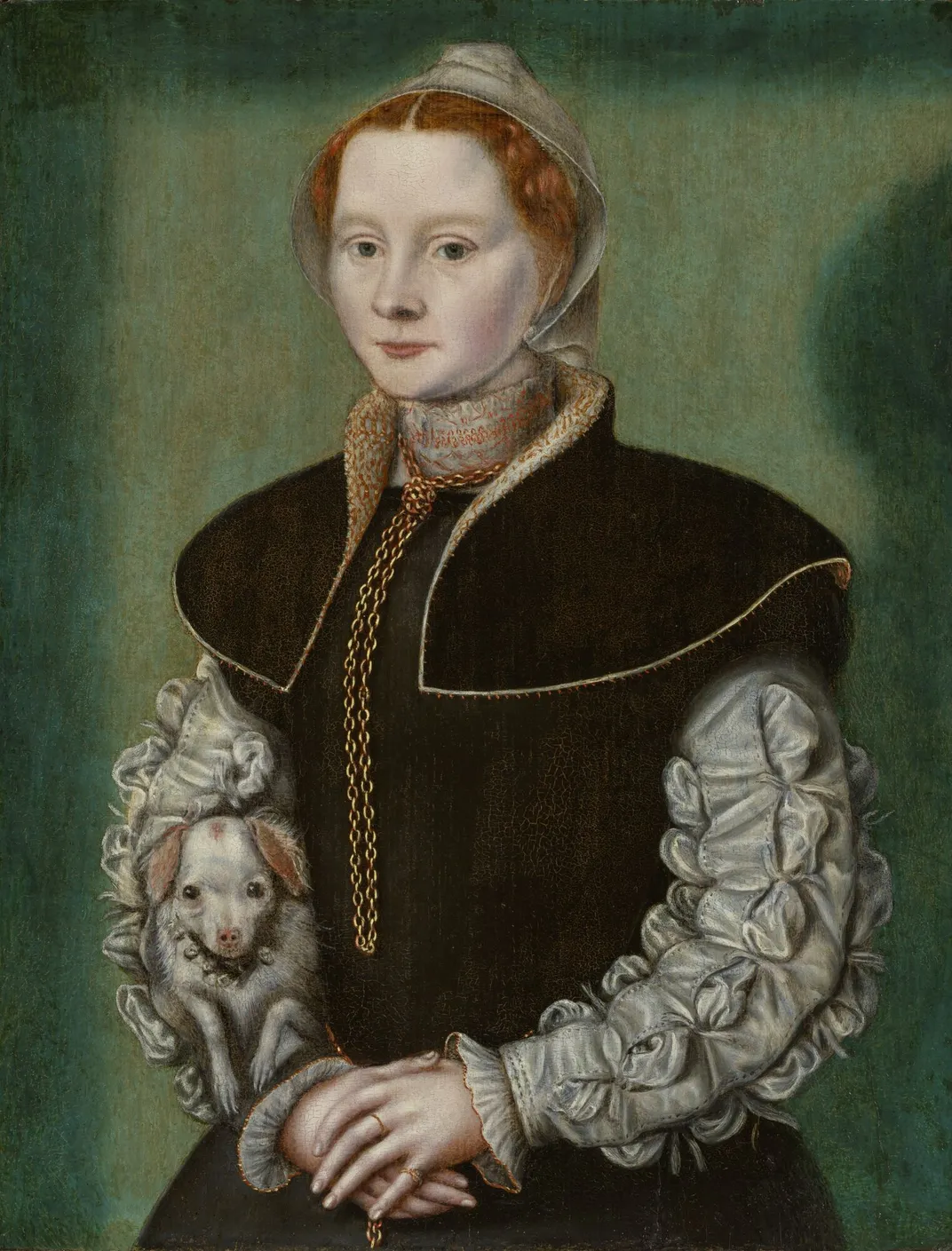
In an era when few women were employed as professional artists, van Hemessen earned the recognition of her male peers, including Guicciardini and Giorgio Vasari, who included her in the second edition of his famous compendium of Renaissance artists.
As curator Christine Seidel said in a March interview shared by the National Gallery, “Perhaps the most important thing about her story is that we can still tell it today. This is not the case for many other women painters of the time who worked in their fathers’ or husbands’ workshops under the mantle of anonymity.” Van Hemessen is “an astonishingly rare case of a woman painter in the 16th century with a surviving and identifiable body of work,” Seidel added. “Her story deserves attention … and will hopefully spark the desire to learn more about her.”
“Van Hemessen and Father: The Antwerp Workshop of Jan and Catharina van Hemessen” is on view at the Snijders and Rockoxhuis in Belgium through January 31, 2027.
Editor’ s note, October 21, 2026: This article has been updated to include a comment from exhibition curator Maarten Bassens.