
/https://tf-cmsv2-smithsonianmag-media.s3.amazonaws.com/filer_public/5d/4c/5d4c0548-c707-4775-bd4b-2907727fd348/thomas-more.png)
An English Church Wants to Exhume the Skull of Thomas More, Tudor Statesman Beheaded by Henry VIII Nearly 500 Years Ago
The king accused More of treason and ordered his execution in 1535. Now, St. Dunstan’s hopes to conserve the Catholic saint’s remains ahead of the quincentenary of his death
/https://tf-cmsv2-smithsonianmag-media.s3.amazonaws.com/accounts/headshot/meilan_headshot2.png)
:focal(871x407:872x408)/https://tf-cmsv2-smithsonianmag-media.s3.amazonaws.com/filer_public/5d/4c/5d4c0548-c707-4775-bd4b-2907727fd348/thomas-more.png)
Shortly after Thomas More, a leading statesman and longtime friend of Henry VIII, was executed on July 6, 1535, his head was parboiled and tarred, then stuck on a spike on London Bridge as a warning not to defy the king. Such was the fate of traitors in Tudor England.
About a month later, More’s eldest daughter, Margaret Roper, bribed the official in charge of the bridge to release her father’s skull into her custody instead of throwing it into the River Thames to make room for the head of another executed criminal. When Thomas Cromwell, the political adviser often blamed for More’s downfall, discovered what Margaret had done, he accused her of recovering the skull for subversive purposes. In response, she simply said, “I have saved my father’s head from being devoured by the fishes with the intention of burying it.”
Margaret fulfilled this pledge with her death in 1544, when she was interred beside her father’s skull in the family tomb in London. (The rest of More’s remains were buried in a chapel at the Tower of London alongside other prominent Tudor traitors, including Anne Boleyn and Katherine Howard.) Decades later, Margaret’s son moved his famous forefather’s skull yet again, to the Roper family vault at St. Dunstan’s Church in Canterbury.
/https://tf-cmsv2-smithsonianmag-media.s3.amazonaws.com/filer_public/46/2e/462ec984-6c8c-4112-ac9c-8dc863355817/margaret-roper.jpg)
/https://tf-cmsv2-smithsonianmag-media.s3.amazonaws.com/filer_public/2a/99/2a9962c7-cf99-40a9-91a0-36a2d7130b5a/will-roper.jpg)
Earlier this month, the parochial church council that governs St. Dunstan’s announced a proposal to “exhume and conserve what remains” of More’s skull ahead of the 500th anniversary of his death. While the quincentenary isn’t until 2035, the skull “will take several years to dry out and stabilize,” according to the council. To move forward with the plan, St. Dunstan’s will need permission from Canterbury’s commissary court, which oversees local churches’ lands and buildings, reports the Times of London’s Kaya Burgess.
A renowned humanist scholar and staunch adherent of the Catholic faith, More served as Henry’s chief minister before falling out of favor over his refusal to acknowledge the Tudor king’s status as supreme head of the Church of England. Pope Pius XI canonized More as a martyr in 1935.
Fun fact: Thomas More's Utopia
Thomas More coined the term “utopia,” meaning an idealized, often imagined community, in his 1516 humanist treatise of the same name.
In a statement provided to Madeleine Teahan of the Catholic News Agency (CNA), St. Dunstan’s cites the anticipated focus on More in the leadup to the 2035 quincentenary as the reason for the proposed exhumation.
“We won’t be able to keep him to ourselves,” the statement says. “Ecumenically and globally, we have a responsibility both to the relic and to Christians and scholars throughout the world, and judging by the comments in our visitors’ book, having the relic deteriorating in a vault is not good enough for many who venerate Thomas More.”
If the commissary court approves the proposal (a decision that is “not guaranteed,” churchwarden Sue Palmer tells CNA), then St. Dunstan’s will seek community input on how to proceed. Even if the skull is made accessible to pilgrims, it will not be on “display,” Palmer says. This phrasing, she adds, “makes [More] sound like a museum exhibit, and our church is not a museum. Nor is the relic an exhibit.”
/https://tf-cmsv2-smithsonianmag-media.s3.amazonaws.com/filer_public/40/32/40322aa7-465e-472c-8ddb-d769bdae3adf/more_famb_1280x-g0.jpg)
Speaking with St. Dunstan’s parishioners on July 6, the 490th anniversary of More’s execution, Palmer outlined several potential options for preserving the skull, including placing it back in the Roper family vault, perhaps in a reliquary, or commissioning an aboveground shrine or carved stone pillar to hold it, “which is what many of our visitors have requested.”
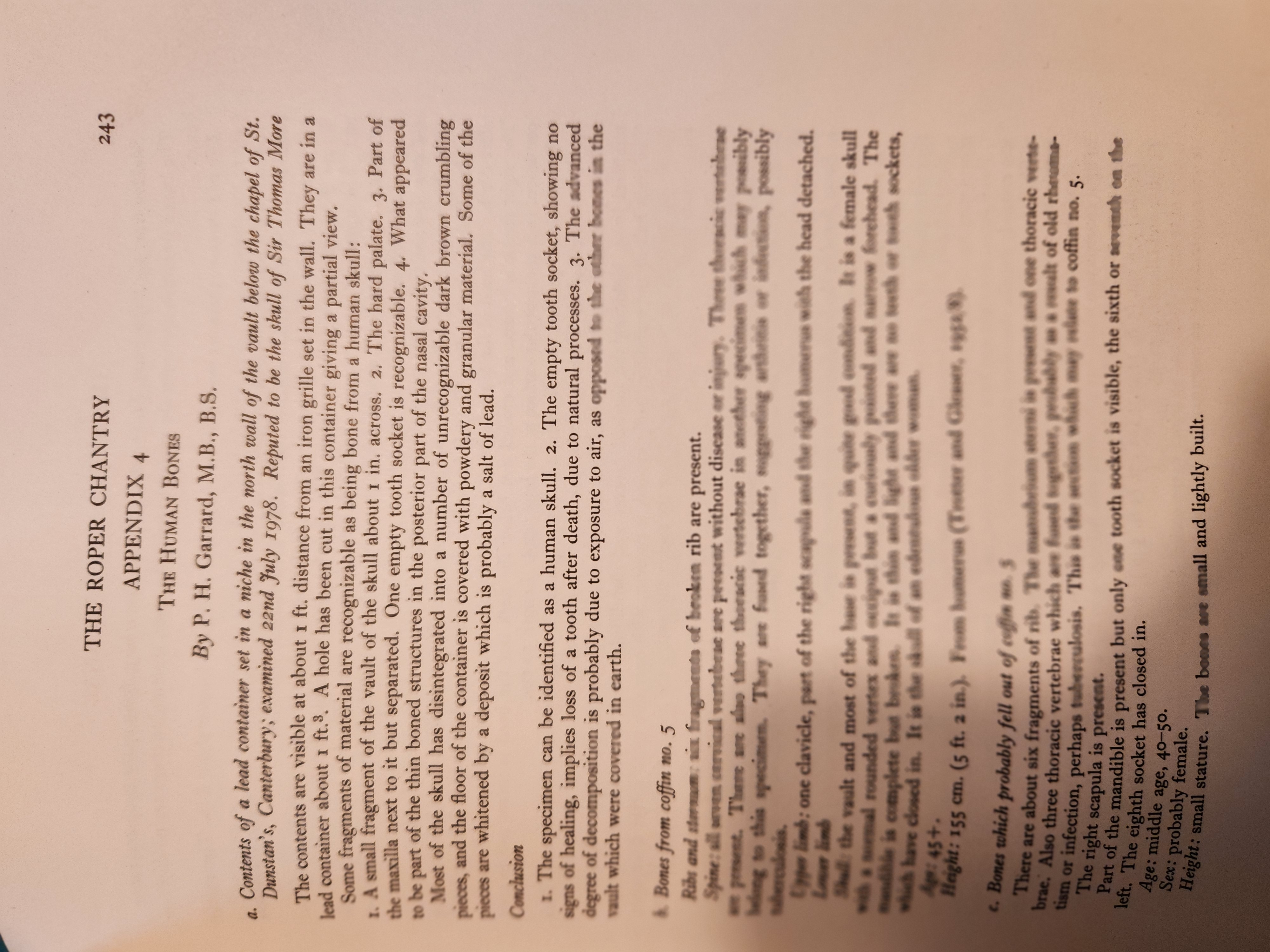
Historical sources suggest that More’s skull was later moved to a niche in the wall of the Ropers’ underground vault, where it was tucked in a “leaden box” behind iron grating. As early as 1837, the vicar of St. Dunstan’s noted the poor conditions under which the skull was stored, urging the readers of the London-based Gentleman’s magazine to “save from ruin the sacred walls which contain the head.”
A 1978 archaeological survey of the vault concluded that the skull’s “advanced degree of decomposition is probably due to exposure to air, as opposed to the other bones in the vault, which were covered in earth,” according to a report. Though the excavation found that the remains “had suffered greatly and were likely vandalized, nothing was done about it,” Steven Brizek, a lawyer who has campaigned for the skull’s preservation, told the National Catholic Register’s Edward Pentin in 2023.
/https://tf-cmsv2-smithsonianmag-media.s3.amazonaws.com/filer_public/30/0c/300cd126-6cb7-4480-8146-50817f655be0/pst000068790486-seq_520.jpg)
The current condition of More’s skull is unknown, but a video filmed in 1997, when the vault was last opened, indicated that all that remained “was some fragments of cranium, a piece of lower jaw and lots of dust,” per the Times.
The son of a London lawyer, More entered Henry’s service by 1518, acting as an adviser and secretary before ascending to the role of lord chancellor, second only to the king in political power, in 1529. In this role, More defended the Catholic Church against the growing tide of Protestantism, overseeing the burning of six heretics and countless texts he deemed heretical.
Henry initially supported his chancellor’s efforts, but he began questioning the church’s authority after the pope refused to annul his marriage to his first wife, Catherine of Aragon, and allow him to marry the queen’s lady-in-waiting Anne Boleyn. Henry broke with Rome and married Anne in the early 1530s, officially declaring his supremacy as head of the Church of England in 1534. More, who had resigned as chancellor in 1532, declined to sign an oath acknowledging the king’s new authority and the validity of his second marriage. More hoped that staying silent on the matter, rather than loudly denouncing it, would save his life, but Henry decided to charge his former friend with treason. The statesman was beheaded on Tower Hill after more than a year of imprisonment.

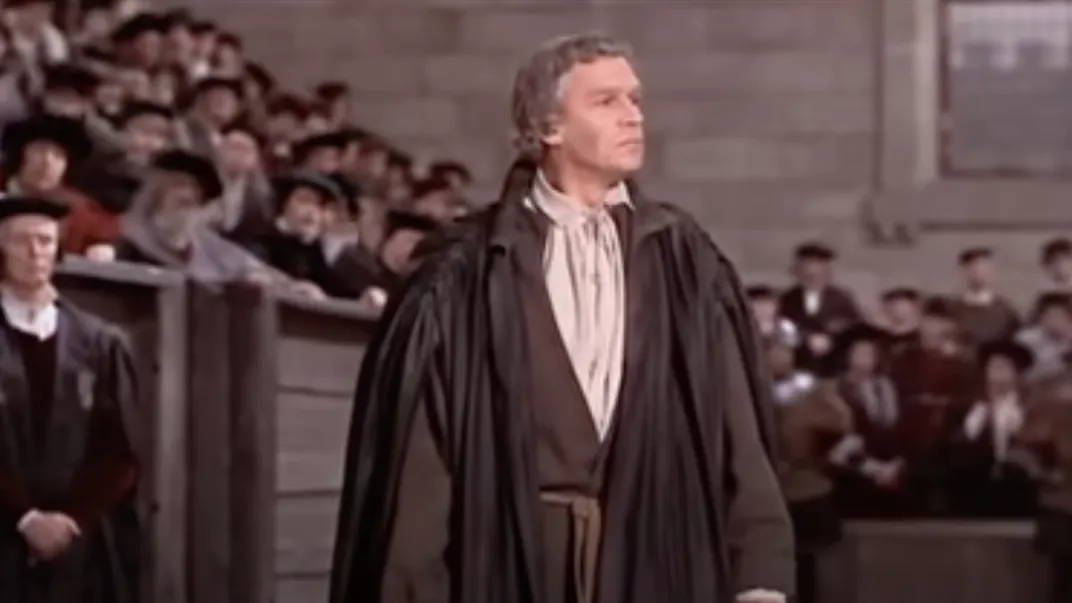
More’s reputation has continually shifted in the centuries since his execution. The 1966 film A Man for All Seasons lionized him as a brave, brilliant scholar who chose to die rather than compromise his morals; more recently, Wolf Hall, a fictional trilogy by the late author Hilary Mantel, cast him as the ruthless, fanatical foil to fellow politician Cromwell’s “unlikely hero,” in the words of historian Tracy Borman.
Reflecting on More’s legacy in a magisterial new biography, historian Joanne Paul writes, “It is difficult to point to any event or moment in Tudor history and claim that it would have been vastly different without his intervention.” Still, she argues, “In a deeply dangerous time, Thomas More was one of the few who overtly opposed the growing tyranny of Henry VIII, and he did so with full knowledge of his own powerlessness and the deadly consequences. … We must not overlook him as a man who spoke truth to power, even while trembling with fear.”
/https://tf-cmsv2-smithsonianmag-media.s3.amazonaws.com/accounts/headshot/meilan_headshot2.png)