
/https://tf-cmsv2-smithsonianmag-media.s3.amazonaws.com/filer_public/a7/48/a7487faf-ba59-41b8-8878-135d377c691d/noailles.png)
The Marquis de Lafayette’s Brother-in-Law Participated in Three Revolutionary Wars, Supporting American Independence but Brutally Suppressing an Uprising by Enslaved Africans in Haiti
Louis-Marie, Viscount de Noailles, served during the American, French and Haitian Revolutions. “He fights wherever France fights, because he’s a soldier and he believes in France,” a historian says
/https://tf-cmsv2-smithsonianmag-media.s3.amazonaws.com/accounts/headshot/Serena096-edit.png)
:focal(750x500:751x501)/https://tf-cmsv2-smithsonianmag-media.s3.amazonaws.com/filer_public/a7/48/a7487faf-ba59-41b8-8878-135d377c691d/noailles.png)
When Louis-Marie, Viscount de Noailles, was a young man, he fought alongside his brother-in-law, the Marquis de Lafayette, in the American Revolution. A skilled soldier, Noailles won the respect of several key patriot leaders, including Alexander Hamilton, who declared, “Wherever you are, you will be useful and distinguished.”
America’s fight for independence from Great Britain marked Noailles’ first brush with revolution—but it wouldn’t be his last. He played a pivotal role in the French Revolution, presiding over the Constituent Assembly on August 4, 1789, the night that the governing body abolished feudalism in France. Nearly a decade and a half later, Noailles led French forces sent by Napoleon Bonaparte to reclaim the colony of Saint-Domingue from the formerly enslaved Africans who had revolted against their oppressors during the Haitian Revolution. By the end of the conflict in 1804, these rebels would emerge victorious, establishing Haiti as the first Black republic.
The story of the man who fought in three revolutionary wars also sheds light on the inherent contradiction of such campaigns: How could Western revolutionaries champion the cause of freedom while actively or implicitly supporting the continuation of slavery? The issue is a complex one, but in Noailles’ case specifically, the answer may be straightforward: “He fights wherever France fights, because he’s a soldier and he believes in France,” says Marlene Daut, a historian at Yale University and the author of The First and Last King of Haiti: The Rise and Fall of Henry Christophe. “He’s French. That’s his identity.”
/https://tf-cmsv2-smithsonianmag-media.s3.amazonaws.com/filer_public/2b/c6/2bc6f5b8-de10-4a06-9e11-f89e4358776e/louis_marie_vicomte_de_noailles_g20824-597.jpg)
The American Revolution
Noailles was born in Paris in 1756, into one of the oldest and most prominent families in the French aristocracy. According to the recollections of a childhood friend, Louis-Philippe, Comte de Ségur, the young Noailles was “wholly occupied with pleasures, play and women,” but a “military ardor” soon seized him, and from then on, “he dreamed of nothing but arms and horses.” In 1773, Noailles married his cousin Anne, whose younger sister would, in turn, wed Lafayette the following year.
When war broke out across the Atlantic in 1775, Noailles, Ségur and Lafayette were eager to join the fight, which they saw as an opportunity to pursue glory and put Enlightenment ideals into practice. “The American Revolution seemed to demonstrate the validity of this new approach to politics,” says François Furstenberg, a historian at Johns Hopkins University and the author of When the United States Spoke French: Five Refugees Who Shaped a Nation. Unfortunately for the young men, their families discouraged them from joining the patriot cause; Lafayette, however, could not be dissuaded, and in 1777, he was commissioned as a major general in the Continental Army.
Noailles joined the French Army in 1778, distinguishing himself during the capture of Grenada, a British-held island in the Caribbean, the following year. By then, France had joined the American Revolution on the patriots’ side, freeing Noailles to finally join Lafayette in the United States.
/https://tf-cmsv2-smithsonianmag-media.s3.amazonaws.com/filer_public/c0/e2/c0e2b5bb-bb0a-43e8-adfd-f3df365387d9/gilbert_du_motier_marquis_de_lafayette.png)
Upon his arrival, Noailles quickly became a popular figure among the revolutionary set. “He brought all this glamour of the court of Versailles, which was far and away the place of refinement and manners and food and dress,” Furstenberg says. “So, in that way, he was kind of an appealing figure.”
Noailles led a division of soldiers at the 1779 Siege of Savannah, a failed campaign to recapture the Georgia port city from the British. The gens de couleur libres, free Black fighters from French colonies such as Saint-Domingue, also fought in the battle; their ranks reportedly included André Rigaud, a mixed-race soldier who would become an important but controversial leader in the early Haitian Revolution, and a drummer boy named Henry Christophe, who would later serve as the first and only king of Haiti.
What did it mean for these Black men to fight for Americans’ “freedom” on soil worked by enslaved people? “They, for the most part, already had free status, and so their motivations were much more granular and about their own personal lives than some kind of grand narrative about liberty and equality spreading through the world,” Daut says. “In fact, they didn’t know what that looked like. They lived in an extremely unequal and unfree society,” where they were elevated above the enslaved but still looked down upon by white colonizers.
/https://tf-cmsv2-smithsonianmag-media.s3.amazonaws.com/filer_public/68/38/6838b12a-c7b9-4378-b014-dde34fdb8e82/henri_christophe.jpg)
In the 18th century, “when people are talking about liberty and equality, they mean social classes,” Daut explains. “They mean liberty from kings and queens and aristocracies.” The Haitians who rebelled against France toward the end of the century, creating a political system centered on the inherent rights of humans, “are the ones who argue for what is our modern interpretation of liberty and equality,” the historian adds.
As for Noailles, his reputation continued to rise in the years following the Siege of Savannah. One commander praised his “love for war, for his métier,” while another said that he deserved the French king’s gratitude. In December 1780, the viscount visited George Washington’s camp, gaining the commander in chief’s respect. Washington wrote Noailles a letter of introduction to present to the president of the Continental Congress, calling him “an officer of distinction, a gentleman who possesses those talents and qualities which ornament birth and fortune, who has besides the advantage of being allied to the Marquis de Lafayette, and participates in the same zeal for the service of America.”
Need to know: Whatever happened to the Marquis de Lafayette?
- Lafayette and his wife, Adrienne, held antislavery views, purchasing a plantation in Cayenne (now French Guiana) with the aim of emancipating those enslaved there. These plans were halted by the French Revolution.
- Lafayette fled France in 1792, seeking safe passage to England and eventually the U.S. via an Austrian-controlled territory. Instead, Austrian officials imprisoned him as a dangerous political radical, only freeing him in 1797.
- After his release, Lafayette largely retreated from politics. In 1824-25, the aging marquis embarked on a tour of the U.S., generating much excitement in the nation he’d helped create. He died in 1834 at age 76.
Toward the end of the Siege of Yorktown in October 1781, British General Charles Cornwallis sent a message to Washington under a white flag, requesting a cease-fire and a meeting to discuss the terms of his surrender. Washington selected Lieutenant Colonel John Laurens to represent the Americans and Second Colonel Noailles to speak on behalf of the French. Together, the pair negotiated the full British surrender at the decisive battle of the American Revolution.
That December, as France’s role in the war drew to a close, Noailles, Lafayette and their fellow officers set sail for home. The viscount had left a strong impression on his American comrades. As Hamilton wrote in a 1782 letter to Noailles, “Esteem for your talents and acquirements is a sentiment which from my earliest acquaintances with you, my dear viscount, I have shared in common with all those who have the happiness of knowing you.” The feeling was mutual: Years later, Noailles wrote that Hamilton was “a man of great understanding, fine talents, a communicative genius, an untainted probity, an absolute disinterestedness.”
Hamilton and Washington weren’t Noailles’ only prominent American friends. During his time in the U.S., he also cultivated connections with Benjamin Franklin, William Bingham (once considered the wealthiest man in America) and “financier of the American Revolution” Robert Morris.
/https://tf-cmsv2-smithsonianmag-media.s3.amazonaws.com/filer_public/bd/b5/bdb5fd5e-a6f6-4d2f-8545-d1fb91f94738/surrender_of_lord_cornwallis.jpg)
The French Revolution
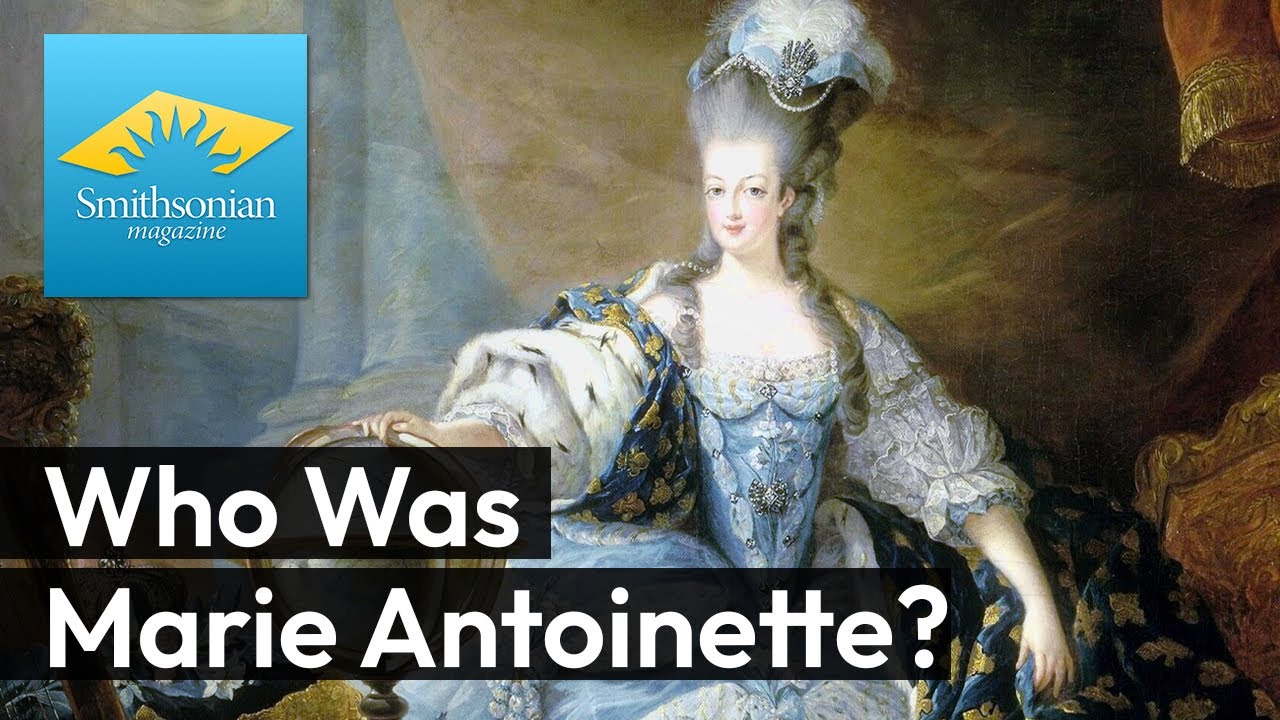
Noailles returned to France accomplished and dashing, emerging as a central figure at the glittering court of Versailles. At dances, he often partnered with Marie Antoinette, the French queen.
In 1789, however, mounting unrest in France boiled over into revolution—a development that Noailles initially encouraged. The viscount became a leading liberal voice in the rechristened French governing body, laboring on “behalf of unified constitutional government, honest administration and solid military planning to protect the nation,” art historian John K. Howat wrote in a 1971 journal article.
The height of Noailles’ contributions to the revolution took place in August 1789, when he delivered a rousing speech that inspired the French nobles present to spontaneously renounce their feudal privileges, in what one witness described as “a moment of patriotic drunkenness.” As Furstenberg argues in his book, “It was [Noailles], as much as any single person, who slew France’s ancien régime.” A contemporary admirer wrote that he had “influenced the French Revolution as Monsieur de Lafayette influenced the American Revolution.”

Even as Noailles coaxed his fellow noblemen to renounce their privileges and forge a more egalitarian France, the assembly remained conspicuously quiet on the issue of slavery. Several enslavers from France’s colonies were in attendance on that August night. “It would have taken one of [them] to stand up and say, ‘I’m a slaveholder, and we’re going to give up our privileges,’” says Jeremy D. Popkin, an emeritus historian at the University of Kentucky and the author of You Are All Free: The Haitian Revolution and the Abolition of Slavery. Although one participant broached the topic, his suggestion was “ruled out of order, and so nothing is done about slavery.”
In April 1790, Noailles wrote to Washington about the upheaval unfolding in his country. “The French Revolution, which portends the greatest blessings [to] almost all those who have beheld the foundation of liberty in the United Provinces, have brought from thence of American spirit and have displayed it with undaunted courage as they have had a hand in preparing the revolution,” the viscount reported.
Noailles rose to the position of president of the Constituent Assembly before shifting his focus back to military service. As a maréchal de camp in the Army of the North in 1792, he fought on the front lines of France’s war against Prussia and Austria, whose monarchies had formed a coalition to defeat the newly formed First Republic. But internal strife would soon put an end to Noailles’ alliance with the increasingly radical revolutionaries. French soldiers mistrusted their noble-born officers and at one point murdered an aristocratic general whom they suspected of treason. After witnessing the disorganization of the French Army firsthand, Noailles resigned his commission in disgust.
/https://tf-cmsv2-smithsonianmag-media.s3.amazonaws.com/filer_public/21/50/2150571a-f280-4e94-9bcb-768315ea8c5e/anonymous_-_prise_de_la_bastille.jpg)
“People like Noailles were viewed as enemies by both camps,” Furstenberg says. “By the reactionary types, they were viewed as people who started all the trouble, who were naive and who were too liberal, and by the more radical, they were viewed as remnants of the old regime that needed to be wiped away.”
In the summer of 1792, Noailles fled France for the relative safety of England. There, he learned that mobs had started massacring perceived enemies of the French Revolution, killing at least 1,100 people, among them many of his friends.
“As long as it was possible to serve the cause of liberty, I never deserted it,” Noailles wrote in a letter that December, “but when it became criminal, I left my country, quitted the part of the world where crimes were committed and fled to England, where I pity the errors of the French people and cannot forget their cruelty.”
Noailles’ time in England was short-lived. In early 1793, Parliament passed an act that sharply limited the rights of émigrés. As the British ambassador to The Hague noted, some of the French refugees were believed to be “paid by the Jacobin leaders to do mischief and to prepare and promote revolutions.” The ambassador named Noailles as one of “the exiles who are highly dangerous and are now said to be in London.” No longer welcome in England, the viscount left for the U.S., arriving in Philadelphia on May 3.
/https://tf-cmsv2-smithsonianmag-media.s3.amazonaws.com/filer_public/e5/61/e561193a-133f-470e-b8ec-bc004e8270f4/marie_antoinette_16_10_1793_cropped.jpg)
Once again, Noailles attracted suspicion, with critics accusing him of harboring a secret political agenda, such as conspiring with England and the U.S. against republican France. In truth, however, Noailles was more interested in establishing a community for French exiles and making a name for himself as a businessman. “This country offers rather occasion to re-establish some broken fortune than to make people in general happy,” he wrote.
Back in the U.S., Noailles reconnected with the friends he’d made more than a decade ago, in addition to forming new relationships with prominent Americans. As John Adams, who’d crossed paths with the viscount during the American Revolution, told his wife, Abigail, that December, Noailles “seems to despair of liberty in France and has lost apparently all hopes of ever living” there again.
Even as Noailles found refuge in America, the Reign of Terror loomed over his friends and family back in France. In June 1794, his wife and his father were both executed by guillotine. When the news reached Noailles, he was devastated. The following year, he decided to become an American citizen—a step that many famous French émigrés, including the four others highlighted in Furstenberg’s book, never took. Even after Napoleon came to power in France in 1799 and offered amnesty to those who’d fled France during the revolution, Noailles chose to remain abroad.
The viscount’s second stint in the U.S. might be immortalized in an iconic Gilbert Stuart painting of Washington. Credible evidence indicates that Noailles stood in for his friend when the artist worked on a series of portraits of the first president in the late 1790s. Noailles’ “elegant and polished” physique, on top of his familiarity with Washington’s “poses and gentlemanly stances,” made him an ideal candidate for the job, Furstenberg writes in When the United States Spoke French. Stuart also painted a 1798 portrait of Noailles surveying his troops, shapely legs on full display.

/https://tf-cmsv2-smithsonianmag-media.s3.amazonaws.com/filer_public/cc/b8/ccb8fc15-5718-4811-b466-25bbc6dc7fa9/dt11172.jpg)
The Haitian Revolution
By the turn of the 19th century, the U.S. had “gone from ardently pro-French to rabidly anti,” making “life for a French aristocrat in Philadelphia … simply not as fun as it had been in the glory days of the 1790s,” Furstenberg points out in his book.
Noailles’ life hadn’t exactly turned out as he’d imagined. “He’d lost everything—his wife and his family and his former rank,” Furstenberg says. “He was really the only figure [of the French political refugees] who had no interest in going back to France.” Nevertheless, Noailles decided to leave Philadelphia and offer his military expertise to Napoleon’s new government. “I’ve never known why he did that,” Furstenberg adds.
Noailles set out for Saint-Domingue sometime after the summer of 1802. The colony was then in its 12th year of violent upheaval, following a coordinated slave uprising that began in 1791. Yellow fever was ravaging the French troops sent to put down the rebellion and would soon kill General Charles Leclerc, Napoleon’s brother-in-law and the head of the French forces in Saint-Domingue. By the time of Noailles’ arrival in Saint-Domingue, the situation had deteriorated into chaotic brutality, with people “just murdering for the sake of murder,” Furstenberg says. As the University of Kentucky historian Popkin notes, “That would not be a very smart time to go there.”
Leclerc was replaced by Donatien de Rochambeau, the son of Noailles’ commander during the American Revolution. The younger Rochambeau was notorious for his extreme cruelty toward Black revolutionaries. He worked to fulfill Leclerc’s earlier directive to kill every “colored person in the colony who has worn an epaulet.”
/https://tf-cmsv2-smithsonianmag-media.s3.amazonaws.com/filer_public/5b/f8/5bf8404f-cdd0-4629-85ef-ae0cce142e8c/combats_entre_les_insurges_de_saint-domingue_et_les_troupes_f-8180e6a78f56092de681c26a2f5df290.jpg)
Noailles was stationed near Môle Saint-Nicolas, in what is now northwest Haiti. He tended this post with gravity, writing in a February 1803 letter that “I am penetrated by the importance of my mission.” That May, Noailles sailed across the Windward Passage to Cuba, where he purchased 300 hunting dogs to use against Black freedom fighters. Rochambeau relished the opportunity to brutalize Saint-Domingue’s population, writing, “I don’t need to tell you that no rations or expenses are authorized for the dogs’ food; you must give them Negroes to eat.”
In Cap Français, Noailles staged a demonstration of the dogs’ viciousness in an amphitheater, setting the animals on an enslaved Black boy, whom they ate alive as spectators clapped. Some French generals considered the use of dogs immoral. Others viewed the dehumanizing practice as “potentially a war-winning technique and were willing to give it a try,” says Philippe Girard, a historian at McNeese State University and the author of A Day in Colonial Haiti in the Age of Runaways, Revolutionaries and Executioners.
In May 1803, Britain declared war on France, citing the failure of a proposed trade treaty with Napoleon, among other grievances. As part of this campaign, the British blockaded Saint-Domingue, cutting off French troops in the colony. That November, Rochambeau surrendered first to the Black revolutionary leader Jean-Jacques Dessalines and then to the British, evacuating his men to Jamaica.
But Noailles refused to give up. He defended Môle Saint-Nicolas against Haitian and British soldiers, only leaving Saint-Domingue in December, when he narrowly avoided the enemy blockade and made it to Cuba. Off the coast of Havana on December 31, he encountered a Royal Navy patrol. Speaking English, he sprung a trap and captured the British ship, sustaining serious injuries in the process.
Haiti officially declared its independence on January 1, 1804. Noailles died in Havana six days later; at his son’s request, his heart was buried in a French church.
/https://tf-cmsv2-smithsonianmag-media.s3.amazonaws.com/filer_public/53/b3/53b31afc-5b9d-465c-99e6-33012a8c1e3e/histoire_maritime_de_la_france_depuis_la_paix_de_nimegue-leon_guerin_20200510_125155.jpg)
/https://tf-cmsv2-smithsonianmag-media.s3.amazonaws.com/accounts/headshot/Serena096-edit.png)