Subscribe to Smithsonian magazine and get a FREE tote.

American Revolution

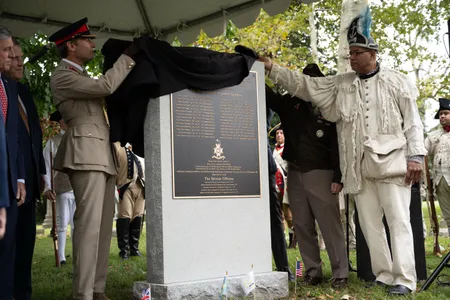
Officials unveiled the memorial for the Revolutionary War soldiers at the Wilmington and Brandywine Cemetery on September 23.

These Soldiers Were Buried in an Unmarked Grave During the Revolutionary War. Now, Historians Finally Know Their Names

At a recent memorial ceremony, officials honored 28 Continental soldiers and at least 38 British soldiers who were buried in Wilmington, Delaware, nearly 250 years ago
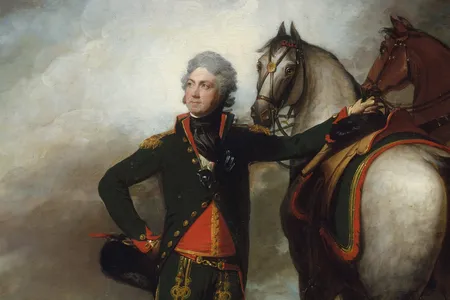
A close-up view of a 1798 Gilbert Stuart portrait of Louis-Marie, Viscount de Noailles

The Marquis de Lafayette’s Brother-in-Law Participated in Three Revolutionary Wars, Supporting American Independence but Brutally Suppressing an Uprising by Enslaved Africans in Haiti

Louis-Marie, Viscount de Noailles, served during the American, French and Haitian Revolutions. “He fights wherever France fights, because he’s a soldier and he believes in France,” a historian says
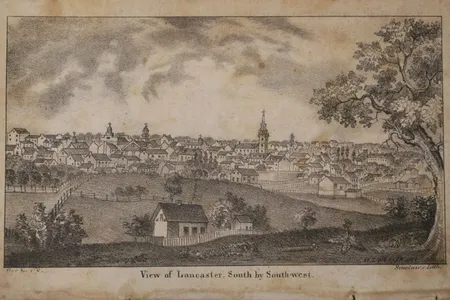
An illustration of Lancaster in the early 1800s. The Pennsylvania city served as the nation's capital on September 27, 1777.

America's 250th Anniversary

During the American Revolution, the City of Lancaster, Pennsylvania, Served as the United States’ Capital for Just One Day

The nascent nation’s leaders fled to the inland city as the British advanced on Philadelphia in September 1777. They held one meeting at the local courthouse before moving on to York
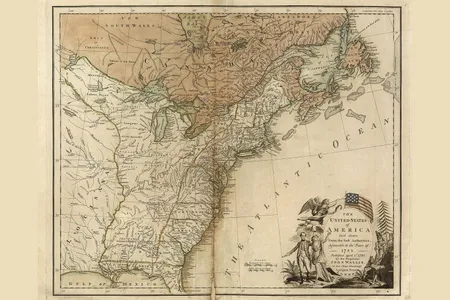
A 1783 map of the United States

America's 250th Anniversary

How Did the Nation Get Its Name? Other Suggestions Included the United Colonies, Columbia and the United States of Alleghania

The nascent country adopted its name 250 years ago, on September 9, 1776. Americans have debated the moniker ever since. One congressman even proposed the “United States of the Earth”
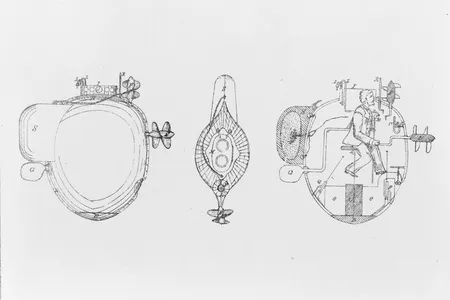
A diagram of David Bushnell's Turtle submersible

America's 250th Anniversary

To Defeat the Royal Navy During the American Revolution, a Rebel Inventor Designed a Secret Weapon: a Bomb-Carrying Submarine

David Bushnell developed the “Turtle” submersible as a student at Yale University. The vessel’s attack on a British flagship failed, but the trailblazing boat’s legacy endures 250 years later
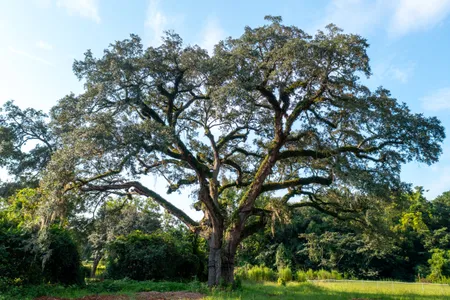
The Eutaw Springs witness tree is estimated to be 300 years old.

Inside the Fight to Save a 300-Year-Old Tree That Survived a Revolutionary War Battle

Arborists are working to preserve the 45-foot-tall live oak in South Carolina’s Eutaw Springs Battlefield Park. The historic tree suffered damage during a lightning strike 50 years ago
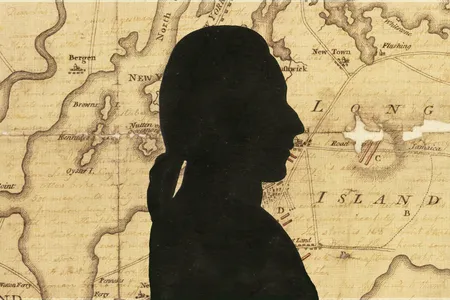
Nathan Hale was captured and executed by the British within days of his arrival on Long Island. David Maltbie evaded detection for a much longer time, although he, too, was eventually caught by the enemy.

America's 250th Anniversary

This Connecticut Teenager Spied on the British During the American Revolution, Succeeding Where Nathan Hale Failed

Newly uncovered documents reveal the story of David Maltbie, who relayed intelligence to the patriots in 1776, narrowly avoiding execution as a spy
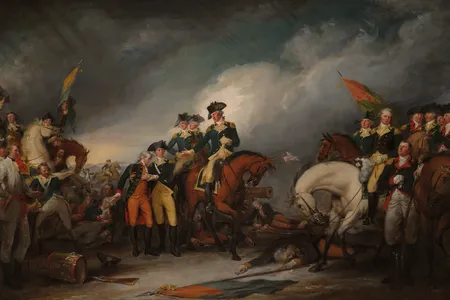
A John Trumbull painting of George Washington's capture of Hessian soldiers in Trenton, New Jersey, in December 1776

America's 250th Anniversary

The Hessians Were Supposed to Quickly End the American Revolution. Instead, They Endured Years of Battles and Suffered Thousands of Casualties

Some 30,000 German soldiers fought for the British during the war. Contrary to popular belief, they weren’t mercenaries, and not all were actually Hessians
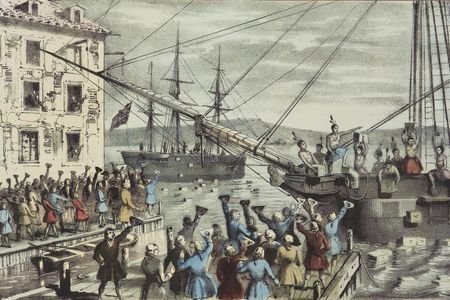
The Destruction of Tea at Boston Harbor, Nathaniel Currier, 1846

A Historian at MIT Discovered the Surprising Truth About This Chinese Label Long Thought to Be a Souvenir of the Boston Tea Party

The saga of the artifact displayed at Boston’s Old South Meeting House demonstrates how the study of history evolves
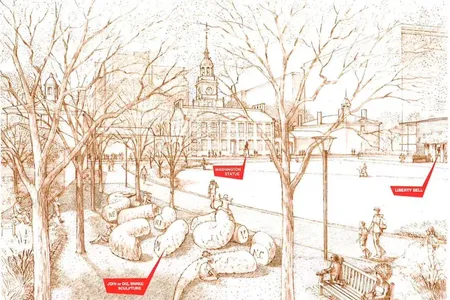
The granite sculpture is being installed on the Liberty Bell Center Block of Independence Mall in Philadelphia.

A Serpentine Sculpture Inspired by Benjamin Franklin’s ‘Join, or Die’ Call for Unity Is Taking Shape—Segment by Segment—in Philadelphia

Created by John Collins, the 46-foot-long granite artwork inspired by an 18th-century political cartoon is slated to be unveiled on Independence Mall sometime this fall

Before this document was discovered, only ten copies of the Exeter Declaration were known to exist.

A Volunteer Stumbled Upon a Strange Document in the U.K. National Archives. It Turned Out to Be a Rare Copy of the Declaration of Independence Printed in July 1776

Michael Scurr, a retired insurance broker, found the text while cataloging boxes of 18th-century correspondence housed at the London archives. It’s the only known copy of its kind outside the United States

A lithograph by Nathaniel Currier, printed between 1835 and 1856, depicting the signing of the Declaration of Independence, is on display in the new exhibition.

America's 250th Anniversary

Thomas Jefferson’s Original Rough Draft of the Declaration of Independence Can Now Be Seen at the Library of Congress

The new exhibition, which shows how the document was edited, also features an early copy of the Gettysburg Address

Graves of unidentified soldiers who died at the Battle of Camden

DNA Reveals the Identity of a Teenager Who Died in the Revolutionary War, Cracking a Nearly 250-Year-Old Cold Case

John Pumphrey was still a boy when he enlisted in the Continental Army in 1777. After archaeologists discovered his remains, a genetic genealogy analysis identified 20,000 DNA matches for living relatives

Established in 1660, the Granary Burying Ground is Boston’s third-oldest cemetery. 

Cool Finds

The City of Boston Discovered One of the Oldest Known Gravestones of a Free Black American, Who Shared a Name With the Massachusetts Capital

Also known as Sebastian, he died in 1729 and is buried alongside Samuel Adams, John Hancock and Paul Revere. His life tells a story of slavery and freedom in the North before the American Revolution

Bernardo de Gálvez by José Nicolás de la Escalera on display in the National Portrait Gallery exhibition “Out of Many: Portraits from 1600 to 1900.”

This Spanish Officer Besieged the British During the American Revolution, Giving George Washington Time to Plan a Pivotal Attack

Bernardo de Gálvez indirectly contributed to the Continental Army’s victory at the 1781 Siege of Yorktown. A rare painting of him is now on view at the Smithsonian’s National Portrait Gallery

Bartlett Frost's Declaration of Independence diorama, copy after John Trumbull

America's 250th Anniversary

To Recreate One of the American Revolution’s Most Famous Paintings, This Artist Painstakingly Crafted Miniature Wax Figures of the Nation’s Founders

Bartlett M. Frost’s diorama is modeled after John Trumbull’s depiction of the presentation of the Declaration of Independence. Newly conserved, the work is now on view at the National Portrait Gallery

First Bank of the United States in Philadelphia

Alexander Hamilton’s First National Bank Revolutionized the U.S. Economy. After Sitting Shuttered for Years, the Philadelphia Landmark Reopened as a Museum

A controversial idea right after the American Revolution, the First Bank of the United States proved prescient. Visitors can now check out its historic home after a $43 million makeover

The torch and part of the arm of the Statue of Liberty on display at the 1876 Centennial Exhibition in Philadelphia

America's 250th Anniversary

As France Prepares to Light Up the Statue of Liberty for America’s 250th, Peek Into the History of the Symbol of Trans-Atlantic Friendship

Here’s how three French idealists—an abolitionist, a sculptor and the engineer behind the Eiffel Tower—brought the representation of freedom to life

Individuals and objects associated with Irish contributions to the American Revolution (clockwise from top left): Surgeon and statesman James McHenry, Quaker spy Lydia Barrington Darragh, Commodore John Barry, a letter written by Irish-born printer John Dunlap, Continental Army officer Stephen Moylan, Pennsylvania politician James Smith, Delaware politician Thomas McKean, and Charles Thomson's proposal for the Great Seal

America's 250th Anniversary

How Tens of Thousands of Irish Immigrants Led the Patriots to Victory During the American Revolution

Soldiers of Irish heritage accounted for up to 50 percent of the Continental Army’s ranks. Driven from their homeland by British oppression, Irish-born rebels also served as spies, politicians and more

A first printing of the Declaration of Independence of the United States of America in German, from July 6-8, 1776

America's 250th Anniversary

After the Founders Declared Independence, Printers Quickly Translated the Text for German-Speaking Americans

The document, printed in a gothic typeface, was translated in Philadelphia. One of two surviving copies is going on display in Berlin ahead of America’s 250th birthday

Page 1 of 14