
Six Ways That People of the Past Used Magic to Protect Their Homes, From Witch Bottles to Mystical Symbols
Throughout history, humans around the world have employed protective talismans such as special stones, herbs and plants, and decorative demon tiles
/https://tf-cmsv2-smithsonianmag-media.s3.amazonaws.com/filer_public/b8/04/b8041e14-0310-4961-9c52-3076b161a62f/witches-and-wizards.png)
Virtually all cultures and epochs fizz with magic. You might call it a secret ingredient of human life, because magic takes so many forms and serves so many functions.
One relatively new area of research among historians and archaeologists focuses on the use of magic and mysticism to protect buildings, gardens and their inhabitants. It’s one of the many forms of magic I explore in my forthcoming book, Magick: Decoding the Visual Culture of Spells, Illusions and Psychic Powers.
Early modern Europe saw numerous reports of towns being burned by “incendiary witchcraft” or fire-starting demons. One such act of arson reportedly took place in Schiltach, Germany, in 1533. These dramatic examples, from an era of terrifyingly combustible domiciles, help explain why so many people focused magical building protection on chimneys and around hearths.
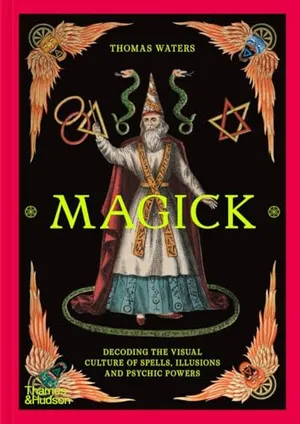
Magick: Decoding the Visual Culture of Spells, Illusions and Psychic Powers
Magick tells the visual story of the magical arts, from personal and community-based folk magic to ceremonial magic, illusionists and the paranormal.
Even today, people living comparatively safe and comfortable lives still use special objects and occult techniques to allay their anxieties and increase their sense of security.
A few years ago, a lovely volunteer guiding me around an ancient church in North Yorkshire, England, explained that she had planted a rowan tree in her garden. The purpose? To repel her neighbor’s “evil eye.” Rowan trees have been used in this way for centuries across the British Isles.
So, if you’ve got problem neighbors, or if your house and garden seem to suffer from bad luck, perhaps it’s time to try a magical solution.
1. Protective plants
Trees, herbs and other plants were and are used to defend properties against dangers both natural and supernatural. The Complete Herbal, a book by 17th-century botanist Nicholas Culpeper, claimed that a bay tree in the garden would protect a home from witchcraft, the devil and lightning.
Betony, meanwhile, was said to be helpful against diseases, epidemics and witchcraft, while bittersweet nightshade was believed to be effective against harmful sorcery.
Across Britain and Europe, a rosemary bush in the garden was supposed to protect from witches who attacked at night. They would be caught up counting every leaf until the light of morning dispelled their evil powers. In the Americas, chile peppers have long been regarded as evil-averting and were sometimes fixed to doors to repel harmful powers.
/https://tf-cmsv2-smithsonianmag-media.s3.amazonaws.com/filer_public/ef/18/ef18b409-2156-4663-922e-d5ba1dfd7608/de_matiera_medica_abbasid_periode_bagdad_1224_kestron__betonica_officinalis.jpg)
2. Mystical symbols
In early modern Europe and beyond, five- and six-pointed stars were inscribed into wood and mortar to repel evil.
Magical instructional texts known today as “grimoires”—including the tiny Booke of Experiments (1622) now held in the University of Oxford’s Bodleian Library—explain that these star symbols helped overcome enemies.
Some inscriptions may have been masons’ marks intended to assist construction. However, the concentration of these symbols in certain areas of historic buildings suggests they may also have been intended to repel witchcraft and other harmful influences.
We have less certainty about the significance of another recurrent symbol: two interlocking v’s. During the early modern era, these were quite widely inscribed into beams, walls and doors. The reference may be derived from the medieval Christian phrase Virgo Virginum, meaning “Virgin of Virgins.”
The meaning of hexafoils, or daisy wheels—made up of six ellipses in a circle—is even less certain. While some think these were masons’ marks or just decoration, the positioning of hexafoils at key entry and danger points (around fires and chimneys) again raises the possibility of a more mystical purpose.
/https://tf-cmsv2-smithsonianmag-media.s3.amazonaws.com/filer_public/09/70/09706e1b-621a-4568-94a4-34c646e8eb6f/worlington.jpg)
3. Magical architecture
Throughout world history, researchers have found that many buildings feature some form of magical protection. Medieval masonry guides in East Asia, for example, advised on the placement of demon tiles and figurines to scare away burglars and evil spirits.
In Spain’s Aragon region during the 17th and 18th centuries and even beyond, geometric shapes on chimney flutes were said to confuse witches with intricate designs.
On the Channel Island of Jersey, stones protruding from chimneys seem to have been originally added to stop rain from damaging cottage roofs. However, during the 18th and 19th centuries, these “witches’ seats” became known as resting places for flying witches. According to this way of thinking, it was best to placate rather than attack or retaliate against magical evildoers.
4. Witch bottles
These macabre and somewhat unhygienic magical objects, created to break bewitchments, were fairly popular across Europe between the early modern era and the early 20th century.
Witch bottles generally contained the fingernails, hair or urine of a person who was believed to have been bewitched, along with other objects like bent pins and cloth hearts.
Some were buried, while others were boiled or left in the chimney. The aim, generally, was to attack the witch’s bladder, make them reveal themselves or stop their magical attacks. Secrecy was important: Speaking about the witch bottle supposedly broke the spell.
Did you know? Witch bottles in the U.S.
- To date, researchers have discovered about 250 witch bottles in England.
- The macabre objects are far rarer across the Atlantic, with fewer than a dozen unearthed in the United States.
/https://tf-cmsv2-smithsonianmag-media.s3.amazonaws.com/filer_public/85/8a/858a187b-99f6-4c5d-8c31-87422676e22e/witch_bottles_curse_protection.jpg)
5. Special stones
Across East Asia, shigandang stones are used to protect public places and private dwellings. They evoke the holy Mount Tai in China’s Shandong Province, said to be so heavy that it can hold down any evil.
Naturally holed stones, often referred to as “hag stones,” were widely used across Britain in the 19th century to provide good luck, as well as to protect against witchcraft and bad dreams. Large examples might be left in the front garden, whereas smaller hag stones were hung from a bedpost or beams in a barn.
In recent years, the crafting and use of hag stones has undergone something of a renaissance among modern witches—who overwhelmingly undertake positive magic while rejecting harm—and other esoteric practitioners.
6. Religious objects
In 19th-century Britain, sleeping with a Bible close to the bed, or even under the pillow, was a fairly common method of keeping away harmful powers and nightmares.
In Ireland until the early 20th century, crosses surrounded by circles were sometimes drawn on farm walls or inscribed into mortar to keep away the “good people,” as capricious and dangerous fairies were euphemistically known.
/https://tf-cmsv2-smithsonianmag-media.s3.amazonaws.com/filer_public/6d/c4/6dc402ce-eb44-4ef0-bdb0-77f7ade0fed0/description_of_the_prophet_hilya_al-nabi_by_hafiz_osman_cbl_t_5594.jpg)
In the Ottoman Empire, meanwhile, calligraphers specialized in the creation of evil-repelling hilyas or hilyes—beautiful scrolls extolling the virtues of the Prophet Muhammad, which could be worn in cases as amulets or hung on walls for supernatural home protection.
Magic takes many forms. Yet in everyday life, it is often a low-key form of supernatural self-defense, soothing anxieties and taming troubles—psychologically, if not literally.
This article is republished from the Conversation under a Creative Commons license. Read the original article.
Thomas Waters is a historian at Imperial College London who is utterly fascinated by people’s magical beliefs, acts and experiences.


A Note to our Readers
Smithsonian magazine participates in affiliate link advertising programs. If you purchase an item through these links, we receive a commission.