Subscribe to Smithsonian magazine and get a FREE tote.

Smart News

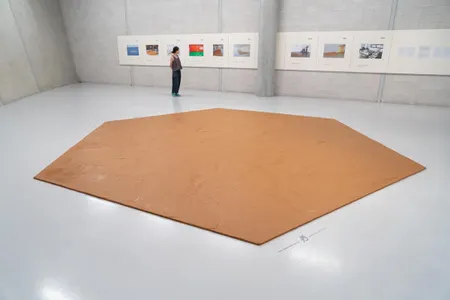
Pindakaasvloer, Wim T. Schippers, 1962. Realized in 2026 at the Depot location of Museum Boijmans Van Beuningen

Why Did This Dutch Museum Cover the Floor With an 800-Pound Installation of Creamy Peanut Butter?

“Pindakaasvloer,” or “peanut butter floor,” highlights the absurd sense of humor that artist Wim T. Schippers captured in his artwork before he died last month
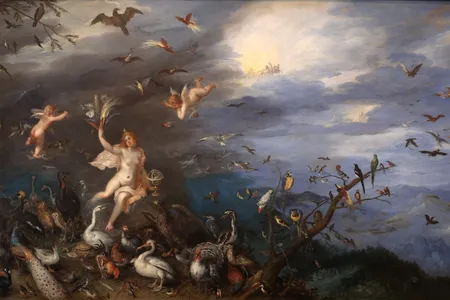
The 1611 oil painting Air

Scientists Just Learned That This Bat Eats Birds Midflight. A Renaissance Painter May Have Known About It Hundreds of Years Ago

Last fall, scientists reported the first known recordings of greater noctule bats hunting and feasting on songbirds during night flights. But a 17th-century artwork by Jan Brueghel the Elder seems to depict the species flying with feathered prey in its mouth
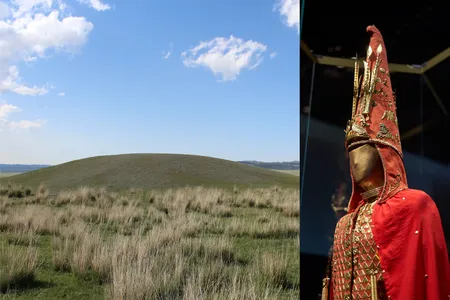
Left: a burial mound in Kazakhstan. Right: the Golden Man's head ornaments.

Kazakhstan’s Iron Age ‘Golden Man’ and Other Elite Scythians of Eurasia Inherited Their High Social Status, Ancient DNA Suggests

Researchers have long wondered whether upper-class members of the ancient nomadic warriors earned their social status through individual achievements or birthright
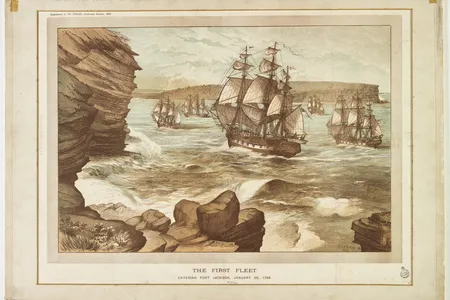
Artist E. Le Bihan created this depiction of the First Fleet entering Sydney Harbor.

Smallpox Scabs That British Doctors Used to Inoculate Patients May Have Introduced the Deadly Disease to Australia, New Research Suggests

Two new studies find that British colonists arriving via ship in the late 18th century likely introduced smallpox, which devastated Aboriginal communities far more than previously known
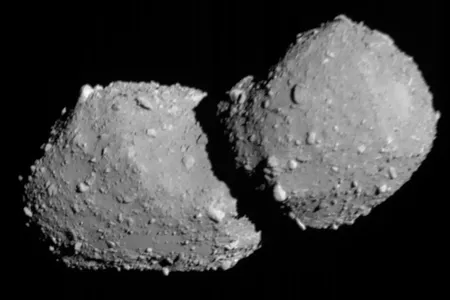
Asteroid Torifune as seen by Hayabusa2 from a little more than half a mile away

New Images Reveal That This Asteroid Is Actually Two Conjoined Space Rocks. They Form a Peanut-Shaped Object Called a ‘Contact Binary’

A flyby conducted by the Japanese spacecraft Hayabusa2 uncovered the asteroid’s strange shape. Data gathered by the probe will also help defend the planet against potentially threatening space rocks
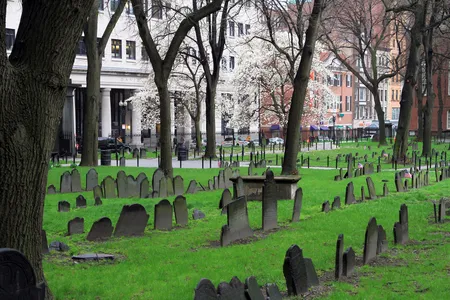
Established in 1660, the Granary Burying Ground is Boston’s third-oldest cemetery. 

Cool Finds

The City of Boston Discovered One of the Oldest Known Gravestones of a Free Black American, Who Shared a Name With the Massachusetts Capital

Also known as Sebastian, he died in 1729 and is buried alongside Samuel Adams, John Hancock and Paul Revere. His life tells a story of slavery and freedom in the North before the American Revolution
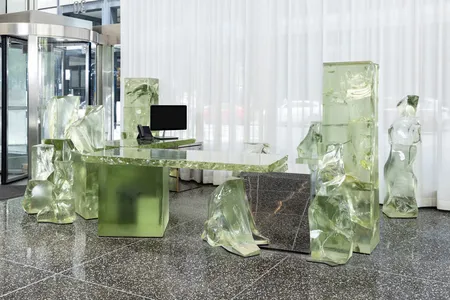
Frank Gehry’s Icehenge desk in the Inland Steel Building in Chicago

‘Like an Explosion in a Glass Factory’: Frank Gehry’s Seven-Ton ‘Icehenge’ Desk That Once Graced a Skyscraper Lobby Is Up for Auction

Designed for the Inland Steel Building in Chicago, the desk is made from more than a dozen blocks of jagged, green-tinted glass
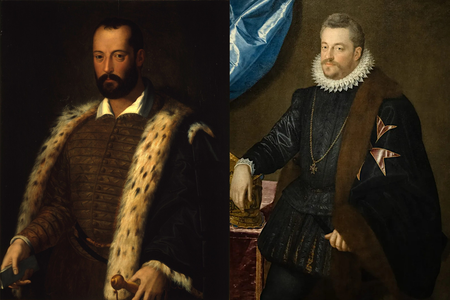
Francesco I de' Medici, left, died suddenly in 1587. His brother Ferdinando I, right, succeeded him as grand duke of Tuscany.

Did This Duke Poison His Brother? A New DNA Analysis May Solve the Centuries-Old Medici Mystery

Researchers found evidence of malaria in Francesco I de’ Medici’s bones, leading them to argue “with scientific certainty” that it was disease, not arsenic, that led to his death in 1587

Scientists analyzed about 25 years' worth of data from the Fram Strait, a passageway where the Arctic and Atlantic oceans meet.

The Arctic Ocean May Have Passed a Crucial Tipping Point That Could Harm Food Webs and Worsen Climate Change

Sea ice loss seems to have triggered a decline in the nutrient nitrate, affecting the tiny organisms that form the foundations of marine food chains and absorb atmospheric carbon dioxide, according to a new study
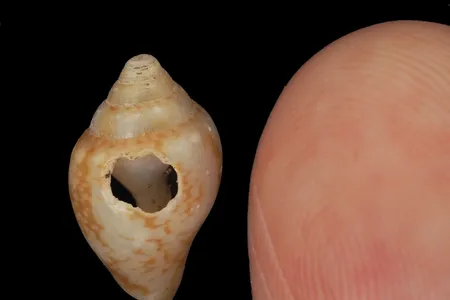
Researchers discovered that Neanderthals and Homo sapiens appeared to collect the same type of snail shell, possibly for ornamental or symbolic purposes.

Our Ancestors Loved Shell Trinkets, Just Like Neanderthals. New Research Suggests It’s a Sign of Shared Culture Across Species

Based on artifacts found in a limestone cave on the Mediterranean coast, scientists think the two species might have shared similar survival strategies, stone tool technologies and symbolic traditions
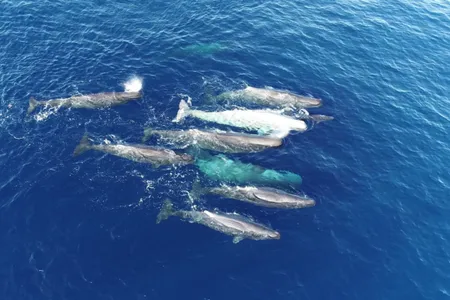
Scientists think sperm whales entered the Mediterranean Sea via the Strait of Gibraltar roughly 20,000 years ago, then began to spread east.

Sperm Whales Living in the Eastern Mediterranean Sea Seem to Have Developed a Distinct Dialect From Those in the West

All Mediterranean sperm whales were thought to be part of one cultural group, identifiable by a unique pattern of clicks, or a coda. But sound recordings suggest that eastern creatures use a sped-up version of the western whales’ coda
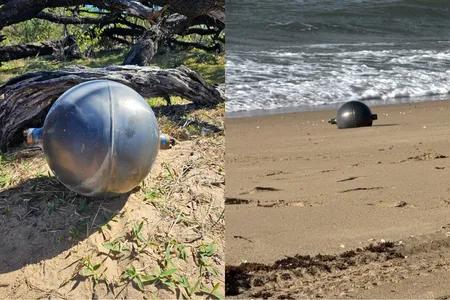
Strange, metallic-looking spheres recently washed ashore in Queensland, Australia.

Strange Spheres Washed Ashore on an Australian Beach. Authorities Say They’re Probably ‘Space Balls’—Empty Fuel Vessels From a Rocket

The shiny objects—each roughly twice the size of a basketball—began to appear on July 3. Authorities initially worried that they were hazardous but have since determined that they’re likely safe bits of space junk
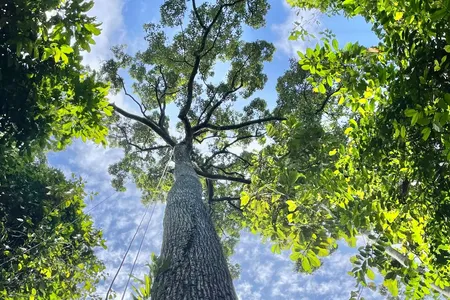
A 187-foot-tall dipterocarp tree

Tall Trees Were Thought to Be More Vulnerable to Drought. But These Towering Plants in Southeast Asia Have Adapted to Move Water Efficiently

A new study found that enormous dipterocarp trees have special adaptations to transport water up to their highest limbs, challenging the assumption that they would more easily succumb to dry conditions
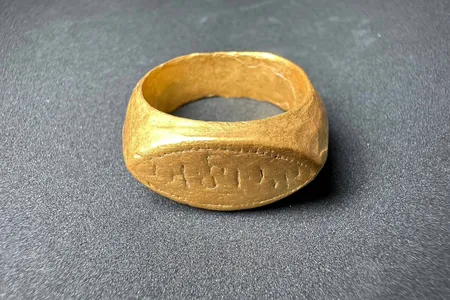
A gold ring unearthed at the Don Yai Thong archaeological site in Thailand is engraved with what experts think is Brahmi, an ancient Indian script. 

A Pair of 2,000-Year-Old Gold Rings, One Engraved With Indian Script, Was Discovered in an Iron Age Burial Ground in Thailand

The engraving seems to reference an “auspicious” zodiac sign in Indian or Vedic astrology

None

This Giant Planet May Have Survived the Death of Its Star. The James Webb Space Telescope Just Found Its Atmosphere

New observations of WD 1856 b, a gas giant closely orbiting a white dwarf, offer a preview of what could happen to Jupiter and Saturn after the sun dies in about five billion years.
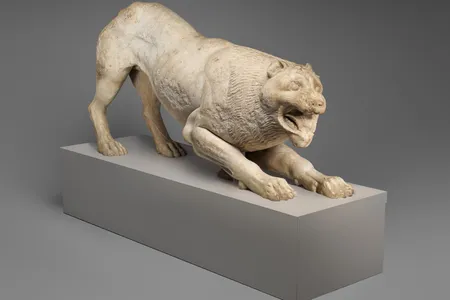
Greek statue of a lion, c. 400-390 B.C.E.

Can You Guess the Origins of Papyrus Fragments or Painted Ceramics? A College Student Turned the Met’s Open-Access Database Into an Online Game

If you consider yourself an art history buff, test your smarts with Anthropeum. The game pulls ten images from the Met’s open-access archive and challenges players to identify each artifact’s time and place of origin
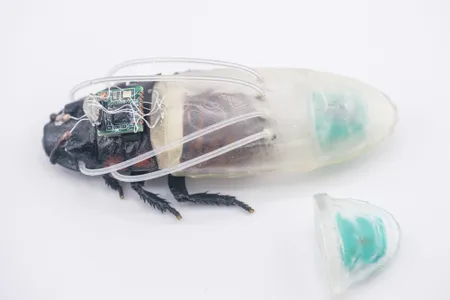
A cyborg cockroach wearing a diving suit, which provides oxygen.

Cyborg Cockroaches Could Help Find Survivors of Natural Disasters. New Diving Suits Allow the Insects to Expand Their Search Underwater

Previously, researchers created electrical implants to control cockroaches’ movements for search-and-rescue missions. Now, they’ve made 3D-printed suits that provide oxygen, allowing the critters to survive submerged for up to three hours
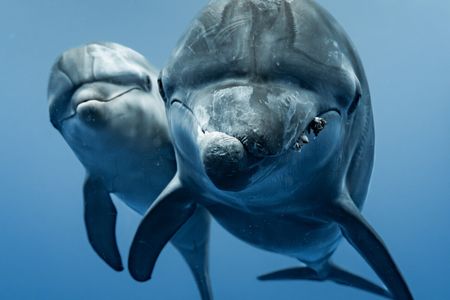
Two dolphins swim up to the camera. The recognized images from this year's Ocean Conservancy Photo Contest all feature animals.

These 11 Wildlife Images From the Ocean Conservancy’s Photography Contest Showcase the Wonder of Earth’s Waters

Seals, penguins and fish are featured in the nonprofit’s annual competition to inspire care for the world’s oceans
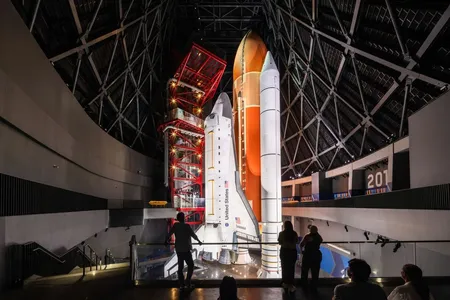
Space Shuttle Endeavour

See the Space Shuttle ‘Endeavour’ in a Unique Vertical Display Before Its New Exhibition Launches at the California Science Center

This November, visitors to the new Samuel Oschin Air and Space Center in Los Angeles will get to see the “ready-to-launch” “Endeavour” complete with rocket boosters and a fuel tank
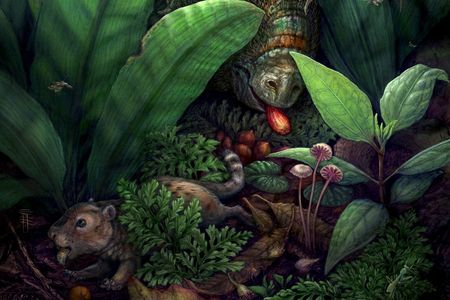
Dinosaurs and other animals might have eaten the fruits of angiosperms during the Late Cretaceous.

Early Flowering Plants May Have Relied on Dinosaurs to Eat Their Fleshy Fruits and Spread Their Seeds

According to fossils preserved by volcanic ash, the plants, known as angiosperms, began producing relatively large, blueberry-size fruits millions of years earlier than previously thought

Page 33 of 1155