
Subscribe to Smithsonian magazine and get a FREE tote.

Articles

Vegas Vic prevails over the Fremont Street Experience in Las Vegas.

How the Desert Town of Las Vegas Became a Hotbed of Magic

Legal gambling and the construction of the Hoover Dam conjured up an entertainment capital that constantly reinvents itself

An American Legion member and Korean War veteran salutes at a Memorial Day service.

Smithsonian Photo Contest Galleries

Celebrate the Nation’s Veterans With These 20 Stirring Photographs of American Military Heroes

Communities nationwide honor retired service members in these images from the Smithsonian magazine photo contest

Giant panda Bao Li eats bamboo in his outdoor habitat on January 4, 2025

How Do Pandas Have Sex While in Human Care? As the National Zoo’s Director Details in Her New Book, It Takes a Village of Dedicated Keepers

Brandie Smith, who leads the Smithsonian’s National Zoo and Conservation Biology Institute, has seen more of pandas’ private lives than most people ever will. With “In the Company of Pandas,” she explores the world of the lovable black-and-white bears
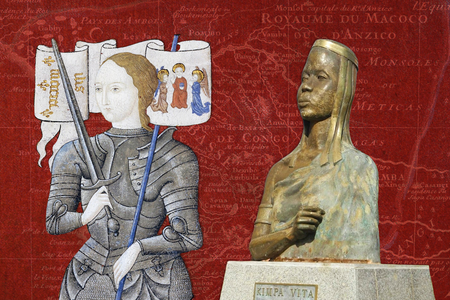
A portrait of Joan of Arc (left) and a statue of Kimpa Vita in Angola (right)

This African Prophet Was Burned at the Stake 320 Years Ago. Today, Kimpa Vita Is Celebrated as the ‘Kongolese Joan of Arc’

Dona Beatriz Kimpa Vita believed herself to be possessed by the spirit of St. Anthony. The movement she led in the early 1700s promoted an Indigenous African form of the Christian faith
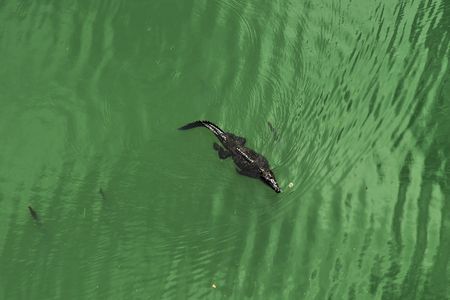
Top view of a crocodile in Gatun Lake, next to the Panama Canal, on March 23, 2015

The Panama Canal Has an Unusual Ecosystem, Flowing From Fresh Water to Salt Water and Serving as a Home to Crocodiles, Manatees and Sea Squirts. New Intruders Pose a Growing Threat to the Waterway

The species that occupy this artificial channel are transforming, thanks to a shifting environment and invading marine creatures. The Smithsonian Tropical Research Institute is tracking what happens next
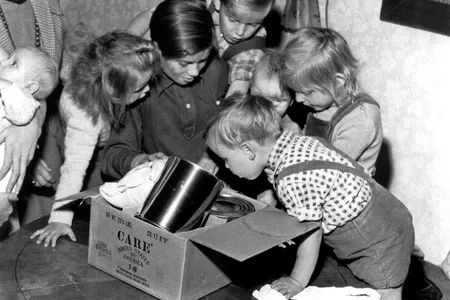
Children of a refugee family from East Germany crowd close to get a better view of the food in a CARE package they received soon after they arrived in West Berlin in 1956

CARE Packages Provided a Lifeline for World War II Survivors. Here’s How the Group Turned Leftover Army Rations Into an 80-Year Legacy

The organization began as the Cooperative for American Remittances to Europe, and it became a way for those in need to receive food, clothing and other necessities. It continues to aid people today

Protesters occupied the Department of Health, Education and Welfare's regional offices in San Francisco for 26 days in 1977.

Women Who Shaped History

The Real Story Behind the 504 Sit-In for Disability Rights, the Longest Peaceful Occupation of a Federal Building in American History

Organizers like Judy Heumann pressured officials to implement the first federal legislation protecting disabled Americans from civil rights violations. “Being Heumann,” a new film by director Siân Heder, dramatizes the 26-day demonstration
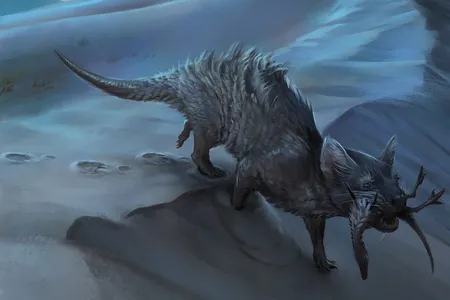
In Cretaceous Brazil, a prehistoric mammal the size of a cougar or a large dog left telltale tracks on sand dunes.

Fossil Footprints in Brazil Hint at a Cougar-Size Mammal That Walked Among Dinosaurs. It’s Another Sign That Some Early Beasts Grew to Impressive Sizes After All

Don’t think of all Mesozoic mammals as meek and tiny—alongside the terrible lizards, some were giants in their own right
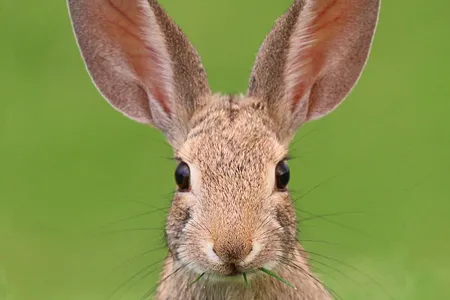
A rabbit chews on blades of grass.
 

Smithsonian Photo Contest Galleries

Hear, Hear to Long Ears: These 15 Furry Photos of Adorable Rabbits and Hares Will Have You Leaping for Leporidae

The images from Smithsonian Magazine Photo Contest show the mammalian species and their twitching noses at their cutest
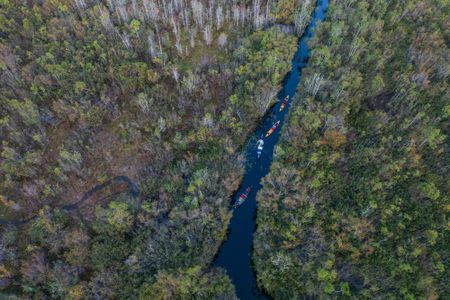
“It’s a national treasure,” says Sara Brown Aicher, a retired U.S. Fish & Wildlife Service biologist who spent 31 years at the refuge. “It is one of the last places like it.”

America’s Newest UNESCO World Heritage Site Is a Swamp—and That’s Exactly Why You Should Go

Georgia’s Okefenokee National Wildlife Refuge is one of the world’s rarest surviving wetland ecosystems. Its new global recognition reveals why protecting this landscape matters far beyond the American South

The four-color theorem is simple to state: Given a contiguous map, is it possible to color each region with one of four colors such that no neighboring regions share a color?

The Four-Color Theorem Has Haunted Mathematicians for Decades. It Just Got a Rare New Proof, but Some Still Long for a Simpler Solution

The famous problem asks whether a map can be filled in with only four colors such that the same color never borders itself. It has been solved with the help of computers, but some experts suggest an elusive, short answer is out there
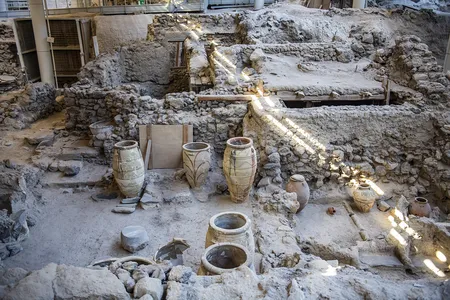
The ruins of Akrotiri, a Bronze Age settlement on what is now the Greek island of Santorini

Greece Has Its Own Pompeii, and the Ruins Tell a Captivating Story of a Sophisticated, Seafaring Bronze Age Society

The Thera volcano, on modern-day Santorini, buried Akrotiri in ash in the 17th or 16th century B.C.E. The eruption was one of the largest in recorded history
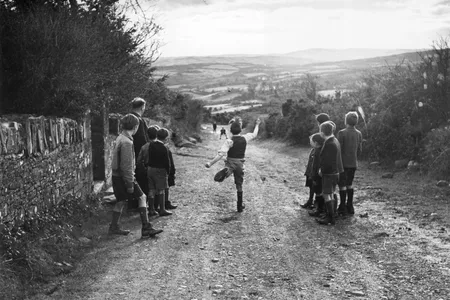
Road bowling is a deeply rooted Irish tradition.

How an Irish Backroad Tradition Is Rolling Into Small-Town America

With roots in County Armagh and County Cork, the sport of road bowling is finding new life stateside, both as a fun pastime and as a way for a group of Americans to honor their heritage

The entrance to "At Home in Space" at the Smithsonian's National Air and Space Museum

What Can Space Offer Humanity? In Pursuit of the Answer, Astronauts Have Been Making a Home in Microgravity for Decades

In a new gallery called “At Home in Space,” the National Air and Space Museum shows how humans have tackled risky and arduous missions to push the boundaries of scientific discovery and exploration
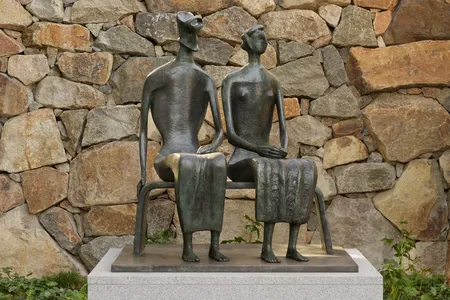
King and Queen, Henry Moore, bronze, 1952-1953

For Over Four Years, the Hirshhorn Worked to Revitalize Its Sculpture Garden. Today, It’s Home to a ‘King and Queen,’ a ‘Wish Tree’ and a 55,000-Pound Vertical Swimming Pool Artwork

Newly refreshed by Japanese artist-architect Hiroshi Sugimoto, the sunken garden welcomes National Mall visitors with bronze masterpieces, contemporary stunners and a stage set for creative performances

The green gas emanating from this small jack-o’-lantern alludes to the spread of Covid-19. Fittingly, the photographer’s subject dons a beaked mask based on the ones worn by physicians treating bubonic plague victims in 17th-century Europe.

Smithsonian Photo Contest Galleries

Treat Yourself to 20 Eerie Images Celebrating Halloween, From Pet Costumes to Mysterious Illusions to Spooky Shadows

These highlights from the Smithsonian Photo Contest are sure to scare up some smiles
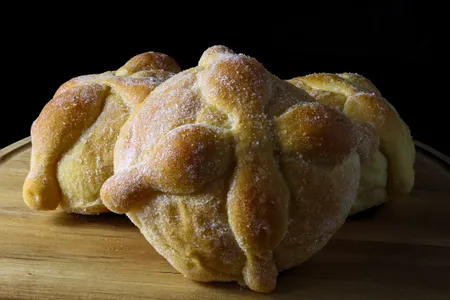
Pan de muerto is an orange-scented sweet bread traditionally prepared and eaten during Día de los Muertos, a Mexican holiday celebrated each year from October 31 to November 2.

Mexico’s Bread of the Dead Kneads Together Indigenous and Catholic Traditions

Pan de Muerto, a Mexican sweet bread eaten for Día de los Muertos, is more than just a festive treat. Its history mirrors the holiday itself, a combination of cultures that breathes life back into the dead
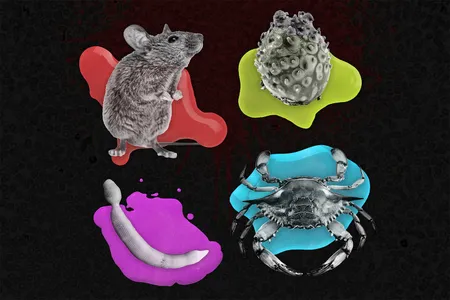
Scientists have made some headway in understanding what lends blood its varied shades.

The Bloody Palette of the Animal Kingdom Goes Far Beyond Red. These Creatures Have Blood That Runs a Chilling Blue, Bright Green or Milky White

The hemoglobin in humans’ blood is not the standard for all critters—and one group of Antarctic fish are the only vertebrates to not have red blood cells at all
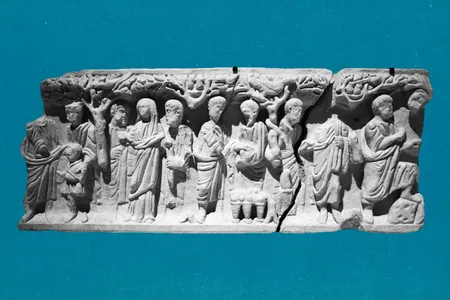
This relief on a fourth-century sarcophagus from Gaul depicts scenes from the Bible, including the famous miracle of Christ multiplying the loaves (center).

A Cult Grew Around the First Emperor of Rome in 27 B.C. A New Book Argues His Followers Might Have Created the Template for Christianity

Augustus was seen as a descendant of the gods who would go on to redefine authority. New research posits that his rule paved the way for Jesus
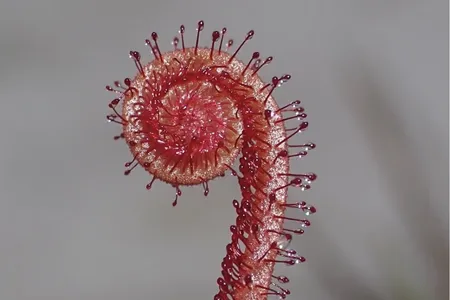
The Florida threadleaf sundew is endemic to just two counties in the state’s Panhandle, where it relies on the sandy margins of sinkhole lakes.

The World’s Newest Carnivorous Plant Is a Red Sundew That ‘Death Hugs’ Its Insect Prey. Its Survival Depends on a Rare and Disappearing Florida Habitat

Confined to hidden sinkhole lakes in the Panhandle, the Florida threadleaf sundew is both a discovery and a warning bell for a vanishing ecosystem that’s long been ignored

Page 1 of 1287