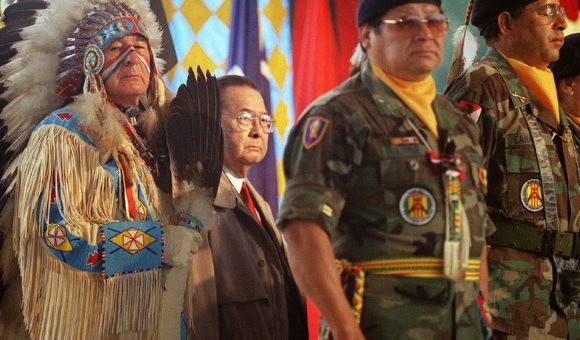
On National Korean War Veterans Armistice Day, Kiowa tribal member Dennis Zotigh pays respect to the veterans who served during the Korean conflict, and especially to the three Kiowa soldiers who gave their lives there. Dennis, whose uncle served in Korea, also shares memories of performing with a Kiowa cultural group in Seoul nearly 20 years ago and his impressions from that trip.
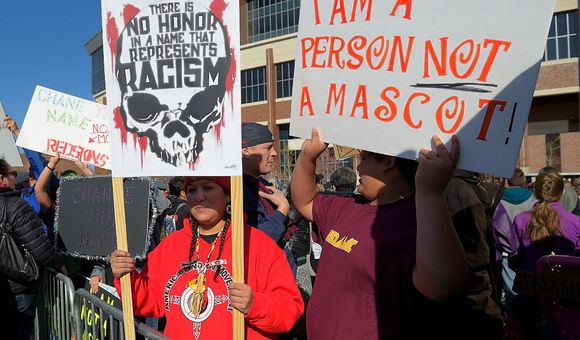
As the country debates racist symbolism in monuments, sports, and commercial brands—and the Washington NFL franchise considers dropping the racial slur from its name—the director and board chair of the National Museum of the American Indian take the stand that the appropriation of Native language and imagery never serves to honor Indigenous people, histories, and cultures. On the contrary, it perpetuates racism and legitimizes racist acts.
“From where we stand now,” this short essay on the Declaration of Independence notes, “after 244 years, the standard of equality, human rights, freedom, and the pursuit of happiness . . . is still an ambition rather than a reality. Nothing about it is guaranteed, despite the public and private struggles that have continued for centuries.” The Declaration’s purpose was a call for radical change. “That call for change was relevant in 1776 and it is no less relevant now as we continue to strive against long-lived preconceptions, prejudices, disparities, and innumerable forms of discrimination and social injustice.”
How do Native Americans observe the Fourth of July? This year, many people’s plans reflect their concerns about the coronavirus pandemic. But the answer has always been as complicated as America’s history