
Subscribe to Smithsonian magazine and get a FREE tote.

Stories from Margherita Bassi
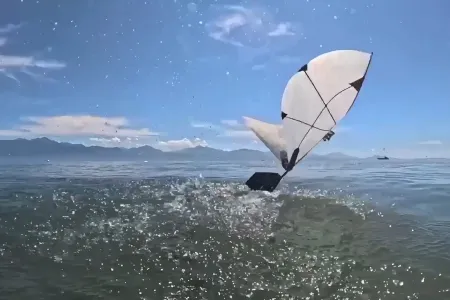
Getting the device to transition between air and water seamlessly was one of the most challenging aspects of the work.

This Robot Can Flap Its Wings to Both Fly and Swim. It Might One Day Help Scientists Study Diving Birds and Survey Ocean Habitats

The bioinspired device, which weighs roughly half a pound and measures around three feet wide, was also modeled after aquatic birds like puffins, gulls and loons
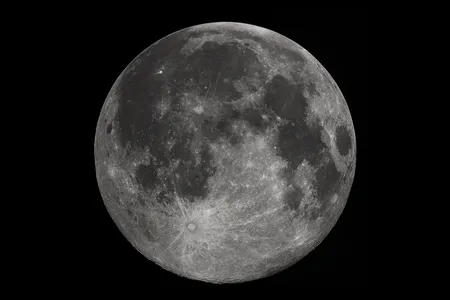
The upper stage of a SpaceX Falcon 9 rocket is estimated to hit the moon on August 5.

A SpaceX Rocket Part Is Expected to Smack Into the Moon in August, Highlighting the Growing Problem of Space Junk

The unintended event also creates an opportunity for scientists and skywatchers to witness lunar impact dynamics in real time, although the debris will hit a sunlit portion of the moon from the perspective of Earth, making it hard to see
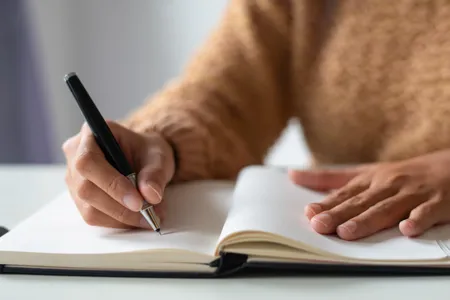
Handedness refers to both hand preference and hand dominance. 

People Aren’t Born as Righties or Lefties—They Develop Hand Dominance With Practice, a New Study Suggests

Humans do have a biological preference for using one side of their body, which might prime them for using limbs on that side for complex motor tasks like writing—and honing those skills over time
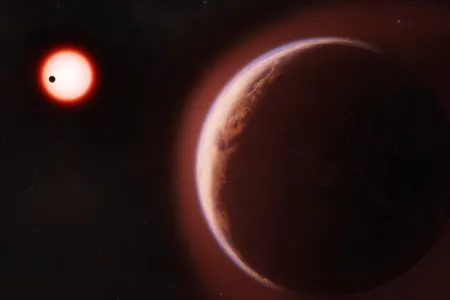
An artistic rendering of LHS 1140 b and its host star, with another smaller exoplanet orbiting nearby.

Could Life Exist on This Nearby World? In a First, Astronomers Find an Atmosphere on an Earth-Like Exoplanet in the Habitable Zone

While the celestial body seems to host three features that could make a livable environment—an atmosphere, a rocky composition and a temperature that could allow liquid water to sit on the surface—researchers have not currently detected any residents
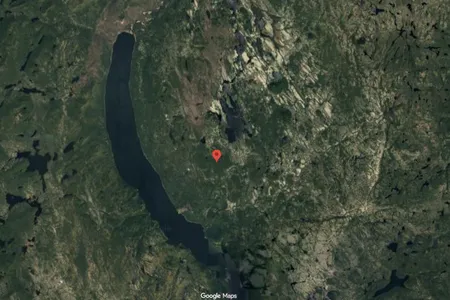
An amateur astronomer thought he found an impact crater on Google Maps. Then, an expedition to the site confirmed that he was right.

An Amateur Astronomer Using Google Maps Spotted a Strange Indentation. It Turned Out to Be a Meteorite Crater From 390 Million Years Ago

Scientists confirmed the astronomer’s suspicions with an expedition to the site in Quebec. The discovery offers a rare case of a reported new crater turning out to be real

Cats lick each other in different contexts, and they're not all friendly.

When a Cat Licks Another Cat, It’s Not Always a Friendly Gesture. New Study Reveals They May Just Want Their Own Space

Classic feline behavior could be a passive-aggressive maneuver to get what they want

Two new studies suggest that smartphones are partially to blame for declining birth rates.

Smartphones Might Be Playing a Role in the United States’ Declining Birth Rate, New Research Suggests

Some economists suspect that the technology’s widespread adoption has reduced in-person interactions and increased access to pornography and information on birth control, leading to less unprotected sex
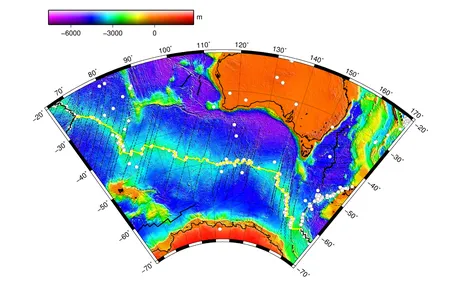
Researchers observed seafloor movement at the Southeast Indian Ridge, denoted by the yellow line.

In a First, Scientists Witness the Seafloor Spread in Real Time, Giving Them a Rare Glimpse at a Mysterious Geologic Process

Across a matter of days in 2024, the seafloor in part of the Indian Ocean dropped by about 13 feet, and roughly 5.7 billion cubic feet of molten rock rose to the crust’s surface, according to a new study
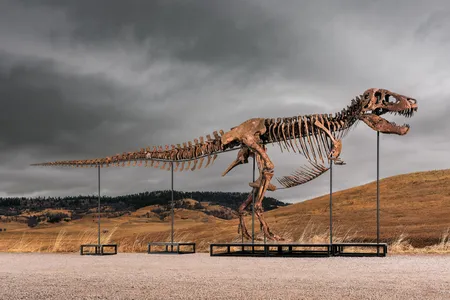
Sotheby's is auctioning one of the largest and most complete T. rex skeletons ever found.

This T. Rex Fossil Could Fetch the Largest Sum of Any Dinosaur Ever Auctioned. Scientists Worry They’ll Lose the Chance to Study It

Bids on “Gus” will start at $19 million, a steep price for public institutions. Specimens in private collections can be harder for researchers to examine, and they’re practically impossible to include in studies in top-tier scientific journals
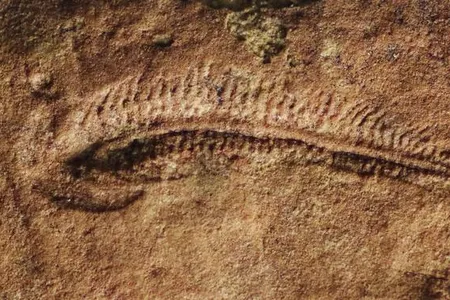
About two-thirds of the analyzed fossils were bent left, which means that the animals were curved right when they were alive.

Meet the Earliest Known ‘Right-Handed’ Animal, a Worm-Like Creature That Lived About 550 Million Years Ago

During the Ediacaran period, the critter wriggled around on the ocean floor of what’s now South Australia and preferred to turn right, a fossil analysis suggests
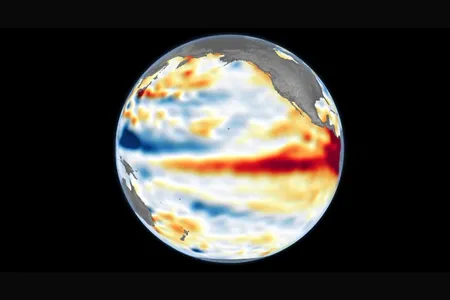
Earth is currently experiencing an occurrence of the El Niño climate pattern.

Could We Mitigate Super El Niños by Artificially Changing the Climate? A New Study Indicates Yes

Researchers used computer models to see what would have happened had scientists caused marine cloud brightening in the face of strong past El Niños
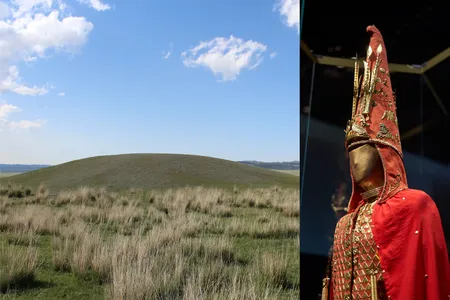
Left: a burial mound in Kazakhstan. Right: the Golden Man's head ornaments.

Kazakhstan’s Iron Age ‘Golden Man’ and Other Elite Scythians of Eurasia Inherited Their High Social Status, Ancient DNA Suggests

Researchers have long wondered whether upper-class members of the ancient nomadic warriors earned their social status through individual achievements or birthright
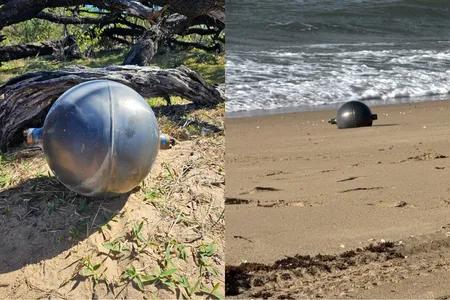
Strange, metallic-looking spheres recently washed ashore in Queensland, Australia.

Strange Spheres Washed Ashore on an Australian Beach. Authorities Say They’re Probably ‘Space Balls’—Empty Fuel Vessels From a Rocket

The shiny objects—each roughly twice the size of a basketball—began to appear on July 3. Authorities initially worried that they were hazardous but have since determined that they’re likely safe bits of space junk
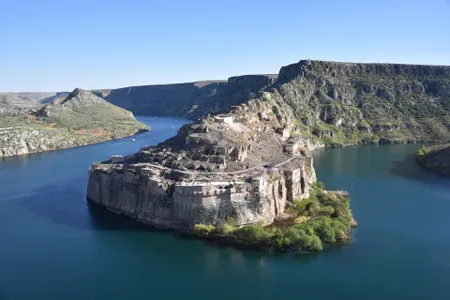
The Rumkale fortress ruins sit on the banks of the Euphrates River in Turkey.

Scientists May Have Discovered the Origins of the Euphrates River, Which Helped Nurture Some of the Earliest Known Civilizations

The famous waterway began as two rivers, a new study suggests. Tectonic activity around five million years ago probably made them change course and merge, helping to birth the Fertile Crescent
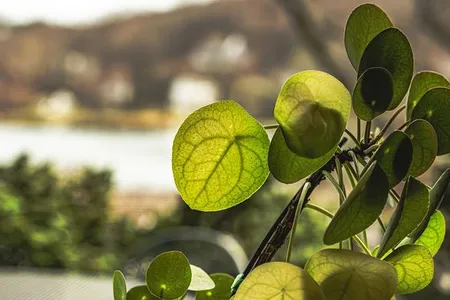
Chinese money plant

Researchers Find a Mathematical Pattern Used in City Planning Hidden in the Leaves of a Common Houseplant

The major veins of Chinese money plant leaves form what’s called a Voronoi diagram. It might be caused by a plant-growth hormone that emanates in waves from developing leaves’ pores
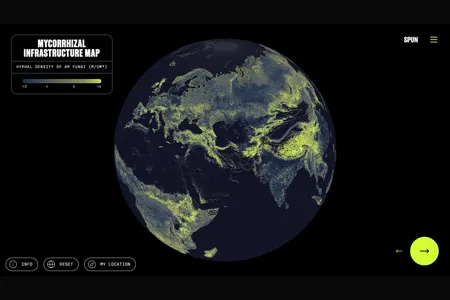
Researchers created a map of arbuscular mycorrhizal fungal networks across Earth's topsoil.

Nearly All Plants Depend on Tiny Underground Fungi. The Microbes’ Vast Global Networks Were Just Mapped for the First Time

If lined up end to end, the thin, tubular threads that make up the arbuscular mycorrhizal fungal networks in Earth’s topsoil could stretch between our planet and the sun almost one billion times
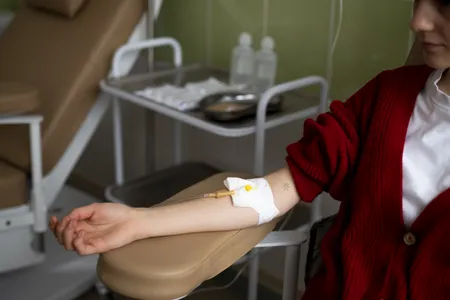
About two-thirds of patients ages 40 and older with a common form of breast cancer might be able to forego chemotherapy—usually delivered intravenously—as part of their treatment plans.

This ‘Practice-Changing’ Gene Test Could Tell Doctors Which Patients With Breast Cancer Can Skip Chemo, Clinical Trial Suggests

Chemotherapy comes with debilitating side effects, including brain fog, nausea and nerve damage. New research suggests that many people with a common type of breast cancer need just radiation and hormone therapy to prevent recurrence
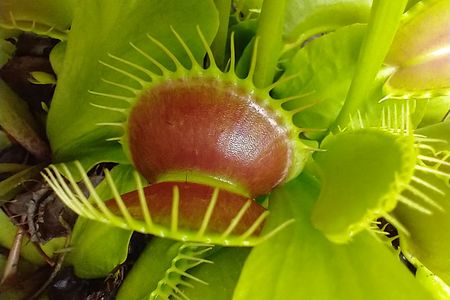
Venus flytraps and other carnivorous plants have long intrigued scientists, including English naturalist Charles Darwin.

Venus Flytraps Snap Their Traps Shut in Less Than a Second. Scientists Say They’ve Discovered How the Predatory Plants Are So Fast

The walls of cells in the leaves’ outer layer suddenly soften, allowing the structures to hinge into a closed position, according to a new study

How teenage participants moved on a schoolground in Spain. 

Researchers Accidentally Discover That Humans Prefer to Turn Counterclockwise. But They Still Have No Idea Why

The effect transcends factors like culture, gender and handedness, causing the scientists, who were initially studying social distancing behavior, to scratch their heads

A team of researchers put out information about a fake disease, and A.I.-powered chatbots fell for it.

Scientists Invented a Disease to Test Whether A.I. Knew It Was Fake. Then, Chatbots Started Saying It Was Real

The eye condition bixonimania doesn’t exist, but neither bots nor some researchers caught that the content was fabricated—despite obvious clues

Page 5 of 27