
Subscribe to Smithsonian magazine and get a FREE tote.

Stories from Margherita Bassi
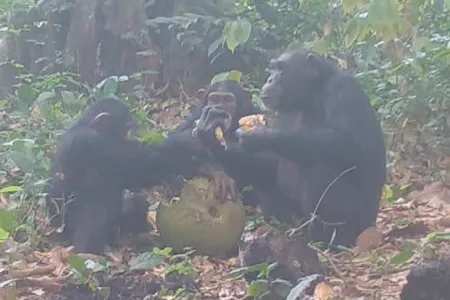
For the first time known to scientists, a team has documented chimps sharing alcoholic fruit.

Watch Wild Chimpanzees Share Alcoholic Fruit, a Behavior Just Captured on Video for the First Time

Though the reason behind this action is unclear, researchers suggest socially consuming alcohol may have offered evolutionary benefits to a common ancestor of both humans and chimps
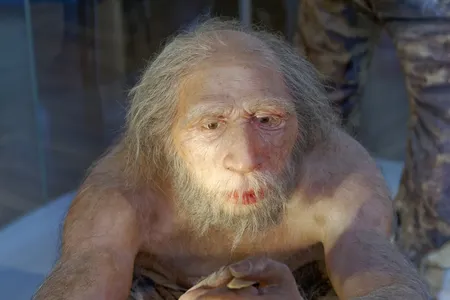
A reconstruction of a Neanderthal man in the Natural History Museum, Vienna. A new study suggests Neanderthals could not adapt to a period of increased radiation as well as early modern humans did.

Sunscreen, Clothing and Caves May Have Given Modern Humans an Edge Over Neanderthals When Earth’s Magnetic Field Wandered

A new study suggests the extinction of Neanderthals nearly coincided with a shift in Earth’s magnetic field that let more radiation reach the ground. Our species might have adapted more easily

The winning humanoid, called Tiangong Ultra, races alongside human runners. It completed a half-marathon in about 2 hours and 40 minutes.

Humanoid Robots Just Raced Alongside Human Runners in a World-First Half-Marathon. Here’s How It Went

The race, held in China on Saturday, showcases the country’s advancements in humanoid technology. Still, only 6 of the 21 robot contestants made it across the finish line
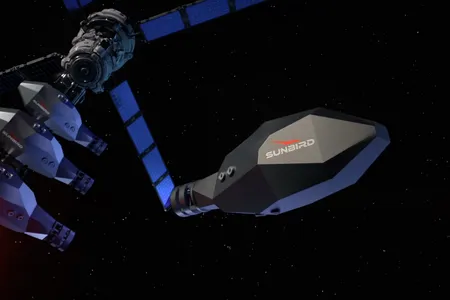
A rendering of a Sunbird rocket detaching from its station to dock onto an approaching spacecraft.

Fusion Rockets Could Theoretically Cut Our Travel Time to Mars in Half. This U.K. Startup Wants to Give It a Try

The company’s ambitious new Sunbird design aims to harness nuclear fusion in space, despite the fact that commercializing such energy on Earth remains a faraway dream
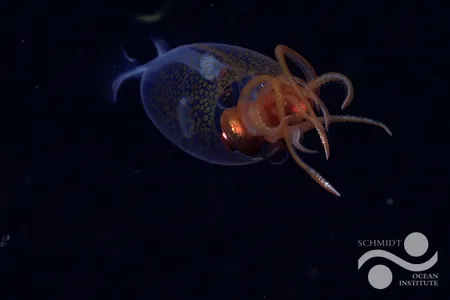
Researchers recently captured the first-ever confirmed video of the colossal squid in its natural habitat.

Check Out the First Confirmed Footage of the Colossal Squid, a Rare and Enigmatic Deep-Sea Species

Most of what we know about the elusive creature comes from research on its remains found in whale stomachs, but scientists just filmed a one-foot-long juvenile in the South Atlantic Ocean

Matteo Paz with Caltech President Thomas F. Rosenbaum after winning the Regeneron Science Talent Search award.

High School Student Discovers 1.5 Million Potential New Astronomical Objects by Developing an A.I. Algorithm

The 18-year-old won $250,000 for training a machine learning model to analyze understudied data from NASA’s retired NEOWISE telescope
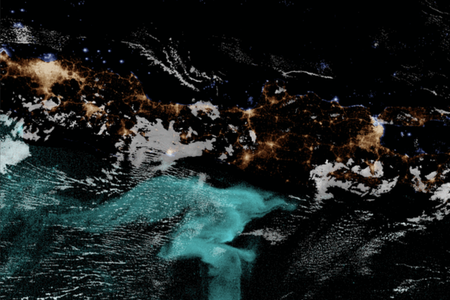
Glowing "milky seas," seen here from a satellite, have confused and captivated sailors for centuries.

Glowing ‘Milky Seas’ Have Baffled Sailors for Centuries—New Research Brings Scientists One Step Closer to Solving the Mystery

Historical accounts of vast ocean waters glowing in the dark go back hundreds of years, and researchers are still trying to determine exactly what triggers the phenomenon
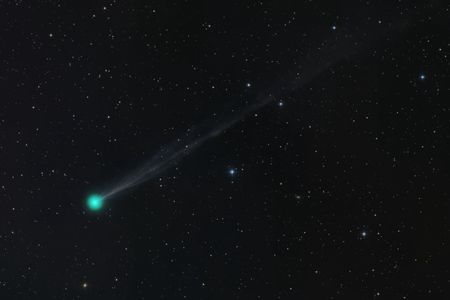
Comet C/2025 F2 (SWAN) captured from California. 

A Newly Discovered and Brilliantly Green Comet Is Dazzling Astronomers. Here’s What to Know About the Glowing Celestial Visitor

Initial observations suggest the comet, called C/2025 F2 (SWAN), will continue getting brighter as it approaches the sun. Northern Hemisphere viewers with binoculars can currently spot it in early morning skies
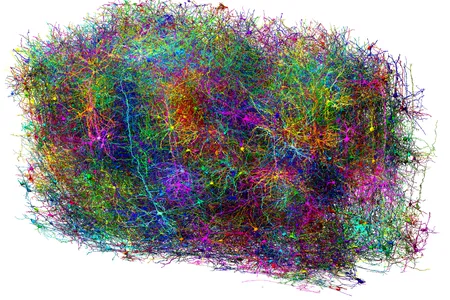
A subset of more than 1,000 neurons, representing just a snapshot of the complexity mapped within a cubic millimeter of mouse brain tissue

In a World First, Researchers Mapped Part of a Mouse’s Brain in Incredible Detail. It’s a Leap Forward for Neuroscience

The 3D brain map includes more than 200,000 cells, 523 million synapses and over two miles of axons, representing the most detailed wiring diagram of a piece of mammal brain ever constructed

An artistic rendering of the moment when the first white dwarf explodes and spews material at the second white dwarf, which itself is about to explode. 

Astronomers Discover a Rare White Dwarf Pair Doomed to Explode in a Brilliant Supernova

The event will be ten times brighter than our Moon in the night sky, but never fear, it won’t happen for another 23 billion years
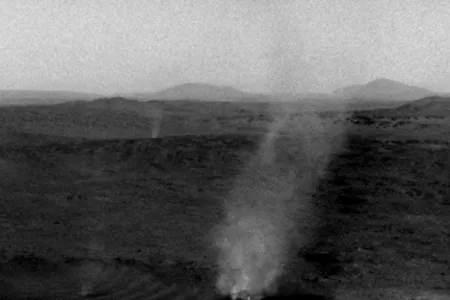
NASA’s Perseverance Mars rover spotted a large dust devil (on the right) consuming a smaller, fainter twister (on the left in the foreground).

Watch a Spinning Martian Dust Devil ‘Consume’ Another in a New Video Captured by NASA’s Perseverance Rover

Tracking dust devils helps researchers learn more about Mars’ atmosphere, wind and weather conditions
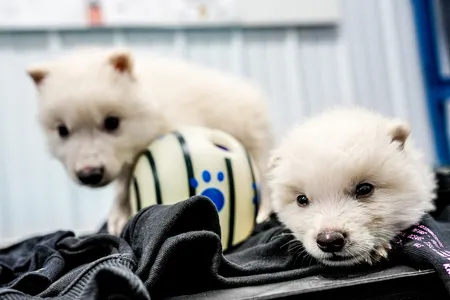
Romulus and Remus, pups that the company Colossal Biosciences says are the first dire wolves to roam the planet in several thousand years, are seen at one month old.

Have Dire Wolves, Which Went Extinct More Than 10,000 Years Ago, Really Been Brought Back to Life?

Pioneers in the science of “de-extinction,” an American company has announced the births of three pups whose genes resemble those of a species that hasn’t roamed Earth for millennia
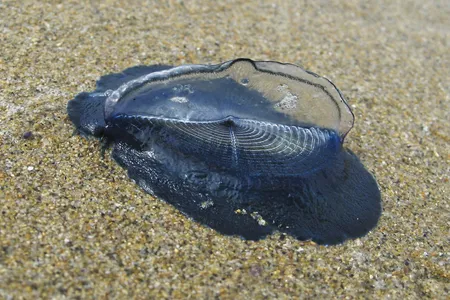
Also known as by-the-wind sailors, the free-floating Velella velella are coating California beaches once again.

Odd-Looking Blue Creatures Are Washing Up in Large Groups on California’s Beaches Once Again

Strandings of these jellyfish-like animals, sometimes called “by-the-wind sailors,” usually mean spring is coming
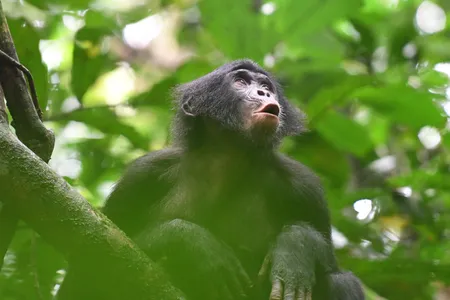
A young bonobo female responds to group members.

There Might Be Something Human in the Way Bonobos Communicate—Their Calls Share a Key Trait With Our Language, Study Suggests

Researchers attempted to decode bonobo calls by recording their social context, then analyzed how the primates string together these vocalizations
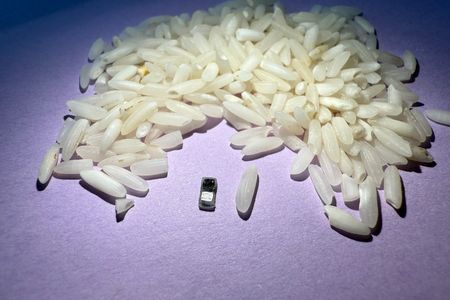
A new, temporary pacemaker is smaller than a grain of rice.

Researchers Develop the World’s Smallest Pacemaker, and It Could Be Revolutionary for Newborn Babies With Heart Defects

The new device is smaller than a grain of rice and gets absorbed by the patient’s body when it’s no longer needed, eliminating the risks of an extraction surgery
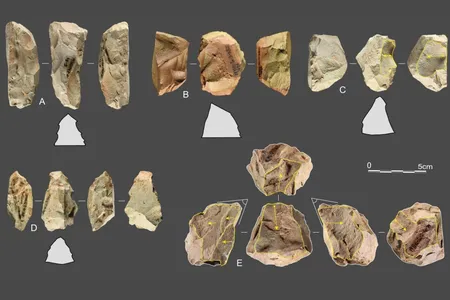
The Quina technology discovered in East Asia was a set of stone tools for making other tools. Prehistoric sites in Europe that host similar tools are associated with Neanderthals.

Stone Tools Discovered in China Resemble Neanderthal Technology Used in Europe, Creating a Middle Stone Age Mystery

Archaeologists previously assumed that East Asia did not see considerable tool development during the Middle Paleolithic, but new findings might change that widely held idea
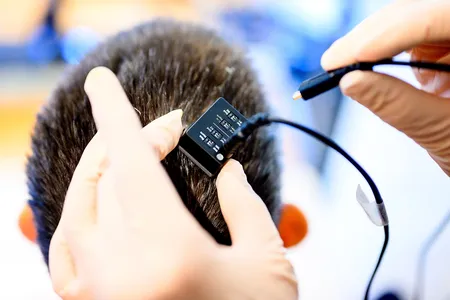
Researchers connect stroke survivor Ann Johnson's brain implant to the experimental computer, which will allow her to speak by thinking words.

Enhanced Brain Implant Translates Stroke Survivor’s Thoughts Into Nearly Instant Speech Using Artificial Intelligence

The system harnesses technology similar to that of devices like Alexa and Siri, according to the researchers, and improves on a previous model

The Myanmar Fire Services Department conducts emergency search and rescue operations after the March 28 earthquake.

Death Toll Passes 2,000 After Magnitude 7.7 Earthquake Hits Myanmar, Among the Most Powerful Quakes in the Region Since 1900

The natural disaster compounds humanitarian concerns in a country already in the throes of a devastating civil war
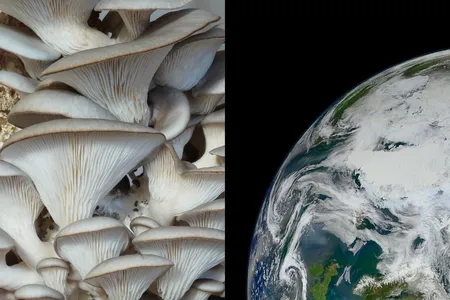
For the first time, the "Mission MushVroom" experiment on SpaceX's Fram2 mission will attempt to grow mushrooms in space.

SpaceX Astronauts Will Try Growing the First Mushrooms in Space on Upcoming Fram2 Mission Over Earth’s Poles

Described as the “perfect space crop,” the nutritious and ready-to-eat fungus could be a key stepping stone toward fueling crew members during long-term spaceflight
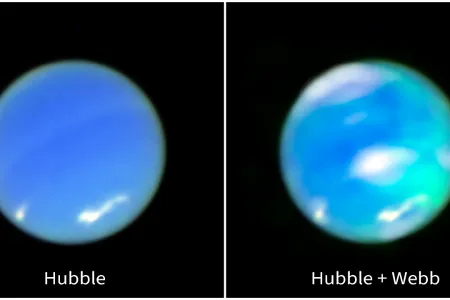
At the left, an enhanced-color image of Neptune from NASA’s Hubble Space Telescope. At the right, that image is combined with data from NASA’s James Webb Space Telescope to show auroras, represented by cyan coloring.

Check Out Neptune’s Beautiful Auroras, Captured for the First Time by the James Webb Space Telescope

Scientists suspected the ice giant hosted auroras—and had already observed them on Jupiter, Saturn and Uranus. But an observation of Neptune’s lights remained elusive for decades

Page 18 of 27