Subscribe to Smithsonian magazine and get a FREE tote.

NASA

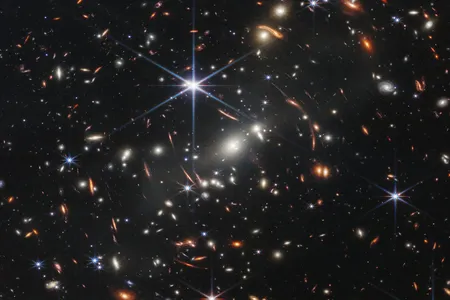
The James Webb Space Telescope's first Deep Field image

NASA Releases First Breathtaking Images Taken by James Webb Space Telescope

The five pictures from the most powerful space observatory ever launched offer a deep look back in time and the promise of stellar things to come
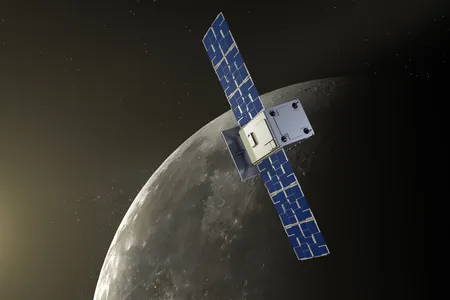
CAPSTONE is currently in low-Earth orbit and will take about four months to reach lunar orbit. (Pictured: An illustration of CAPSTONE)

The Revolution in Moon Exploration

NASA Launches CubeSat to Orbit the Moon

The CAPSTONE mission will help the agency plan upcoming lunar missions
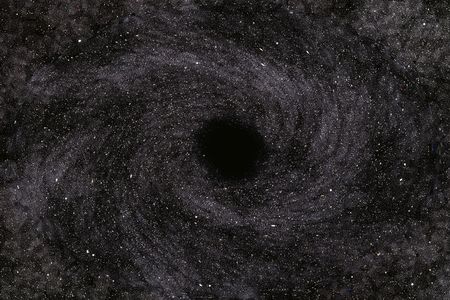
An digital illustration of a black hole in space

Hubble Space Telescope May Have Spotted a Moving Black Hole

Two teams analyzed data from NASA’s telescope and found a compact object, which may be either a black hole or a neutron star
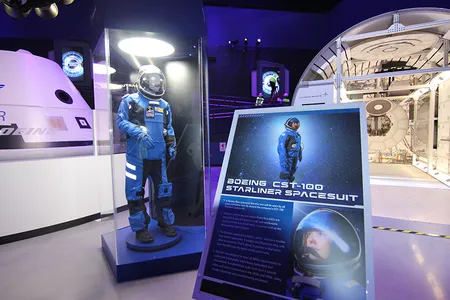
Boeing's Ascent/Entry Suit (AES) design was drawn up by ILC Dover, an engineering development and manufacturing company based in Delaware.

Boeing Reveals New Space Suit Design for Starliner Missions

The snazzy outfit, unveiled at the Kennedy Space Center, is expected to be worn by astronauts starting in 2023
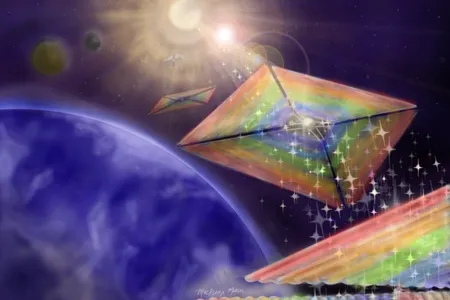
Like a regular sail uses wind to navigate across an ocean, solar sails use the pressure exerted by sunlight to move through space. (Pictured: a conceptual illustration of a diffractive solar sail)

Innovation for Good: Game Changers

NASA’s New Solar Sail Could Soon Navigate in Space

Scientists say the flashy tech could help them study the sun’s polar regions
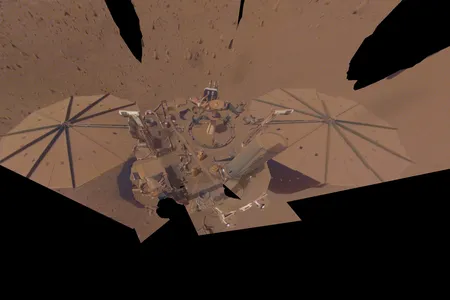
InSight's final selfie, taken in April 2022.

Trending Today

Dusty InSight Mars Lander Takes Its Final Selfie

The Red Planet probe will likely stop operating sometime later this year

A 2015 expedition found two species of sharks living in the hot, acidic water near Kavachi, thus earning it the nickname "Sharkcano."

Trending Today

NASA Snaps Photos of Underwater ‘Sharkcano’ Erupting

Kavachi, a submarine volcano in the southwest Pacific Ocean, is home to several species of sharks and fish that can withstand the extreme environment
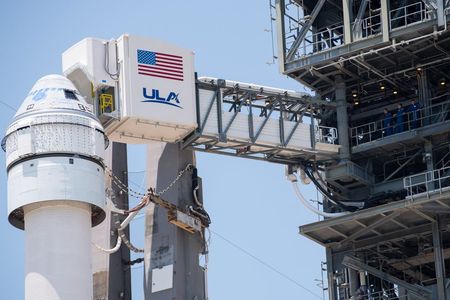
Boeing's Starliner as it prepared for launch at Cape Canaveral Space Force Station in Florida last week.

Boeing’s Starliner Reaches the International Space Station

After two and a half years of issues, the spacecraft’s successful arrival is an important next step in NASA’s commercial crew program
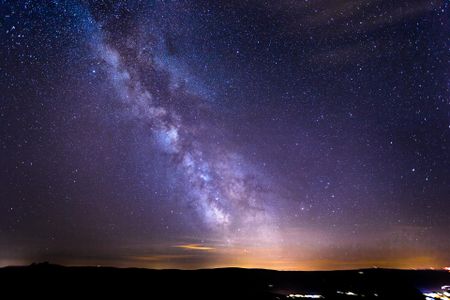
Scientists want to open a dialogue with intelligent extraterrestrial beings in the Milky Way.

Art Meets Science

Why NASA Scientists Want to Send Nudes to Space

The naked truth: It’s a plan to make contact with intelligent life forms in the Milky Way
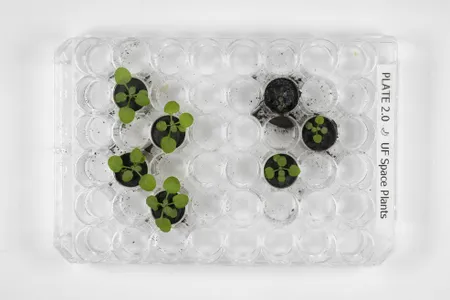
The plants in lunar soil were compared to a control group of plants grown in volcanic ash and a lunar soil simulant known as JSC-1A. The lunar samples on the right do not appear as developed as the control samples grown in volcanic ash on the left.

Innovation for Good: Game Changers

Scientists Prove That Plants Can Grow in Soil From the Moon

The experiment is a milestone in the path to helping humans one day experience extended stays on the lunar surface
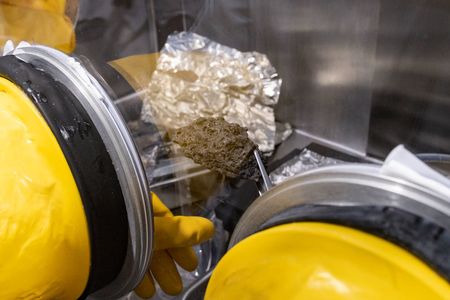
Each sample in the redesigned facility is handled with gloves in a sealed, nitrogen-free box and stored inside a walk-in freezer kept at minus 20 degrees Celsius.

Fifty Years Later, Researchers Unbox Samples From Apollo 17

The lunar surface material was kept in a freezer at NASA’s Johnson Space Center since December 1972
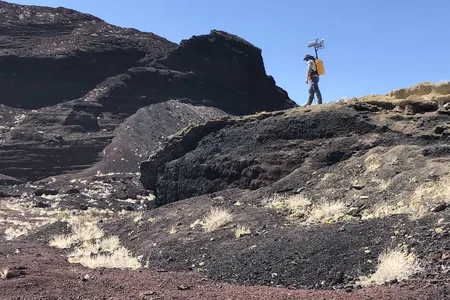
Reseachers tested out the backpack dubbed KNaCK in a volcanic field in New Mexico, and are hoping the tech can support astronaunts on future lunar missions.

Innovation for Good: Game Changers

Lunar Backpack Could Aid Astronauts on Future Missions to the Moon

The pack can create 3-D maps in real-time of uncharted terrain
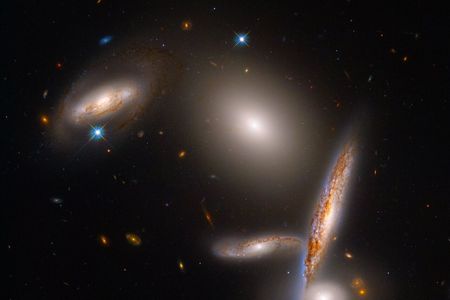
The Hickson Compact Group 40 features five galaxies caught in a gravitational dance.

Hubble Space Telescope’s 32nd Anniversary Photo Features Dramatic Galaxy Cluster

The five galaxies, dubbed the Hickson Compact Group 40, will merge in roughly a billion years
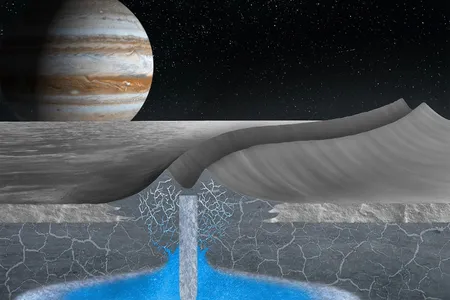
Europa became an interest to researchers as a place that potentially could harbor life after observations from Earth-bound telescopes and space probes found evidence of an ocean 10 to 15 miles beneath the icy surface. This drawing illustrates a possible water pocket within the ice that may contribute to ridges forming on the moon's surface.

Europa’s Icy Shell May Be Habitable for Life

The moon of Jupiter could have shallow water pockets within its frozen surface
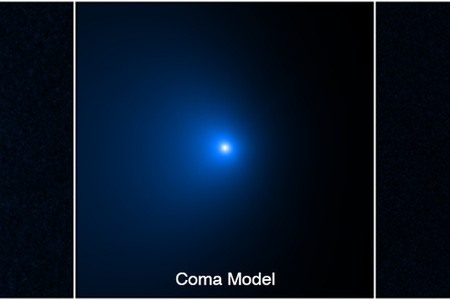
The research team confirmed the comet's size with photos taken by Hubble Space Telescope in January 2022. The comet's nucleus is seen as a bright dot of light in the photos. With the computer model, the team removed the hazy glow of the coma to leave behind the bright star-like nucleus.

Hubble Space Telescope Spots Largest Comet Ever Discovered

The icy object is larger than the state of Rhode Island and weighs an estimated 500 trillion tons
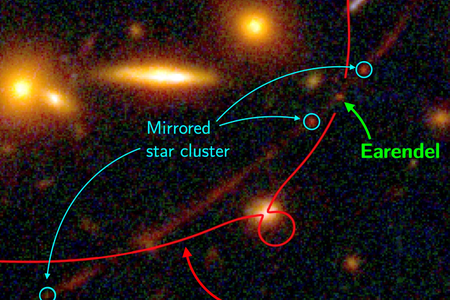
The Hubble Space Telescope detected Earendel after homing in on a magnified streak of light boosted by a nearby galaxy.

Hubble Telescope Spots the Most Distant Star Ever Detected in Outer Space

The star, nicknamed Earendel, is 28 billion light-years from Earth
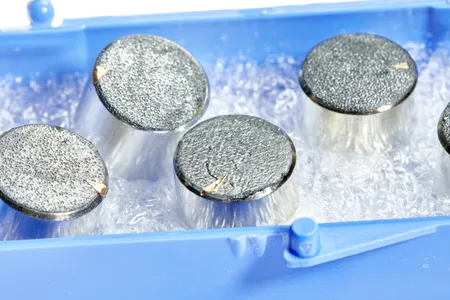
The lunar dust collected by Neil Armstrong as part of the 1969 Apollo 11 mission in will be auctioned off with a number of space-related items, and is expected to fetch between $800,000 and $1.2 million at auction

Trending Today

Apollo 11 Moon Dust Samples Go Up for Auction Against NASA’s Wishes

Auction house Bonhams is expecting around $1 million
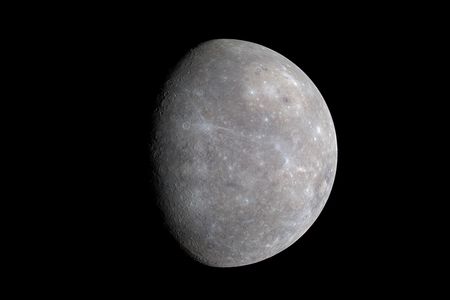
Researchers turned to Mercury for the possibility of impact-born diamonds because previous surveys of the planet and molten rock found that the surface may have fragments of graphite, a carbon-rich mineral.

Mercury’s Cratered Crust May Hold Glittering Gemstones

Fragments of a graphite shell from the planet’s past and a series of violent meteorite impacts may have combined to form sparkling diamonds
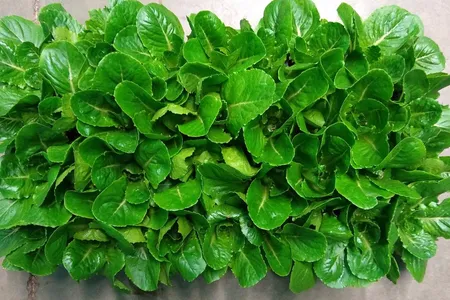
Researchers chose to focus on lettuce because the plant has been grown numerous times aboard the International Space Station and would provide a way for astronauts to eat fresh greens besides only canned and freeze-dried foods.
 

Innovation for Good: Game Changers

Genetically Modified Lettuce May One Day Help Space Travelers Fight Bone Loss

The vegetable could provide fresh leafy greens to astronauts’ diet while providing a new way to transport and consume medications in the cosmos
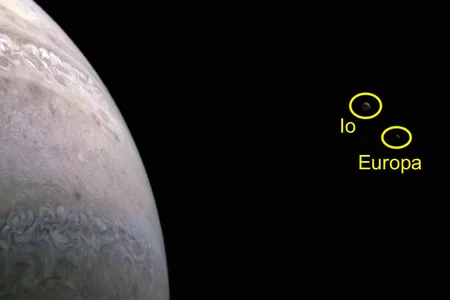
The moons appear as two blurry dots located close together in the upper right area of the image. Io, seen as a darker speck on the left of the two dots, is the most volcanically active world in the solar system. Europa is seen on the right and features a global ocean beneath its icy surface. 

Citizen Scientist Captures Glimpse of Jupiter’s Moons, Io and Europa, Using Juno Space Probe Data

The natural satellites are seen in the distant background of the gas giant’s portrait

Page 20 of 49