
Which Memes Deserve Digital Preservation? See the Online Videos the British Film Institute Selected for a New Archive
Viral videos, tutorials, vlogs and livestream snippets produced across decades offer insight into modern culture and communication, archivists say. This material could be lost without efforts to save it
/https://tf-cmsv2-smithsonianmag-media.s3.amazonaws.com/accounts/headshot/ChristianThorsberg_Headshot.png)
/https://tf-cmsv2-smithsonianmag-media.s3.amazonaws.com/filer_public/49/cf/49cfd537-e726-4b60-a2f5-99e34658c83c/charlie-bit-my-finger-2007-biting-finger.jpg)
More than 400 online videos spanning 30 years of internet memedom and virality have been enshrined by the United Kingdom’s highest authority on cinema as culturally significant pieces of digital life in a new archival collection.
Curated by the British Film Institute—whose library of thousands of films and documentaries are otherwise geared largely toward cinephiles and historians—the new collection is meant to preserve memorable pieces of ubiquitously shared media for future generations. From grainy clips that took early forums and chatrooms by storm to the TikToks and Twitch streams popular today, the expanded archive represents a new type of archaeological research, its keepers say.
“The videos have this almost scary ability to document so much of modern life,” Will Swinburne, a curator at the British Film Institute, tells the New York Times’ Leo Sands. “If you imagine losing that, you would lose access to what life was like at this time and how people were expressing themselves.”

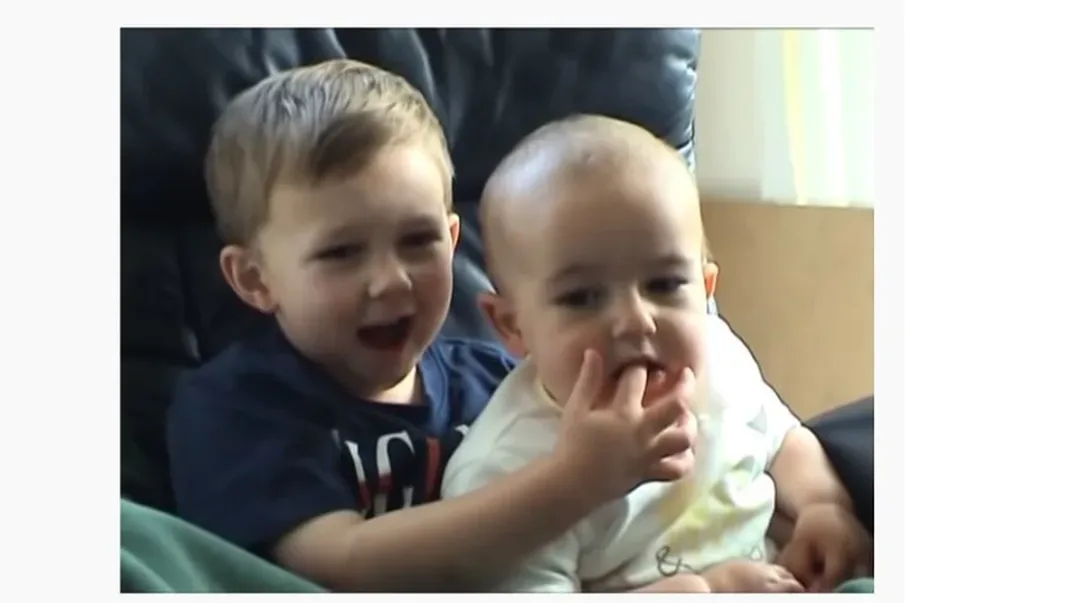
Though all the chosen videos were made by British creators, many reached global audiences. Perhaps most famous of them all is the YouTube video known as “Charlie Bit My Finger,” which has been viewed 888 million times since it was uploaded in 2007. The 55-second clip features a toddler sticking his finger in his younger brother’s mouth and learning the hard way how unpredictable babies can be. As further testament to its longevity and resonance, the video sold in 2021 as a non-fungible token (NFT) for $761,000, leading many to worry that the original would be removed from YouTube.
“After the auction we connected with the buyer who ended up deciding to keep the video on YouTube,” Howard Davies-Carr, the father of the two boys in the video, told NPR’s Emma Bowman in 2021. “The buyer felt that the video is an important part of popular culture and shouldn’t be taken down. It will now live on YouTube for the masses to continue enjoying as well as memorialized as an NFT on the blockchain.”

Joining “Charlie” is the 2003 animation “Badgers,” a nonsensical looping music video with three simple lyrics: “badger,” “mushroom” and “snake.” Created before the advent of YouTube, the video circulated exclusively via email chains and online forums. A 17-second snippet of a 2021 Twitch stream, in which a Scotsman realizes that saying “purple burglar alarm” with a Scottish accent is nearly impossible, is another instance of widely resonant comic relief.
Other videos were chosen for their role in helping to shape the content creation we are familiar with today. These include early vlogs, video essays, tutorials and marketing campaigns.
Fun fact: Keep dancing
One of the first online memes was “Dancing Baby,” which circulated via email chains in the mid-1990s.The process of preservation was not simple. British Film Institute researchers began by identifying videos they wished to add to their library, then contacted the people who had made them and asked for the original footage. Many clips no longer existed on the internet and needed to be retrieved from decades-old hard drives, laptops or memory cards.
Once they acquired a file, researchers indexed its genre, description and quality. Two copies of each video have been stored on tapes in robot-operated libraries, while a third copy exists in a separate archive some 50 miles away, a measure intended to protect records from disasters.

“A lot of people think that just because a meme is shared online, that it’s going to be saved. But that’s not the case,” Arran Rees, a museum data manager with the Collections Trust, said in a 2020 BBC News explainer video. “We know from past experience that our digital culture heritage is not safe just because it’s online.”
The formerly popular social media platform Myspace famously lost all of its data and millions of songs uploaded before 2016 during a botched server migration. When the popular short-form video app Vine was shut down in 2017, much of its content disappeared with it.
“The goals of this project were very ambitious. We wanted to significantly grow the collection of online moving image while also diversifying the voices of the creators in it, and also building the infrastructure for us to do that in,” Kristina Tarasova, an assistant curator at the British Film Institute National Archive, says in a video about the collection. “It’s also about transforming the way we look at copyright and rights, building toward the archive of the future.”
/https://tf-cmsv2-smithsonianmag-media.s3.amazonaws.com/accounts/headshot/ChristianThorsberg_Headshot.png)