
Peggy Guggenheim’s First Art Gallery Lasted Just 18 Months. But Its 21 Exhibitions Showed a Multitude of Modern Art Masterpieces
A new exhibition at the Royal Academy of the Arts in London revisits Guggenheim Jeune, the short-lived art gallery where the American socialite introduced a skeptical British public to surrealism and abstraction
Long before Peggy Guggenheim became synonymous with her palazzo art museum on Venice’s Grand Canal, she launched her art collecting career in a modest storefront on London’s Cork Street. Between January 1938 and June 1939, her short-lived gallery, Guggenheim Jeune, introduced skeptical British audiences to radical European modernism and laid the groundwork for one of the 20th century’s most influential art collections.
Now, a new exhibition at London’s Royal Academy of Arts, “Peggy Guggenheim in London: The Making of a Collector,” brings together more than 80 artworks and archival artifacts to re-examine that pivotal 18-month chapter. Running through March 14, 2027, after an earlier stint in Venice, the show argues that Guggenheim’s prewar London venture has been unfairly overshadowed by her later fame and sensationalized personal life.
“I think she’s been underrated,” Gražina Subelytė, a curator at the Peggy Guggenheim Collection in Venice and a co-curator of the London exhibition tells the BBC’s Cath Pound. “People talk so much about her relationships, all the advisors who helped her make decisions, but Peggy was really groundbreaking herself.”
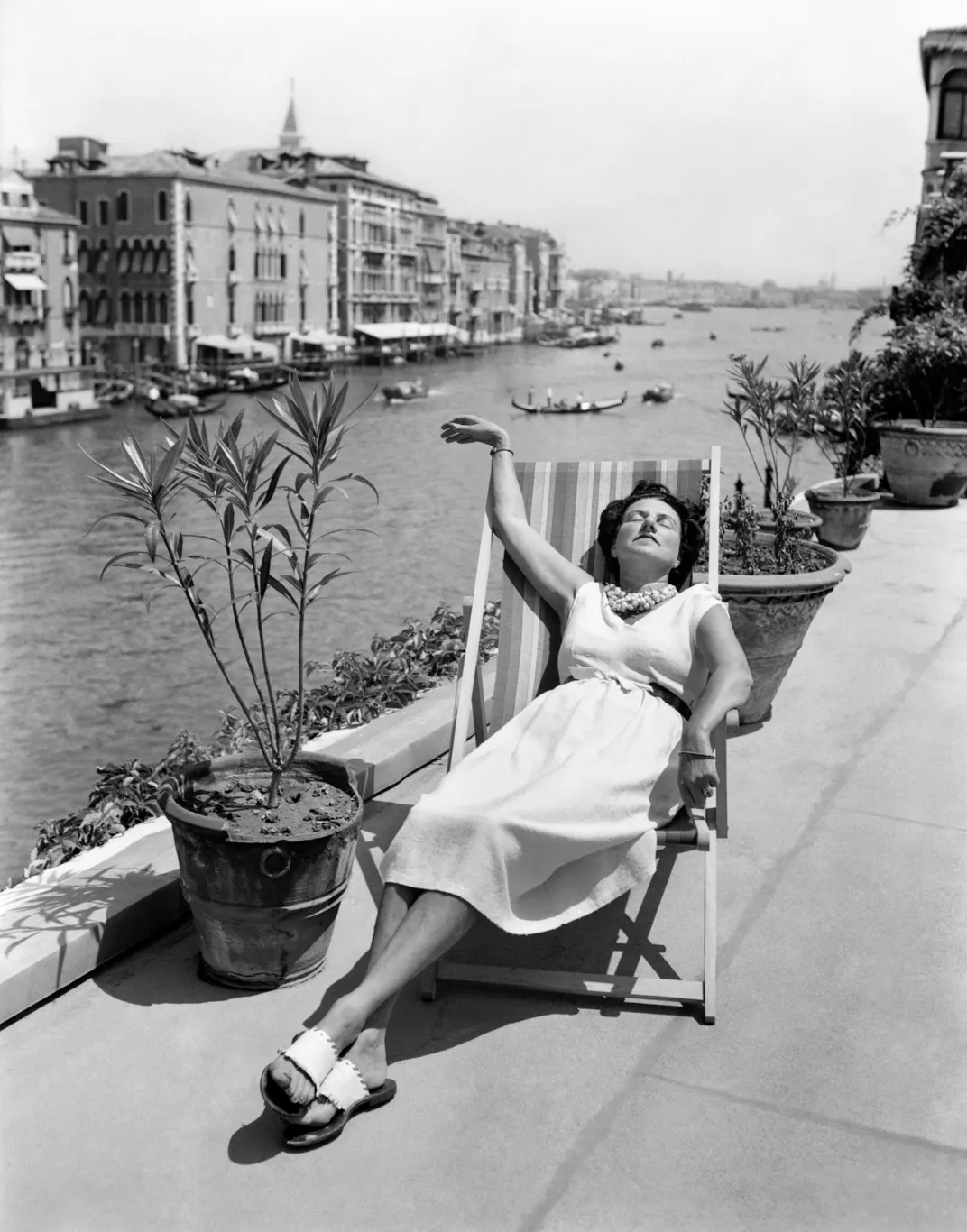
Born in New York in 1898, Guggenheim grew up on the fringes of immense family wealth; her father, Benjamin Guggenheim, squandered much of his fortune before dying aboard the Titanic in 1912. Eager to escape upper-crust convention, she volunteered in her youth at New York’s woman-owned, avant-garde Sunwise Turn Bookshop, an experience that showed her how “a woman could do something extremely creative and independent,” Simon Grant, co-curator of the exhibition, tells the BBC.
Guggenheim consorted with major figures in the creative world, who helped shape her views on abstraction and modern art. During a trip to Paris, Irish playwright Samuel Beckett urged her to devote herself to contemporary art as “a living thing,” per the BBC. Marcel Duchamp tutored her on the nuances of abstraction and surrealism, the Guardian’s Olivia McEwan reports. In 1937, a $450,000 inheritance (around $5 million today) following her mother’s death gave the 39-year-old Guggenheim the means to act.
Did you know? "My uncle’s garage"
Peggy Guggenheim’s uncle, Solomon R. Guggenheim, commissioned architect Frank Lloyd Wright to design a museum in New York City for his vast art collection. Sixteen years later, the Solomon R. Guggenheim Museum opened its doors.
- Peggy was unwilling to have the works she collected be shown at what she called “my uncle’s garage, that Frank Lloyd Wright thing on Fifth Avenue.”
Back in London, influential British art historian and critic Herbert Read served as Guggenheim’s “general galvanizer” in shaking up the Mayfair gallery scene, the London Times’ Laura Freeman writes. Gallery manager Winifred “Wyn” Henderson secured the 30 Cork Street premises and tapped her professional network ahead of the January 1938 opening.
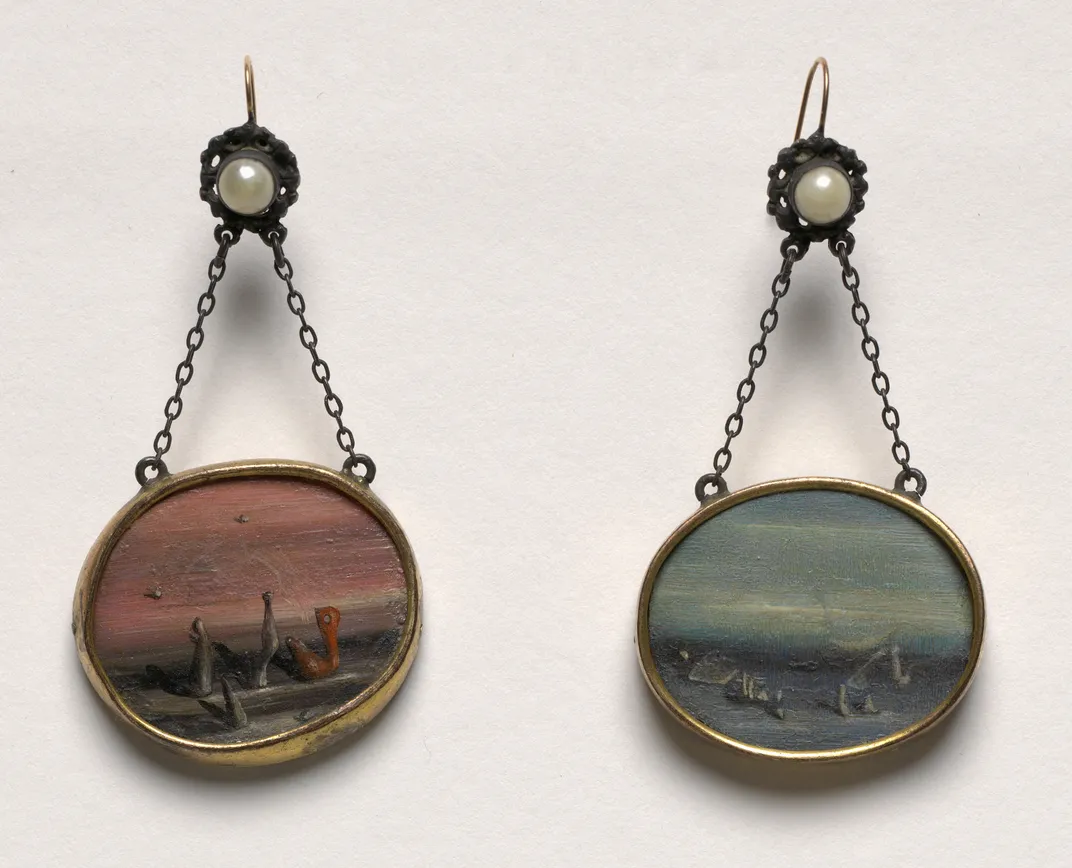
Over the next year and a half, the gallery staged 21 exhibitions. It hosted the United Kingdom’s first solo shows for Jean Cocteau, Wassily Kandinsky and Yves Tanguy, who also painted a pair of tiny shell-and-pearl earrings for Guggenheim with miniature surrealist works, according to a statement. Other shows spotlighted women artists and children’s art—including a painting by a teenage Lucian Freud.
“Guggenheim Jeune is where Peggy Guggenheim defined herself through action: exhibiting, taking risks, and forming friendships with artists,” Subelytė and Grant tell Wallpaper’s Hannah Silver.
Those risks frequently collided with British institutional conservatism. When Guggenheim imported sculptures by Constantin Brâncuși, Jean Arp and Henry Moore for a group show, British customs officials refused to recognize the abstract works as art and moved to tax them as raw stone. Tate director J.B. Manson backed the officials, declaring the pieces were not art, a ruling that sparked a debate in the House of Commons before Guggenheim ultimately prevailed. “Mr. Manson not only lost his case, but pretty soon his job as well,” Guggenheim later wrote. “I thus rendered a great service to foreign artists and to England.”
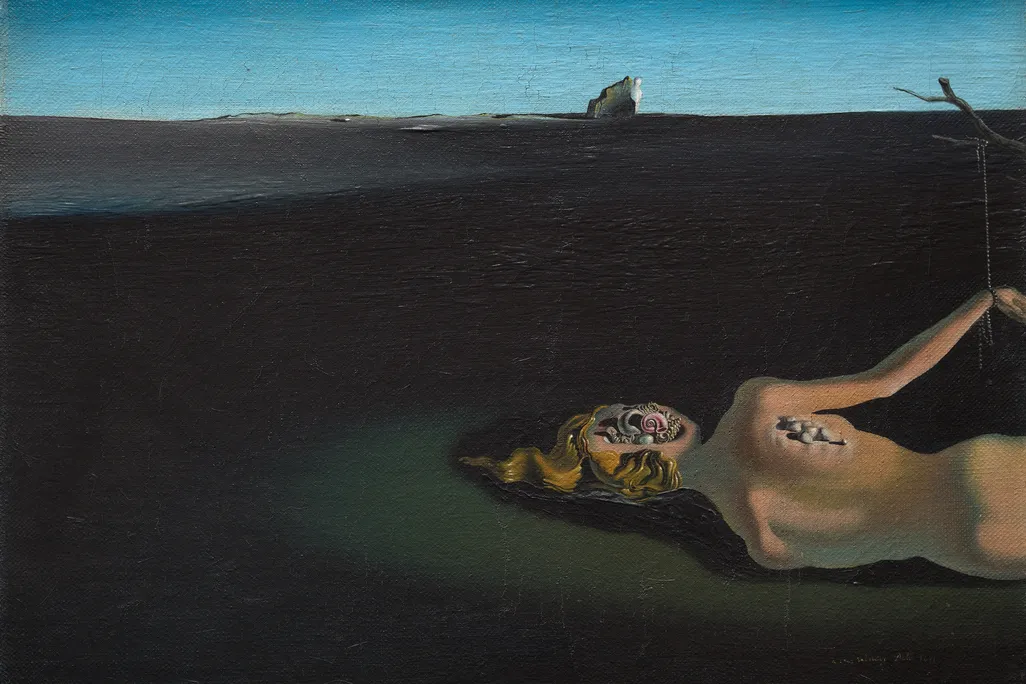
According to the exhibition catalogue, at least 60 percent of the works currently on view at the Royal Academy were originally displayed at Guggenheim Jeune, reflecting the difficulty of fully reassembling a long-lost gallery, per the Guardian. Original highlights include a Salvador Dalí painting, Kandinsky’s Dominant Curve and Wolfgang Paalen’s sponge-covered umbrella.
Concluding, as she confided to a friend, that “the London public [was] apathetic to modern art,” Guggenheim closed the gallery in June 1939, according to the Telegraph’s Alastair Sooke.
Months later, as World War II erupted, she traveled to France, snapping up works by Pablo Picasso, Piet Mondrian and Paul Klee even after the Louvre declined to safeguard her collection from the Nazis because it was deemed too modern. Smuggling the art out of Europe before fleeing to New York and later settling in Venice, she cemented a legacy that began in London.
“She undeniably left her mark,” Guggenheim’s granddaughter Karole Vail tells the London Times’ Etan Smallman. “And, thanks to this exhibition, people—at least I hope—will understand how critical she really was to the development of modern and contemporary art in England.”
“Peggy Guggenheim in London: The Making of a Collector” is on view at the Royal Academy of Arts in London through March 14, 2027.