
In Times of Trouble, the Maya Rejected Divine Kingship. This Newly Discovered Public Building Reveals How the Transition to Shared Power Unfolded
Archaeologists in northern Guatemala unearthed a colonnaded open hall that may have served as a council house, where local leaders and everyday people met to discuss political issues
/https://tf-cmsv2-smithsonianmag-media.s3.amazonaws.com/accounts/headshot/meilan_headshot2.png)
/https://tf-cmsv2-smithsonianmag-media.s3.amazonaws.com/filer_public/c6/3b/c63b7f59-57aa-4294-953b-ec5f68e5cb54/council-house.jpg)
Around 810 C.E., a man named Papmalil rose to power in Ucanal, a Maya city in what is now northern Guatemala. Linguistic evidence and artifacts unearthed at the site suggest he may have hailed from a Nahua-speaking community in Central Mexico, making him a “powerful outsider” at a time of great upheaval for the Maya, anthropologist Simon Martin wrote for Expedition magazine in 2024.
Papmalil’s ascent coincided with the end of the Classic period, which began around 300 C.E. and is widely considered the height of Maya civilization. Now, a study published in the journal Antiquity offers new insights into this tumultuous transition.
The Terminal Classic period (about 810 to 1000 C.E.) ushered in a more “collaborative, consensus-based” form of government, the authors argue. Under Papmalil and other rulers of this era, everyday people in the southern Maya lowlands gained a voice in their community, with individual kings no longer ruling over city-states unchecked.
/https://tf-cmsv2-smithsonianmag-media.s3.amazonaws.com/filer_public/56/46/5646296c-bb9b-45b4-b60a-bfaace7408c1/20260409_council-house-texte1.jpg)
The new research centers on a colonnaded hall in Ucanal that dates to Papmalil’s reign. The building is likely an early example of a council house where Maya leaders gathered “together in meetings and discussions,” lead author Christina Halperin, an archaeologist at the University of Montreal, tells Smithsonian magazine. “They were places in which the ruling ajaw and other lineage heads assembled to deliberate on political accords, to discuss war, to make judgments on crimes, for feasting rituals, for weddings and to prepare for dances.”
Council houses were common during the late Postclassic period, which spanned roughly 1000 to 1521 C.E. But scholars have long questioned exactly how the Maya transitioned from the divine kingship of the Classic period to the power-sharing, council-based system of later centuries. “Maya kings continued to serve as the heads of state,” Halperin says, “but their power was counterbalanced by … other leaders that also held sway through consensus-building activities.”
Did you know? A forgotten Maya queen
- Last year, archaeologists in Mexico’s Yucatán Peninsula decoded a set of hieroglyphs that revealed the name of a forgotten Maya queen.
- Ix Ch’ak Ch’een ruled the city of Cobá during the Classic period, in the sixth century C.E.
Excavations at Ucanal have revealed remnants of public works projects seemingly undertaken by Terminal Classic rulers to improve the lives of all of their subjects, not simply the elite. The newly discovered hall was situated in a public plaza, with an open layout that encouraged passers-by to participate in meetings. According to a statement, the structure could be another example of Maya leaders’ efforts to appeal to the masses, “signifying that public consensus became important to the maintenance of power.”

Moving forward, Halperin says that she hopes to use 3D modeling to determine “how different types of buildings may have been experienced based on their architectural forms. In addition, further research is needed on other possible early versions of such civic-ceremonial buildings.”
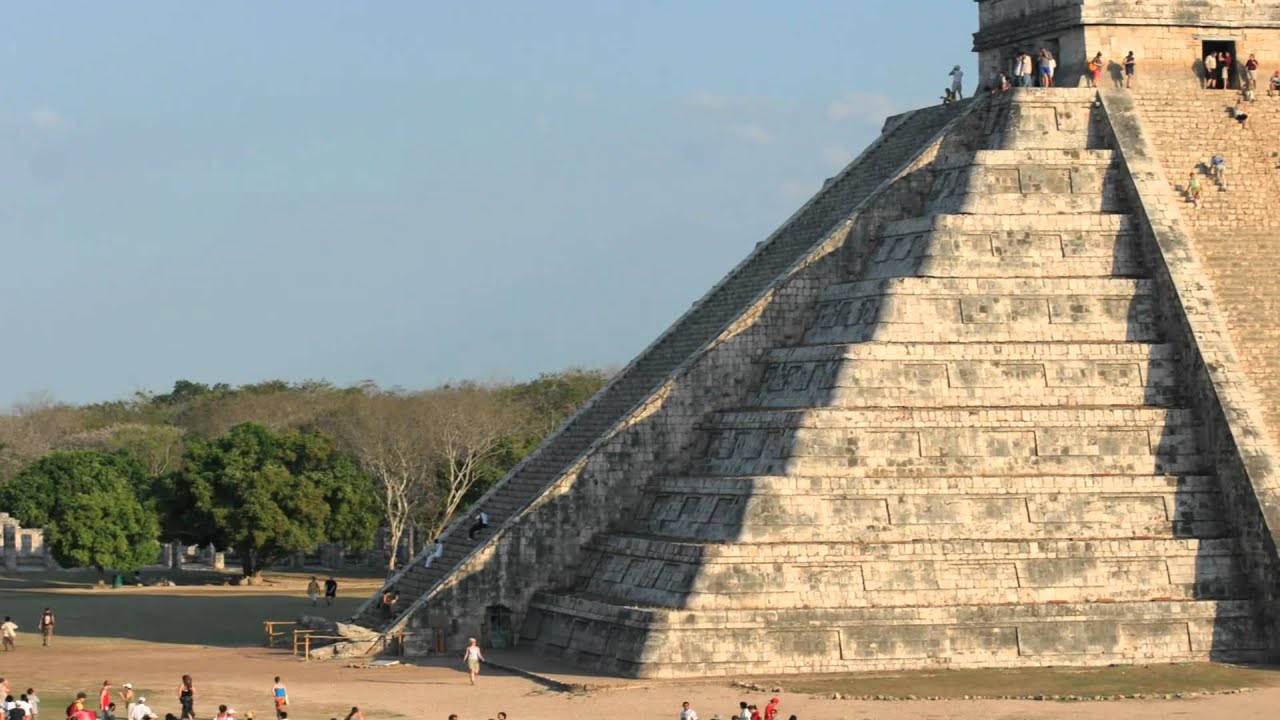
Chichén Itzá, a Maya city that thrived in the Yucatán during the Terminal Classic period, was an early adopter of decentralized political structures, with “rulers and advisory councils shar[ing] power based on the control of critical commodities, corvée and slave labor, strategic warfare, and religion,” anthropologist Loa Traxler wrote for Expedition in 2012. Other cities followed suit during the Postclassic period, with “decision-making and responsibility … shared rather than concentrated in a single individual, although one lord was usually identified as paramount among the ruling council for a time,” Traxler added.
Contrary to popular perception, “ancient Maya societies did not collapse” at the end of the Classic period, Halperin says in the statement. Instead, “they reworked their institutions and political arrangements. One of these reinventions was an effort to counter the weight of paramount kings.”
/https://tf-cmsv2-smithsonianmag-media.s3.amazonaws.com/filer_public/f4/d0/f4d0ff24-078c-41a7-b9c4-67fc5fe1f2d3/487464464_1112787530861507_6334143899232620473_n.jpg)
In a 2024 Antiquity study, Halperin and her co-authors analyzed a burnt deposit found in Ucanal, determining that it held human remains and artifacts from a late Classic period royal tomb. The researchers argued that a Terminal Classic ruler, probably Papmalil, ritually burned these remnants of an earlier regime to signal “the making of a new era of political history.”
As Francisco Estrada-Belli, an archaeologist at Tulane University who wasn’t involved in the research, told Science magazine’s Rodrigo Pérez Ortega at the time, “This is a very clear rupture with the dynasties of the Classic period. It could’ve been one of the causes that contributed to the decline of those dynasties.” Ultimately, he added, “It’s about closing a chapter and starting a new one.”/https://tf-cmsv2-smithsonianmag-media.s3.amazonaws.com/accounts/headshot/meilan_headshot2.png)