
/https://tf-cmsv2-smithsonianmag-media.s3.amazonaws.com/filer_public/8d/ad/8dad55dd-6089-4211-a179-dc51f45ad2b5/anastasia-tennis.png)
Thousands of Intimate Photographs Reveal the Everyday Lives of the Romanovs, Russia’s Last Imperial Family
The Bolsheviks executed the last czar, Nicholas II, and the rest of his family, including his famous daughter Anastasia, 108 years ago. Surviving snapshots open a portal into the royals’ private world
/https://tf-cmsv2-smithsonianmag-media.s3.amazonaws.com/accounts/headshot/meilan_headshot2.png)
:focal(750x500:751x501)/https://tf-cmsv2-smithsonianmag-media.s3.amazonaws.com/filer_public/8d/ad/8dad55dd-6089-4211-a179-dc51f45ad2b5/anastasia-tennis.png)
When Anastasia Nikolaevna Romanov was 11, she sent a lighthearted letter to her father, the Russian czar Nicholas II. “I am sitting and digging in my nose with my left hand,” the young grand duchess reported. Her older sister Olga “wanted to slap me, but I ran away from her swinish hand,” Anastasia recounted with glee.
Undoubtedly the most famous member of Russia’s last imperial family, Anastasia was a “sharp and clever child” with a penchant for practical jokes, a friend later wrote. Photographs of the youngest Romanov daughter testify to her rich sense of humor. In one image, she dons a set of false teeth and strikes a silly pose, even as Olga sleeps in the background. In another, Anastasia grins at the camera as she sneaks a puff of her father’s cigarette.
/https://tf-cmsv2-smithsonianmag-media.s3.amazonaws.com/filer_public/7f/d1/7fd1ff35-08f9-4b88-a2a5-8093673a2cdf/anastasia_nikolaevna_of_russia_fooling_around_original.jpg)
/https://tf-cmsv2-smithsonianmag-media.s3.amazonaws.com/filer_public/23/18/23186e2a-54a3-495b-a7f5-2aa50bdb453c/inside_anastasia_smoking.jpg)
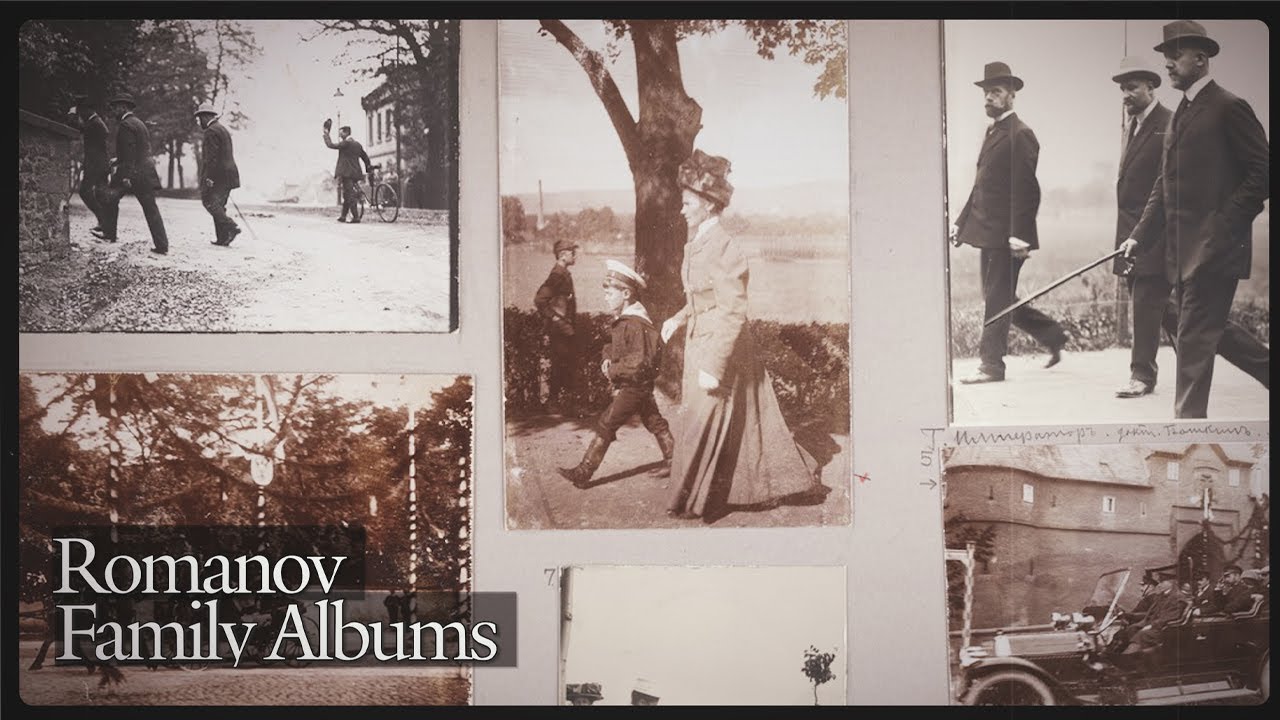
These snapshots and thousands of other surviving photos of the Romanovs preserve every facet of the royals’ lives, from their vacations to their recurring bouts of poor health to their favorite pastimes, including tennis, boating and bicycling. The five children carried their box-shaped Kodak Brownie cameras everywhere, capturing pictures of each other, their parents and their surroundings with a zeal unmatched by Europe’s other royal houses. The family spent many happy evenings pasting images into photo albums, with Anastasia and Maria, the sister she was closest to in age, even colorizing some of their favorites by hand.
Preserved in state archives, museums, university libraries and private collections, the Romanovs’ personal photos were never intended for public consumption. “The feeling one gets, perusing them, is primarily one of voyeurism,” the Yale Alumni magazine noted in 2003. “They are fascinating mostly because of what happened after they were taken.”
In March 1917, amid the upheaval of the Russian Revolution and World War I, Nicholas abdicated the throne, bringing an end to 300 years of Romanov rule. The Bolsheviks executed the former czar and the rest of his family the following year, on the night of July 16-17, 1918.
/https://tf-cmsv2-smithsonianmag-media.s3.amazonaws.com/filer_public/30/bf/30bf0f74-b6f2-4950-839e-c4ba627ad751/romanov_cycling_on_bikes_5_of_10.jpg)
More than a century later, the Romanovs continue to fascinate, in large part because of “the tragedy of their murder, the brutality of it,” Helen Rappaport, the author of numerous books about the family, tells Smithsonian magazine. “It goes back to the photographs,” the historian explains. “There’s something so very haunting about [seeing] those four lovely girls whose lives were cut short and that handsome and engaging little boy,” their 13-year-old brother, the heir apparent Alexei.
Did you know? The myth of Anastasia
- Polish factory worker Anna Anderson was the most notable imposter to claim to have survived the massacre of the Romanov family.
- Anderson’s efforts to be acknowledged as Anastasia inspired several romanticized Hollywood hits, including a 1956 film starring Ingrid Bergman and an animated 1997 musical.
The Romanovs’ photo albums humanize a family that fiercely protected their privacy at the cost of intense criticism over their perceived insularity and inability to relate to everyday Russians. A 1905 Washington Post article titled “Children Without a Smile” expressed a common view of the sheltered siblings, suggesting that “melancholy has marked them for her own.” But the family’s own photos and videos contradict this assessment, capturing Anastasia’s experimental selfies, Alexei with his beloved pets and all of the children playing together on board the imperial yacht.
“What amazed me was how alike those albums were to any other family albums we have,” Natalia Sidlina, the curator of a London exhibition about Nicholas, told the Guardian in 2018. “The Romanovs looked just like any middle-class family.”
/https://tf-cmsv2-smithsonianmag-media.s3.amazonaws.com/filer_public/80/10/8010618b-b792-4a82-accc-a18190e7632b/anastasia_nikolaevna_romanova_in_a_selfie_1915.png)
/https://tf-cmsv2-smithsonianmag-media.s3.amazonaws.com/filer_public/91/8d/918daa7d-bb79-4982-8eae-1a2f78580529/mirror-selfie.png)
Despite appearances, the Romanovs were anything but ordinary. Nicholas was one of the richest men in history, and he wielded absolute power over one-sixth of the world’s landmass. Yet he was better suited to life as a “placid country gentleman, walking amid his flower beds in a linen blouse, with a stick instead of a sword,” as one American diplomat put it. Nicholas himself acknowledged his weaknesses as a ruler: When he ascended to the throne in 1894, the 26-year-old told a cousin that he was “not prepared to be a czar. I never wanted to become one. I know nothing of the business of ruling.”
Nicholas inherited an empire teeming with resentment. His paternal grandfather, Alexander II, had abolished the practice of Russian serfdom in 1861, freeing some 20 million peasants whose lives had long been bound to land they didn’t own. But Alexander didn’t go far enough for the country’s most ardent revolutionaries, who responded to the so-called czar liberator’s reforms by assassinating him in 1881. Perhaps unsurprisingly, the violent nature of Alexander’s death—and the spate of assassinations of public figures that followed—led his successors to reject his modernizing instincts, instead embracing the centuries-old tradition of autocratic rule.
“Russia’s potential could be unlocked only by reforming peasant landownership, by breakneck industrialization based on Western credit, and by broadening political participation and dismantling the corrupt, repressive autocracy, something the last two Romanovs, Alexander III and Nicholas II, were ideologically incapable of doing,” historian Simon Sebag Montefiore writes in The Romanovs: 1613-1918.
/https://tf-cmsv2-smithsonianmag-media.s3.amazonaws.com/filer_public/07/dc/07dcdb3f-e14f-406f-bd57-6a9ffee17e1c/3840px-family_nicholas_ii_of_russia_ca_1914.jpg)
The late biographer Robert K. Massie argued that the tragedy of Nicholas’ reign was that he was ill suited to the modern era, a moment when “events were moving too swiftly, ideas were changing too radically.” Unable to adapt, Nicholas brutally suppressed peaceful protests; refused to work with political reformers; and stubbornly insisted on pursuing his own agenda, against the advice of his relatives and advisers.
Throughout his nearly 23-year reign, Nicholas relied heavily on the guidance of his wife, the czarina Alexandra. Born Alix of Hesse, a minor princess from a German grand duchy, she was a favorite granddaughter of Queen Victoria, who’d overseen her upbringing after the death of her mother. Victoria and her husband, Albert, were early adopters of photography, instilling a love of the new technology in their many royal relatives. One of the earliest photos of Nicholas and Alexandra’s firstborn, Olga, features the chubby-cheeked girl in a white dress, perched on her mother’s knee as her great-grandmother looks on admiringly.
/https://tf-cmsv2-smithsonianmag-media.s3.amazonaws.com/filer_public/35/0c/350c569a-b87e-4b0e-8f74-cdf74eabac7d/royal_family_group.jpg)
The czarina was unpopular from the start, with both Russian aristocrats and everyday citizens criticizing her German origins and seeming antipathy toward her role as consort. Extremely shy, Alexandra protected “her own deeply held insecurities by retreating, at every opportunity, from public view,” Rappaport writes in The Romanov Sisters. “She only succeeded in accentuating her already marked air of chilly reserve.”
Alexandra’s detached demeanor masked an effusive, devout woman who exchanged passionate love letters with her husband and cared deeply for the privileged few whom she took into her confidence. In the view of one of Alexandra’s aunts, she was “very imperious and will always insist on having her own way, and she will never yield one iota of the power she will imagine she wields.”
As czarina, Alexandra’s main duty was to bear a male heir. Despite this looming expectation, the couple celebrated Olga’s birth in 1895. When Alexandra learned the sex of her second child, Tatiana, however, she reportedly cried out, “My God, it is again a daughter. What will the nation say?” Two more girls, Maria and Anastasia, followed by 1901, prompting the press and the extended Romanov family alike to openly express their disappointment. It was only in 1904 that Alexandra gave birth to Alexei.
/https://tf-cmsv2-smithsonianmag-media.s3.amazonaws.com/filer_public/bb/c5/bbc55b38-df69-4bb9-af94-2e148612ebab/screenshot_2026-07-15_at_123625pm.png)
“It is one of the supreme ironies of history that the blessed birth of an only son should have proved the mortal blow” to the Romanov dynasty, Massie wrote in Nicholas and Alexandra. As the czar and czarina soon learned, Alexei suffered from hemophilia, an incurable and largely untreatable condition that prevents blood from clotting properly. “Imperial Russia was toppled by a tiny defect in the body of a little boy,” Massie explained, with Alexandra, who’d passed the genetic mutation down to her son, taking increasingly desperate measures on Alexei’s behalf.
That, “of course, opened the door to Rasputin,” the Siberian peasant and faith healer widely credited with cementing the family’s downfall, Rappaport tells Smithsonian. As the historian writes in The Romanov Sisters, Alexandra was a “woman whose abiding virtue—and one that, perversely, destroyed them all in the end—was a fatal excess” of maternal love.
To protect the stability of the realm, Alexei’s diagnosis was kept secret from all but a trusted few until 1912, when he was 8. The Romanovs released a bulletin acknowledging that the young heir was on the brink of death after a particularly serious incident. In the years leading up to this disclosure, Alexei’s immediate family “created a protective cocoon around” him, retreating to a smaller palace in Tsarskoye Selo, outside of the bustling capital of St. Petersburg, Rappaport says. “They lived much more private lives after that, which meant they were less accessible” to their subjects, and Alexei was “very rarely seen by the Russian people.”
/https://tf-cmsv2-smithsonianmag-media.s3.amazonaws.com/filer_public/e9/8c/e98c51fb-f4e3-428d-9519-15783945c5a1/nicholas_ii_and_alexei_in_reval_1908.jpg)
With few opportunities to see the imperial family in person, Russians looked to official photographs and postcards to gain a sense of their character. “The Romanovs really used photography to publicize and promote an image of the family as this beautiful domestic unit,” Rappaport says. Inevitably, these carefully curated images presented the four grand duchesses as largely indistinguishable sisters who went everywhere in matching white dresses, their expressions serene but somewhat inscrutable.
Olga, Tatiana, Maria and Anastasia grew up under surprisingly austere conditions imposed by their Victorian-minded mother. They slept on simple cots, wore hand-me-down clothing and rarely played with children who weren’t members of the immediate family.
“The girls themselves were rather self-effacing because they developed their own acronym, which was OTMA,” Rappaport says. “That in itself was a bit anonymizing of them,” as was the family’s tendency to divide the sisters into an older “big pair” and a younger “little pair.” Contrary to the grand duchesses’ “superficial, saccharine” public image, Rappaport writes in The Romanov Sisters, each sister had a distinct personality that clearly shines through in the family’s private photos.
/https://tf-cmsv2-smithsonianmag-media.s3.amazonaws.com/filer_public/f5/64/f564102b-b1d9-4459-866a-b190d4101739/empress_alexandra_fyodorovna_of_russia_and_her_children.jpg)
/https://tf-cmsv2-smithsonianmag-media.s3.amazonaws.com/filer_public/21/aa/21aae4ab-fe2a-4c73-a227-df826e8af206/olgatatianamariaanastasia1916.jpg)
A 1911 snapshot of Olga reading on vacation in Finland, for example, shows that she was “more dreamy and introspective,” Rappaport says, weighed down by the responsibilities placed on her as the oldest child. Tatiana, meanwhile, could often be found at her mother’s side, acting as her “right-hand helper.” The third daughter, Maria, was considered the most conventionally attractive of the four, with large blue eyes that her family likened to “saucers.” Naturally maternal, she dreamed of becoming the matriarch of a big family.
Anastasia, finally, was “mercurial and quirky, funny and irreverent, and a real handful,” according to Rappaport. In one childhood photo, the impish grand duchess bares her teeth at the camera, in stark contrast with her sister Maria, who offers the viewer a knowing smile. A few years later, in 1913, Anastasia posed for a photo while hanging from an exercise bar, with her outstretched toes barely grazing the floor.
/https://tf-cmsv2-smithsonianmag-media.s3.amazonaws.com/filer_public/7c/f0/7cf0dee6-b8eb-4a92-9dd0-76634fe1fdfb/olgabeachreading.jpg)
/https://tf-cmsv2-smithsonianmag-media.s3.amazonaws.com/filer_public/86/2d/862d7775-4ec5-459c-86b3-5929cb8b48d0/tatianaalexandra.jpg)
/https://tf-cmsv2-smithsonianmag-media.s3.amazonaws.com/filer_public/56/7a/567a553a-3708-4793-867c-5c2cbaf64c0e/maria_nikolaevna_aboard_the_imperial_yacht_polar_star.jpg)
/https://tf-cmsv2-smithsonianmag-media.s3.amazonaws.com/filer_public/9b/79/9b795fe5-de6a-4f55-a583-b51045cd32eb/mariaanastasiamugging.jpg)
The youngest Romanov, Alexei, “was the center of this united family, the focus of all its hopes and affections,” Pierre Gilliard, the siblings’ Swiss tutor, wrote in a 1933 essay. “His sisters worshipped him, and he was his parents’ pride and joy.” A rambunctious child, the heir chafed at the restrictions placed on him by his parents, who knew that a simple bump or bruise could trigger a life-threatening hemophilia episode. Alexei often asked, “Why can other boys have everything and I nothing?”
Like his older sisters, Alexei embraced photography at a young age, with a picture of him as a toddler showing him clutching a camera. Other snapshots from Alexei’s childhood testify to his desire to be treated like his peers, finding him hard at work on everyday activities such as shoveling snow and playing the drums. Only the presence of a sailor tasked with protecting Alexei by accompanying him everywhere, even carrying the boy when he was too sick to walk on his own, suggests that something is amiss.
/https://tf-cmsv2-smithsonianmag-media.s3.amazonaws.com/filer_public/bb/38/bb387afe-ee95-4efe-acb8-2602345b1dc5/anastasia_romanova_-_gym_at_the_alexander_palace_1913.jpg)
/https://tf-cmsv2-smithsonianmag-media.s3.amazonaws.com/filer_public/98/24/98240e07-a031-4e26-9098-d558295d68ed/screenshot_2026-07-15_at_123910pm.png)
In 1905, the year after Alexei’s birth, a revolution broke out in Russia. In response to the unrest, the czar agreed to establish a parliamentary State Duma, relinquishing absolute control of Russia and paving the way for a constitutional monarchy akin to Great Britain’s. Alexandra strongly disapproved of this concession, reminding Nicholas that to preserve their son’s inheritance, they must remain firm against the revolutionaries’ demands.
Between the 1905 Revolution and the outbreak of World War I in 1914, the Romanovs’ lives settled into a comfortable routine. The family divided their time among Tsarskoye Selo, the fjords of Finland, a hunting lodge in Poland and a summer palace in Crimea. The children captured countless photographs on these vacations, passing the time on rainy days by gluing these snapshots into family albums.
/https://tf-cmsv2-smithsonianmag-media.s3.amazonaws.com/filer_public/ba/6b/ba6bc12d-3aa2-43ce-8230-0afc43323480/olga_and_tatiana_romanova_-_roller_skating_1_of_3.png)
/https://tf-cmsv2-smithsonianmag-media.s3.amazonaws.com/filer_public/fc/1d/fc1d4a25-3ab2-44f4-82d6-4ba247b88db9/screenshot_2026-07-15_at_125229pm.png)
Nicholas often joined these sessions, although he “could not endure the sight of the least drop of glue on a table” and was therefore exceptionally slow, Anna Vyrubova, one of Alexandra’s closest friends, wrote in her memoir. Vyrubova was responsible for spiriting six such albums out of Russia after the revolution; today, these photos are housed at Yale University’s Beinecke Rare Book & Manuscript Library. They survived despite the concerted Soviet effort to “locate, remove and destroy … any photographs depicting the last czar and his family as normal human beings whose faces and activities might arouse a shred of interest or sympathy,” Massie wrote in 1982.
World War I ushered in immense changes in the Romanovs’ lives. Olga and Tatiana trained as nurses, working alongside their mother at a private military hospital. Nicholas (joined by Alexei) oversaw the war effort from a military headquarters in modern-day Belarus, eventually assuming direct command of the Russian Army despite lacking relevant experience.

.jpg)

_Romanova_-_Olga's_Name_Day,_1912.jpg)


#/media/File:Romanov_cycling_on_bikes_(5_of_10).jpg)


.jpg)

#/media/File:Royal_family_group.jpg)
#/media/File:Family_Nicholas_II_of_Russia_ca._1914.jpg)


In her husband’s absence, Alexandra increasingly interfered in political affairs, following the advice of Rasputin, who’d earned her trust by seemingly healing Alexei when modern medicine failed. Exactly how Rasputin influenced the heir’s health remains the subject of debate (hypnosis is one possible explanation), but his actions rendered him infallible in the eyes of the czarina. As Massie wrote in Nicholas and Alexandra, “If she could trust him with the dearest thing she possessed—the life of her son—why should she not also trust him with choosing ministers, commanding the army or directing the life of the entire nation?”
As Russia’s wartime casualties rose, food shortages and gossip about Alexandra’s relationship with Rasputin sparked unrest at home. In a last-ditch effort to save the monarchy, a group of elites, including the czar’s first cousin, conspired to murder Rasputin on December 30, 1916. But they were too late to stop the tide of revolution. In February 1917, widespread strikes escalated into a full-blown uprising that soon saw Nicholas abdicate on behalf of both himself and his sickly son. The fatalistic former czar “had no stomach for a fight, either with his relatives, his wife or his government,” Rappaport writes in The Romanov Sisters. “His life was in the hands of God, and he had long since abandoned all responsibility for it.”
/https://tf-cmsv2-smithsonianmag-media.s3.amazonaws.com/filer_public/70/42/7042599b-efba-42ff-918e-f10a306ca507/alexandra_feodorovna_with_rasputin_her_children_and_a_governess.jpg)
/https://tf-cmsv2-smithsonianmag-media.s3.amazonaws.com/filer_public/5d/22/5d228657-ef88-49f5-9feb-e866b5e5381a/olgatatianapatient.jpg)
/https://tf-cmsv2-smithsonianmag-media.s3.amazonaws.com/filer_public/bd/e7/bde7162b-ac49-4f74-b069-9fb9e1731f42/alexei_nikolaevich_of_russia_during_a_mudbath.jpg)
After the abdication, Nicholas joined his family under house arrest at Tsarskoye Selo, where the Romanov sisters were recovering from measles. The disease made the grand duchesses’ hair fall out, forcing them to shave their heads, with Alexei following suit in solidarity. Gilliard, the children’s tutor, took several photos of them in this state, including one where they kneeled in a row behind a black cloth, their bare heads seemingly disembodied. “It’s very stark and haunting because, of course, they were prisoners by then,” Rappaport says. Alexandra apparently disapproved of the photoshoot, finding it terribly upsetting. “She said they looked like prisoners going to their execution, which is horribly prophetic.”

In August 1917, the provisional government that had replaced the monarchy moved the Romanovs to Tobolsk, in remote Siberia. The family attempted to retain a semblance of normality in captivity by continuing the younger children’s studies and working outside as permitted. Alexandra, for her part, gave thanks that “we are still in Russia and all together.” This arrangement was by no means guaranteed, as many revolutionaries wanted to put Nicholas on trial for his alleged crimes against the Russian people, including the massacres of peaceful protesters and his mismanagement of the army during World War I, which resulted in the deaths of millions.
#/media/File:Olga_Nikolaevna_chops_wood_with_her_father_at_Tobolsk.jpg)
#/media/File:Nicholas_II_saws_wood_during_the_captivity_at_Tobolsk.jpg)
/https://tf-cmsv2-smithsonianmag-media.s3.amazonaws.com/filer_public/aa/67/aa67c7d2-d279-4155-b567-a7b7aa7c076a/otmaa1917_1-1.jpg)
The few surviving photographs of the Romanovs from their time in Tobolsk are strikingly poignant. One image—the last known photo of Alexandra—shows the czarina seated on a balcony while holding a parasol. As they often did, her two eldest daughters flank her protectively. Another shot finds Nicholas and his children perched atop the roof of a greenhouse, with the sisters wearing hats to hide their bald heads.

#/media/File:The_former_tsar_Nicholas_II_and_his_children_sitting_on_the_roof_of_a_greenhouse_during_their_captivity_in_Tobolsk.jpg)
The Bolsheviks, a radical faction led by Vladimir Lenin, overthrew the provisional government in late 1917, in a coup known as the October Revolution. Far less sympathetic to the Romanovs, the Bolsheviks moved their prisoners once again, this time to Yekaterinburg, some 300 miles west. It was here, in the ominously nicknamed House of Special Purpose, that the family and their last four loyal attendants met a bloody end exactly 108 years ago. Eleven executioners packed into the building’s basement, each assigned to kill a specific victim. Nicholas and Alexandra died quickly, in a hail of gunfire by multiple shooters. But none of their daughters “died a quick or painless death,” Rappaport writes in The Last Days of the Romanovs.
/https://tf-cmsv2-smithsonianmag-media.s3.amazonaws.com/filer_public/ff/23/ff23fa5d-8c1a-4e4c-a6b5-4979f758b776/the_former_tsar_nicholas_ii_and_his_children_sitting_on_the_ro-f7793a207794769678adf56e1a0472d6.jpg)
/https://tf-cmsv2-smithsonianmag-media.s3.amazonaws.com/filer_public/dc/9f/dc9fdc0a-9eb2-48a7-8090-09d9507bea97/ipatyev_house_basement.jpg)
Alexandra had instructed the sisters to wear jewel-studded corsets in case of evacuation, and the force of the bullets may have propelled these diamonds and precious gems into the girls’ torsos. When bayonet thrusts failed to penetrate their victims’ bodices, the killers shot them in the head. According to Rappaport’s account, Alexei also suffered greatly, with his “fatally flawed blood … keeping him alive when on so many occasions in the past it had nearly killed him.”
An execution that should have taken 30 seconds instead lasted 20 minutes, and even then, the Bolsheviks failed to finish the job. As the killers loaded the 11 bodies onto a truck, one of the grand duchesses—probably Anastasia—sat up and screamed. She, too, was silenced by a pistol to the head.
/https://tf-cmsv2-smithsonianmag-media.s3.amazonaws.com/filer_public/1b/45/1b452008-f27d-4985-b9ca-185664bce52a/alexeiolgarus.jpg)
No photos of the Romanovs in Yekaterinburg are known to survive today. The last recorded images of the children date to May 1918, when they were photographed on board the steamship transporting them to the city. These snapshots are blurry, serving as a record of a historical moment rather than an illuminating portrait of their subjects’ personalities.


Rappaport points instead to a series of photos taken in Tsarskoye Selo the previous year. As Gilliard wrote in his diary, the family and their few remaining attendants decided to plant a vegetable garden in mid-May 1917. “We began by taking up the turf, carrying away the sod on barrows and arranging it in heaps,” the tutor noted. “Everyone helped: the family, ourselves and the servants.” By June 15, the garden was “in splendid condition,” boasting “every imaginable kind of vegetable and 500 cabbages.”
In one of the photos, Tatiana helps a soldier transport lumps of sod. In another, Olga, Tatiana, Anastasia and Alexei take a break from their work by resting against a white wall. Far removed from the frilly white dresses of their youth, the sisters don simple hats, sweaters and skirts. “They’re not these mythical princesses” anymore, Rappaport says. “It makes them very human, seeing them like that.”
/https://tf-cmsv2-smithsonianmag-media.s3.amazonaws.com/filer_public/3c/92/3c92e5e0-15c2-4ab0-8378-5e9d79c844ec/service-pnp-ppmsca-15700-15750v.jpg)
/https://tf-cmsv2-smithsonianmag-media.s3.amazonaws.com/filer_public/16/69/16691558-6d19-4392-b019-db6e8faed9cb/sisters.png)
/https://tf-cmsv2-smithsonianmag-media.s3.amazonaws.com/accounts/headshot/meilan_headshot2.png)