Subscribe to Smithsonian magazine and get a FREE tote.

Smart News

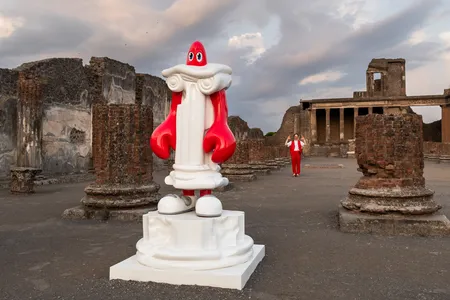
A sculpture of a giant lobster disguised as a column, made by pop artist Philip Colbert, stands in Pompeii

First a Volcanic Eruption, Now a Crustacean Invasion? See the Giant Lobsters Taking Over the Ancient City of Pompeii

A pop art installation featuring more than 30 sculptures from artist Philip Colbert is the first contemporary sculpture exhibition to land in Pompeii in three decades
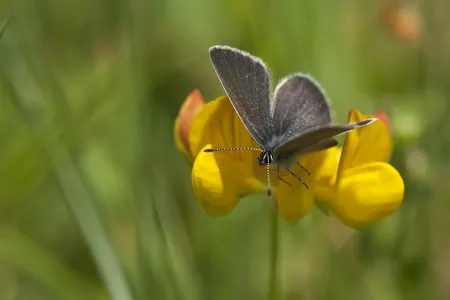
The small blue, shown here, has lost about 40 percent of its habitat in the United Kingdom over the last 150 years.

Butterflies Around the World Are Moving to New Habitats, Largely Because of Climate Change, a Study Suggests

Researchers examined data on 1,758 butterfly species—about ten percent of all those known—from 105 countries and estimated that about one in ten global species has shifted its distribution range

Researchers involved in the study collect samples at Blood Falls.

Why Does Antarctica’s Blood Falls Spew Ruby Red Water? Microbes Offer New Clues About the Geologic Feature’s Ancient Origins

The falls contain saltwater rich with iron, which oxidizes and turns red when exposed to air. A new study provides further evidence that the brine probably comes from ocean water trapped when flood waters retreated millions of years ago

Excavations in Rome uncovered a building near the Colosseum from the second century C.E. with mosaics and frescoes.

Cool Finds

This Marine-Life Mosaic Discovered Near the Colosseum Offers a Surprising Clue—Its Building May Have Housed Firefighters in Ancient Rome

At the time of the structure’s construction in the second century C.E., firefighting in ancient Rome was a formalized profession
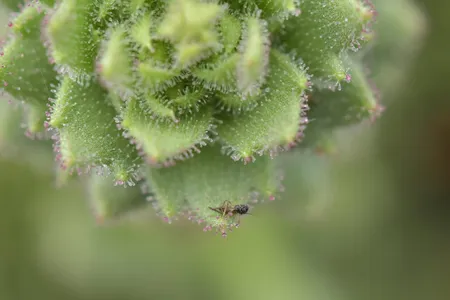
The sticky hairs on the alpine flower trap tiny insects. 

Charles Darwin Theorized That These Plants Were Carnivorous 150 Years Ago. A New Study Proves Him Right

As the naturalist predicted in 1875, some Saxifraga plants consume insects—using sticky hairs to trap them
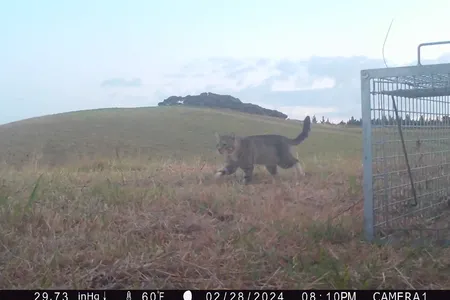
Nine Lives eluded capture for three years.

Notorious Feral Cat That Feasted on Rare New Zealand Ducks Captured After Three-Year Hunt

The gray tabby, known as Nine Lives because it eluded capture so many times, had devastated efforts by conservationists to reintroduce the birds to the wild
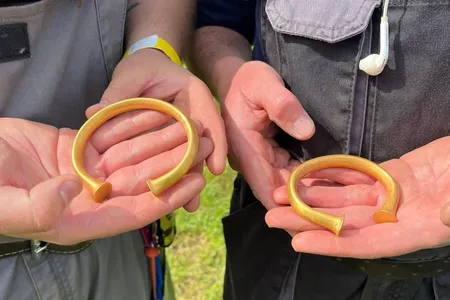
Andy Crammond and Alan Daniels discovered the three gold armbands while surveying a field near the Scottish-English border.

Cool Finds

Metal Detectorists Thought They’d Hit the Jackpot When They Discovered a Gold Bracelet Dating to the Bronze Age. Then They Dug Up Two More

At first, Andy Crammond thought the object was a bull’s nose ring. Other artifacts unearthed nearby include a Viking brooch, a Roman coin hoard and a Bronze Age ax head

The interior of the Glasgow School of Art’s Mackintosh building, which was significantly damaged by fire in 2018. This photo is from 2023.

Fires and Financial Trouble Leave the Fate of Two Arts Buildings Uncertain in This Scottish City—Including a Century-Old Masterpiece

The historic Glasgow School of Art and the more modern Glasgow Centre for Contemporary Arts were both affected by a significant blaze in 2018
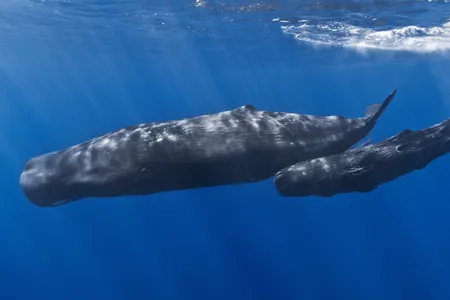
Sperm whales seem to communicate differently in the presence of underwater shipping sounds.

Sperm Whales Seem to Change Their Calls When Ships Are Near, Highlighting the Implications of Underwater Noise Pollution

Several of the huge cetaceans living in the eastern Caribbean Sea shortened the intervals between their clicks and used one click pattern more than another when vessels were around, according to a new study

The USS Silversides entered dry dock for the first time in more than 50 years, giving crews a chance to perform major repairs and maintenance work.

This World War II Submarine Noted for Sinking Enemy Ships Just Journeyed Across Lake Michigan for a Multimillion-Dollar Makeover

The USS ‘Silversides’ earned a dozen battle stars for its work patrolling the Pacific Ocean. The Gato-class sub is now the star of a museum in Michigan
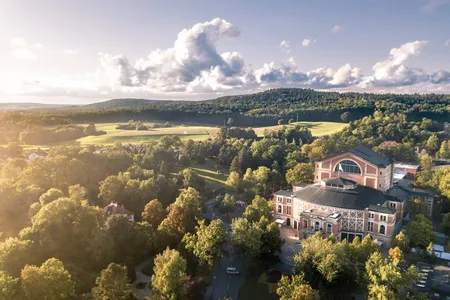
Bayreuth Festspielhaus

A.I. Went to the Opera, Creating Images for an Anniversary Production of Wagner’s ‘Ring Cycle’ at the Theater Where He First Staged the Masterpiece

It took Richard Wagner a quarter-century to complete the four-part opera. The new production, called “10010110,” uses generative artificial intelligence to explore the artwork’s evolution

A 2022 image of Neptune, captured by the James Webb Space Telescope's Near-Infrared Camera

Neptune May Have Once Witnessed a Lunar Massacre That Turned Its Original Moons ‘Inside Out’

A new study identifies an unexpected mineral in two of the planet’s inner moons, pointing to a destructive past in which a large object got pulled into the system and obliterated the former, larger satellites
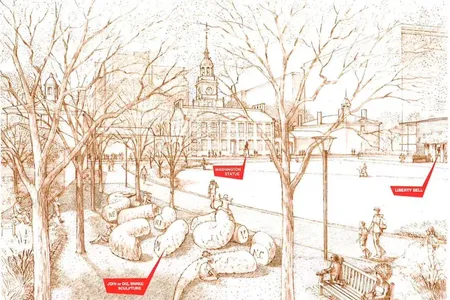
The granite sculpture is being installed on the Liberty Bell Center Block of Independence Mall in Philadelphia.

A Serpentine Sculpture Inspired by Benjamin Franklin’s ‘Join, or Die’ Call for Unity Is Taking Shape—Segment by Segment—in Philadelphia

Created by John Collins, the 46-foot-long granite artwork inspired by an 18th-century political cartoon is slated to be unveiled on Independence Mall sometime this fall
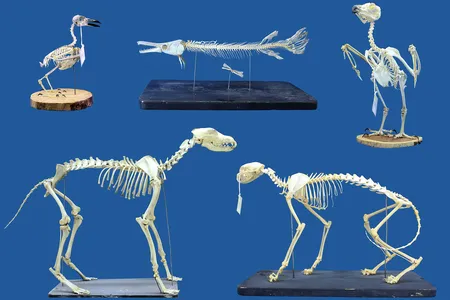
Researchers tested the superworms' skeleton-cleaning abilities by letting them loose on a variety of animal skeletons, including those of a rook, an alligator gar, a Eurasian eagle owl, a gray wolf and a wild cat.

Flesh-Eating ‘Superworms’ Could Become a New Skeleton-Cleaning Crew for Museum and Research Specimens

A new study hints that the critters would be a good alternative to traditional methods used to remove flesh from bones, including dermestid beetles, chemical treatments and boiling, which can cause damage or be time-consuming
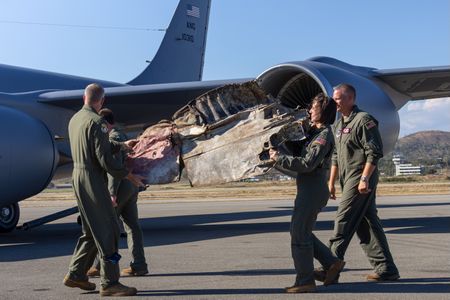
Wisconsin Air National Guard officers carry the wingtip on July 12.

This American Pilot Downed 40 Enemy Aircraft During World War II. Researchers Discovered the Wreck of His Plane in a Pacific Jungle and Brought a Wing Back to His Home State

Richard I. Bong, flying a plane decorated with a portrait of his future wife, Marge, became America’s highest-scoring “ace” and received a Medal of Honor

One source of the cyclosporiasis outbreak is Taylor Farms iceberg lettuce grown in central Mexico.

Two People Died After Getting Sick With Cyclosporiasis, Marking the First Known Deaths Linked to the Ongoing Multistate Outbreak

Both patients, who were in Michigan, had underlying health conditions, according to state officials. The parasite-caused infection usually isn’t life-threatening
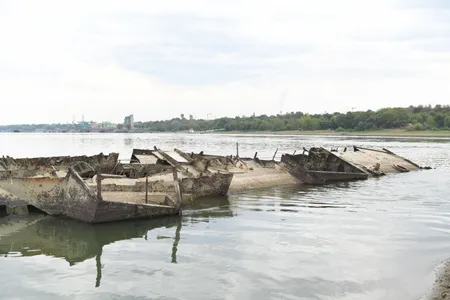
German warships dating to World War II are visible again in the Danube River, as they were in 2024 as pictured here.   

The Danube River Has Fallen to Record-Low Water Levels, Revealing Nazi Warships, Bombs and Woolly Mammoth Bones In Its Channel

Residents and researchers are finding historic and prehistoric relics as Europe’s second-longest river dries

An artistic rendering of a tidal disruption event, when a black hole rips apart and devours a star that got too close. These events help scientists find black holes, which don't emit light.

In a First, Astronomers May Have Spotted a Supermassive Black Hole That Wandered to the Edge of Its Galaxy

These giant celestial objects have mostly been identified at the centers of galaxies, where they’re known to reside. But a recently discovered one—found because of the light emitted while it snacked on a star—appears to be more than 30,000 light-years from its host galaxy’s heart

Introduced in 1919, the Oriole was a three-seat biplane produced by the Curtiss Aeroplane and Motor Company in Garden City, New York.

These Early Biplanes Documented the Arctic, Captured Newsreel Footage and Witnessed Lindbergh’s Historic Flight. Now, a Rare Example Will Hang in a Museum

The Cradle of Aviation Museum recently acquired a Curtiss Oriole, three-seat biplane manufactured at a nearby Garden City factory
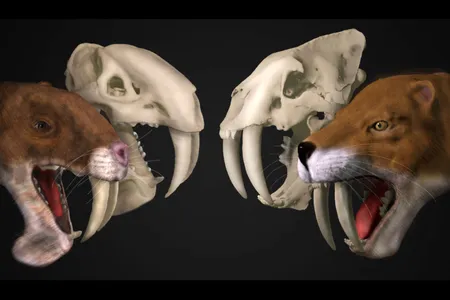
South America was home to the marsupial sabertooth, illustrated on the left, while North America was home to the smilodon, on the right. The species competed with each other after the Panamanian land bridge connected North and South America.

Ancient North American Mammals May Have Gathered in Mexico and Diversified Before Moving to South America, Priming Them to Thrive There

An analysis of fossils from the country hints that animals from the north stayed in a “holding pen” between seven million and ten million years ago. The timeline might help explain why so many South American mammals have North American ancestry, but not vice versa

Page 26 of 1155