
Doctors Used ‘Digital Twins’ of Patients’ Hearts to Fix Their Irregular Heartbeats
A small clinical trial suggests the technology can help physicians perform life-saving surgeries more efficiently and safely
/https://tf-cmsv2-smithsonianmag-media.s3.amazonaws.com/accounts/headshot/Sara_-_Headshot_thumbnail.png)
/https://tf-cmsv2-smithsonianmag-media.s3.amazonaws.com/filer_public/c2/8c/c28c89cd-b999-4cad-bc73-9402d735abb8/screenshot_2026-04-02_at_123331pm.png)
Creating virtual replicas of patients’ problematic organs could be the future of medicine.
In a small clinical trial, testing surgical procedures on “digital twins” of patients’ hearts before operation led to better outcomes than traditional methods. The findings, published April 1 in the New England Journal of Medicine, suggest that the personalized technology could usher in a new way to treat a life-threatening heart rhythm condition.
“We show the technology isn’t merely feasible, it has excellent outcomes,” says Natalia Trayanova, a study co-author and a biomedical engineer at Johns Hopkins University, in a statement. “This demonstrates a crowning achievement in this technology that allows us to go further toward a larger clinical trial.”
Digital twins are computer models that can predict how an organ will react to different interventions. Researchers have been developing the technology in many medical fields, including cancer care and orthopedic surgery.
In the new study, Trayanova and her colleagues enrolled ten participants who had previously suffered from heart attacks and developed ventricular tachycardia, a condition in which the heart’s lower chambers beat too fast to pump blood properly throughout the body. Doctors typically treat it with a procedure called ablation, where they destroy the tissue causing the irregular electrical activity, but finding the problematic regions can be difficult and often requires repeat procedures.
Need to know: How common is ventricular tachycardia?
Every year in the United States, roughly 350,000 people—mostly above the age of 35—die from sudden cardiac arrest. Most of those deaths are due to ventricular arrhythmias.
That’s where the digital twins come in.
High-resolution MRI scans of each participant allowed the researchers to create a personalized 3-D digital twin of every patient’s heart. The models helped the team analyze how electrical signals traveled within each organ and determine which areas of the heart were likely causing arrhythmia.
“In the patient’s digital twin, we can try different scenarios for treatment before we treat the actual patient and provide the treating physician with the best, most optimal scenario, minimizing damage to the heart, and increasing the potential for a successful treatment,” Trayanova says in the statement. “The digital twin allows us to address all potential sources of arrhythmias that may not be seen by clinical interrogation. We exhaust all possibilities.”
The doctors then relied on those predictions to destroy each patient’s problematic heart tissue. The surgery usually takes around three hours, but the digital heart guidance reduced it to about 30 minutes, lowering the risk of complications from prolonged sedation, reports Elie Dolgin at Science News. Afterwards, the team couldn’t trigger arrhythmia in any of the participants, which is how physicians determine whether the procedure was successful.

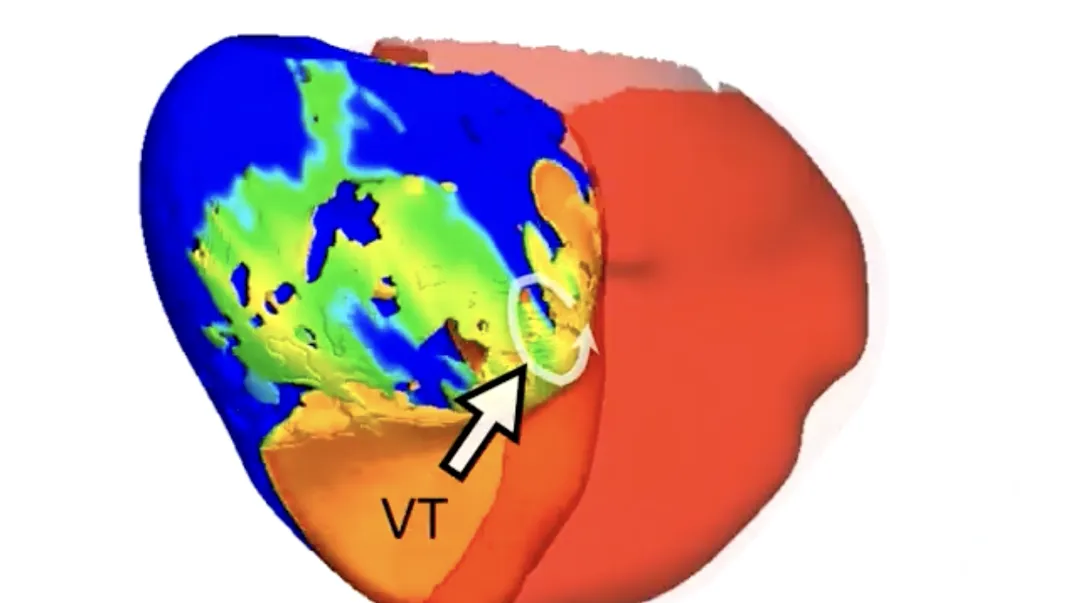
Eight of the patients remained arrhythmia-free—even without medication—within the average follow-up period of a little over a year. The other two participants each experienced an episode of ventricular tachycardia within a month of their surgeries, but implanted defibrillators fixed their heartbeats. Neither has experienced heart issues since then, and both have reduced their antiarrhythmic drug doses.
While the long-term success rate of traditional ablation is around 60 percent, the digital twin-guided method led to a 100 percent success rate.
The approach “is very innovative,” says Babak Nazer, a cardiac electrophysiologist at the University of Washington who was not involved in the work, to Science News. “These are state-of-the-art cardiac simulations.”
The team is now working on a bigger trial to continue testing the digital twin approach, and they also plan to expand their research to more cardiac conditions. Those larger studies will be necessary to determine whether the technology consistently leads to better care, Nazer tells Science News. “That’ll tell me if it’s a game-changer or a physiologically elegant widget.”
/https://tf-cmsv2-smithsonianmag-media.s3.amazonaws.com/accounts/headshot/Sara_-_Headshot_thumbnail.png)