

After 131 Years of Being Buried in an Indian School Cemetery, a Comanche Child’s Remains Are Returned to Her Homelands
As a child, Frances Bones was taken from her people in Indian Territory to the Carlisle Indian School in Pennsylvania where she, along with many other Native children, died. Her fate shines a light on the broader tragedy of what happened in these schools
:focal(400x232:401x233)/https://tf-cmsv2-smithsonianmag-media.s3.amazonaws.com/filer_public/56/de/56de5bf9-c6b5-4c8c-98fb-ba0feaed4c5f/carlisle_4.jpg)
My father was a survivor of the Riverside Indian School in Anadarko, Oklahoma. In an interview, he once said, “I remember my little sister and I being taken from my parents when I was 6 years old. My sister was really cute with long black hair. She was always smiling. When we arrived [at the school] they separated us and took my little sister into a building along with other girls her age. One by one the little girls came out of that building and all their long hair was cut, in helmet style, and they were dressed in uniforms. They all looked sad. I didn’t recognize my own sister in the group of girls because they all looked and dressed alike. This memory still hurts me.”
My aunt and my father were just two Native children who were separarted from their parents, families and all the things familiar to them. Established by the federal government, these schools' primary purpose was to assimilate these children into white, American society. Forced to abandon their tribal clothes and wear uniforms, they were taught to march, tell time and recite the Pledge of Allegiance to the flag of the people who took their land and resources. The children faced horrors of pain and retaliation for speaking their Native languages or exhibiting any sort of cultural behavior. But above all, these schools witness the death of Native children, with no accountability to their families or tribal nations. Parents and families were rarely informed of their children’s deaths. Oftentimes, parents would learn of their child’s death after they were buried in in unmarked graves on school property.
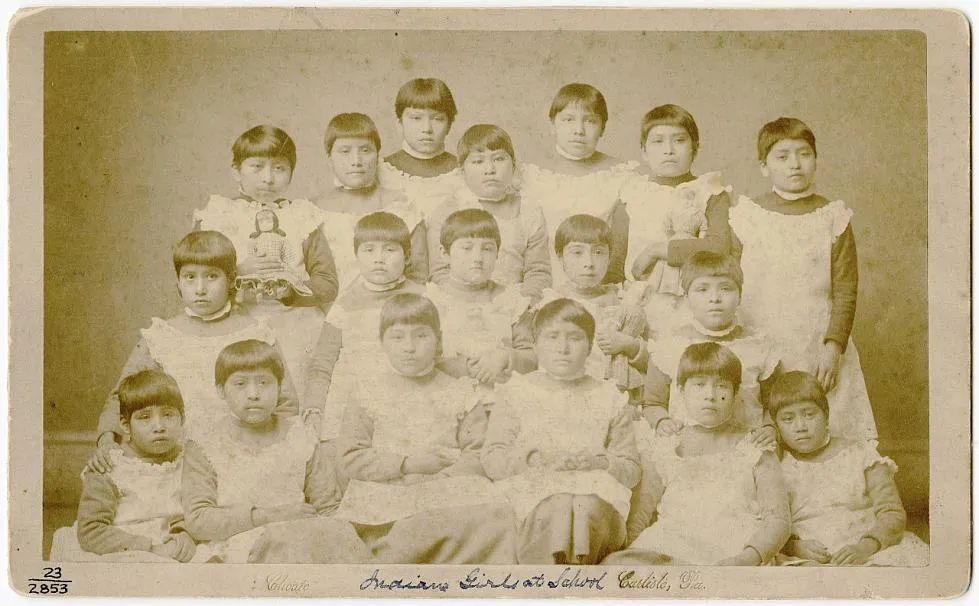
The Indian boarding school era ran from 1860 to 1978. In 1860, the first such on-reservation school was established by the U.S. Bureau of Indian Affairs on the Yakama Indian Reservation in Washington State. In 1879, the first off-reservation boarding school was established in Carlisle, Pennsylvania. In January 2025, the National Native American Boarding School Healing Coalition released its latest research identifying 526 Indian boarding schools that operated in the United States.
"For generations, families and communities have carried the grief of children who were taken from their homes and never returned. We call on institutions entrusted with the care of Native children's remains and cultural belongings to carry out this work with transparency, respect, consultation and accountability. These children were loved, they mattered, and their lives and stories must never be forgotten." – Nikki Santos (Coeur D' Alene Tribe) CEO, National Native American Boarding School Healing Coalition
/https://tf-cmsv2-smithsonianmag-media.s3.amazonaws.com/filer_public/99/6e/996ef7f7-4b08-4699-bdd2-28db85f15680/carlisle_sign.jpg)
The most widely known boarding school was the Carlisle Indian Industrial School in Pennsylvania, founded in 1879 on a military site by Richard Henry Pratt, known for his quote, “Kill the Indian in him and save the man.” Pratt modeled the school off an education program he designed while overseeing the Fort Marion Prison, in St. Augustine, Florida, where Native leaders were sent for incarceration. Pratt served as the headmaster for 25 years. Between 1879 and 1918, more than 10,000 Native students attended, and by its closing, the bodies of 186 Indigenous children from throughout the United States lay buried in its cemetery. One of these children was Frances Bones.
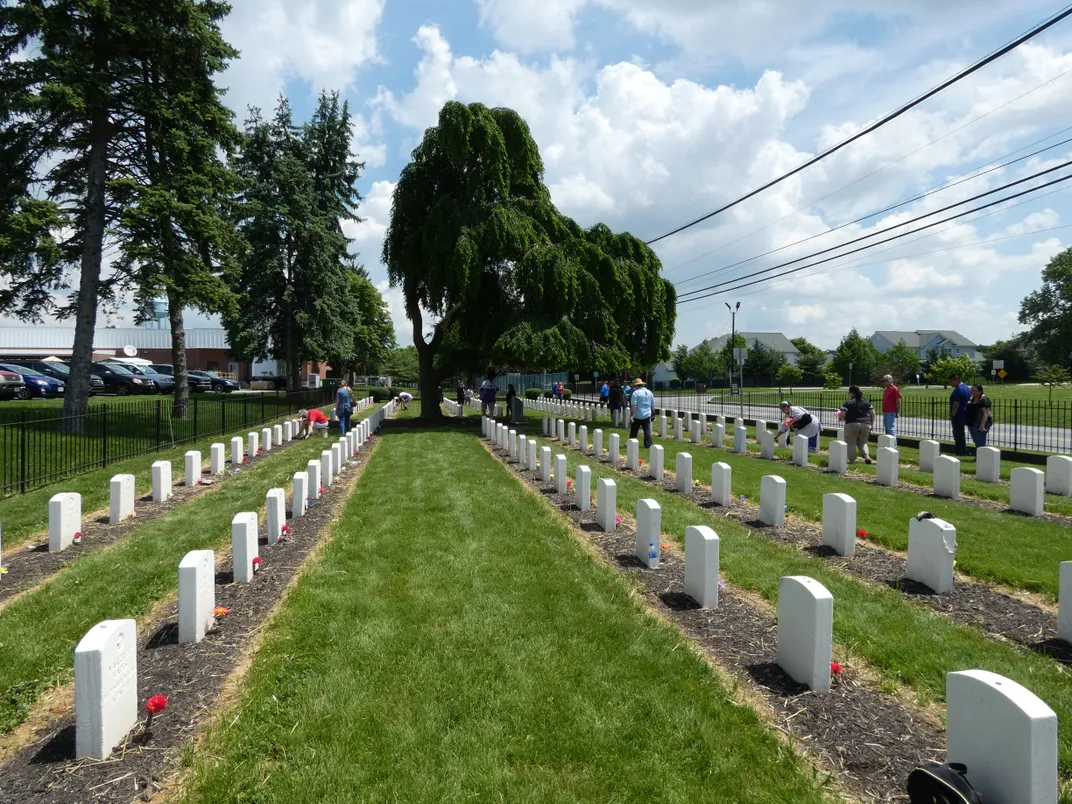
Estimated to be born in 1880 or 1881, Frances was the daughter of Chief Bones (a.k.a. Chonip) of the Nokoni Band of Comanches. An Army Corps of Engineers ledger book lists the eight children who accompanied Frances on November 5, 1894, from the Kiowa, Comanche and Wichita Agency in Indian Territory, now Oklahoma. Chief Bones sent Frances with $5.00. They arrived in Carlisle three days later. School records state that Frances passed away from pneumonia on May 7, 1895, less than six months after arriving at Carlisle. She was buried in plot A-22 in the Carlisle Barracks Post Cemetery.
“In 1894, $5.00 was enough to buy over-the-counter remedies and it was enough to cover the fee of a visiting physician which could cost between $1-$5. Understanding the small piece of information for Frances’s story is meaningful in many ways.” - Audrey Whitefeather Herrera, descendent of Frances Bones
Recently, Audrey Whitefeather Herrera became aware that the Comanche Nation was in the process of having Frances returned home to Oklahoma for re-burial and informed them of her direct blood relationship with Chief Bones. Frances’ repatriation is part of a broader effort to return the remains of 12 Native students from the cemetery to their families and/or tribes. Until this year, the U.S. Office of Army Cemeteries had trouble locating descendants of Frances. The reason that Frances’ name or story could have been lost is because there is an old Comanche tradition that when someone passes away, their name is no longer mentioned. In historical documentation, many Comanche family names have been lost through this traditional practice.
Before the Office of Army Cemeteries allowed the body to be returned, a doctor performed an analysis of the remains to confirm it is Frances. Herrera stated, “As they carried her body out of the Carlisle Barracks Post Cemetery, a huge overwhelming amount of sorrow hit me, and I gave a loud lulu (A shrill high-vocal sound made by women in times of victory, honor and sorrow).”
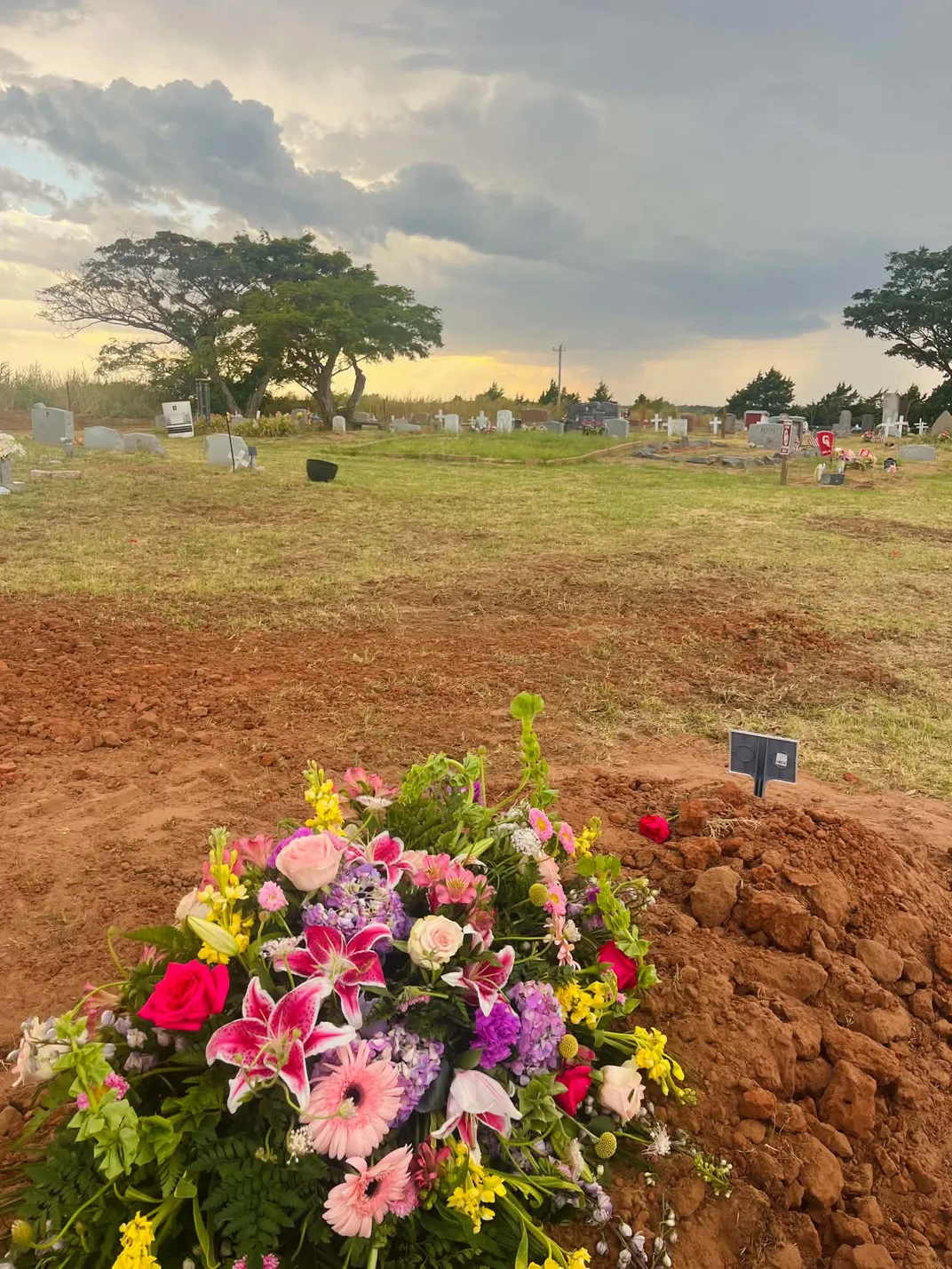
Frances Bones was re-buried on Saturday, September 26 at the Little Washita Indian Cemetery near Fletcher, Oklahoma. Herrera, her husband and others including Chairman Forrest Tahdooahnippah, news reporters, a tribal spiritual advisor and many citizens of the Comanche Nation witnessed Frances’s homecoming re-interment.
Today, thousands of Native students who survived the boarding school era suffer from mental health and other related issues directly related to their experience in boarding schools. Those that survived these inhumane conditions carry lasting emotional scars from their trauma for the remainder of their lives. In addition, many Native parents often do not have parenting skills because they were not raised by their parents and often pass down the harsh punishments that they were subject to, to their children. This historical trauma continues to foster a detrimental impact on Indigenous individuals and communities today.
Wednesday, September 30, is National Day of Remembrance for U.S. Indian Boarding Schools Day honoring survivors, remembering children who never returned home, and calling for truth, healing and justice. In addition, Representatives Sharice Davids (D-KS) and Tom Cole (R-OK), co-chairs of the Congressional Native American Caucus, introduced a bipartisan House Resolution designating the week of September 27 through October 3, 2026, as Indian Boarding School "National Week of Remembrance."
/https://tf-cmsv2-smithsonianmag-media.s3.amazonaws.com/filer_public/e8/60/e860f829-1c84-4483-928e-2f165497b001/carlisle_3_dz_at_cemetary.jpg)