

The Enormous Fan That Powered a Historic Wind Tunnel
When it came to testing American aircraft, a super-sized wind tunnel fan demonstrated that bigger was oftentimes better.
Few technologies have been as foundational to the advancement of human flight as the wind tunnel. First used in the 1870s, wind tunnels operate on the principle that moving air over a stationary object produces the same forces as moving an object through the air. Among their many benefits, wind tunnels provide data that is more consistent and easier to obtain than subjecting an airframe (and pilot!) to the unpredictability of the open skies. In 1901, Orville and Wilbur Wright famously built a small tunnel to systematically collect data for their glider experiments, research that directly contributed to their historic flight on December 17, 1903. More than a century later, wind tunnels remain just as invaluable to our own understanding of how things fly.
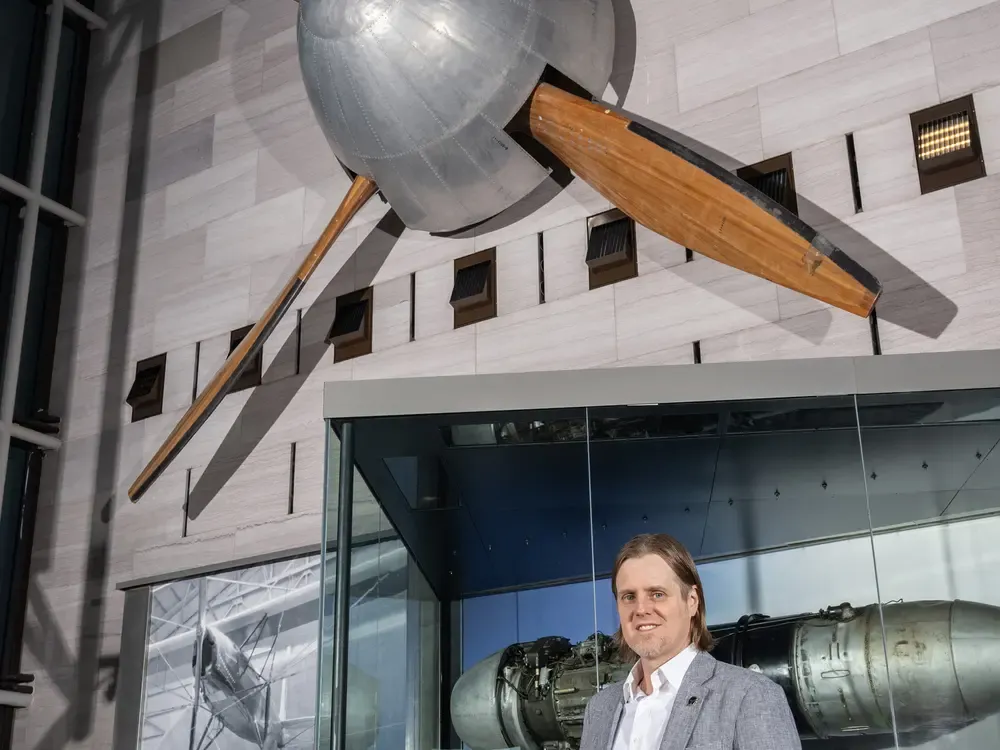
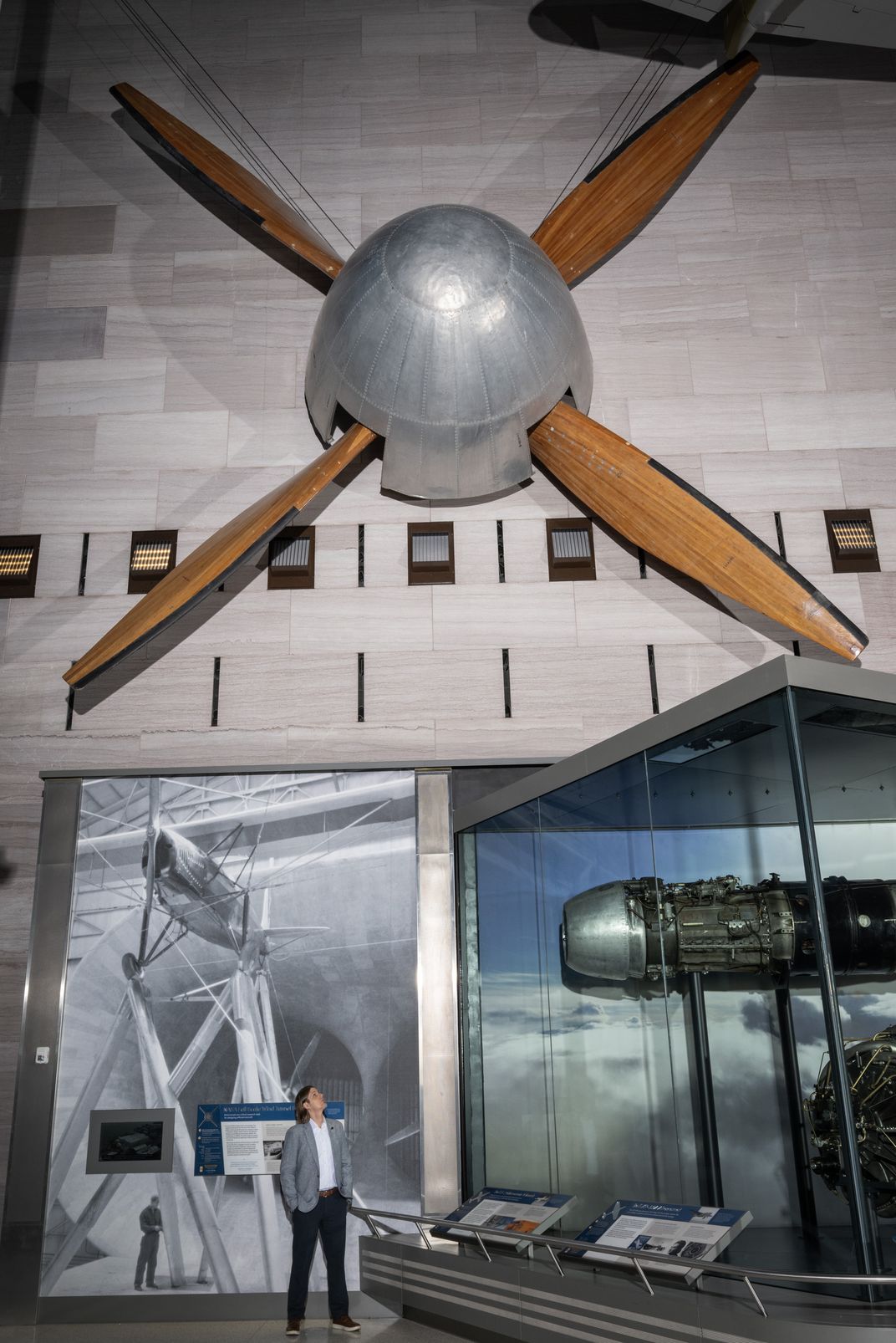
One of the most impressive testaments to the enduring relevance of the wind tunnel is an artifact displayed in the National Air and Space Museum’s Boeing Milestones of Flight Hall. The object in question is a massive four-blade fan salvaged from the now-demolished Full Scale Wind Tunnel (FST) at NASA’s Langley Research Center in Hampton, Virginia. Measuring nearly 36 feet in diameter and tipping the scales at 6,855 pounds, the gigantic fan was one of a pair that moved air through the FST at speeds up to 118 mph. Unlike smaller tunnels that could accommodate only scale models, the Langley tunnel’s expansive 30 x 60-foot test chamber was capable of mounting full-size aircraft with wingspans up to 40 feet. When the FST began operating on May 27, 1931, its ability to safely collect data on complete airframes marked a huge step forward for aeronautical engineering in the United States.
Aside from providing an occasional chuckle when an awestruck visitor asks what type of airplane the FST fan powered, there are three reasons why it’s one of my favorite artifacts. First and foremost is the sheer number of classic aircraft the fan helped improve as part of the Langley wind tunnel. From the mid-1930s through the end of World War II, drag cleanup was a core activity of the FST. Working around the clock, tunnel engineers placed dozens of iconic U.S. aircraft models in the FST’s test section, where they then used wool tufts, putty, and sheet metal to identify and fix drag sources. The Museum currently holds several examples of FST-improved aircraft, including the Curtiss P-40 and the Vought F4U Corsair. The FST’s role as an essential tool in refining these and other aircraft was an undeniable factor in U.S. dominance of the skies during the war.
Beyond its connection to the Museum’s aircraft collection, another reason I find myself drawn to the FST fan is its amazing versatility. Like a utility player on a baseball team, the FST carried out many different types of research during its decades of operation. In the early 1950s, for example, the Langley tunnel gained renewed attention as a platform for free-flight testing of dynamically scaled models. Combined with its proven full-scale credentials, this new capability extended the wind tunnel’s useful life and provided critical support for such varied projects as space capsules, lifting bodies, variable-sweep wings, and supersonic transports. By the time the FST ran its final tests on a Boeing X-48C unmanned aerial vehicle on September 4, 2009, its 78 years of service had made an impressive contribution to U.S. aviation history.
The final aspect of the FST fan that stands out to me is the durability and craftsmanship of its construction. Langley woodworkers hand-carved each of the 600-pound blades from laminated Sitka spruce, a labor-intensive process that ensured the fan could be fine-tuned to just the right balance. Mounting plates and bolts made from heavy-gauge steel join the blades together, giving the fan the appearance of something from an industrial-era factory. A sturdy sheet-aluminum nosecone completes the fan, its dings and spray-painted notes testifying to the artifact’s history. Installed in 1938 to replace one of the tunnel’s original cast-metal fans, the entire fan assembly was as rugged and long-lived as the FST itself, operating with only minor repairs and maintenance until the facility’s closure.
Knowing these stories, I hope visitors to the Museum will recognize the FST fan as more than just a bulky relic suspended among the sleek modern aircraft of the Boeing Milestones of Flight Hall. In fact, this wood-steel-and-aluminum object was part of an essential engineering tool that helped propel the U.S. to the forefront of aeronautical research.
Joseph Abel is a curator in the National Air and Space Museum’s aeronautics department.
This article, originally titled "A Mighty Wind," is from the Summer 2026 issue of Air & Space Quarterly, the National Air and Space Museum's signature magazine that explores topics in aviation and space, from the earliest moments of flight to today. Explore the full issue.
Want to receive ad-free hard copies of Air & Space Quarterly? Join the Museum's National Air and Space Society to subscribe.