
A Rainbow Eclipse and X-Ray Fireworks Are Among These Cosmic Treats
A solar eclipse painted the cloudy U.K. skies and an explosion rocked a stellar corpse in our picks for this week’s best space images

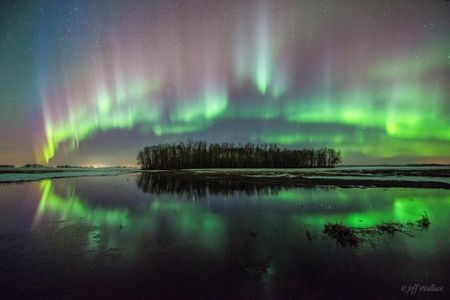
These Stellar Wonders Include a Red Aurora and a Billowing Black Hole
A light show over Montana and an eruption snapped by a satellite feature among our picks for the week’s best space images
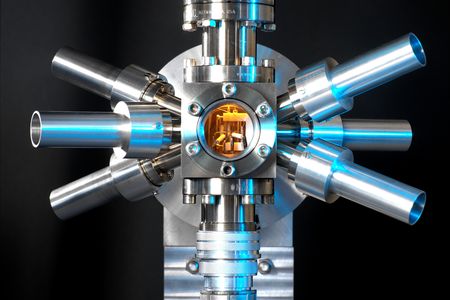
Send Atomic Clocks to Space to Find Gravitational Waves
A new breed of the hyper-accurate clocks could help scientists detect the elusive ripples in space-time faster and cheaper
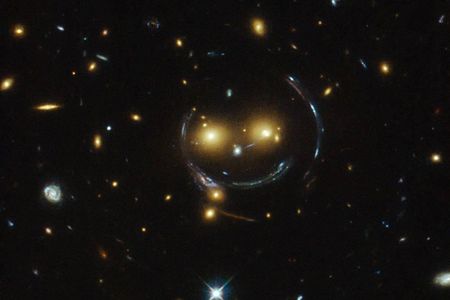
These Spacey Treats Include a Galactic Smiley Face and an Interstellar Rose
A lucky lens and a pair of mismatched star twins feature among our picks for the week’s best space images
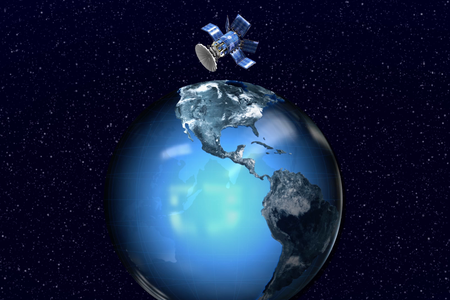
Ask Smithsonian: How Does a Satellite Stay Up?
Meet a Harvard-Smithsonian researcher who monitors all the satellites and explains why they rarely fall
New Exhibit Showcases the Power of Light in Our Everyday Lives
The open-source show “LIGHT: Beyond the Bulb” crosses disciplines to show the many ways photonics has improved our lives
New Super-Earths Double the Number of Life-Friendly Worlds
Three studies looking at small, rocky planets are helping astronomers figure out how common worlds like ours are in the galaxy

Three recent black hole events and how they shape our universe
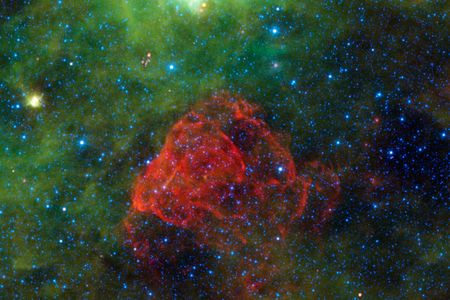
The Big “Gravitational Wave” Finding May Have Actually Just Been Some Dust
A supernova remnant interacting with interstellar dust could have caused the signals interpreted to be gravitational waves
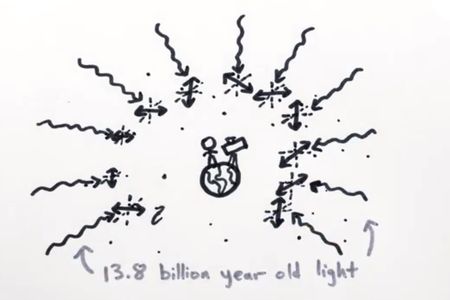
The Science of Monday’s Big “Gravitational Wave” Thing Explained in Two Minutes
Big Bang news left you lost? This Minute Physics video might help
How Two Pigeons Helped Scientists Confirm the Big Bang Theory
For decades, astronomers had debated how the universe began. Then, in 1964, they had their “Eureka!” moment
Page 6 of 6