Subscribe to Smithsonian magazine and get a FREE tote.

Cool Finds

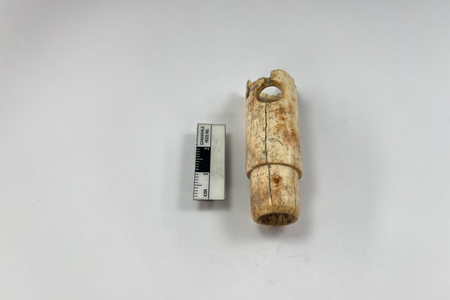
Researchers found the bone flute in an archaeological layer of Troy that dates to the eighth century B.C.E.

Cool Finds

Crafted From Bone, This 2,800-Year-Old Flute Unearthed in Troy May Have Been Played Around the Time That Homer Composed ‘The Iliad’ and ‘The Odyssey’

After more than 150 years of excavations, the object is the first musical instrument ever discovered in the ruins of the ancient city, which is located in modern-day Turkey
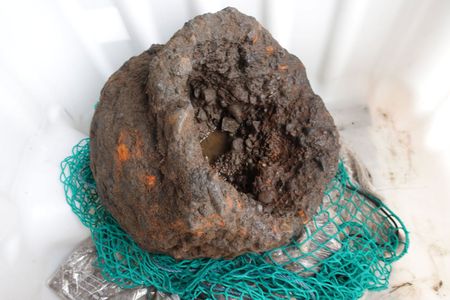
Researchers are examining the cauldron to learn more about its origins.

Cool Finds

Divers Recover a Mysterious Cauldron That Had Been Hiding at the Bottom of an English River for Hundreds of Years

Nobody knows how the three-legged iron cauldron ended up in the River Wear. Weeks before Halloween, it finally returned to the surface
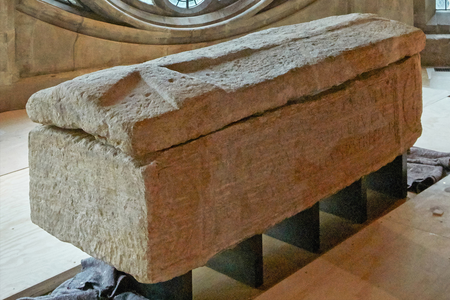
The Roman sarcophagus is on view in the Queen’s Diamond Jubilee Galleries at Westminster Abbey.

Archaeologists May Have Solved the Mystery of a Roman Sarcophagus Excavated at Westminster Abbey in 1869

New research suggests that the ancient coffin was repurposed in the 10th or 11th century to hold the remains of an abbot who had overseen the London monastery

The archaeologists were thrilled when they found the human remains.

Cool Finds

Archaeologists Searching for Evidence of a Norse Church in Greenland Have Found ‘the Smoking Gun’ Near Erik the Red’s Settlement

The site was first identified as a possible church decades ago, but researchers did not confirm that hunch until they found human remains there this summer. It could offer another clue to the Viking’s unexplained 15th-century disappearance
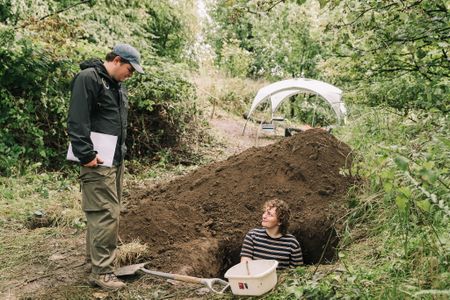
Archaeologists and volunteers took part in excavating the dike near Glasgow.

Cool Finds

When a 19th-Century Scottish Landowner Blocked a Public Footpath, Locals Rebelled. Now, Archaeologists Have Unearthed Parts of His Controversial Wall

The rebellion against “Harvie’s Dyke,” a pair of stone walls erected in the 1820s, was a triumph for the workers and middle classes of Glasgow, who used riots, boycotts and lawsuits to win back access to the River Clyde
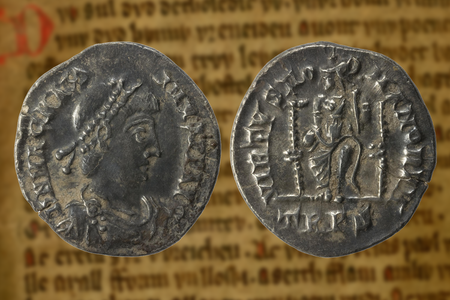
A coin bearing the likeness of the fourth-century C.E. Western Roman emperor Magnus Maximus, overlaid atop a page from a medieval manuscript of the Mabinogion

Cool Finds

Legend Has It That This Roman Emperor Established a Camp in Wales. A Newly Discovered Fort May Offer Proof That It Really Existed

An archaeologist has uncovered an ancient fortification linked to Magnus Maximus, a fourth-century ruler who is immortalized in the medieval “Mabinogion” stories as Macsen Wledig
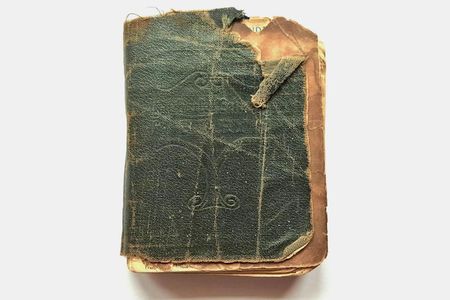
Claude Nuttall's pocket diary measures just under four inches long.

This Soldier Kept a Diary in the Trenches of World War I. A Child Found It at the Dump Decades Later, Pierced by a Bullet and Stained With Blood

Corporal Claude Nuttall recorded his wartime experiences in the diary. Now, after decades of research, a museum curator is telling the soldier’s story in a new book
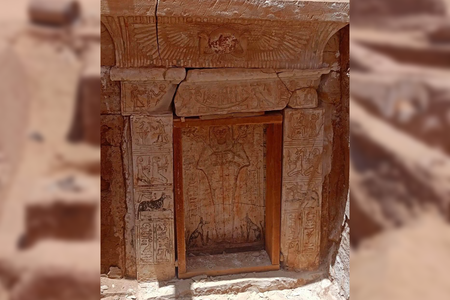
The tomb's entrance is inscribed with protective funerary spells.

Cool Finds

Archaeologists in Egypt Discover a Mud-Brick Tomb Featuring a Heartbreaking Elegy to an Ancient Man’s Father

The 19-line poem was inscribed on a stone slab in the Bir al-Shaghala necropolis. The lament “is a highly literary and original epigram,” a scholar says
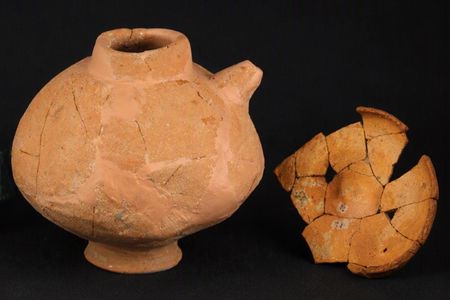
The tettina was found broken into pieces in 2011.

Cool Finds

Mourners Placed an Ancient Sippy Cup in a Roman Toddler’s Grave. It May Have Been Meant to Sustain the Child on the Journey to the Afterlife

Fragments of the spouted cup, known as a “tettina,” were unearthed in England over a decade ago. It has recently been restored and put on display for the first time
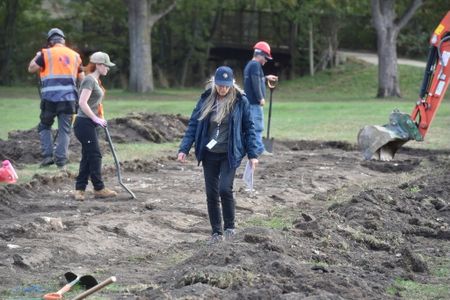
"Time Team" archaeologist Carenza Lewis helped supervise the dig.

Cool Finds

Volunteers Are Helping Unearth One of England’s Oldest Leprosy Hospitals, Giving a Glimpse Into How Victims of the Disease Were Treated in Medieval Times

Researchers believe that the Hospital of the Holy Innocents, founded in the 11th or 12th century, may have had “little houses with a little yard” for up to 20 people with leprosy. “You’d need to have resources to get in here,” one archaeologist says.
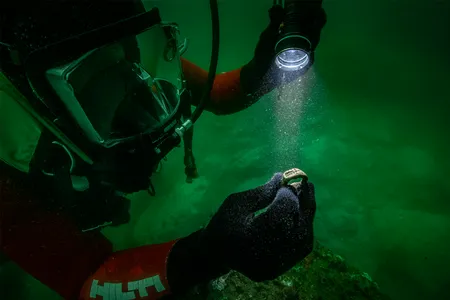
An underwater archaeologist examines a bronze signet ring discovered off the coast of Alexandria, Egypt.

Cool Finds

This One-of-a-Kind Bronze Ring Offers a Tantalizing Glimpse at the Lighthouse of Alexandria, a Lost Wonder of the Ancient World

Archaeologists in Egypt discovered the signet ring while conducting excavations on the island of Antirhodos, which once housed a lavish Ptolemaic palace
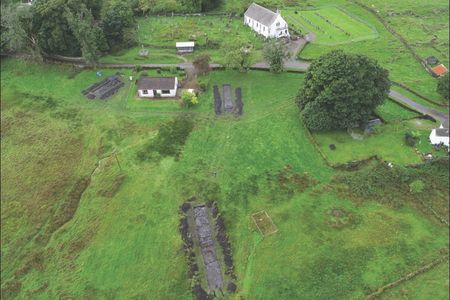
An aerial view of the archaeological trenches dug around Lismore's parish church, a 13th-century cathedral

Cool Finds

A Community-Led Archaeology Dig on a Tiny Scottish Isle Has Unearthed a Medieval Monastery of ‘International Importance’

The settlement, founded by an early Christian saint in the 500s, is “far more than a small island church.” It may have played a larger role in the Christianization of Britain than historians once realized

An artistic concept of the second-generation planet orbiting the white dwarf HS 0209+0832

Like a Mythical Phoenix, This Planet May Have Risen From the Ashes of a Dead Star

The “second-generation” world, predicted from telescope data, could be the first known planet of its kind, and it may shed light on the future of our own solar system
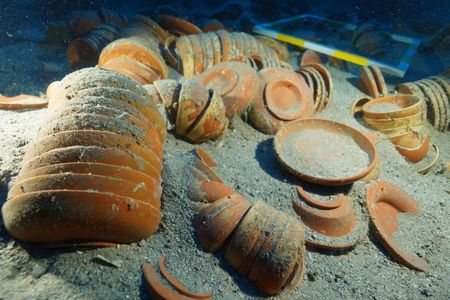
The dishes were packed carefully, and many remained intact.

Cool Finds

A Ship Carrying Stacks of Ancient Dishware Sank Off the Coast of Turkey 2,100 Years Ago. Its Ceramic Cargo Is Still Remarkably Intact

Researchers believe that the vessel’s plates and bowls were made in the ancient city of Rhosus, once praised by Roman statesman Cicero for its “fine pottery”
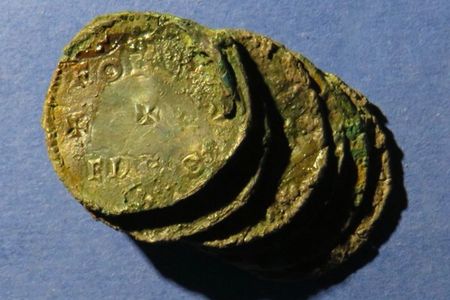
Twenty coins discovered in Rome may be the first physical evidence of a "Little England" enclave.

Cool Finds

What Are Medieval English Coins Doing in Rome? They Could Be Rare Evidence of a ‘Little England’ Enclave That Received Special Papal Privileges

Researchers argue that the tenth-century coins provide new evidence of a bustling English community located next to the Vatican that was permitted to use its own currency
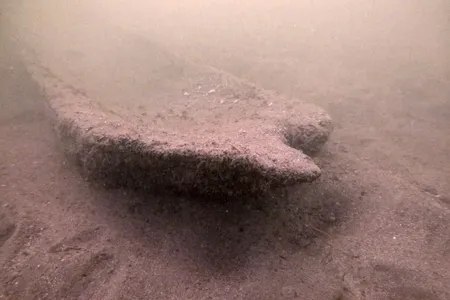
The canoe is submerged 15 feet deep in Wisconsin’s Pewaukee Lake.

Cool Finds

A Diver Volunteered to Clean Up Trash From a Wisconsin Lake. He Discovered a 1,000-Year-Old Dugout Canoe at the Bottom Instead

Indigenous communities near present-day Milwaukee likely hand-carved the white-oak vessel before shaping it with fire between roughly 992 and 1049 C.E.
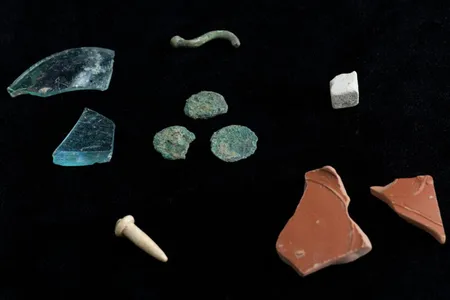
A few of the ancient Roman artifacts found beneath the Bath Assembly Rooms

When Jane Austen Took a Turn About the Ballroom in Bath, Ancient Roman Artifacts Were Hiding Beneath Her Feet. Now, Archaeologists Have Finally Found Them

Recent excavations at the Bath Assembly Rooms in England revealed Roman-era coins, roof tiles, pottery, glassware, a network of ditches and a fragment of a military helmet
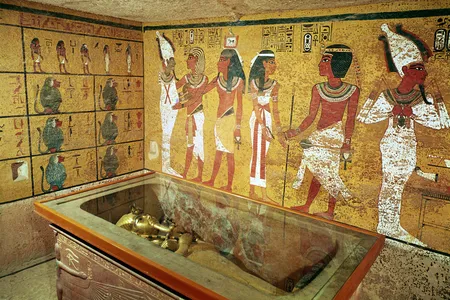
The tomb of King Tutankhamun in Egypt

New Research

Mysterious ‘Anomalies’ Have Been Detected Beyond King Tut’s Tomb. Could They Be Secret Passageways Leading to the Long-Lost Remains of Queen Nefertiti?

Geophysical surveys provide new evidence for a theory that the Egyptian pharaoh was interred in the outer rooms of an existing burial complex. Researchers are trying to get approval to investigate for themselves
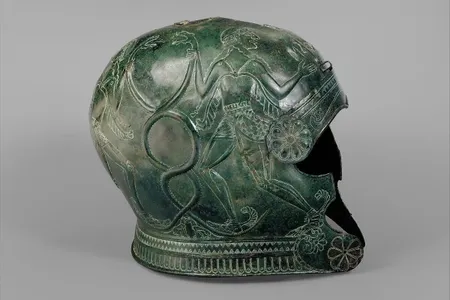
A bronze helmet with hammered decoration from Heraklion, Crete

Cool Finds

See a Stunning Collection of Stolen Greek Artifacts, Spanning 5,000 Years, That Were Just Returned to Greece

The antiquities were seized at the Metropolitan Museum of Art by investigators from the office of Manhattan District Attorney Alvin L. Bragg Jr.
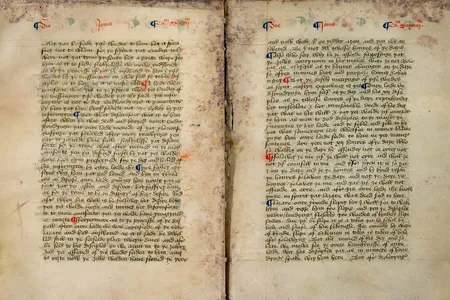
Pages from a manuscript of Nicholas Love's Mirror of the Blessed Life of Jesus Christ

Cool Finds

Henry VIII Relied on This Courtier to Enforce His Orders During the English Reformation. Behind the Scenes, the Tudor Politician Defied His King by Secretly Saving a Catholic Text

A newly discovered fragment suggests that John Gage preserved a 15th-century religious manuscript, keeping it “safe when he was meant to destroy books precisely like this one”

Page 1 of 285