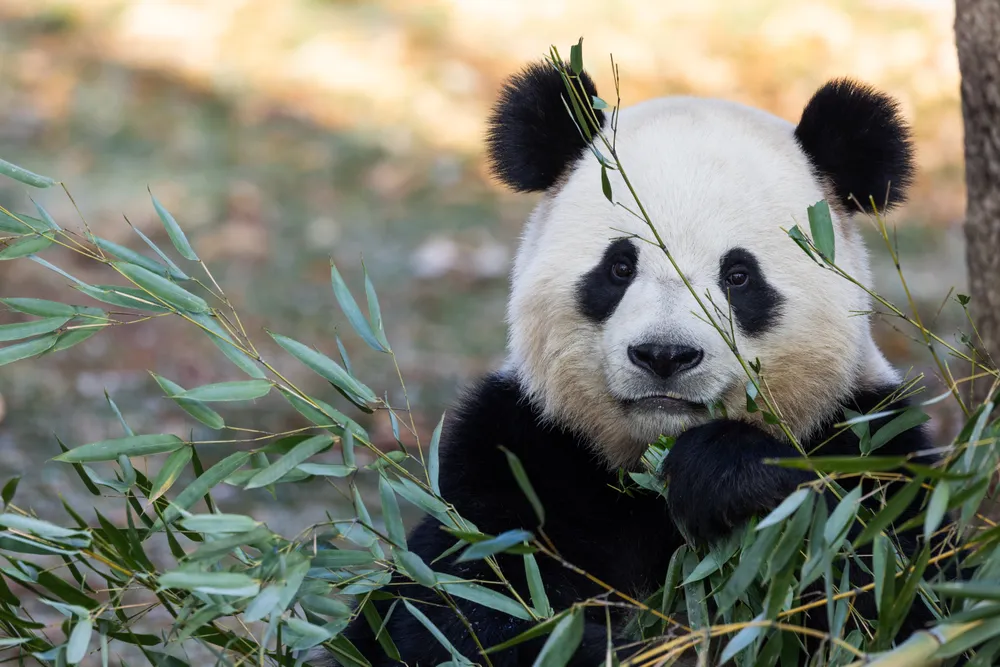
How Do Pandas Have Sex While in Human Care? As the National Zoo’s Director Details in Her New Book, It Takes a Village of Dedicated Keepers
Brandie Smith, who leads the Smithsonian’s National Zoo and Conservation Biology Institute, has seen more of pandas’ private lives than most people ever will. With “In the Company of Pandas,” she explores the world of the lovable black-and-white bears

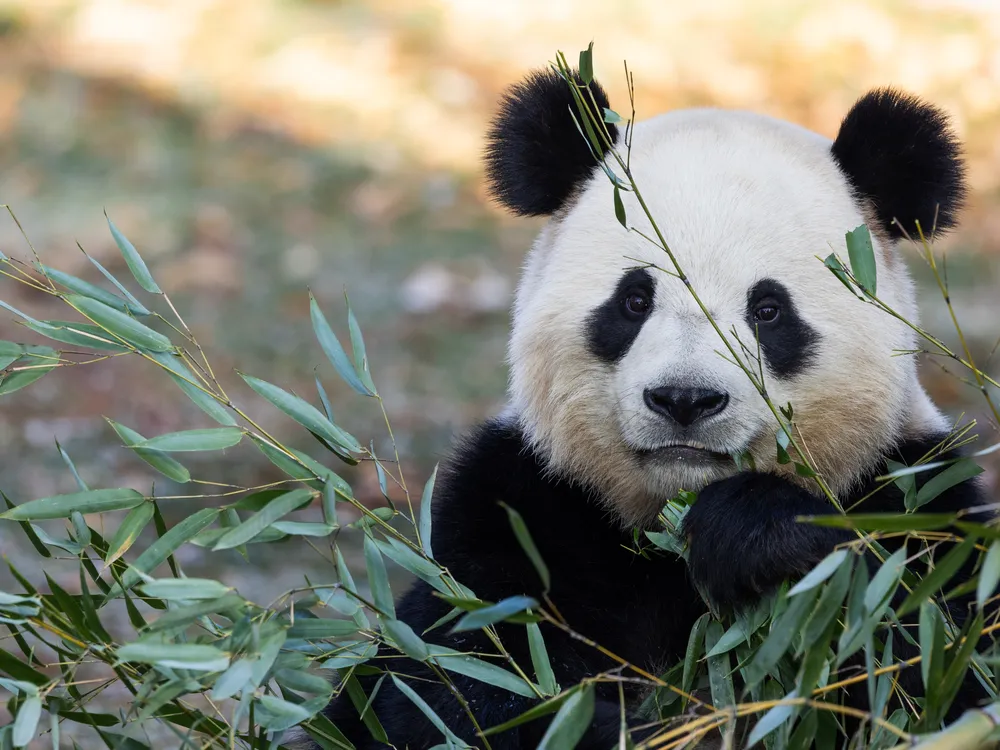
Brandie Smith has spent much of her zookeeping career fielding journalists’ questions about panda pregnancies. As Smith writes in her new book, In the Company of Pandas, every breeding season, reporters wanted to know: “Is she, or isn’t she?”
Smith joined the Smithsonian’s National Zoo and Conservation Biology Institute as a staff member in 2008 and is now its director. During her time at NZCBI, Smith has shepherded several generations of giant pandas through life. She’s been there at every stage: handling the pandas as babies, at their tiniest and pinkest, and watching their furry spots grow in. As they’ve matured, she’s also watched their repeated mating challenges. (Artificial insemination has been a useful backup method for the pairs that just can’t figure it out).
But her favorite part, she says, has been getting to know the giant pandas’ unique personalities. In the 2010s, she watched over the ever-independent female panda Bao Bao, a prolific tree climber. Today, she observes the male panda Bao Li, who often falls asleep while eating.
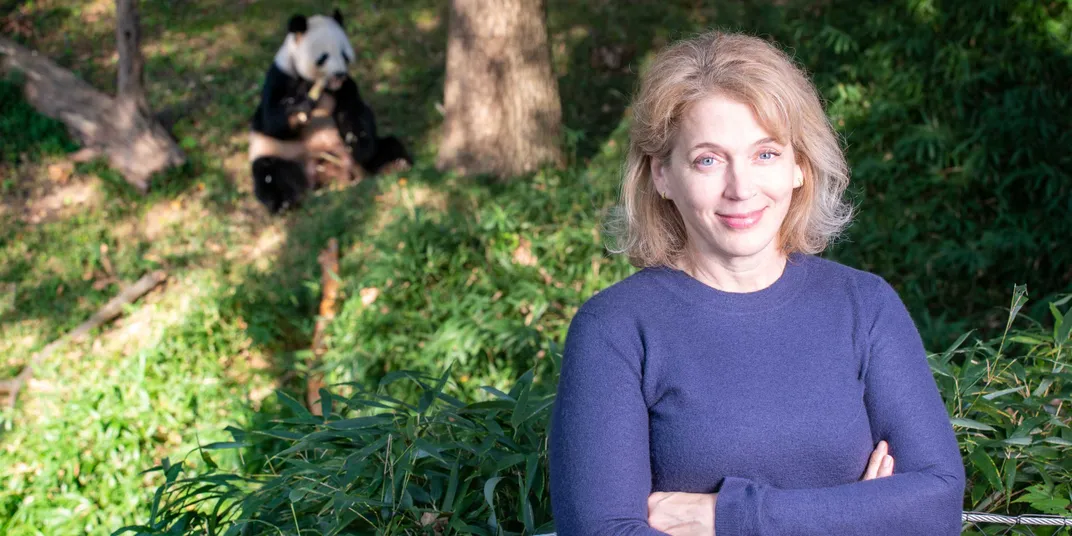
Before the November 10 release of Smith’s book describing her life with pandas, she spoke with Smithsonian magazine about panda sexual frustration, the difficulties of telling apart real and fake pregnancies, and the pros and cons of bamboo.
This interview has been edited for length and clarity.
You didn’t start your career out enamored with pandas. When did they win you over?
I have two moments. The first was when I came here with my parents to visit the Zoo and see the giant pandas. We saw Hsing Hsing. I just remember it being a “wow” moment, and sharing it with my family, and thinking about just how incredible they were.
And then the other panda moment is when I got a job here. Meeting a panda for the first time, I was like, what if the panda doesn’t like me? Do I get fired if the panda looks at me and deems me wanting? It was Tai Shan, and I remember being more afraid than excited because I was afraid of what would happen if he didn’t like me.
Were you wondering: What if he turns away?
Yes, or what if he—I didn’t know pandas that well. What is a noise of dismissal from a panda? Is it like “tuh!” or “grr”? What kind of noise was he going to make if he deemed that I was not up to the job of taking care of him? I remember the moment of fear, walking up to him, very clearly. There was just a little bit of mesh between him and me, so he could get the chance to see, to really judge who I was. I gave him a biscuit, and pandas are pretty simple that way. So it was also falling in love with pandas in a different way, getting to understand them as individuals.
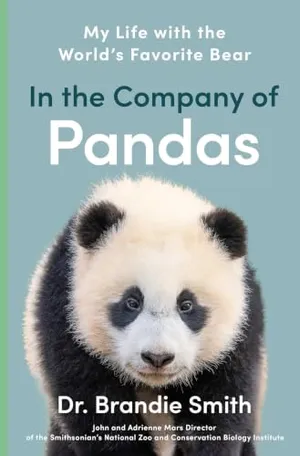
In the Company of Pandas: My Life with the World's Favorite Bear
Spend time in the company of giant pandas with this delightful collection of stories and first-person insights about their behavior, biology and conservation from panda expert Dr. Brandie Smith, director of the Smithsonian’s National Zoo and Conservation Biology Institute.
You talk a lot in the book about getting to know pandas as individuals and how that inspired you to write it.
There’s a lot of information out there about giant pandas, but there isn’t that first-person experience: This is what my life with a giant panda was like. What is it like to hold a panda cub in your hands? What is it like to pull a panda cub out of a tree? They can really hold on more than I thought. What is it like to get to know a panda? What does it take to make a panda happy? People talk about pandas in the abstract, but I wanted to tell the story of what it was like to work with them in person and to have those moments.
And to get to know them and their personalities, right? You write about the pandas as distinct characters.
I think people perceive them as celebrities, so they think of them as two-dimensional, almost. I don’t think people truly appreciate how unique each individual panda is. And part of our job is to help people love pandas, so that they want to be part of the panda conservation story.
It’s hard to spot pandas in the wild, right? So many people study pandas and never even see one. How much of our knowledge of panda behavior stems from what we see in zoos?
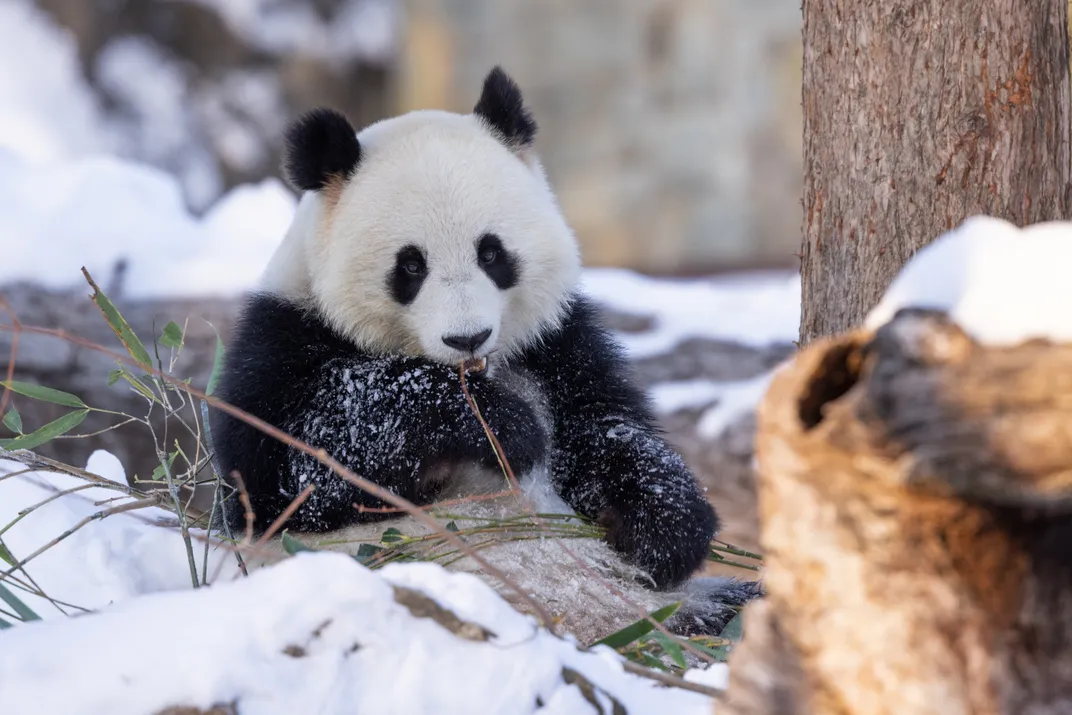
Pretty much all of it—not just about panda behavior but panda biology—comes from these opportunities to see them up close in zoos. Observing pandas in the wild is very difficult. There are some incredible field scientists who have done that, but you’re limited in what you can see. You can’t sit down and watch the entirety of their day or the entirety of a year. The information we have from pandas in zoos has really allowed us to understand behavior in a way we can extrapolate into how to help save pandas in the wild.
Do we think that they behave differently in the wild?
There are a lot of behaviors you can assume would be the same. The amount of time spent foraging, the amount of food they have to conserve, panda mating, maternal care. There’s a lot of certainty that we can extrapolate to wild pandas. I sometimes wonder if there are behaviors we haven’t yet observed in the wild, and then we manage pandas based upon the limited knowledge that we have. We know they’re relatively solitary animals, which is why we keep pandas separate. But are there any stages, phases of their lives when they might be more social?
In captivity, ensuring that pandas are genetically well-matched is really important. What goes into the panda arranged marriage?
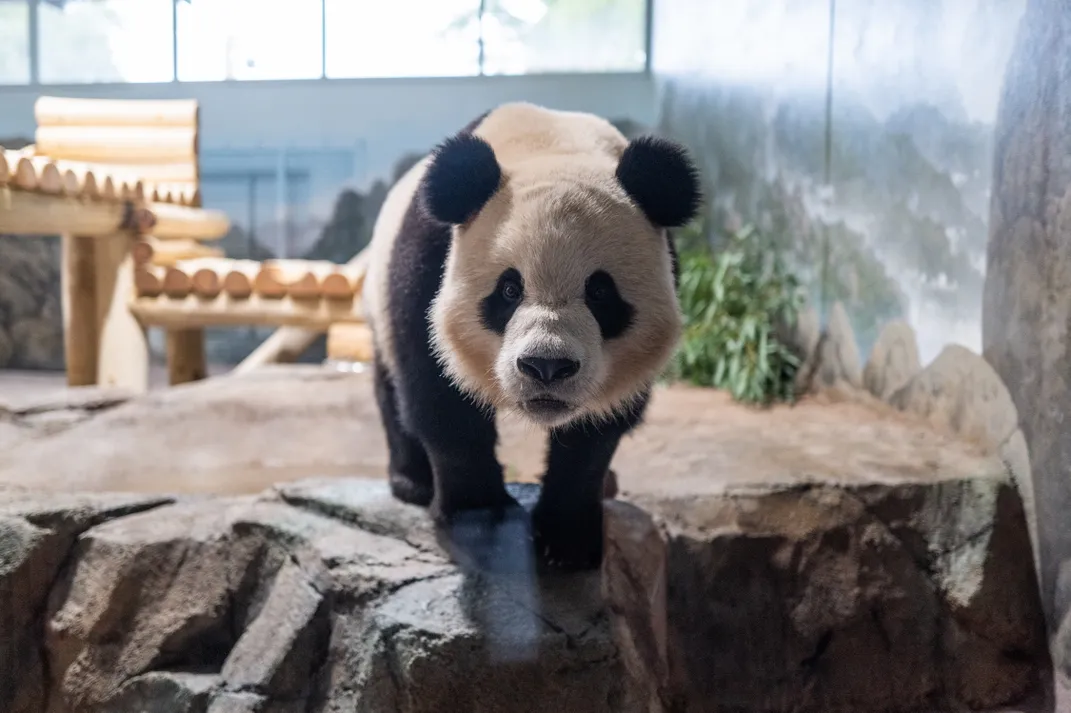
We know the pedigree of all of the pandas in captivity in zoos and in breeding centers. We match pandas genetically to ensure we are capturing as much genetic diversity from the wild as possible, and that we are not breeding related individuals. There’s also a social component. You want to make sure you have pandas that are going to get along, that’ll be a good match.
A lot of the book is about trying to get pandas to have sex, which is seemingly difficult.
When my editor first saw the first draft of the book, he’s like, “There’s so much sex in this book.” And I’m like, “But that’s pandas.” The reality is the panda population was so small. You can save all the habitat you want in the wild. But if you don’t have a stable population, then you’re doing it to no end.
Everybody talks about panda cubs. They’re like, “Oh, you just want these cute panda cubs?” Well, yes, because that pulls on people’s heartstrings and makes them part of the conservation story. But the reality is, this is a program of survival, so the goal is to make as many pandas as we possibly can.
Did you know? Artificial insemination
When female pandas are artificially inseminated, zookeepers often use a mixture of semen samples from multiple bears to increase the likelihood of a successful fertilization.
And staff tries to coach the pandas to reproduce.
If you read the book, you find out Ling Ling and Hsing Hsing couldn’t mate, but then one year they figured it out, and after that they had it down. Using that as our inspiration, we had Mei Xiang and Tian Tian, and we assumed they’d have to fumble around for the first few years, but eventually they’d figure it out. But they never did.
So Mei Xiang would pancake; she would lie flat on the ground. And then Tian Tian would essentially just step on her. And so we’re like, how can we either get Mei Xiang to assume the correct posture so that Tian Tian can do what he needs to do? Or how can we get Tian Tian to help her assume the correct posture? We did everything. We thought of strengthening exercises for Tian Tian in the off season, so he was in shape, he was ready for breeding season.
There was a rumor that the year Tai Shan was born, Mei Xiang fell out of a tree, and she kind of was in the right posture for Tian Tian to come up behind her and to mount her naturally, and so we were, like, maybe we can create a similar situation.
There are these big, hard plastic toys. And we were, like, maybe if we get one in the right location, Mei Xiang will trip over it, and then she’ll assume the posture. Tian Tian will see it. Something will click in both of their heads, and then they’ll breed naturally. But we could never do it. They were too amped up on hormones. They couldn’t think straight, and we couldn’t help them.
I assume the breeding season is a busy time for zookeepers.
In one of the chapters, I talk about zookeepers and how weird we are and the things that we talk about all the time. When the female panda is ready for breeding, when she’s in estrus, her vulva becomes a huge pink target. We’d monitor her vulva, because it would be like, OK, here’s where she is. The size and the color was an indicator of how soon we had to mobilize all of our forces to get involved. And so we would just send out photos. And I remember I was sitting next to someone in a meeting, and they opened their phone, and there was, like, a close-up.
What are some of the quirks of panda pregnancies?
Pandas have something called delayed implantation. Essentially, if an egg is fertilized, it doesn’t implant and start growing. It just hangs out for a while. So there’s a whole phase right after pandas breed, even if it’s successful, that everything is just back to normal.
Interestingly enough, a panda with a fertilized egg behaves no differently from a panda with an unfertilized egg. Whether there is a developing egg or not, it’s the same. The hormones are the same. Her uterus grows. Even looking through the window of an ultrasound, testing hormones, blood and urine, all of the data that you’re getting on a pregnant panda versus a pseudo-pregnant panda is exactly the same.
Why is it hard to tell whether a panda is truly pregnant? And what’s a panda ultrasound like?
We use the same equipment, the same gel as we would use on humans. They’re very cooperative in the training cage. They love ultrasounds, actually. But physiologically, it’s not always the easiest thing to see. You have to find that teeny-tiny little panda fetus within a giant panda, and you’ve got to get through fur and skin and fat and all those other things.
What are the panda babies like?
Some animals are precocial, right? An antelope baby can pretty much get up and run within minutes of its birth. These animals are more altricial. Humans are the classic example of things that are born and they’re just utterly helpless.
With pandas, it takes more effort to sustain a pregnancy internally than externally. Giant pandas den up, so they’re not exposed to environmental factors. There are basically no predators for adult giant pandas in the wild, and so there’s not a pressure to protect their infant from external predators. So energetically it makes sense for pandas to have their baby earlier and kind of finish cooking it on the outside.
As cubs grow, you’re also learning from them. Every individual animal is a data point in our understanding. It’s a lot of fun to wrap a tape measure around a little baby panda’s round belly. So I can’t pretend that it wasn’t the best job ever.
Why do pandas like bamboo so much?
Anybody who has bamboo in their yard knows that it grows like crazy. So it’s actually kind of genius. Pandas just kind of sit there, and their food grows up around them. They’ve exploited such an abundant resource. It doesn’t have a lot of energy, but it doesn’t require a lot of energy to eat it.
Are they eating all the time?
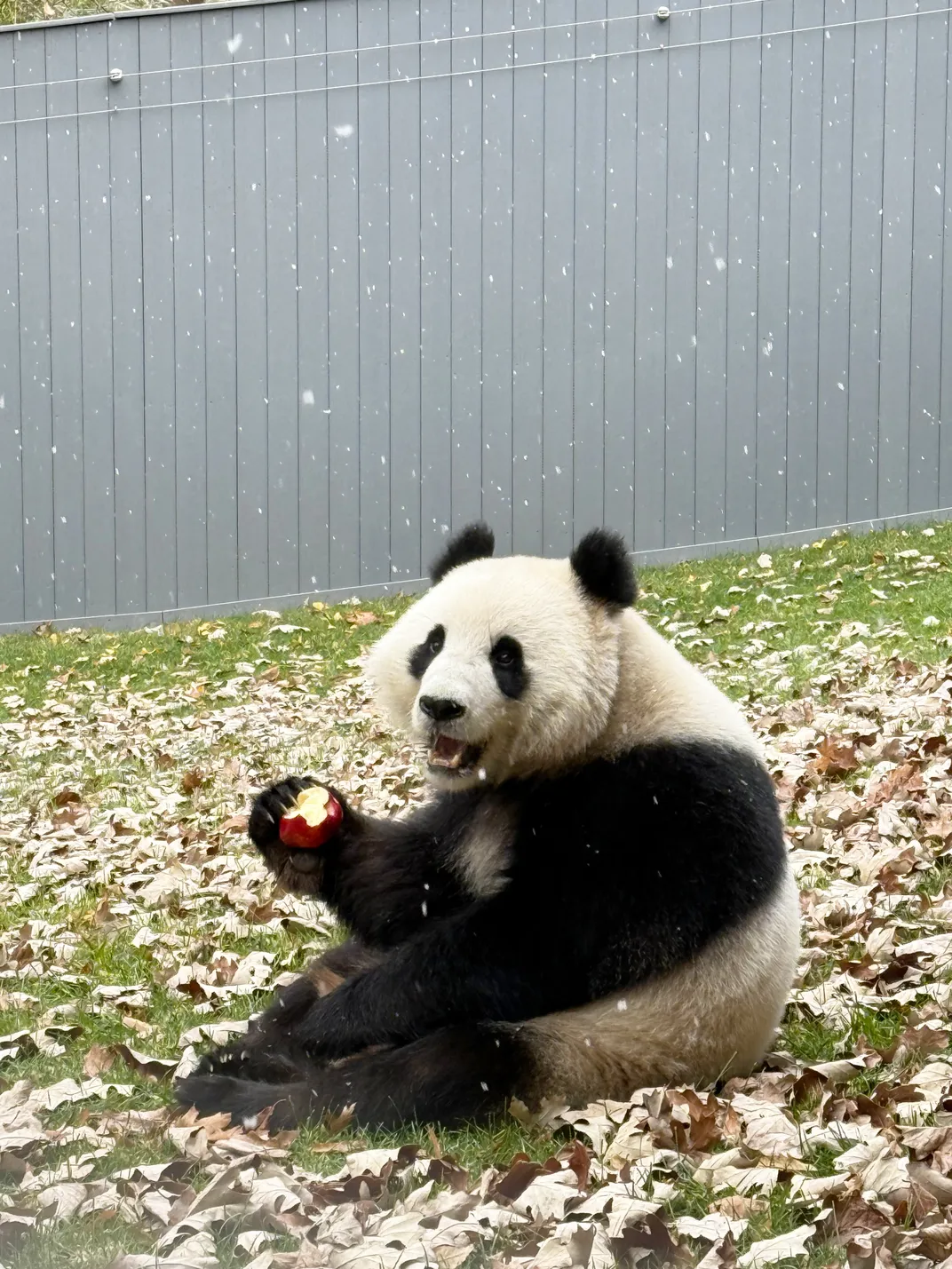
The life of a panda seems like everybody’s best life because they’re just eating and then they rest. Bao Li, our male panda, he’s so funny. He’ll eat bamboo and then all of a sudden he just stops. I’m like, I think he just fell asleep mid-chew. And then he just picks up eating. The fascinating thing, though, is that they eat different parts of the bamboo in different seasons. Sometimes they eat the leaf. Sometimes they eat the culm. They know which parts of the bamboo to eat at which times to maximize the energy and the micronutrients that they’re getting out of it at any given time.
What are some other interesting evolutionary quirks about pandas?
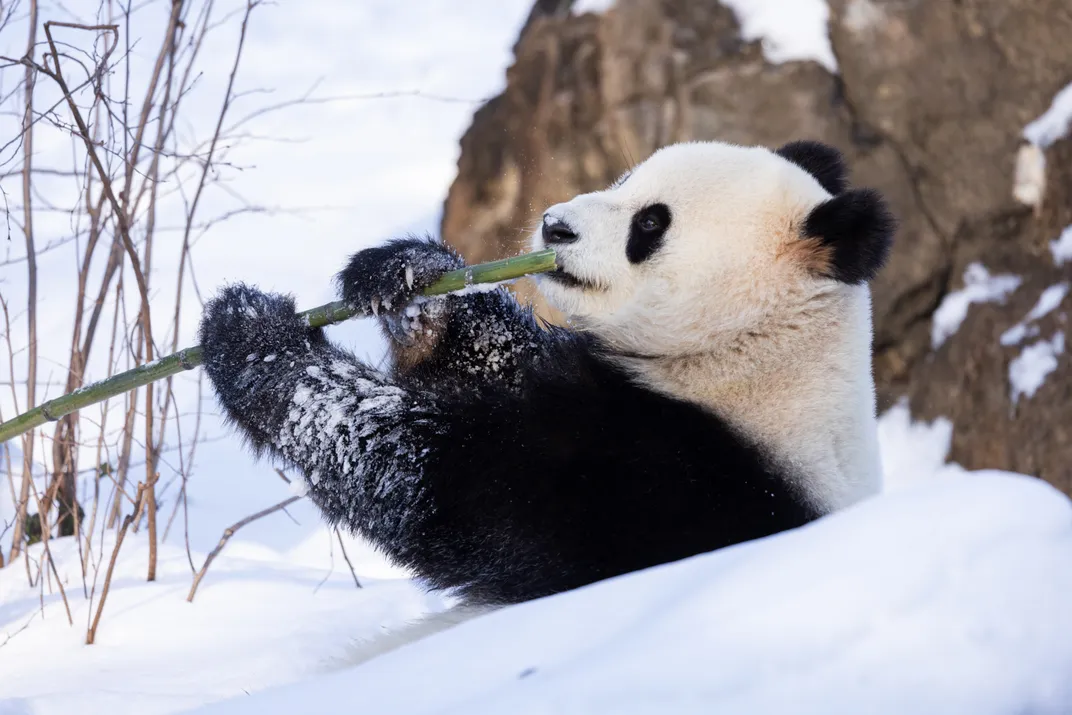
Everybody talks about the panda’s thumb. It’s a modified wrist bone. The amount of time it must have taken an anomaly in probably a single panda’s wrist bone to evolve over time to become a bone that has so much flexibility that it operates with the same dexterity as a primate’s thumb—that’s crazy.
That’s to hold onto the bamboo, right?
Yeah, bamboo is circular, so they don’t eat it like a cow does. They’re not just mowing through it. Although sometimes you watch, we see a panda eating grass like a cow, and it’s hysterical. But in order for them to eat it faster, just holding on and plowing through it is a lot easier. Because bamboo is a poor nutritional resource, eating more of it confers an advantage.
What do people get wrong about pandas?
The thing that drives me crazy is that people will say, “Oh, pandas can’t reproduce.” They say, “Oh, pandas were on an evolutionary dead end.” This is an animal that is perfectly evolved to its environment, right? Its nutritional strategy, its reproductive strategy. And then we come along, we mess up its environment, and then we blame the pandas.


Is there any panda research that you’re currently excited about?
Right now, we have a scientist who’s looking at the gut microbiome of giant pandas, and I know that’s a very trendy topic. But we’ve learned that the gut microbiome between Qing Bao and Bao Li are very different. And why is that? Does it confer any benefits? What does a healthy gut microbiome look like in giant pandas?
If you talk about reintroducing giant pandas, is there one that would be more suited for wild pandas? Is there a difference between the gut microbiome in pandas in the wild and pandas in zoos? Would we need to do some kind of supplementation for giant pandas that are going to be reintroduced? It’s super cool as we understand just how important the gut microbiome is in species writ large, and to really be kind of leading the charge in that direction with giant pandas.
Thanks for sharing your deep panda knowledge with me.
Honestly, it’s like someone showing up at your house and being like, “Tell me about your kids.” I can go on forever.