
Subscribe to Smithsonian magazine and get a FREE tote.

Stories from Georgia Michelman

Scientists at Italy’s Gran Sasso National Laboratory are working to confirm September’s potential dark matter detection.

The Search for a Top Dark Matter Candidate Was Losing Hope. Then Came a Potential Signal. Will It Be Enough to Energize the Struggling Field?

Physicists were growing weary with WIMPs, one proposed contender for the particles that make up dark matter. Despite their new cautious optimism, many challenges remain

Giant panda Bao Li eats bamboo in his outdoor habitat on January 4, 2025

How Do Pandas Have Sex While in Human Care? As the National Zoo’s Director Details in Her New Book, It Takes a Village of Dedicated Keepers

Brandie Smith, who leads the Smithsonian’s National Zoo and Conservation Biology Institute, has seen more of pandas’ private lives than most people ever will. With “In the Company of Pandas,” she explores the world of the lovable black-and-white bears
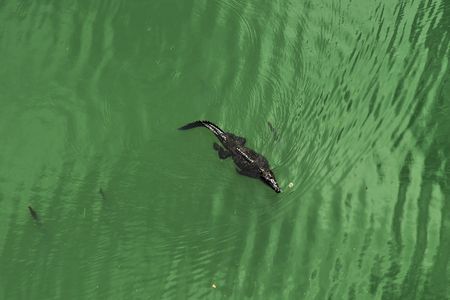
Top view of a crocodile in Gatun Lake, next to the Panama Canal, on March 23, 2015

The Panama Canal Has an Unusual Ecosystem, Flowing From Fresh Water to Salt Water and Serving as a Home to Crocodiles, Manatees and Sea Squirts. New Intruders Pose a Growing Threat to the Waterway

The species that occupy this artificial channel are transforming, thanks to a shifting environment and invading marine creatures. The Smithsonian Tropical Research Institute is tracking what happens next
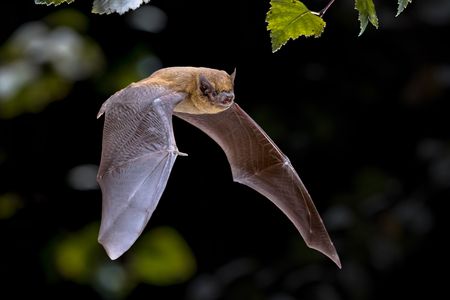
Bats navigate in the dark using echolocation. Scientists are piecing together how the animals understand the world through the mix of echoes that bounces back.

Bats Thrive in a Messy, Noisy World. These Four Discoveries Reveal How They Can Listen and Chatter Through the Din

From eavesdropping to echolocation tricks, science is giving us an inside look into how various bat species weaponize sound
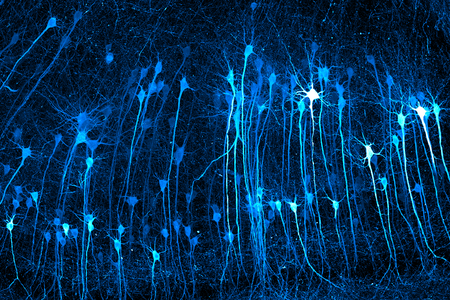
Third place: neurons in an expanded mouse brain

See the Scientific and the Mundane Become Surprisingly Dazzling When Viewed Through a Microscope, From Neurons to Ballpoint Pens

The Nikon Small World Competition has announced its photography winners for its 52nd annual contest. This comes weeks after its video winner was dethroned for use of generative A.I.
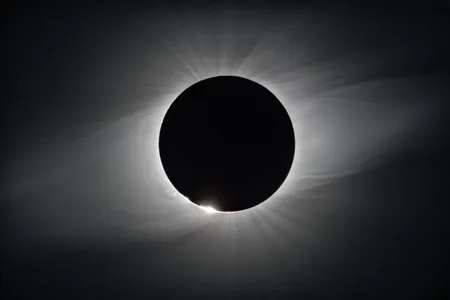
A total solar eclipse, as seen from the European Southern Observatory's La Silla Observatory in Chile in 2019

Were Two Ancient Chinese Astronomers Beheaded for Failing to Predict an Eclipse in 2134 B.C.E.? The Story May Be a Myth, but It Underscores the Real Risks of Interpreting Celestial Events

Experts say that an oft-circulated anecdote about two royal astronomers drunkenly failing to foresee an eclipse thousands of years ago contains hints of truth
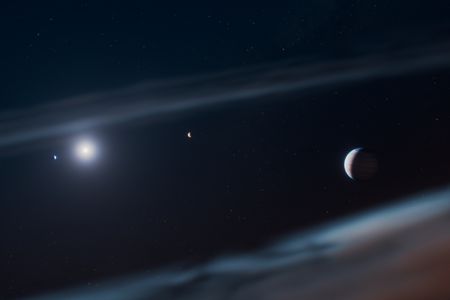
This artist’s concept shows the Beta Pictoris system, about 63 light-years away.

Researchers May Have Directly Glimpsed an Exoplanet’s Magnetic Field for the First Time, Building Hope of Peering Deeper Into Faraway Worlds

Radio signals emanating from Beta Pictoris b suggest that this young and massive exoplanet has a strong magnetic field and intense auroral show
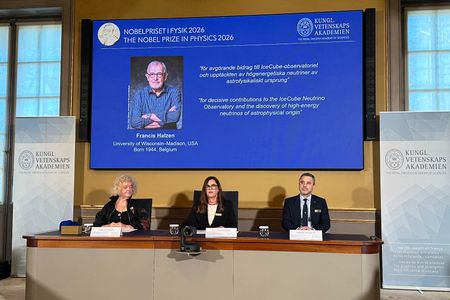
Francis Halzen is a Belgian American physicist who studies neutrinos, sometimes called "ghost particles," which come from space and rarely interact with ordinary matter.

Physicist Wins Nobel Prize for Developing a Massive, Ice-Embedded Observatory That Detects Ghostly Cosmic Particles

Francis Halzen of the University of Wisconsin-Madison led the effort to build the IceCube Neutrino Observatory in Antarctica. His work birthed the field of neutrino astronomy