
This Basilica Has Been Rising Above Barcelona for 144 Years. With Its Central Tower Now Complete, Pope Leo XIV Prepares to Visit
When Antoni Gaudí dreamed up his ambitious vision for Sagrada Família, he knew he wouldn’t live to see its completion. One hundred years after the architect’s death, the tallest tower has reached its peak
/https://tf-cmsv2-smithsonianmag-media.s3.amazonaws.com/accounts/headshot/MicheleDebczak.png)
/https://tf-cmsv2-smithsonianmag-media.s3.amazonaws.com/filer_public/3a/c3/3ac3fb1d-9ded-4703-a22e-d8973a8d367d/sagrada.jpg)
For nearly a century-and-a-half, Sagrada Família in Barcelona, Spain, has held the unique distinction of being both a historical landmark and an everchanging work-in-progress. It shed the latter title in February, when a massive white cross was added to the tallest of the cathedral’s 14 towers. Now, Pope Leo XIV is preparing a trip to Spain to bless the tower and mark the symbolic completion of the structure Antoni Gaudí first envisioned—although interior work remains to be done.
Sagrada Família started as a much less ambitious project in 1882. When the original architect Francisco de Paula del Villar resigned, Catalan architect Antoni Gaudí took over and reimagined the church as a towering structure combining Gothic style with elements inspired by nature. He was just 31 at the time and already on his way to becoming one of Spain’s most famous architects. Sagrada Família, which was merely a quarter of the way complete at the time of death in 1926, is his most iconic work.
“There was such a commitment, and he knew it was never going to be done in his lifetime,” architect Tom Gallagher tells Smithsonian magazine’s Lauren David. “He took on a project that would take over 100 years to finish and got rid of a lot of his other projects just so he could dedicate himself to it.”
The death of its architect was one of many setbacks that plagued the project. During the Spanish Civil War, construction stopped and many of Gaudí’s original plans, models and photographs were destroyed. When work on the cathedral resumed, the construction team had to recreate the plans from memory and materials recovered from Gaudí’s vandalized workshop.

Even during peaceful times, executing the master architect’s vision—which includes three grand facades ornamented with branch-like details and realistic statues depicting the life of Jesus—proved to be difficult.
“We dreamed about Gaudí many times because of the ordeal of dealing with such difficult work,” Jordi Barbany, a stonemason whose family has been working on Sagrada Família for three generations, tells the Art Newspaper’s Alexandra F. Coego. “Without speaking to him, we had to understand what he wanted.”
When part of the basilica’s central tower was added in 2025, it became the tallest church in the world at nearly 535 feet. With the addition of a luminous, five-story cross modeled after a mold made by Gaudí himself, Sagrada Família now stands at 566 feet above the streets of Barcelona.
Fun fact: That’s a big cross
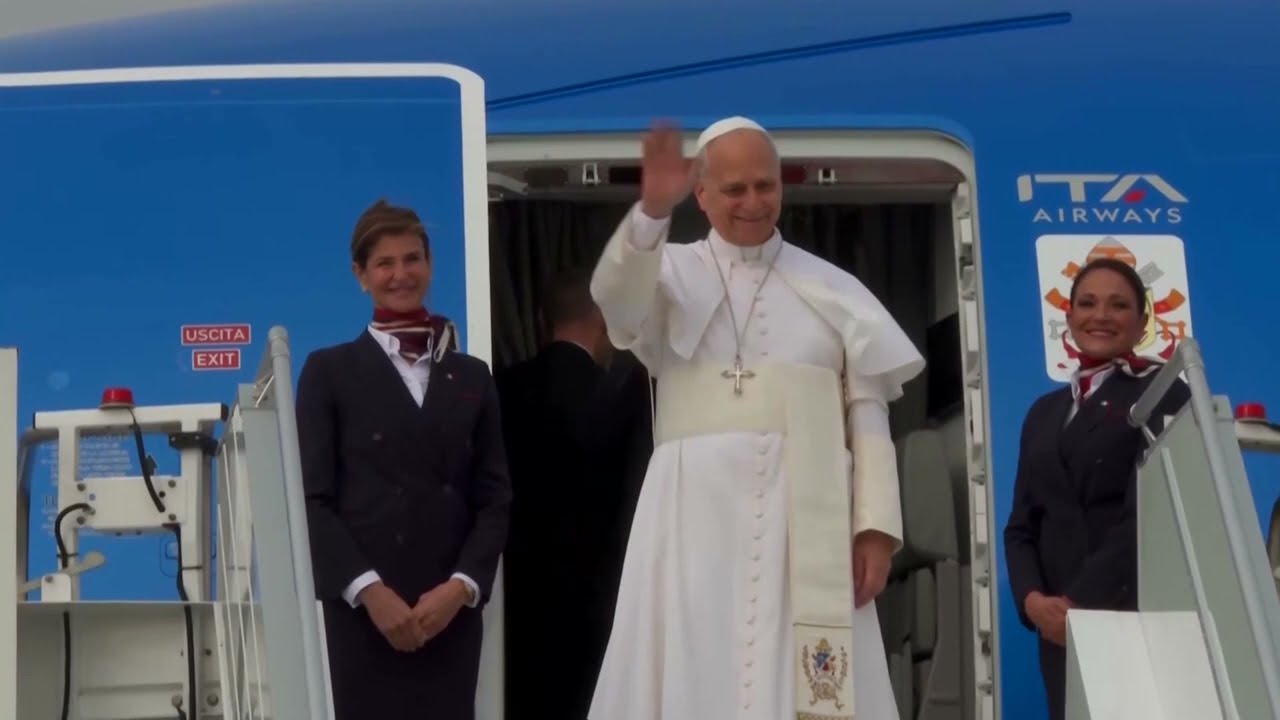
The cross that now tops Sagrada Família is 55 feet tall and 44 feet wide. It was built in Germany in 2025 and assembled at the basilica. Its component pieces, which include white enameled ceramic tiles, stone and glass, were made in factories and workshops in Catalonia, Spain.Pope Leo XIV will hold a special mass inaugurating the church on June 10, which also marks the centennial of Gaudí’s death. Spanish prime minister Pedro Sánchez plans to attend. While the cathedral has been open to worshippers since 2010, the pope’s visit signals a monumental chapter in the landmark’s history—one 144 years in the making.
“He is not coming to give his imprimatur, as they used to say, meaning that Sagrada Família is now complete like this, but rather to show us a path: this path of being builders,” says architect Chiara Curti to Reuters.
Indeed, despite the symbolic completion of the building’s tallest tower, construction crews won’t be packing up any time soon. Additional work will continue on the building's interior into the 2030s.
/https://tf-cmsv2-smithsonianmag-media.s3.amazonaws.com/accounts/headshot/MicheleDebczak.png)