
Where Does This Anti-War Masterpiece Belong? In Spain, a Request to Borrow Picasso’s ‘Guernica’ Sparks a Bitter Debate
The artwork depicts the bombing of a Basque village in 1937. Now, the relocation debate is raising questions about how to balance the painting’s cultural significance with conservation needs
/https://tf-cmsv2-smithsonianmag-media.s3.amazonaws.com/accounts/headshot/IMG_9594-edit.png)
/https://tf-cmsv2-smithsonianmag-media.s3.amazonaws.com/filer_public/c6/0e/c60edfb0-a70c-43eb-9b8d-55184cb7dd7c/picasso_mural.jpg)
From Francisco Goya’s early 19th-century anti-war prints to the 1980s works of Jean-Michel Basquiat condemning police brutality, art often comments on politics. One of the most famous examples is Spanish artist Pablo Picasso’s 1937 painting Guernica, which depicts the brutal bombing of a Basque village of the same name during the Spanish Civil War.
Now, the painting is embroiled in a new conflict. Madrid’s Reina Sofía Museum, where Guernica currently hangs, denied a request from the Basque government to borrow the artwork. Madrid officials have refused many such requests in recent decades on the grounds that transporting one of Spain’s most prized artistic treasures is too risky.
“The great icon of our museum must remain, without exception, outside the institution’s loan policy,” states a Reina Sofía report from 2000, according to El País’ Ana Marcos and Juan Diego Quesada.
This time, Basque officials had hoped to display the painting in an exhibition commemorating the 90th anniversary of the bombing in 2027. The show will open at the Guggenheim Museum Bilbao, located not far from the town of Guernica.
“Does the Spanish government have the courage to move Guernica? They dragged Franco out of his tomb and aren’t capable of moving a painting from Madrid to Euskadi [the Basque region]? The ball is in their court,” says Imanol Pradales, leader of the Basque government, per the Guardian’s Stephen Burgen.
Fun fact: Pablo Picasso’s imagery
The Spanish artist often painted bulls, one of which can be seen in Guernica, and scenes involving bullfighting.On April 26, 1937, Nazi German and Italian air forces bombed the town of Guernica on the orders of Francisco Franco, the leader of Spain’s Nationalist faction, during the Spanish Civil War. Guernica was largely defenseless, and the attack resulted in devastating civilian bloodshed. Although the exact death toll is unclear, the violence was burned into the country’s consciousness.
“At 2 a.m. today when I visited the town, the whole of it was a horrible sight, flaming from end to end,” wrote journalist George Steer in a 1937 report for the London Times and the New York Times.
After reading a reprint of Steer’s report, Picasso, who was living in Paris at the time, began work on Guernica, a roughly 11.5-foot-tall and 25.5-foot-wide piece. He painted evocative imagery depicting the atrocities of war, including flames, a dismembered soldier and a dead child. Guernica was unveiled that July at the International Exposition in Paris, and after that it traveled through Europe and the Americas.
Picasso didn’t want the painting to travel to Spain until Franco’s dictatorship ended. In 1939, Guernica went on display in New York’s Museum of Modern Art (MoMA), only heading to Spanish soil for installation in 1981 after the approval of a new Spanish constitution. It was then housed in Madrid’s Prado museum for more than a decade before arriving at its current home at the Reina Sofía in 1992.

“No other object speaks so clearly to the Spanish experience,” wrote History Today’s Danny Bird in 2017. “Initially shielded behind bulletproof glass and flanked by armed guards in the Prado, Guernica’s installation in the Spanish capital remains a source of contention between the central government and the devolved Basque authority,” which leads the Basque Country, an autonomous community in Spain.
Despite the history of denied relocation requests, the Basque government isn’t backing down. “It would be a serious political mistake to close the door on this issue,” Pradales warned Pedro Sánchez, the Spanish prime minister, at a meeting in March, per El País. Pradales’ regional party is one that supports Sánchez’s now-fragile government coalition.
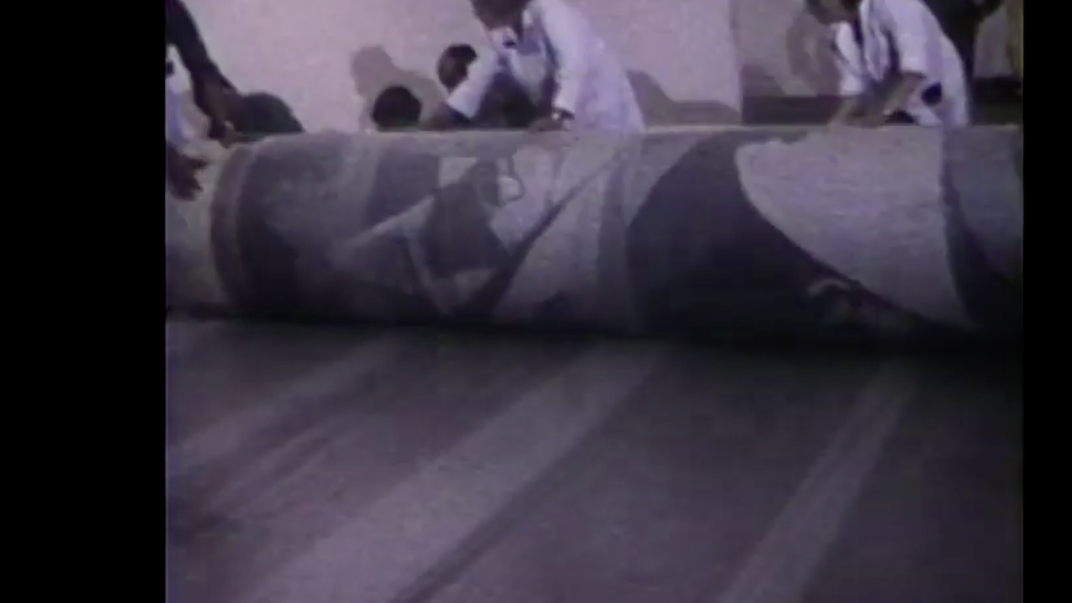
In response to the dispute, Spain’s ministry of culture asked the Reina Sofía to produce a new report on the possibility of relocating Guernica. In the report, the museum advised against moving the painting, warning that “vibrations could generate new cracks, lifting and loss of the pictorial layer, as well as tears in the support,” per Jesús Maturana of Euronews. It also noted that Guernica has been transported more than 30 times over the years, often rolled up and then unrolled, which had taken a toll on the piece.
For Basque leaders, this response was not sufficient. “We didn’t request a report on the painting’s state of conservation—we already know its condition—but rather a report analyzing the conditions under which it would be possible to move it and temporarily relocate it to the Basque Country,” officials tell El País. According to Euronews, the Basque government is “willing to cover all the costs of the operation and to create a specific technical commission to coordinate it.”
/https://tf-cmsv2-smithsonianmag-media.s3.amazonaws.com/filer_public/2b/d6/2bd6f4cb-236d-4104-a1e0-d8358d5777ac/un7922003_mg_2021207_11758.jpg)
On April 7, Ernest Urtasun, the Spanish culture minister, announced that he was denying the request to transfer Guernica, citing conservation concerns. “I understand the sensitivity behind this request. We are talking about a work linked to the memory of Guernica and the pain it symbolizes,” said Urtasun, per El País. “Celebrating the 90th anniversary of Guernica should also mean ensuring that this work can last another 90 years. My obligation is to preserve this heritage.”
Other Spanish politicians are also commenting on the question of where this nationally prized work of art belongs. “It makes no sense for everything to be returned to its origin,” Isabel Díaz Ayuso, Madrid’s president, said during a press conference, per the Guardian. “In that case we should send all of Picasso’s works to Málaga,” the town where Picasso was born.
Picasso died in 1973, before Spain transitioned to a democracy and Guernica returned to his homeland. But during his lifetime, he witnessed Guernica become one of the world’s most influential anti-war artworks. Imagery from the painting appears in posters protesting the Vietnam War. A tapestry reproduction of the piece hangs at the United Nations in New York. History Today attributes the painting’s universal appeal to the fact that, aside from the painting’s name, Picasso kept the specifics of the depicted conflict vague. Viewers are able to see the atrocities of any war reflected in the masterpiece.
In 1981, as MoMA prepared to ship Guernica to Spain, director Richard E. Oldenburg sent an internal memo to museum staff announcing the painting’s departure: “We can take comfort [and] pride in parting with it with good grace, with all possible concern for Picasso’s wishes and with due recognition of the special significance which Guernica has for the people of Spain.”
/https://tf-cmsv2-smithsonianmag-media.s3.amazonaws.com/accounts/headshot/IMG_9594-edit.png)