
Three-Minute Take-Home Test May Identify Symptoms Linked to Alzheimer’s Disease Years Before a Traditional Diagnosis
Researchers say the experimental tool has huge implications for public health, especially in conjunction with Alzheimer’s drugs that are most effective in the disease’s early stages
/https://tf-cmsv2-smithsonianmag-media.s3.amazonaws.com/accounts/headshot/Margherita_Bassi.png)
/https://tf-cmsv2-smithsonianmag-media.s3.amazonaws.com/filer_public/9e/73/9e732b21-a810-4183-8c4b-c8199db165d8/54758935679_1c81360fd4_o.jpg)
In 2021, 57 million people across the planet were living with dementia. This class of memory-related diseases is the world’s seventh greatest killer, and Alzheimer’s disease is its most common form. There is currently no cure for Alzheimer’s, and while there are treatments that can temporarily improve symptoms, diagnoses usually come long after the onset of the condition.
Now, however, scientists have developed a simple and cheap take-home test for memory issues in people with mild cognitive impairment (MCI), which can precede Alzheimer’s. In a study published this month in the journal Brain Communications, researchers say the experimental test, called the Fastball EEG, can detect Alzheimer’s significantly earlier than a traditional clinical diagnosis would.
“Fastball is sensitive to both pre-diagnosed Alzheimer’s disease and individuals at very high risk of developing it,” George Stothart, a cognitive neuroscientist at the University of Bath in England and lead author of the study, tells Fox News Digital’s Melissa Rudy. “Importantly, EEG data collection for Fastball is entirely feasible in people’s homes, making it a practical tool for real-world use.”
Need to know: Alzheimer’s disease
Roughly 5.7 million people in the United States have Alzheimer’s disease, the most common form of dementia.
The team tested Fastball on a small sample of 54 healthy participants and 53 patients with MCI. Each person put on a cap that monitored the brain’s electrical activity as they viewed a series of images on a tablet. Some of the images belonged to a set that participants were shown before the start of the test, while others were entirely new. The Fastball test is just three minutes long and passive, meaning all that is required of the patient is to watch the images—they don’t have to follow instructions or actively remember anything. According to a statement, this can make the approach more objective and accessible than standard memory tests.
Patients with amnestic MCI—who have memory loss as their main symptom and are more likely to develop Alzheimer’s compared to people with non-amnestic MCI—had lower responses to the test, reports the Guardian’s Ian Sample. It can’t directly predict who will develop Alzheimer’s, but it does identify who could be at a higher risk.
The study’s results have even greater implications when paired with the development of donanemab and lecanemab, “breakthrough” Alzheimer’s drugs that are most effective at the beginning of the disease, per the statement.
“MCI presents around five years before Alzheimer’s, so detection five years earlier means patients can get on the drugs earlier and the lifestyle interventions earlier,” Stothart explains to Newsweek’s Hannah Millington. “This allows people to plan and alleviates worry if they are fine. It gives people certainty.”

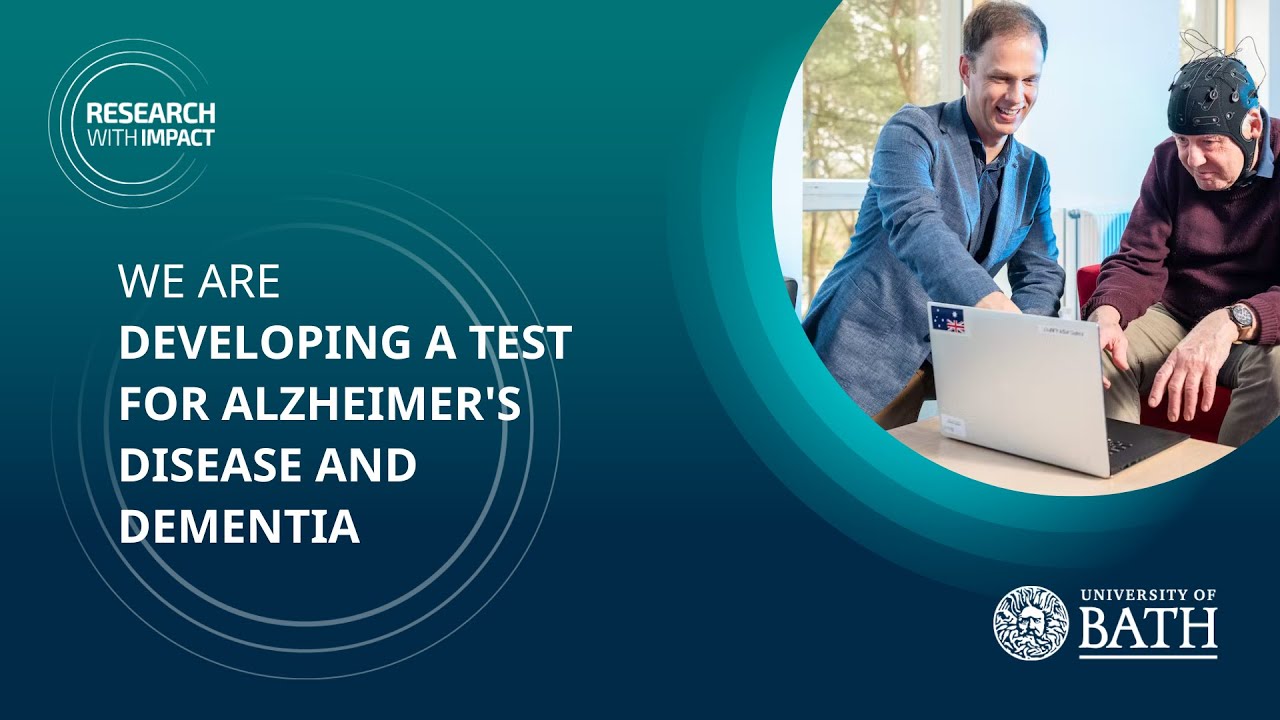
Stothart and his colleagues’ research builds on a previous study by some of the same team members, which in 2021 indicated the test could differentiate Alzheimer’s disease patients from healthy older adults.
The results of the at-home test are sent directly to a patient’s doctor. Stothart hopes Fastball EEG can one day be used as a screening tool for patients over 55 years old, though more research is needed to identify the best time to take the test, per Newsweek.
Additionally, “longer-term studies in larger, diverse groups of people are needed to find out if this technology can predict how memory problems will unfold over time,” Julia Dudley, head of research at Alzheimer’s Research UK, who was not involved in the study, tells the Guardian, adding that memory issues can also be associated with other health complications. “Future research should look at how other factors may influence brainwave test results and explore how these tests could work alongside other diagnosis tools like cognitive assessments and blood tests.”
“More research is needed before this could be considered for inclusion in the diagnostic toolbox for Alzheimer’s,” Christopher Weber, senior director of global science initiatives at the Alzheimer’s Association, tells Fox News Digital. “Even if this tech proves itself with further research, it is still likely that additional tests, looking at disease-related biomarkers or imaging of the brain, would also be needed to inform treatment or risk reduction.”
Nevertheless, he adds that it could help with initial screening for Alzheimer’s. The study offers a step forward for the early diagnosis of the devastating neurodegenerative disease that, by 2050, is estimated to directly impact 16 million people in the United States alone.
/https://tf-cmsv2-smithsonianmag-media.s3.amazonaws.com/accounts/headshot/Margherita_Bassi.png)