
This Dog Learned to Sniff Out a Slimy Marine Invader Called ‘Sea Vomit’—a Skill That Earned Her the Animal of the Year Award
Sgiath, a 6-year-old Labrador from the Scottish Highlands, received the honor from the International Fund for Animal Welfare. She’s believed to be the first pup trained to hunt for the invasive carpet sea squirt, which is threatening marine life along the British coast and elsewhere
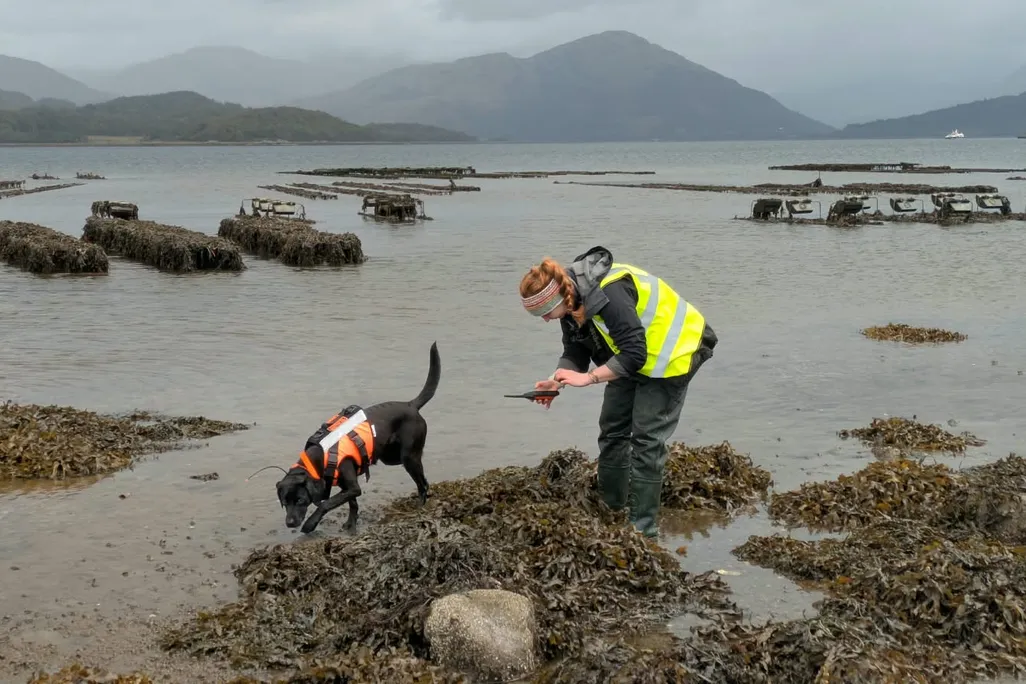
It takes more than a few tricks and a penchant for fetch to receive a prestigious animal award. A black Labrador from the Scottish Highlands just snagged one for her ability to sniff out “sea vomit,” a colloquial name for the carpet sea squirt, an invasive marine creature threatening the waters along Britain and Ireland, among other places.
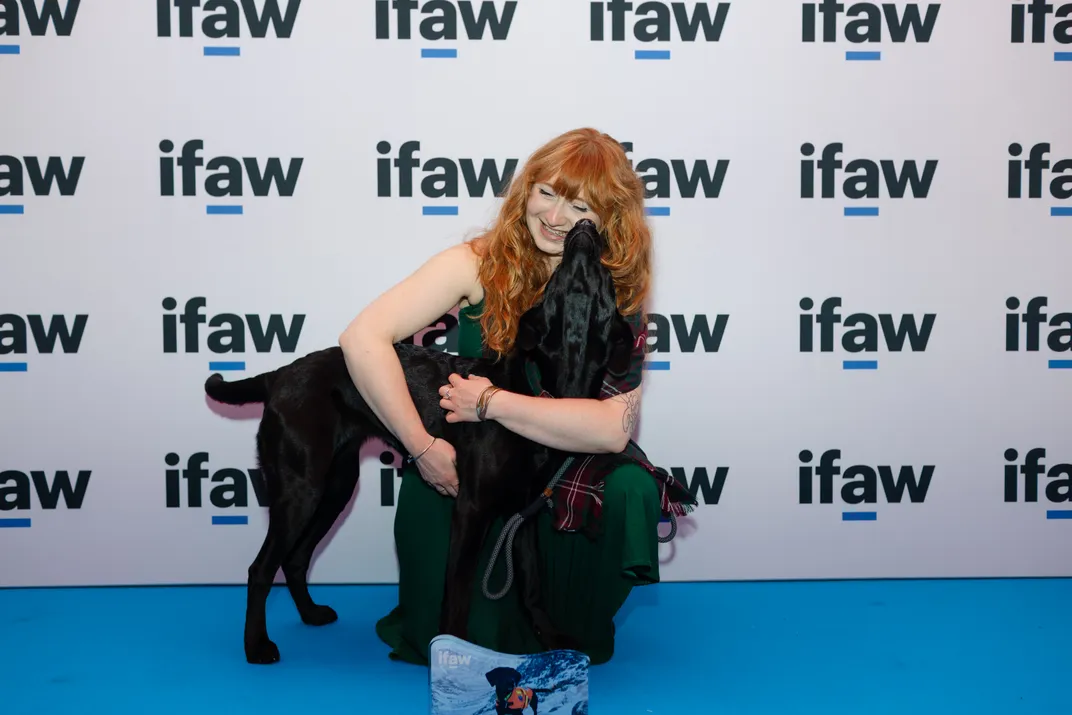
On October 15, Sgiath (pronounced Skee-ah) was crowned Animal of the Year by the nonprofit International Fund for Animal Welfare (IFAW). The 6-year-old pooch and her handler, Texa Sim, a marine ecologist based near Glencoe, Scotland, were recognized for their pioneering work in marine conservation. According to IFAW, Sgiath is believed to be the first dog trained to sniff out carpet sea squirt—which, if left unchecked, can smother native species and colonize infrastructure like oyster farms and fisheries.
“Every year, the Animal of the Year award celebrates animals doing extraordinary things, but Sgiath’s story is like nothing we’ve seen before,” says Sharon Livermore, director of marine conservation at IFAW, in a statement sent to media. “Her trailblazing work demonstrates the remarkable potential of dogs to contribute to conservation science in entirely new ways.”
Originally trained as a mountain rescue dog, Sgiath was later taught to recognize the scent of the invasive marine species. She has successfully sniffed out hundreds of colonies of the sea squirt, Kate Stephens and Victoria Gill report for BBC News. In fact, Sim tells the outlet that when Sgiath catches wind of a sea squirt colony, she’s never wrong—even when she’s sniffing through layers of seaweed on tricky structures, like pontoons and oyster cages.
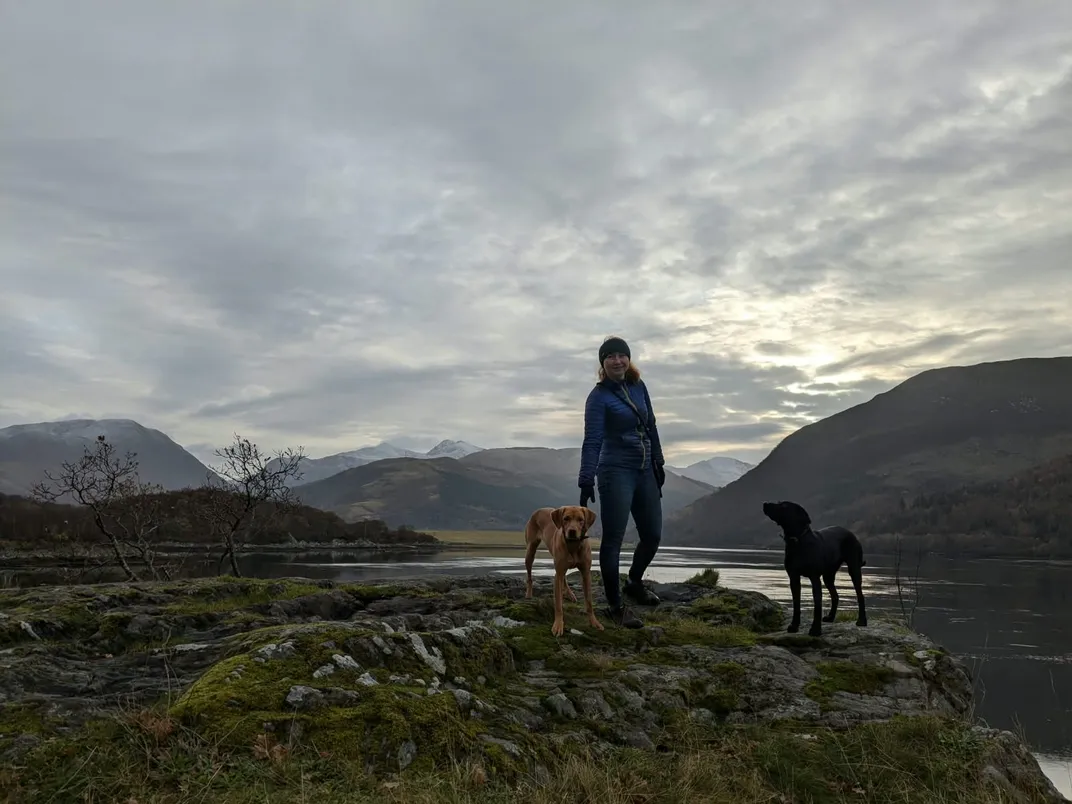
“She’s a natural,” Sim says. Since first training Sgiath in marine detection, Sim has added to the sea squirt-sniffing team: a 3-year-old Labrador named Uisge, described as a “protégé” in the statement.
The carpet sea squirt first appeared in the United Kingdom in 2008. Scientists suspect the organism hopped aboard ships from its native Japan. The creature, formally called Didemnum vexillum, has already spread up the British coast, and conservationists are worried it will expand further. The sea squirt thrives in warmer waters, leading to increased concern as climate change continues to induce higher sea temperatures.
These and other invasive organisms can drain ecosystems of valuable nutrients, depriving endemic wildlife, Martyn Kurr, a marine biologist at Bangor University in Wales, tells BBC News. “These species also clog up aquaculture pens, marine infrastructure, and machinery such as boat propellers,” he says. In Europe, spotting and controlling these invasive populations costs millions of dollars each year.
But not touching them can prove disastrous: In 1969, an unchecked carpet sea squirt population nearly decimated a population of Portuguese oysters living off the coasts of Portugal and France, per Metro’s Sarah Hooper.
Carpet sea squirt colonies are hard to spot. They can be creamy white, tan, or even pale pink or orange, and they often cling to algae or seaweed, appearing like a layer of slime—or vomit. Traditional means of identification involve laboratory analysis and DNA testing, requiring valuable time and resources, Holly Evans reports for the Independent. Sgiath, on the other hand, needs just a nose.
Using dogs to sniff out invasive species is not a new practice. Conservationists have been putting pups to work on land for more than a century, Katherine Manwell reported for Midstory in 2024. The practice became more widespread only in recent decades.
“In the mid-’90s ... within the wildlife research community, there was a call for more noninvasive techniques for getting the same information that we [were] getting by trapping and radio-collaring all kinds of species and animals,” Alice Whitelaw, co-founder and director of programs at the U.S.-based nonprofit Working Dogs for Conservation, told the outlet.
Did you know? Dogs’ keen sense of smell
A dog has more than 220 million odor receptors in its nose. For comparison, a human has only five million.
While canines are not a catch-all, they tend to be more efficient and less invasive than other methods, per Midstory, allowing conservationists to identify and remove unwanted species without disrupting the environment.
However, Sgiath is unique: She’s not sniffing invasive critters on land; she’s hunting them at sea. The Labrador walks the beach, entering the water at low tide to sniff out any potential colonies.
“She just does a survey with her nose, essentially,” Sim tells BBC News. “She can pinpoint exactly where it is.”
Still, Sgiath and future sea squirt-sniffers in her mold cannot eradicate these colonies on their own. But “if we can identify the species earlier and more efficiently, it gives conservationists and site managers a much better chance of responding before the problem gets out of hand,” Sim says in the statement.