
The Sounds of AOL Dial-Up Defined the Early Internet. Now, the Service Is Shutting Down for Good
Many of today’s internet users remember browsing the web for the first time via AOL dial-up. But as subscribers dwindle, the service will be sunsetting on September 30
/https://tf-cmsv2-smithsonianmag-media.s3.amazonaws.com/accounts/headshot/Ellen_Wexler.png)
/https://tf-cmsv2-smithsonianmag-media.s3.amazonaws.com/filer_public/1a/47/1a4757c9-4e8d-432b-99db-f7c440c31bf7/cds.jpg)
It was the soundtrack of the early internet: When AOL dial-up users wanted to go online in the 1990s, they heard the instantly recognizable sequence of beeps and buzzes. The cacophony indicated that their computers were patching them through to the internet through the phone lines.
Today, many adults of a certain age harbor nostalgia for this nascent era. The user experience is preserved in countless YouTube videos with titles such as “Ten Hours of AOL Dial-Up” and “AOL—The Sweetest Sounds.”
But on September 30, the service will be shutting down for good.
“AOL routinely evaluates its products and services and has decided to discontinue dial-up internet,” says the company in a statement. “This service will no longer be available in AOL plans.”
The company introduced dial-up in 1989, though early versions of the service only allowed users to access AOL’s servers. When AOL went public in 1992, it had fewer than 200,000 subscribers. These users finally gained access to the internet in 1994.
The service’s popularity took off in the late ’90s, when many of today’s internet users—at least those born before Y2K—went online for the first time. To access the web, they plugged their computers into a telephone jack. Then, their modems converted digital data from their computers into audio signals that traveled over the phone lines, generating the familiar series of beeps.

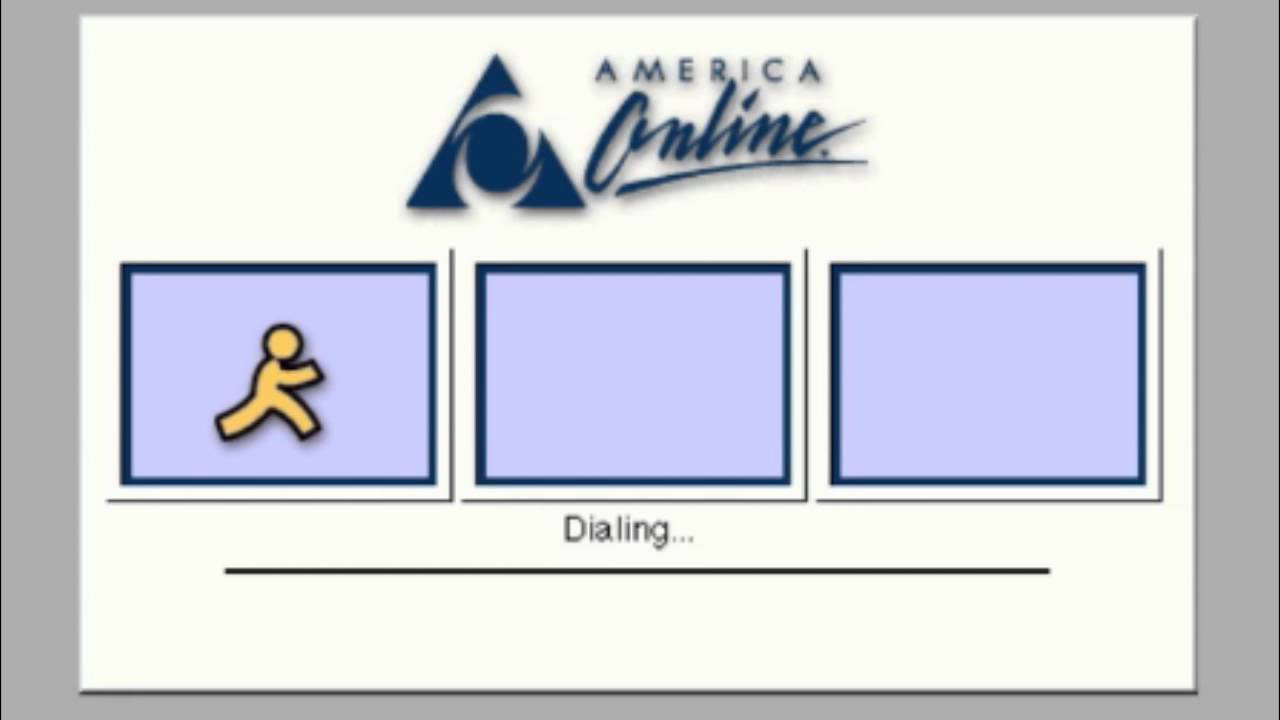
“In some ways, it was kind of like the sound of the 1990s,” W. Patrick McCray, a tech historian at the University of California, Santa Barbara, tells NPR’s Ayana Archie.
Once users were connected, a familiar voice was ready to welcome them: the “You’ve got mail!” voice alert, which famously inspired the title of Nora Ephron’s 1998 romantic comedy. By AOL dial-up’s peak in 2000, 25 million subscribers were using the service.
Quick fact: The voice of “You’ve got mail!”
AOL’s email alerts were voiced by Elwood Edwards, who recorded them in his living room in the 1980s.
As dial-up’s novelty wore off, users realized that it also came with limitations. Its average speed is about 56 kilobits a second—thousands of times slower than the broadband internet most Americans use today. Because the service ran over the phone lines, users couldn’t browse the internet if someone else in their household was talking on a landline phone.
Even as most users switched to broadband, a small group never abandoned dial-up. Some kept their subscriptions because they were hesitant to learn a new way of engaging with the internet. In 2016, the Verge’s Thomas Ricker wrote about helping his septuagenarian father migrate to broadband.
“His subscription was a security blanket,” wrote Ricker. “He was sure he didn’t need the dial-up component, but he didn’t want to risk losing access to his stock portfolio, investor forums and email. His setup worked, and he could afford to keep paying the subscription he had dutifully paid for over a decade.”
The Census Bureau estimates that 163,401 American homes—about 0.13 percent of internet subscriptions—were still using dial-up in 2023. The service is also available in Canada, where a similar percentage of households have been using it.
Today, many dial-up users live in rural areas without access to broadband. They subscribe to the service because they don’t have easy alternatives.
“This isn’t gonna affect a lot of people, but if you’re one of those people who simply never transitioned off, it’s pretty seismic,” technology analyst Carmi Levy tells CBC News’ Jenna Benchetrit. “It means that at the end of September, you’re losing the only access to the internet that you’ve ever known.”
Editors’ note, September 3, 2025: This story had been updated to correct the date that the company introduced dial-up.
/https://tf-cmsv2-smithsonianmag-media.s3.amazonaws.com/accounts/headshot/Ellen_Wexler.png)