
The Burning of This French City Hall Was a ‘Catastrophe for Heritage,’ Tragically Reminiscent of the Notre-Dame Fire
French authorities say that the Limoges city hall, built in the late 19th century and celebrated as an architectural gem, was the victim of an arson attack amid mass protests in France over the weekend

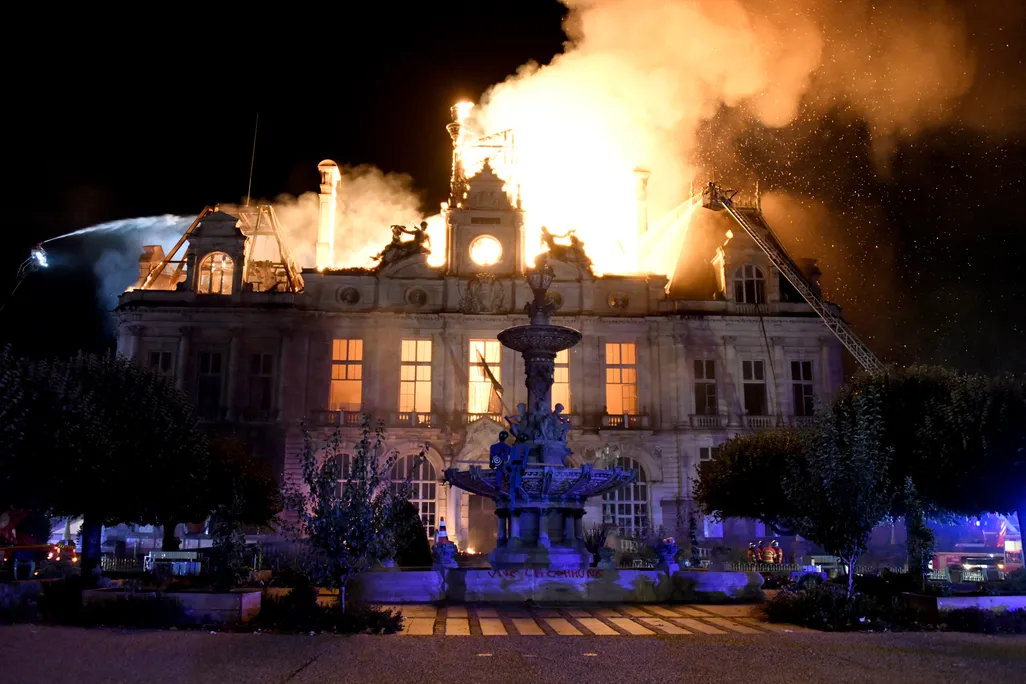
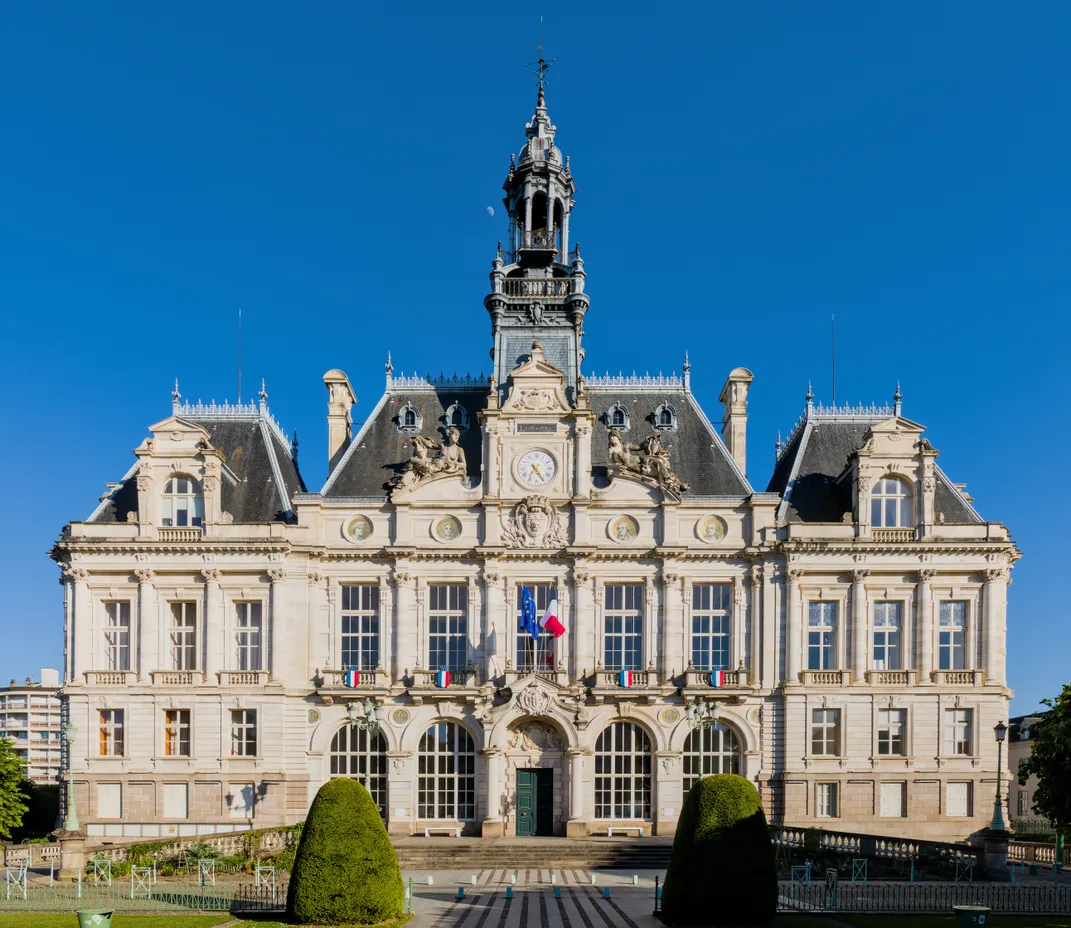
Since it first opened its doors on Bastille Day in 1883, the city hall of Limoges, France, has been celebrated as an architectural wonder. Well known for its tall spire and ornate metal belfry, the 143-year-old building gained historic monument status in 1975 as a prime example of late 19th-century French architecture and civic pride.
On the building’s parapet, the city’s coat of arms was framed by mosaic portraits of four famous former residents, who lived in Limoges between the 16th and 19th centuries: Leonard Limosin, an enamel painter; Henri François d’Aguesseau, a jurist who served as a chancellor of France; Pierre Victurnien Vergniaud, an orator and figure of the French Revolution; and Jean-Baptiste, Count Jourdan, a military commander and one of Napoleon’s marshals.
But this weekend, much of the city hall was destroyed in a blaze that French authorities immediately characterized as arson. Amid antigovernment protests that have gripped France in recent days, masked individuals forced their way into the building on Saturday evening and set fires that spread to cause extensive damage, according to Agence France-Presse (AFP).
“Today, the entire facade and the historic front section have been almost 100 percent destroyed,” Maurice Barate, a top regional official, said on national television, per the New York Times’ Giulia Imbert. The spire and roof also collapsed. Barate called the arson a “catastrophe for heritage” and a “deliberate act by hooligans,” according to AFP.
The physical extent and emotional toll of the town hall’s damage was immediately compared to that of Notre-Dame Cathedral in Paris, which burned extensively in 2019, likely as the result of an accident, not deliberate arson. Over 12 hours, the inferno destroyed most of the 12th-century cathedral’s roof, spire and exterior decorations, though many religious relics and artworks inside were salvaged.
Did you know? Notre-Dame’s construction
The first stone of Notre-Dame Cathedral was laid by Maurice de Sully, the Bishop of Paris, in 1163, at a ceremony attended by Pope Alexander III.
The Notre-Dame tragedy struck an emotional chord not only in France but around the world. Donors raised close to $1 billion to support the cathedral’s reconstruction. In 2023, a new spire was raised, and in late 2024, it officially reopened to the public.
“It broke my heart. I saw Notre-Dame all over again, except this time it was our town,” Francoise Faurie, a Limoges resident who witnessed the fire, tells Reuters’ Clotaire Achi.
Leaders are calling for monetary support from the French government. “I want us to have the same capacity to rebuild as was given to Notre-Dame de Paris,” Guillaume Guérin, the mayor of Limoges, told local media, per the Telegraph’s Vivian Song. “I want to see a rain of millions on the city.”
In the blaze’s aftermath, fire crews and other emergency personnel continue to monitor the building for possible signs of collapse and other infrastructural weaknesses. Standing further back, residents have come to pay their respects to the building, which was a popular location for events such as baptisms and wedding ceremonies.
“All we have left are pictures,” Gilles Peignelin, who married his wife in the building, told the New York Times as he stood beside her and looked at the ruins. “I’m outraged—it’s shameful, deplorable.”
