
The Bloomsbury Group’s Vanessa Bell and Duncan Grant Tangled Their Art and Lives Together for Decades. A Final Sketch of Bell on Her Deathbed Just Resurfaced After 60 Years
The two artists had a thoroughly complicated relationship—and a daughter—but never ceased to paint and draw each other. The new discovery points to an artistic bond that continued through health and sickness

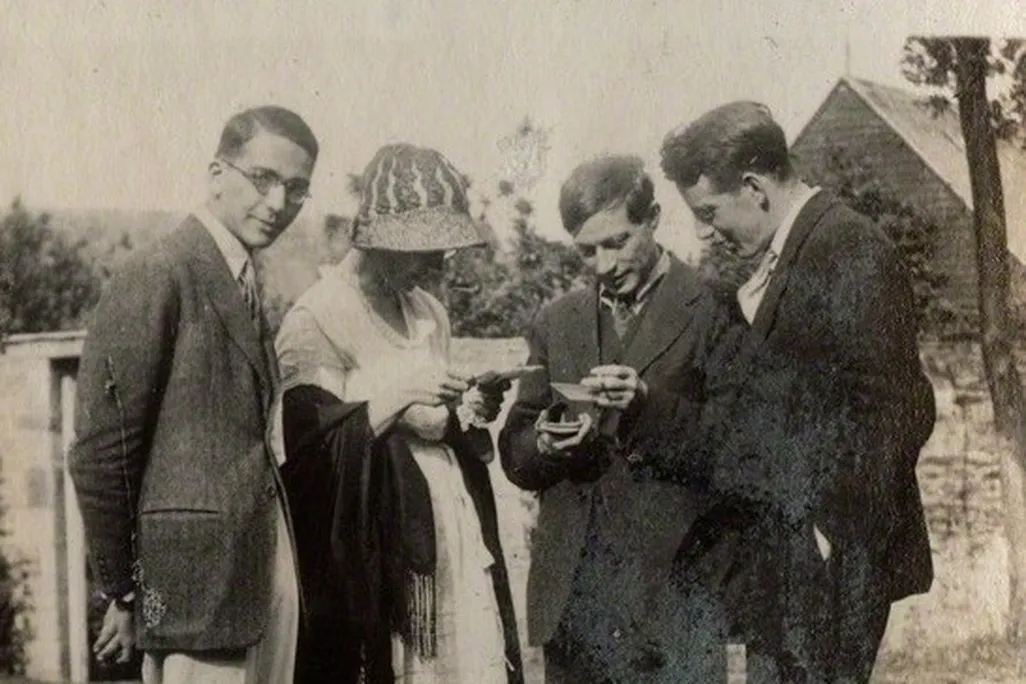

The lives of artists Duncan Grant and Vanessa Bell—collaborators, companions and sometimes lovers—were deeply intertwined both on canvases and in private quarters.
The pair were central figures in the Bloomsbury Group, a circle of artists and intellectuals active in early 20th-century Britain who radically, and often controversially, challenged contemporary creative and social norms. These included public sentiments on philosophy, sexuality and mental illness. The group featured, among others, the economist John Maynard Keynes, as well as the writers E. M. Forster and Virginia Woolf, Bell’s biological sister.
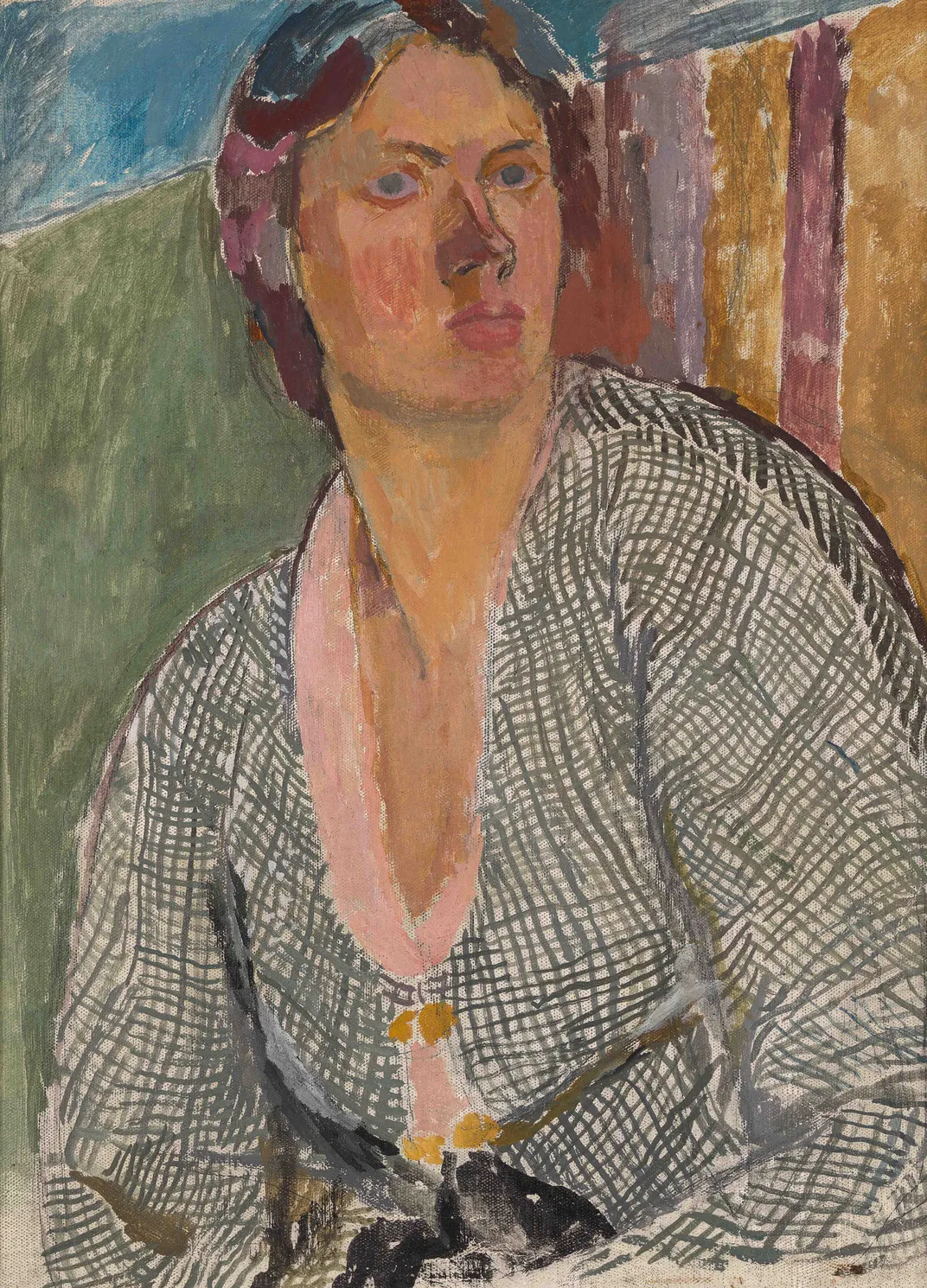
Grant and Bell were often the subjects of each other’s work. Among their most well-known collaborations is one of Grant’s first and most extravagant depictions of Bell, a full-length portrait painted in 1915.
But this summer, while preparing for “Vanessa Bell & Duncan Grant: Inside Bloomsbury,” an exhibition that opened this week at Tate Britain, scholars discovered an intimate, previously unknown work that sheds new light on the end of Grant and Bell’s relationship.
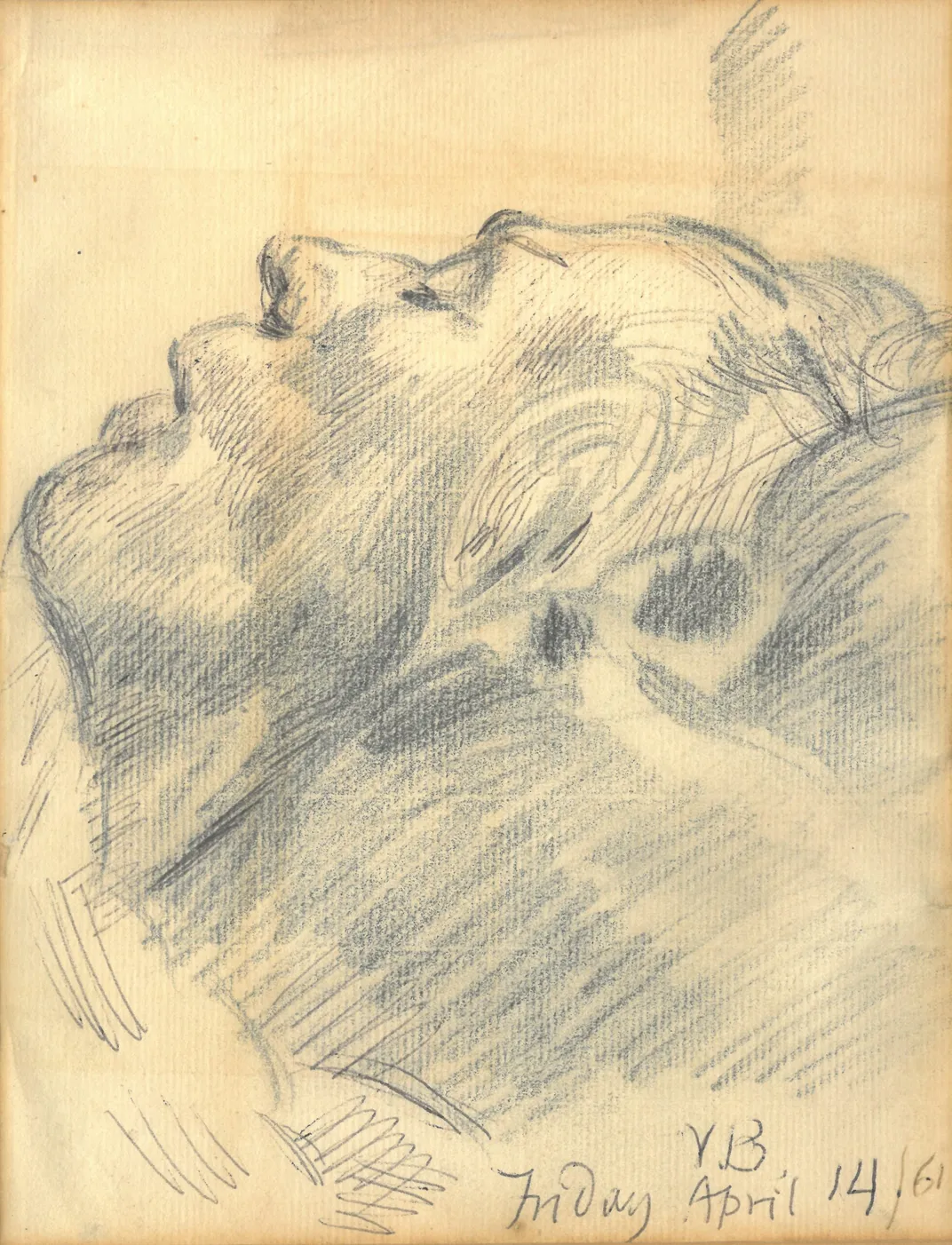
Hidden for some 60 years among private family papers, the newly recovered drawing is thought to be Grant’s final depiction of Bell. Created in an uncharacteristically simple style—soft monochrome pencil and biro on paper—the piece shows an ailing Bell with her eyes closed, head resting on a pillow, from the perspective of an artist who likely was sitting at her bedside. In the bottom right-hand corner, Grant dated the piece April 14, 1961—one week after Bell succumbed to an illness at the age of 81, and two days after her burial.
“I found this drawing deeply moving when I first saw it. We know Duncan’s drawings of Vanessa so intimately, made over the course of their long friendship, that the discovery of a previously unknown work is remarkable in itself,” Nathaniel Hepburn, director of Charleston, the pair’s former home and studio in East Sussex, says in a statement. “But there is something incredibly poignant about imagining Duncan sitting beside Vanessa, drawing her after her death.”
The drawing is considered an emotional bookend to the pair’s decades-long relationship. In a 1937 letter to her son, Bell described Grant as “so incredibly full of charm, his genius as an artist seems to overflow so into his life and character & he is so amusing too and odd and unaccountable that lots of people I think don’t see clearly what to me is really his most adorable quality—his honesty…”
Scholars believe that Grant may have erred slightly, perhaps affected by grief, in his dating of the drawing.
“What seems very likely here is that Duncan knew this drawing had been made around Vanessa’s death and later added a date from memory,” Darren Clarke, head of collections and research at Charleston, says in the statement. “He got remarkably close, but apparently not quite close enough. Everything about the drawing itself—its viewpoint, its intimacy and its extraordinary economy—suggests someone sitting quietly beside Vanessa’s bed and drawing the face he had known for half a century.”
Though it won’t feature in the new Tate show, the drawing will enter into a permanent collection at Charleston as part of the institution’s “50 for 50” campaign, which seeks to secure 50 more works by prominent Bloomsbury Group figures by 2030. In May 2027, after the completion of renovations, it will be put on display for the very first time.
Did you know? Bell and Grant’s daughter
Bell had a daughter, Angelica, with Grant in 1918. Bell raised Angelica as the daughter of Clive Bell, her husband, and did not reveal Angelica’s true father until she turned 18.
At the Tate exhibition, which opened last week and runs through April, some 300 portraits, still lives, landscape paintings and other works guide visitors through the intertwined lives of Grant and Bell, as well as their involvement with the Bloomsbury Group.
“It’s so fascinating to see the ways they differ,” Thomas Kennedy, curator of Modern British art at Tate Britain, tells the Art Newspaper’s Andrew Pulver. “We should recognize their individual accomplishments of course, but also the works they made together and how they influenced each other.”
“Vanessa Bell & Duncan Grant: Inside Bloomsbury” is on view at Tate Britain in London until April 11, 2027.
