
Some Monkeys Seem to Become Germophobic After Living Through a Disease Outbreak, Just Like Humans
Macaques that had gotten sick or seen others become ill were less likely to eat a tasty treat that looked like it was contaminated with poop than primates that didn’t witness the outbreak—even though they didn’t know how the infection spreads

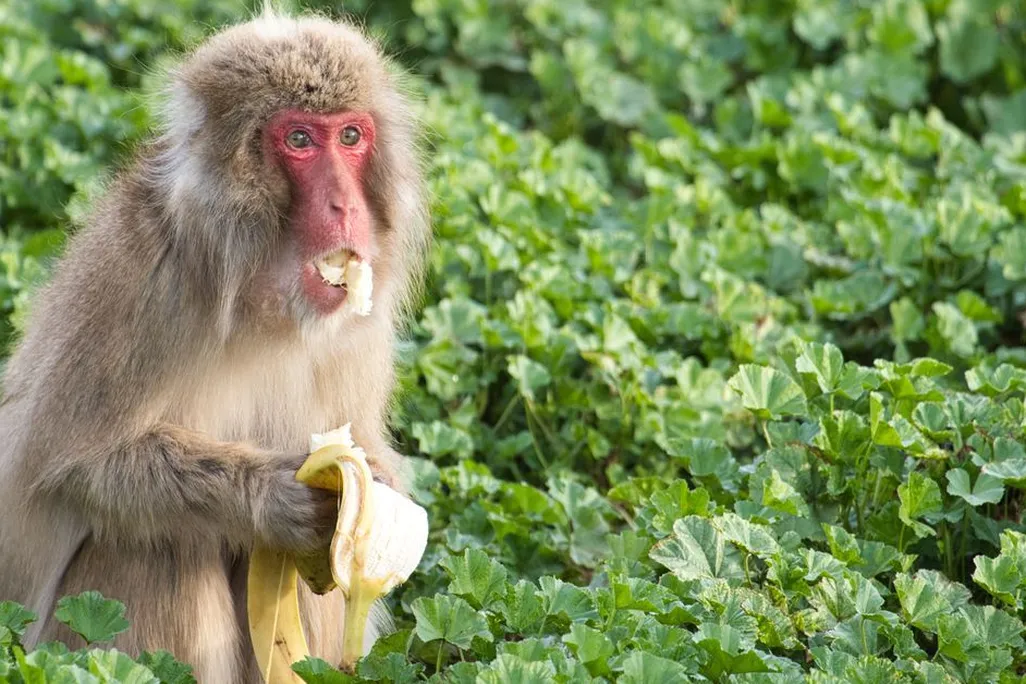
In early 2020, while humans were sanitizing their groceries and obsessively washing their hands to avoid Covid-19, some Japanese macaques in Texas were dealing with their own outbreak in similar ways. After experiencing the spread of a deadly disease at their sanctuary, the monkeys seemed to become germophobic.
In a study published in the journal Royal Society Open Science on October 21, scientists found that macaques that had experienced the outbreak became more wary of food that appeared contaminated. The findings could help researchers pinpoint the evolutionary origins of disgust, which is at the center of what researchers call the behavioral immune system—a collection of strategies that animals use to evade pathogens.
“We can show now, in non-human primates, that this is the same for them,” says study co-author Federico Rossano, a cognitive scientist at the University of California, San Diego, in a statement. “Even with no knowledge of how disease is transmitted, being exposed to others getting sick and dying changes the likelihood of engaging in behaviors that potentially could lead to some form of sickness.”
Did you know? Hand washing
The idea of surgeons washing their hands is only around 150 years old. Back then, germ theory of disease was largely scoffed at.
The study began with an outbreak of simian retrovirus (SRV) among Japanese macaques at the Born Free USA Primate Sanctuary in southern Texas. SRV causes an AIDS-like immunodeficiency and spreads through scratches and bites. Once a monkey is infected via contaminated bodily fluids, the disease “can take a rapid progression, where about three to four weeks after you initially get infected, you might die,” says study co-author Stephan Kaufhold, a cognitive and behavioral scientist at UC San Diego, to Jonathan Lambert at NPR.
The sanctuary responded to the outbreak by separating, testing and quarantining groups of monkeys. That created four groups: three that experienced the outbreak either by getting sick or witnessing others become ill, and one that hadn’t.
To see how those experiences affected the animals, the researchers set up an experiment where the macaques received two plates of grapes, a rare treat. On one plate, a red grape sat on a clean surface, while on the other, a grape sat atop epoxy-coated macaque poop. (Previous research suggests these animals will still eat a high-value snack if it’s presented with poop.)
They repeated this experiment across nearly 200 successful trials among 55 sanctuary-born monkeys. Animals that experienced the outbreak ate the contaminated grape in 47 percent of trials, whereas those that didn’t experience the outbreak consumed it in 79 percent of trials.


The macaques that lived through the outbreak avoided the contaminated grape more often than those that didn’t witness the illness’ effects, even though they didn’t know how the disease spread. And in the case of SRV, feces has nothing to do with transmission.
“The monkeys see disease and sick individuals and increase their overall sensitivity, even for a transmission route that is completely unrelated to how the disease actually spreads,” Kaufhold tells Ryan Green at the New York Times. What’s more, monkeys from the exposed groups behaved similarly regardless of whether they had been infected; seeing another individual go through the disease was enough.
In a different experiment, the researchers tested 54 macaques of multiple species from various backgrounds—sanctuary-born, zoo-born, laboratory-reared animals and former pets—to see how upbringing might influence their behavior. Analyses revealed that former pets were much more likely to eat the contaminated food than sanctuary-born macaques raised by their moms.
“One possibility is that these monkeys didn’t have the opportunity to learn typical avoidance behaviors from their mothers and other macaques early in life,” Kaufhold explains in the statement. “Even after living with other monkeys for several years, that early experience may still shape how they respond to potential sources of disease.”
While the study didn’t directly look at disgust, the researchers suspect the animals’ post-outbreak avoidance could have something to do with the emotion. “The possibility that things like disgust are influencing the behavior of other species, and especially species like primates, it’s definitely a possibility worth considering,” says Andrew MacIntosh, a biologist at the Canada-based conservation charity Wilder Institute who wasn’t involved in the study, to NPR.
“It seems plausible that past exposure to outbreaks could make individuals more cautious or risk-averse,” he adds, though he would like to see more research to confirm that. Still, one thing is clear: Many of us want to avoid eating a poop-contaminated grape.
