
Shamonda Virus Infected and Killed a Person for the First Time. Here’s What to Know About the Pathogen Usually Found in Livestock
The patient, a French man in his 60s with leukemia, died earlier this month. Health officials say the risk to the public is low

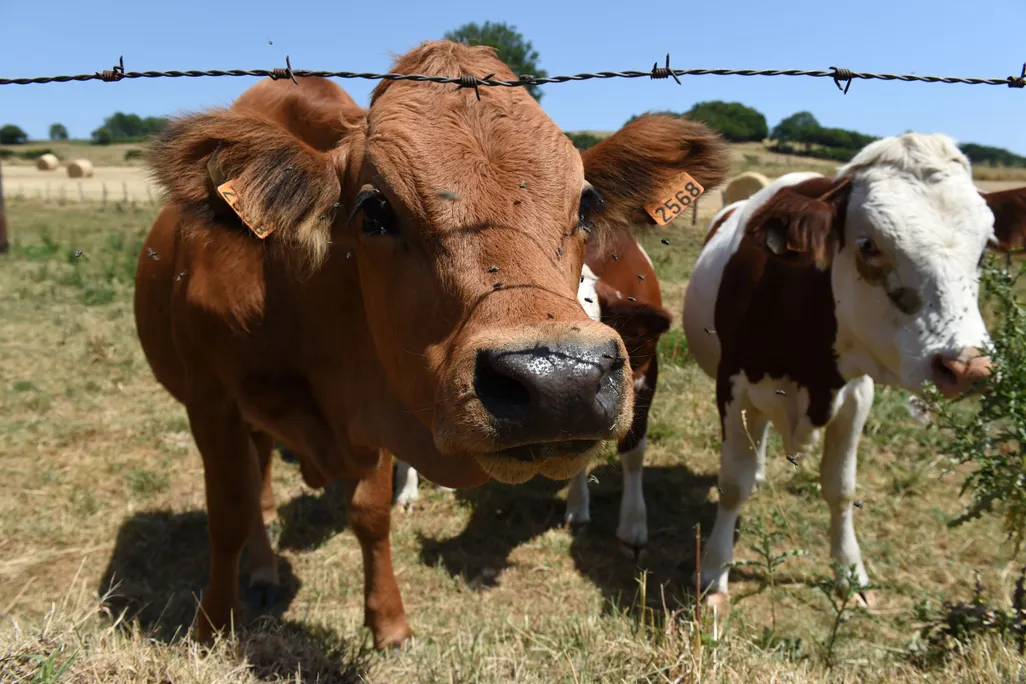
The first known human case of the Shamonda virus was reported by French authorities this month. The patient, a man in his 60s who had leukemia, died on October 9, just 16 days after showing neurological symptoms, including blindness and confusion.
The incident was described in a report released on October 22 in the journal Eurosurveillance.
In a statement translated by Smithsonian magazine, French health officials called it an exceptional case in a severely immunocompromised patient. They stressed that there is no risk to the public based on what is known about the Shamonda virus, which typically infects livestock. However, the fact that a human was infected suggests that scientists still have a lot to learn about the disease and how it affects the body.
Here’s what we know so far.
What is Shamonda virus?
Shamonda virus belongs to a family of viruses called orthobunyaviruses, and it’s primarily transmitted through tiny flies called midges, says Krispin Hajkowicz, an infectious-disease researcher at the University of Queensland in Australia, to Nature’s Rachel Fieldhouse. The pathogen commonly affects cattle, though infections have also been detected in sheep, horses, goats and alpacas.
The virus was first detected in cows in Nigeria in 1965, and since then has been detected in other parts of Africa and in Japan. The virus was found in Europe for the first time this past summer, when officials reported cases in German and Swiss cattle, per the World Health Organization. It rapidly made its way through dairy cows and horses in Western Europe, including Austria, Belgium and France.
How does it affect animals?
Symptoms in animals include fever, diarrhea and reduced milk production. In more serious cases, it can also cause reproduction issues, like stillbirths and fetal malformations. Neurological conditions have also been reported in some horses, according to the World Organization for Animal Health, although this symptom is rare.
There are currently no treatments or vaccines for Shamonda virus.
Did you know? Animal origins
Roughly six in ten known infectious diseases in humans can be spread from animals, and three in four new or emerging infectious diseases that affect people come in animals, according to the Centers for Disease Control and Prevention.
How did it spread to a human?
Scientists still aren’t sure. The patient lived in a rural area about an hour from Lyon, a city in eastern France, a region where Shamonda had been detected in cattle. Officials suspect that the deceased individual was bitten by a midge carrying the virus.
However, these insects typically don’t feed on animals, says Jean-Luc Guérin, a researcher at the National Veterinary School of Toulouse in France and co-author of the report, to Kai Kupferschmidt at Science. That’s why entomologists are trying to determine whether the disease can also spread via mosquitoes.
What is the risk to the public?
The risk to the public is low, as the patient in this case was already severely immunocompromised. There is currently no evidence that the virus can spread person-to-person.
John Drake, an infectious-disease researcher at the University of Georgia, writes in Forbes that he would only become worried if one of three things happened: a second human case with no shared exposure, a serious illness in someone with an intact immune system, or genomic evidence that the virus swapped genes with a better-adapted relative.
“Until one of them appears, Shamonda is a cattle virus spreading across Europe that is very probably linked to the death of one critically ill person,” he adds. “What is needed is surveillance: testing the sick, sequencing the strange case, watching the herds and the people among them. This death is a personal tragedy and an interesting case for science, but not a threat to public health.”
