
One of the World’s Largest Chinstrap Penguin Colonies Is Shrinking Fast
Zavodovski Island, a remote, uninhabited volcanic island between South America and Antarctica, lost 63 percent of its chinstrap penguins between 2011 and 2025, according to a new study
/https://tf-cmsv2-smithsonianmag-media.s3.amazonaws.com/accounts/headshot/SarahKuta.png)
/https://tf-cmsv2-smithsonianmag-media.s3.amazonaws.com/filer_public/c1/17/c117aed2-da4e-46f8-922d-e8294f31b704/chinstraps_interacting_-_john_dickens.jpeg)
Scientists are sounding the alarm after discovering that one of the world’s largest chinstrap penguin populations has collapsed.
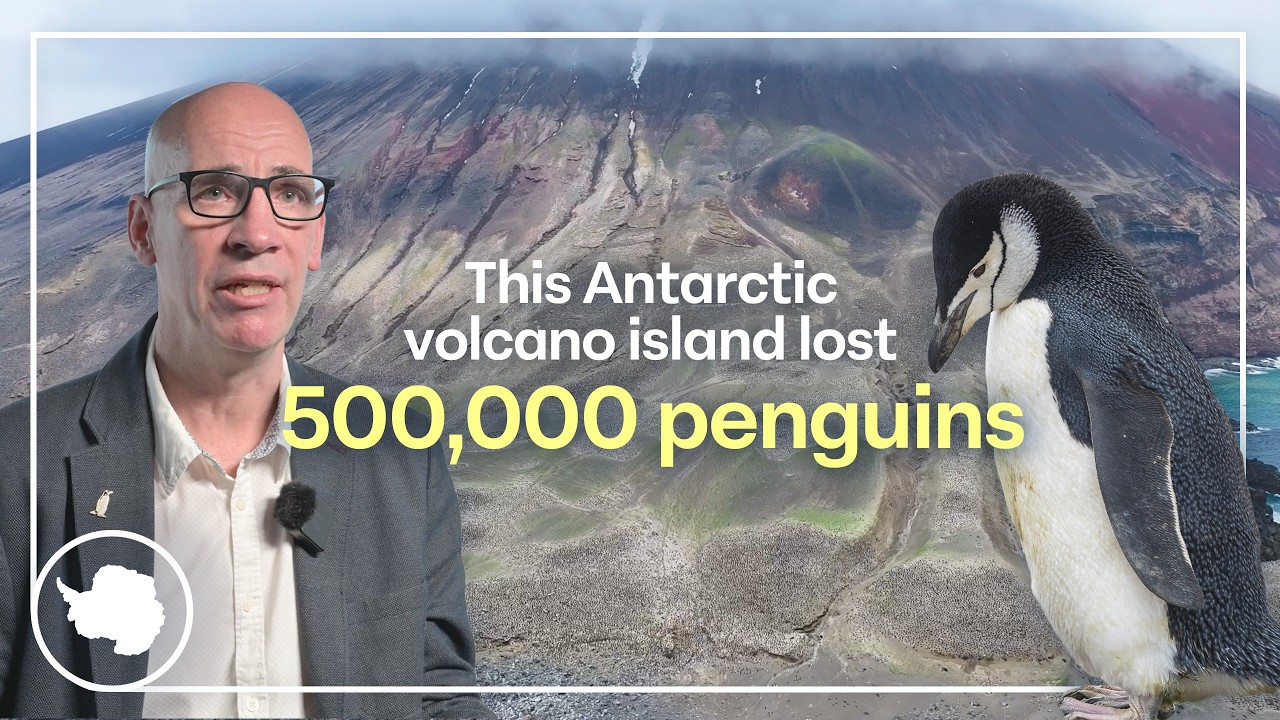
Zavodovski Island, a remote, uninhabited volcanic island between South America and Antarctica, lost 63 percent of its chinstrap penguins between 2011 and 2025, according to a new study published October 7 in the journal Current Biology.
Researchers attribute the losses—which amount to half a million breeding individuals—to climate change, which they say is disrupting the birds’ food supply.
“Imagine losing 60 percent of a country’s entire population in that timeframe,” Lucas Krüger García, an ecologist with the Chilean Antarctic Institute who was not involved with the research, tells National Geographic’s Avery Schuyler Nunn. “It’s really concerning. The fact that this single colony represented 30 percent of the global chinstrap population makes it even more concerning.”
Zavodovski Island, part of the South Sandwich Islands, was once home to the largest penguin colony on the planet, a combination of chinstrap and macaroni penguins. But, since 2011, as chinstrap numbers have plummeted, the island has lost more than a quarter of its total penguin population. Because of the declines, scientists say the island has now lost its world’s largest penguin colony title to the Adélie penguins living at Cape Adare in Antarctica’s Ross Sea.
/https://tf-cmsv2-smithsonianmag-media.s3.amazonaws.com/filer_public/cb/c4/cbc4cd4c-4a32-4775-99d0-c7e8e9559391/penguin_colony_on_island_cliffs_-_john_dickens.jpeg)
Chinstrap penguins have been declining across the Antarctic Peninsula and surrounding islands since the 1980s. But, for years, the birds living on Zavodovski Island, located some 1,240 miles from the nearest permanent human settlement, appeared to be holding their own.
In December 2023, scientists decided to check in on the Zavodovski chinstraps. They were in for a shock: Their analysis—conducted using a combination of drone surveys, aerial photography and satellite tracking data from individual birds—revealed that the island now has the highest rate of chinstrap population decline in the world.
In 2011, scientists counted nearly 543,000 breeding pairs of chinstrap penguins on the island. By 2025, that number had plummeted to roughly 201,000 breeding pairs, according to the paper.
/https://tf-cmsv2-smithsonianmag-media.s3.amazonaws.com/filer_public/87/e6/87e631ed-b10d-46ae-bdd7-ebe42327c4c3/penguin_colony_below_mt_curry_-_nicole_richters.jpg)
The team ruled out a variety of explanations for the birds’ demise. The island has plenty of breeding habitat, so the chinstraps likely weren’t competing with their macaroni neighbors for space. Krill harvesting is banned in the waters surrounding the island, which eliminated local overfishing as a culprit. The March 2016 eruption of the island's Mount Curry might have killed some of the birds, but it doesn’t explain the chinstrap population’s steady decline since 2011.
Instead, the evidence points to climate-driven changes to the Southern Ocean that are affecting krill, the tiny crustaceans that make up the bulk of the chinstrap penguins’ diet. As the ocean warms and sea ice shrinks, krill are becoming increasingly scarce around Zavodovski—and chinstrap penguins are paying the price.

Tracking data shows the birds prefer to forage in the cooler waters northwest of the island, where they would normally find abundant krill. However, as ocean temperatures rise, the krill are increasingly moving south into the Weddell Sea.
Since chinstrap penguins rely so heavily on krill, even small changes in its availability can have significant consequences for their survival. The chinstrap penguin is “quite a specialist species that’s got a very limited global range, and that range is getting squeezed,” lead author Norman Ratcliffe, an ecologist with the British Antarctic Survey, tells CNN’s Laura Paddison.
Did you know? Emperor penguins are also in trouble
Earlier this year, the International Union for Conservation of Nature (IUCN) listed emperor penguins as “endangered.” Projections suggest the birds’ population could shrink by as much as half by the 2080s.
Meanwhile, the island’s macaroni penguins are holding steady. The birds’ numbers increased by 28 percent between 2011 and 2016, and have remained stable at roughly 217,000 breeding pairs since then. Zavodovski Island now has a combined chinstrap and macaroni penguin population of roughly 419,000 pairs, per the paper.
Scientists think macaroni penguins are faring better than chinstraps because their diet is broader and more flexible. They also like to eat krill, but can supplement with or switch to other food sources, such as fish and crustaceans, when necessary. Tracking data suggests they’re doing just that, heading to the warmer waters northeast of the island to forage for alternate prey.
Overall, it’s good news that Zavodovski’s macaroni penguins are flourishing. But researchers worry that the decline of chinstrap penguins could have broader ripple effects.
“Each ecosystem could be regarded as like a giant Jenga set, and every component that you remove increases the risk of ecosystems collapsing completely,” Ratcliffe tells the Guardian’s Jonathan Watts.
/https://tf-cmsv2-smithsonianmag-media.s3.amazonaws.com/accounts/headshot/SarahKuta.png)