
Major Oak, the 1,200-Year-Old Tree with Ties to the Robin Hood Legend, Is Presumed Dead After Failing to Produce Leaves
The legendary bandit who stole from the rich and gave to the poor is said to have used the massive tree as a hideout while running from the sheriff of Nottingham
/https://tf-cmsv2-smithsonianmag-media.s3.amazonaws.com/accounts/headshot/SarahKuta.png)
/https://tf-cmsv2-smithsonianmag-media.s3.amazonaws.com/filer_public/63/c7/63c719b4-e12b-4308-bc13-9883759dcb15/species-trees-major-oak-with-blue-sky.webp)
Conservationists are mourning the death of a 1,200-year-old oak tree in England with ties to the legend of Robin Hood.
The tree, known as the “Major Oak,” failed to produce leaves this spring, leading officials to declare it dead this week. The June 18 announcement came from the Royal Society for the Protection of Birds (RSPB), a nonprofit conservation group that has managed Sherwood Forest, the nature reserve where the tree is located, on behalf of the Nottinghamshire County Council since 2018.
“It’s heartbreaking,” says Chloe Ryder, Sherwood Forest estates operations manager with RSPB, to the Guardian’s Patrick Barkham. “I’m genuinely gutted.”
Robin Hood, the mythical bandit who stole from the rich and gave to the poor, is said to have lived in Sherwood Forest and used the Major Oak as a hideout while running from his nemesis, the sheriff of Nottingham. The nonprofit Woodland Trust crowned the oak Tree of the Year in 2014 and selected it to be the first recorded specimen in its Ancient Tree Inventory.
The tree was named after being mentioned in a 1790 text by Hayman Rooke, a major in the British Army who retired to a home close to Sherwood Forest and became an antiquarian and naturalist. In the late 18th and early 19th centuries, while other Sherwood oaks were being chopped down to build Royal Navy ships, the Major Oak escaped the fate of its neighbors, per the Associated Press’ Brian Melley.

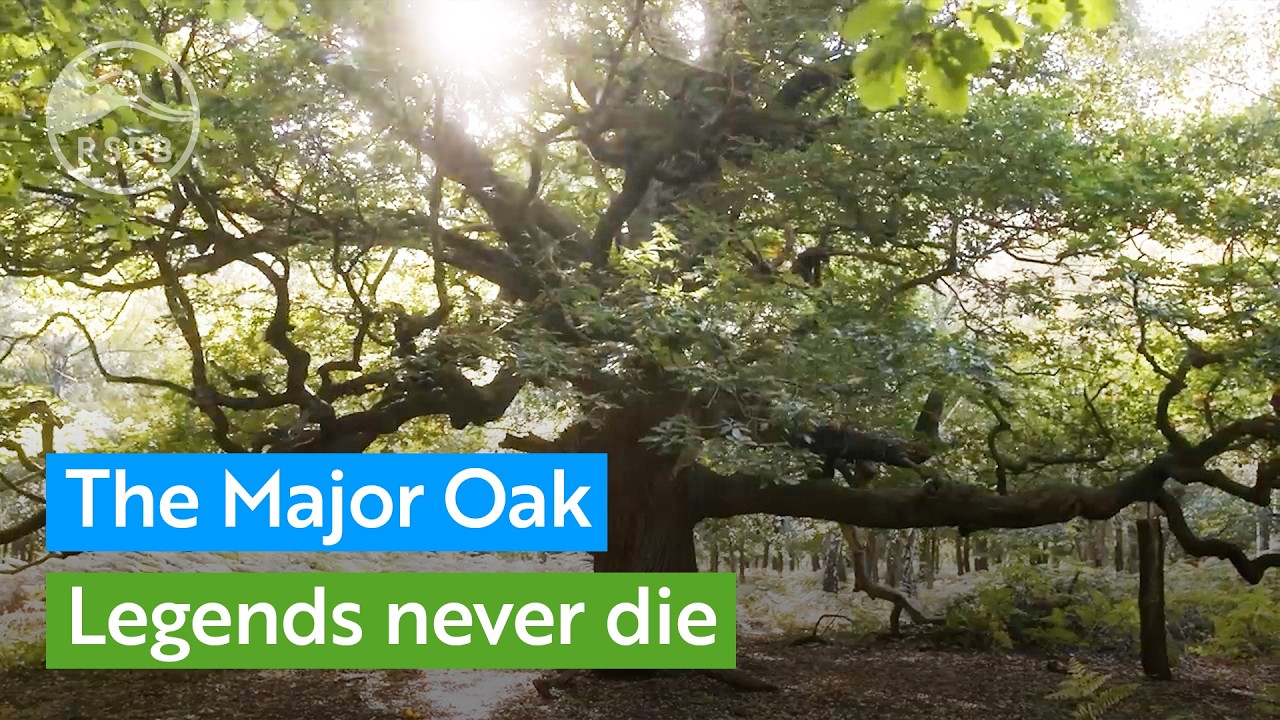
The massive English oak—which had a roughly 32-foot trunk circumference and a 92-foot crown—had been in “visible decline” in recent years, according to the RSPB announcement. It hardly sprouted any leaves last year, and though soil and tree experts were brought in to try to improve the tree’s chance of survival, those efforts ultimately proved futile.
“The damage, it now seems, was already too deeply entrenched to fully reverse,” Simon Parfey, an expert in soil microbiology testing who has helped care for the tree since 2021, tells BBC News’ Asha Patel and David Pittam.
Officials say numerous factors contributed to the Major Oak’s demise, including historical interventions intended to help preserve the tree’s shape. In the early 20th century, officials began using support props and metal chains to hold up its branches. Later, in the 1960s, the tree’s hollow sections were filled in with concrete, and its limbs were covered in lead, fiberglass and fire-retardant paint.
Those efforts likely prevented the tree from aging naturally and threatened its survival, but the oak would have collapsed if modern experts had tried to remove or reverse them, per the Guardian.
Additionally, the footsteps of millions of visitors who came to admire the tree over the past two centuries compacted the soil around its roots. That compression made it more challenging for water, nutrients and oxygen to reach the tree. Recent investigations found that the soil was “extremely hard and lacking in life,” and the root system was “far smaller and weaker than earlier scans suggested,” according to the RSPB statement.
As the tree struggled to weather those challenges, it was also dealing with heat waves and droughts caused by climate change.
“The climate is changing so fast in front of our eyes that these very old trees don’t seem to be able to keep up,” Reg Harris, an arborist who monitored the Major Oak in recent years, tells the New York Times’ Lynsey Chutel.
The tree will remain standing for the foreseeable future, per RSPB. At some point, however, it will collapse and provide important decaying wood habitat for birds, insects, mammals and fungi.
And as the wood eventually starts to decompose, it will add vital nutrients to the surrounding soil. The experts who cared for the Major Oak, meanwhile, will continue to monitor the tree’s ecology and structural safety.
“The Major Oak will continue to stand at the heart of Sherwood as a natural monument for visitors to come and see, living on in the legend of Robin Hood and continuing to provide as much support to the forest’s ecosystem in death as in life,” Hollie Drake, senior site manager at Sherwood Forest, says in the statement.
The Major Oak may be dead, but its genetics live on in the form of several saplings grown from acorns and cuttings.
“Its story is far from over,” according to the statement. “There are Major Oak saplings planted in locations right around the world, so we are planning work to ensure that its offspring will grow and generate their own acorns—and legends—for centuries to come.”
Did you know? The Sycamore gap tree
The Major Oak is the latest casualty among England’s most celebrated trees. In September 2023, the beloved Sycamore Gap tree, which stood for centuries near Hadrian’s Wall in northern England, was chopped down. Two men were convicted of two counts each of criminal damage in connection with the incident in May 2025.
Officials say the lessons they learned while caring for the Major Oak will help them better preserve other ancient oaks—oaks that are at least 400 years old—across the United Kingdom.
“The knowledge we have gained [from the Major Oak] is invaluable,” according to the statement. “We’re continuing to study the relationship between ancient trees and the soils that sustain them.”
/https://tf-cmsv2-smithsonianmag-media.s3.amazonaws.com/accounts/headshot/SarahKuta.png)