
Does Your Dog Love Chasing a Ball? Study Suggests Dog Toy ‘Addiction’ Is Real
The research documents addiction-like tendencies in canines, offering scientific evidence that appears to support owners’ own observations
/https://tf-cmsv2-smithsonianmag-media.s3.amazonaws.com/accounts/headshot/SarahKuta.png)
/https://tf-cmsv2-smithsonianmag-media.s3.amazonaws.com/filer_public/5d/a3/5da39f73-734a-4580-b67f-9013ef8f1cff/pexels-blue-bird-7210262.jpg)
Some dogs absolutely adore their toys—to the point that their owners have dubbed them “ball junkies” because of their inability to quit their favorite chewies, stuffies and balls. Now, new research suggests there might be some truth to the jokey nickname.
These toy-obsessed pooches behave like humans with behavioral addictions such as gambling and internet gaming, researchers report in a new study published October 9 in the journal Scientific Reports.
For the study, researchers recruited 105 highly play-motivated dogs—49 females and 56 males—ranging in age from 12 months to 10 years old. The pups represented a wide variety of breeds, from border collies and Jack Russell terriers to Labrador retrievers and mutts, and belonged to 82 total owners.

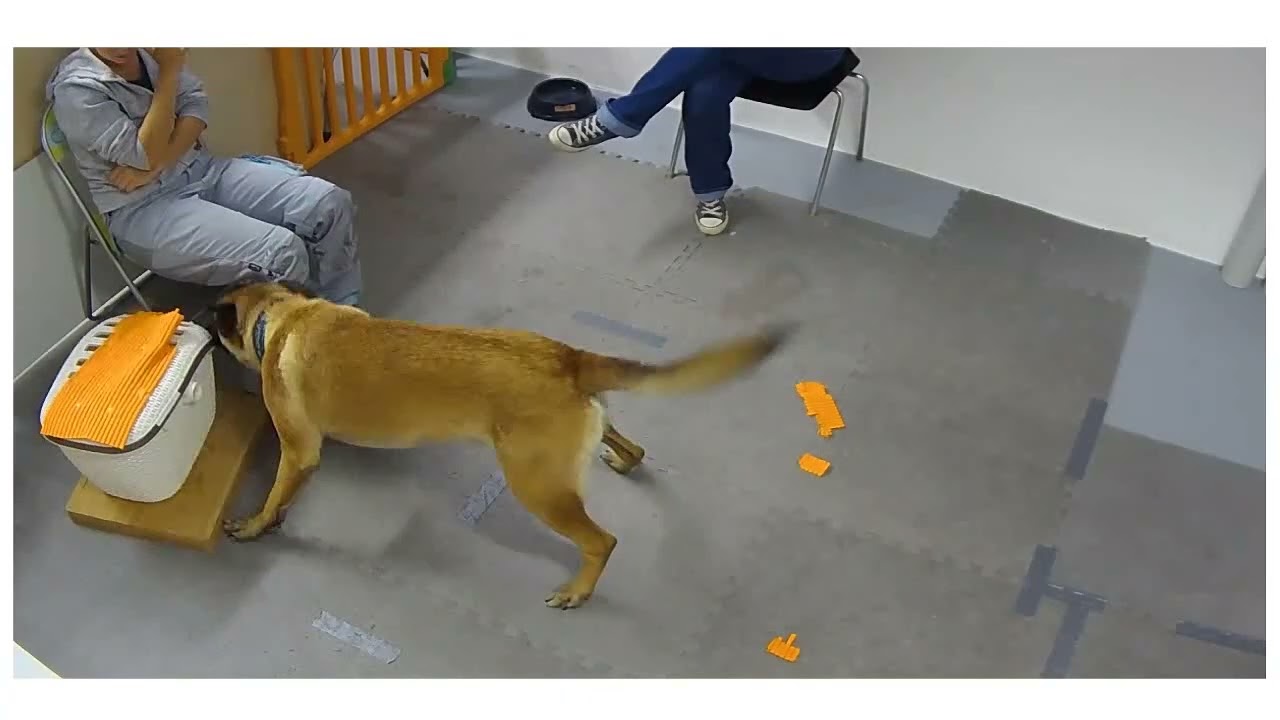
The researchers came up with a series of 14 different tests designed to elicit and measure addiction-like tendencies. They set up four video cameras in an experimental room to document how the dogs reacted as they went through each test.
At the beginning of the experiment, researchers placed three types of toys on the floor—a ball, a plush toy and a tug toy—while the owner held the pooch back. Then, they gave the dog 30 seconds to interact with the toys and, ideally, pick a favorite. (Some owners brought their pet’s most treasured toy from home instead.)
Afterward, the dog and its owner played with the toy for one minute. Scientists then placed the toy on a shelf that was inaccessible to the animal and asked the owner to try to play with the dog.
“Similar to the escalating engagement seen in human behavioral addictions, some dogs would repeatedly spin, jump, focus or bark toward the unavailable toy on the shelf for the duration of the subtest,” the researchers write in the paper.
In another, researchers removed all the toys and food from the room for a 15-minute cool-down period. Some dogs appeared unable to relax or engage in other behaviors, apparently still fixated on the toys that had been taken away.
Key takeaway: The breed's the thing
How important is a dog's breed? Not as much as you might think. In a 2022 study, researchers found only loose ties between a dog's breed and their behavior, with one big exception: Pups' willingness to obey human directions.“They would focus on the door where the toys had disappeared from, or on the shelves where the toys had been previously stored,” co-author Stefanie Riemer, a behavioral biologist at the University of Veterinary Medicine Vienna, tells National Geographic’s Gennaro Tomma.
In one test, scientists secured a pup’s favorite toy in a box, then placed a tantalizing food puzzle nearby. Two canines in the study were so intent on accessing their toys—and so disinterested in the food puzzle—that their behavior turned destructive.
“[They] managed to destroy the box containing their toy, illustrating the intensity of their motivation,” says lead author Alja Mazzini, a veterinary behaviorist at the University of Bern, to BBC Science Focus’ Ezzy Pearson. “It wasn’t something we encouraged or expected, but it was simply a striking example of how far some dogs were willing to go to access the object of their desire.”
In total, 33 dogs displayed addictive-like tendencies, according to the study. Shepherd breeds—such as German shepherds and Belgian shepherds—had the highest scores for addiction-like behaviors. This makes sense, given that shepherds were bred to specialize in tasks like police work and livestock protection. Although these traits may be beneficial to a degree in some specific circumstances, the research suggests they could also be detrimental to a dog’s health and wellbeing.
/https://tf-cmsv2-smithsonianmag-media.s3.amazonaws.com/filer_public/03/e1/03e182c1-3d87-4c1c-b96c-a41c7f7e28bd/image_3.jpeg)
Pups that display addiction-like behaviors “really can't relax after the toys are out of reach or gone. Or they would continue playing even if they're injured. Or they wouldn't take a rest, but they needed one. Or they wouldn't take a drink and so on,” Mazzini tells USA Today’s N'dea Yancey-Bragg.
At this point, it’s not clear why some dogs display more addiction-like tendencies than others. But based on the breed data, the scientists suspect some pets may simply be hard-wired to become infatuated with their toys. They’ll need to conduct additional research to confirm that hunch. “We think the genetic component is pretty strong,” Riemer tells the Guardian’s Nicola Davis.
The study has other limitations, too. Researchers focused only on pups that were already highly play-motivated and the sample size was small, meaning the results may not necessarily reflect the broader, global dog population.
/https://tf-cmsv2-smithsonianmag-media.s3.amazonaws.com/filer_public/36/8d/368dec13-81a5-4f43-a355-cb185b68c4fa/image_1.jpeg)
In addition, it’s not clear if the characteristics of human addiction translate directly to canines. Humans, for instance, are aware they’re taking risks when they engage in behaviors like gambling—and the riskiness is likely part of the appeal. Dogs might face negative consequences when they obsessively play with their toys, but are they aware of those risks?
Julia Espinosa, a psychologist at York University in Toronto who was not involved with the study, is not convinced. Even so, she says the paper is “a really good first step” that addresses “a really important aspect of dog welfare,” she tells National Geographic.
According to the researchers, it’s the first that assesses whether addiction criteria might apply to dogs—and uses rigorous scientific methods to do so. “It's not just people characterizing or anthropomorphizing something about the dog,” Espinosa adds.
In the future, these and other related findings might help inform veterinary medicine or pet training best practices. But, for now, the research is merely exploratory.
“It is difficult to use this study to advise a dog owner [about] what is best for their dog,” Serge Ahmed, a psychologist and neuroscientist at the French National Center for Scientific Research and the University of Bordeaux who was not involved with the research, tells the Guardian.
/https://tf-cmsv2-smithsonianmag-media.s3.amazonaws.com/accounts/headshot/SarahKuta.png)