
Flesh-Eating ‘Superworms’ Could Become a New Skeleton-Cleaning Crew for Museum and Research Specimens
A new study hints that the critters would be a good alternative to traditional methods used to remove flesh from bones, including dermestid beetles, chemical treatments and boiling, which can cause damage or be time-consuming
/https://tf-cmsv2-smithsonianmag-media.s3.amazonaws.com/accounts/headshot/SarahKuta.png)
/https://tf-cmsv2-smithsonianmag-media.s3.amazonaws.com/filer_public/92/1d/921dc374-286e-4958-af39-60fa2c33e07e/journalpone0349669g004.png)
Before an animal skeleton can become part of a museum’s collection, it must be thoroughly cleaned. Scientists use a variety of methods to strip flesh from bones, such as applying chemical treatments, boiling the bones or letting colonies of dermestid beetles chow down. But each approach has downsides.
Now, researchers say they have come up with a promising new option: Zophobas morio, commonly called “superworms.” They describe the creatures’ gentle but efficient flesh-eating prowess in a study published on July 1 in the journal PLOS One.
“Superworms are really fast compared to other traditional methods. They are more environmentally friendly and their maintenance is super easy,” study co-author Niloofar Alaei Kakhki, a bioinformatician at the State Museum of Natural History Stuttgart in Germany, tells Science’s Yejin Lhee.
Native to South and Central America, these robust creatures are not true worms but, rather, the larvae of a type of darkling beetle. They are often sold as a protein-rich food for captive reptiles, amphibians, birds and fish.
Quick fact: Accidental discovery
The researchers initially maintained a superworm colony to feed injured wild birds, per Live Science. The bugs were typically fed vegetable scraps. But one day, the researchers ran out and offered up a leftover chicken bone from their lunch instead. Shocked by how fast the larvae cleaned the remaining meat from the bone, they wondered if superworms might do the same for museum specimens.
In the study, Alaei and her colleagues tested varying numbers of superworms on the remains of eight animal species, including those of an alligator gar, a gray wolf, an Egyptian fruit bat, a Eurasian eagle owl and a house mouse. Before they let the larvae loose, they skinned each carcass and removed the organs; they also boiled the larger animals’ remains to soften their tissue.
Finding the right balance took some experimentation. In the end, they dialed in the sweet spot: 10 to 15 superworms for every gram of carcass. At this ratio, the larvae used their powerful mandibles to complete their cleaning in hours to days, depending on specimen size, without damaging the bones.
Superworms are omnivores, but they eat mostly plants. So after each carcass cleaning cycle, the researchers fed them a vegetable-based diet and gave them time to recover before using them again, Alaei and study co-author Morteza Monfared, a zoologist at the Ferdowsi University of Mashhad in Iran, write in an email to Live Science’s Kenna Hughes-Castleberry.
Since superworms are bred and sold as pet food, they’re relatively easy to obtain. And they’re economical. “You can reuse the same larvae for almost six months,” Alaei tells NPR’s Ari Daniel.
The creatures also remain in their larval state for several months as long as they’re kept in groups, so it’s unlikely that one might escape. That’s a concern with dermestid beetle colonies, which tend to include creatures at every stage of the life cycle. If mature dermestid beetles got out or laid eggs on or in a cleaned specimen, they could spread and damage an institution’s collections.

Using superworms might be “a less risky way of having insects,” Mike Rutherford, curator of zoology and anatomy at the Hunterian Museum & Art Gallery at Scotland’s University of Glasgow, who was not involved with the study, tells Science. He notes that he’s intrigued by the newly proposed cleaning crew and might try using them on a snake skeleton with hundreds of tiny, delicate ribs that he’s been meaning to deflesh.
At the very least, Alaei notes, the larvae could be a good option for institutions that lack the space, staff or funding to carry out traditional carcass-cleaning methods. Dermestid beetle colonies, for instance, often require secure, isolated housing to minimize the risk of escape.
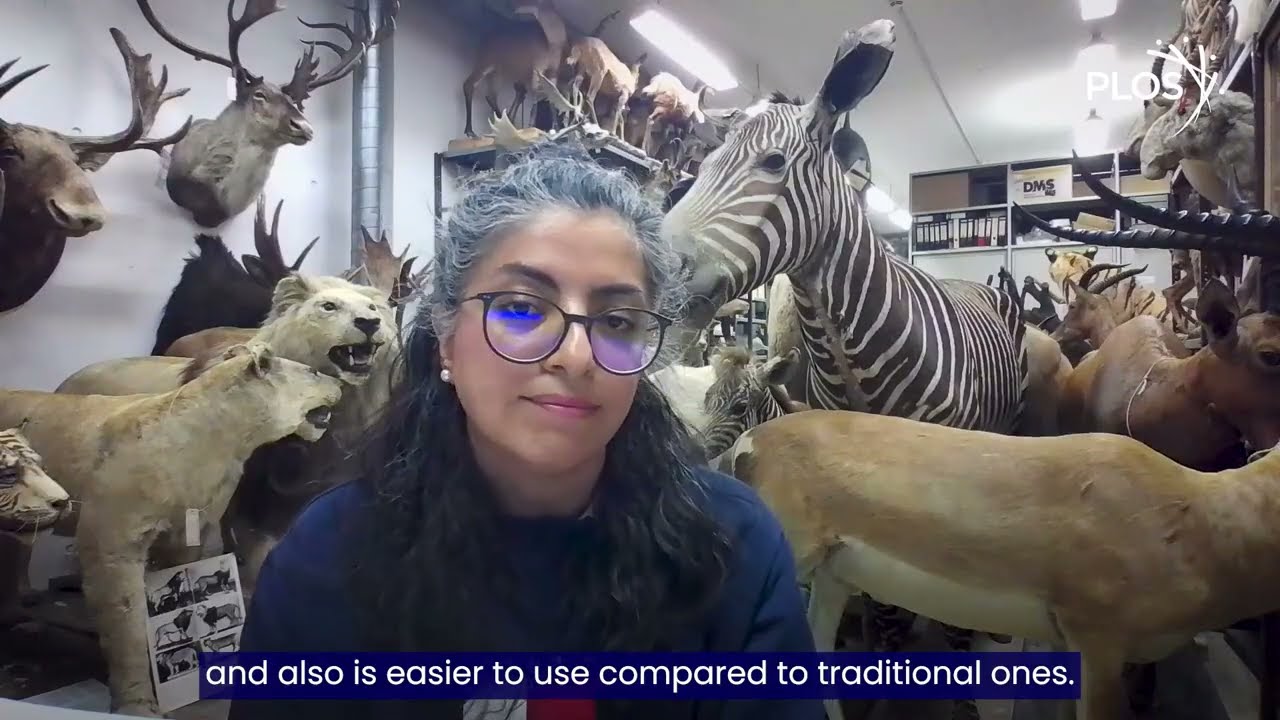
Researchers “can just adapt this setup, even if they have lots of limitations in their resources,” Alaei says in a video shared by the journal. “The first step is just trusting the new approach. As soon as they just try [it] once, even [on] a very small scale, they can see … the big differences between this approach and the traditional approaches.”
The study authors don’t expect superworms to replace other skeleton-cleaning methods. Rather, they see the larvae as a “valuable new tool” that museums, universities and research laboratories can “adopt and adapt according to their own needs,” Alaei and Monfared tell Live Science.
“Every preparation method has its own strengths and limitations, and the best choice depends on the type of specimen and the goals of the researcher,” they add. “However, based on our experience, we believe [the superworm technique] offers an excellent balance between cost, efficiency, safety and specimen quality.”
/https://tf-cmsv2-smithsonianmag-media.s3.amazonaws.com/accounts/headshot/SarahKuta.png)