
Drug-Resistant Germs Now Kill More Than 50,000 Americans Each Year, According to a New CDC Report
The Centers for Disease Control and Prevention has identified 19 “superbugs” that currently pose a threat to human health in the United States, plus another six that are being monitored as potential threats

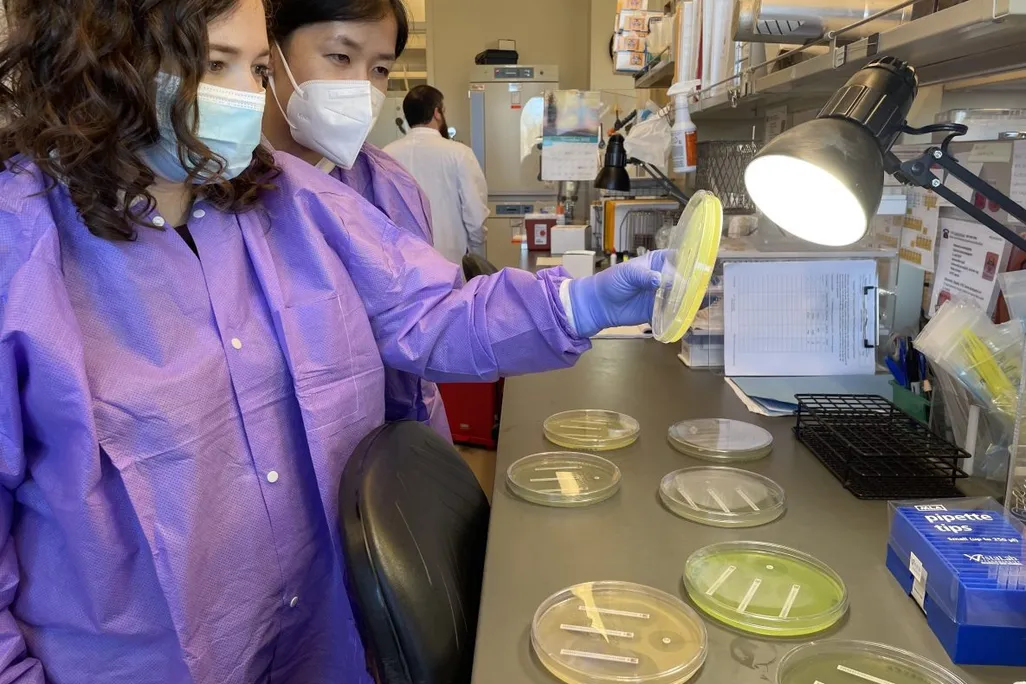
Drug-resistant “superbugs” are now killing more than 50,000 Americans and infecting nearly 10 million each year, according to the Centers for Disease Control and Prevention.
This week, the federal health agency released its first comprehensive assessment of drug-resistant bacteria and fungi in seven years. The new report identifies 19 pathogens that currently pose a threat to human health in the United States, plus another six that are being monitored as potential threats.
Drug-resistant pathogens are those that have evolved to withstand the effects of medications designed to kill them or stop their growth, such as antibiotics, antifungals, antiparasitics and antivirals. Experts say the misuse and overuse of these treatments have contributed to the problem, along with environmental factors that seem to be helping superbugs thrive, like rising global temperatures.
When infections stop responding to standard treatments, patients may take longer to recover or end up with more severe illnesses. The risks are particularly high for people with compromised immune systems, underlying health conditions or those who use medical devices such as catheters and ventilators.
Patients in hospitals and other medical settings are also at increased risk. The CDC estimates that infections commonly associated with health care settings were responsible for more than 42,000 deaths and nearly $12 billion in health care costs in 2023.
Superbugs “prolong hospital stays, drive up health care costs and make it increasingly difficult—and sometimes impossible—for doctors to safely provide care,” Wendy Armstrong, president of the Infectious Diseases Society of America and an infectious-disease specialist at the University of Colorado School of Medicine, says in a statement.
Did you know? A.I.-designed viruses could help with antimicrobial resistance
In August, researchers reported that they used artificial intelligence to design viruses not found in nature. The pathogens they made attack only bacteria, so the scientists propose that this technique could eventually help create treatments for antibiotic-resistant germs.
The new report classifies drug-resistant pathogens into three threat levels: urgent, serious or concerning. It also includes a watch list of potentially risky germs that researchers are still investigating to understand the threat they pose.
“The rankings are a way to differentiate the ones that we have the most lost sleep over at CDC,” says Michael Craig, who co-authored the new report and directs the CDC’s Antimicrobial Resistance Coordination and Strategy Unit, tells NBC News’ Aria Bendix. “But the thing that I always remind people is that all of these are threats.”
Four germs are listed as urgent, the highest level of threat. One is Candida auris, a fungus that spreads easily in hospitals and can cause illnesses ranging from mild skin infections to life-threatening bloodstream infections. According to the CDC, C. auris clinical cases increased by more than 50 percent between 2022 and 2023. And since 2019, the number of cases has increased nearly tenfold.
Another urgent superbug is Neisseria gonorrhoeae, the bacterium that causes the sexually transmitted infection gonorrhea. It has become resistant to nearly every antibiotic used to treat it, and “it’s only a matter of time until it becomes resistant to the last available cure,” per the CDC.
The other two urgent germs are Acinetobacter and Enterobacterales, bacteria that commonly spread in health care settings. They are now resistant to even the most powerful antibiotics, including carbapenem antibiotics, so patients who develop infections have limited treatment options.
Overall, the report paints a troubling picture. But it also points to reasons for optimism. For example, the CDC has downgraded Clostridioides difficile, or “C. diff,” a bacterium that can cause diarrhea and colon inflammation. Cases are declining, dropping from 455,560 in 2018 to 412,504 in 2023, likely due to better diagnosis and infection prevention and treatment efforts.
The new report “shows both the progress we’ve made and the significant work that remains,” Erica Schwartz, director of the CDC, says in a statement.
The CDC last issued a report on drug-resistant bacteria and fungi in 2019. However, the agency cautioned against comparing numbers from the two assessments because it used different data sources and methods this time around. Moving forward, the CDC plans to release an update every two years, per NBC News.
Beyond the U.S., superbugs are a growing threat to public health around the world. Research suggests that antibiotic-resistant infections could result in more than 39 million deaths by 2050. Researchers are racing to develop new drugs that could help address the problem, but experts worry that these efforts may not keep pace with the growing threat.
“The scientific community has developed and approved new antibiotics in recent years,” said Yvan Hutin, previously the director of antimicrobial resistance at the World Health Organization, in a statement earlier this year. “This is good, but unfortunately not sufficient to catch up with evolving drug-resistant bacteria, especially against those of greatest concern. We need a reliable pipeline with new antibacterial agents that are innovative, affordable, accessible to all those who need them.”
