
Dismantled to Survive the Nazi Blitz, Coventry Cathedral’s Stained Glass Is ‘a Medieval Jigsaw Puzzle.’ Its 12,000 Fragments Are Now Digitized for Public View
First shattered during the Reformation, the 15th-century stained glass is rife with religious imagery, comical animal scenes and even portraits of the original donors who funded its construction
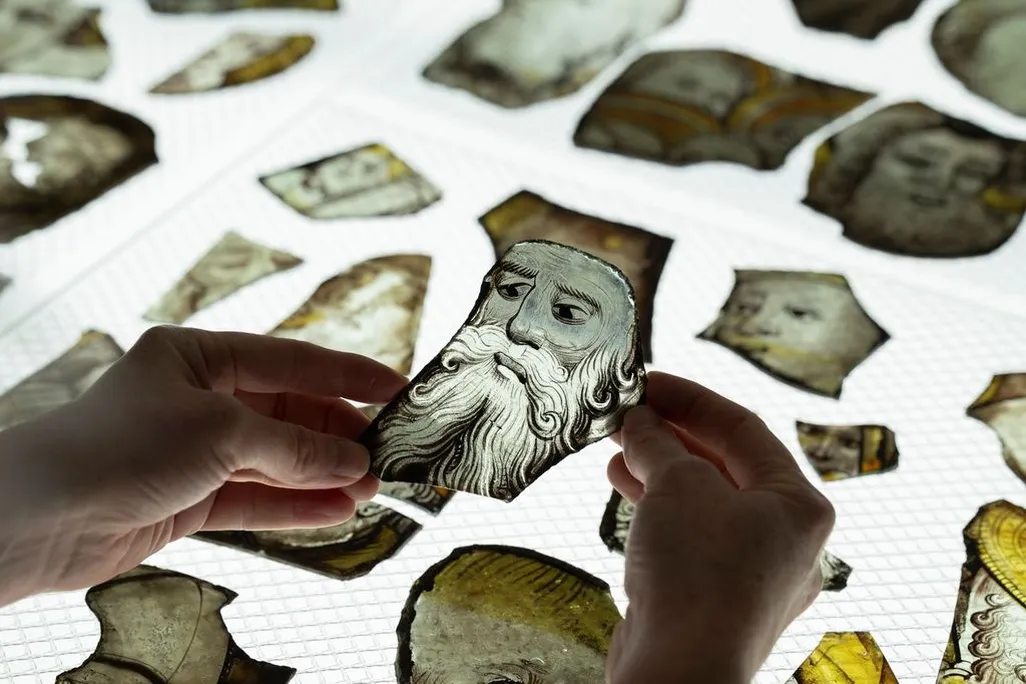
During World War II, the medieval stained glass of Coventry Cathedral was dismantled and hidden in crates to survive air raids. Now, an ambitious cataloging project has digitized roughly 12,000 fragments, making them publicly accessible for the first time in decades.
On November 14, 1940, German bombers obliterated the cathedral, making it the only British cathedral destroyed during the Blitz. The glass survived, stashed in 30 wooden crates in the rectory cellars of a nearby village, remaining there until 1957. The red sandstone cathedral was eventually rebuilt and its old charred shell was preserved as a memorial to peace and reconciliation. But the windows were never reassembled.
As Coventry marks the 86th anniversary of the bombing, the World Monuments Fund (WMF) and cathedral curators have photographed and cataloged the fragile trove, launching a digital exhibition on the Bloomberg Connects app.
“Coventry Cathedral’s collection of medieval stained glass, which includes exquisitely executed examples of 15th-century painting, is of international importance,” Laura Atkinson, a stained-glass conservator who led the cataloging, says in a statement. “Yet it has received little scholarly study. This project is a crucial step towards making the collection accessible to the public and securing the academic attention it merits.”
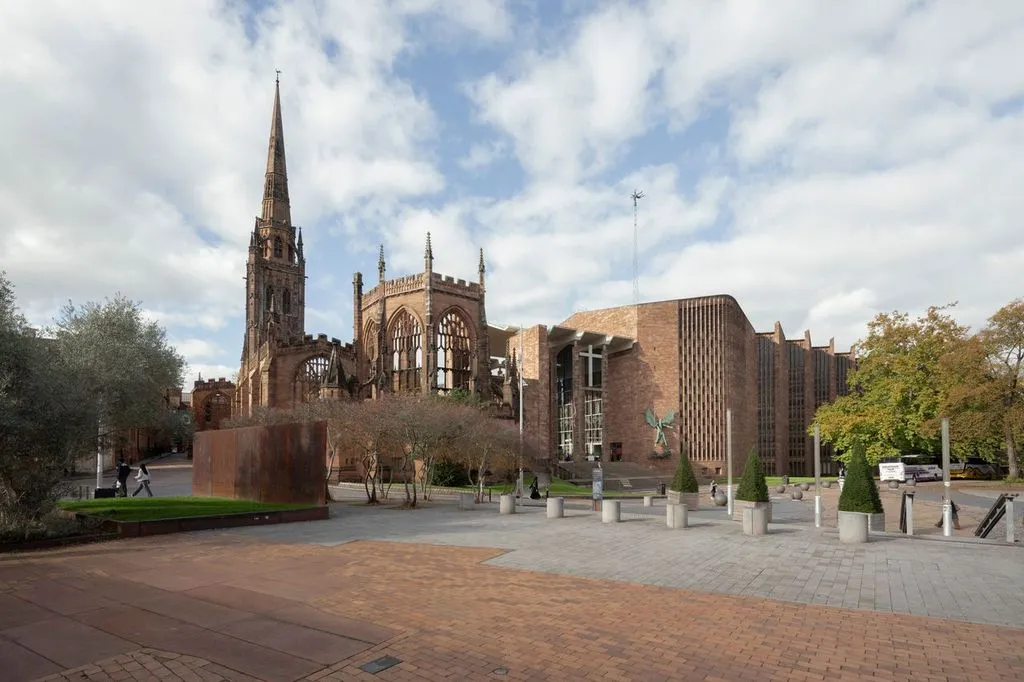
The assemblage— Britain’s largest collection of loose medieval stained glass—dates largely to the 15th century. The fragments are attributed to John Thornton, one of medieval England’s master glaziers, famed for creating the Great East Window at York Minster.
Coventry’s stained glass, the cathedral’s Reverend Canon Nitano Muller tells the BBC’s Lorna Bailey and Alec Blackman, is “akin to the glass that you’d find in Westminster Abbey or Canterbury Cathedral.”
Surviving pieces depict scenes from the Passion of Christ, figures of the Apostles and various saints, as well as fanciful beasts and heraldic shields which bear monograms and rebuses. Particularly distinctive are donor portraits showing the ordinary lay men and women who funded the construction of the windows kneeling in prayer.
Producing such intricate depictions of jeweled robes, in particular, demanded remarkable technical prowess. “The medieval glazer has carefully scratched away the surface of the glass to create a hole and then they’ve inserted a colored piece of glass that will represent the jewel,” Atkinson tells the Guardian’s Esther Addley. “That would have taken a long, long time and had a high failure rate. This is incredibly expensive, high-end glass. This is the best stuff.”
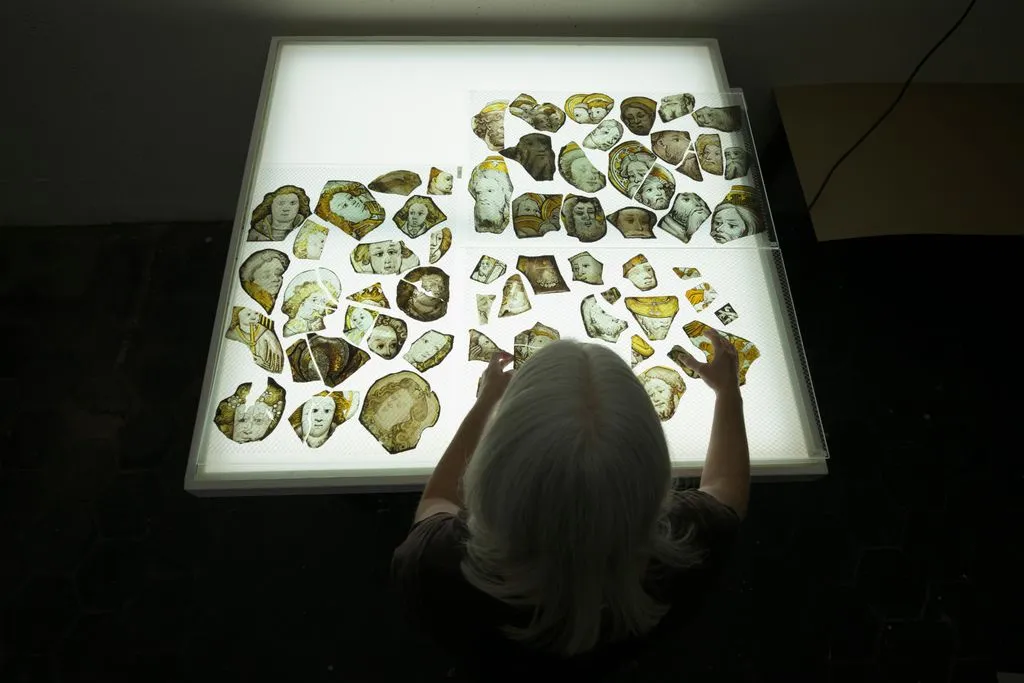
The windows endured centuries of turmoil long before the 1940 air raids. Partially smashed during the 16th-century Reformation, surviving fragments were later pieced together into patchwork arrangements to adorn the apse and clerestory.
Dismantled for protection before the war, the salvaged glass became what Andrew Hines, head of heritage and interpretation at the cathedral, describes as “a medieval jigsaw puzzle,” per the Guardian. Although an initial conservation effort documented parts of the glass in 2012, the pieces remained divided across three separate storage rooms for more than a decade.
Did you know? Words of the war
Following the devastating German air raid on Coventry, Nazi propagandists coined a new word, coventrieren, meaning to destroy a city completely.
During the latest phase, specialists transferred the collection into bespoke cabinets, logging tray numbers and capturing high-resolution photographs to create a digital database. The digital preview marks an early step in the cathedral’s broader Building Hope project, which seeks to preserve the cathedral’s ruins for generations.
“Coventry Cathedral’s medieval stained glass is a remarkable survivor,” Emma Sweeney, projects manager at WMF Britain, says in the statement. “Together, the ruins and the surviving glass tell a powerful story of resilience, with much still to be uncovered.”