
Astronauts Living at NASA’s Planned Future Lunar Base Might One Day Snack on Moon-Grown Potatoes
Researchers successfully grew spuds in simulated moon dirt supplemented with vermicompost, a nutrient-rich organic additive with worm poop. The taters are safe and nutritious—but we don’t know what they taste like yet

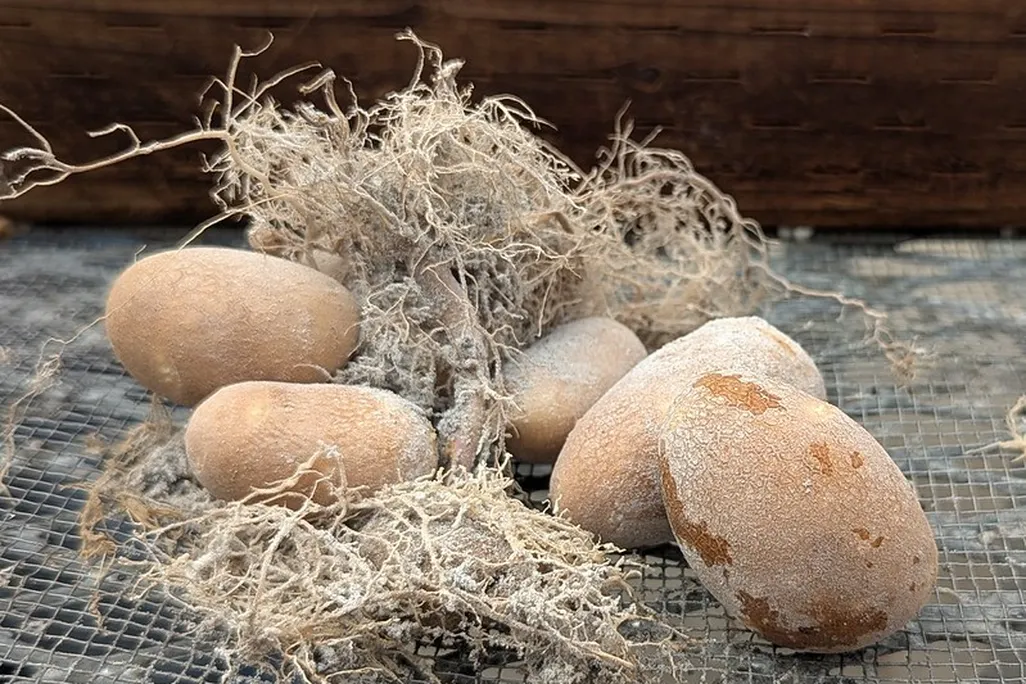
NASA aims to build the first permanent moon base within the next decade, allowing astronauts to live and work there for extended periods. But those lunar residents probably can’t depend on receiving all their food from Earth. They’ll likely need to grow some crops on their own—and new research suggests potatoes could be a viable option.
In a study published November 19 in the journal npj Microgravity, researchers report successfully growing edible potatoes in simulated lunar soil with an added nutrient-rich ingredient. The findings represent a promising avenue for lunar food-production systems and suggest that astronauts might one day feast on moon spuds.
“Potatoes provide more calories per land area than many other crops,” study co-author Aymeric Goyer, a plant biologist at Oregon State University, tells Reuters’ Will Dunham. “They are nutritious—they provide more potassium than a banana, are rich in vitamin C, have good proteins—and they have a high satiety index,” meaning they are very filling and satisfying.


The researchers received funding from NASA to help figure out how to grow plants to feed future moon visitors. But the dirt there, called lunar regolith, doesn’t have nitrogen, which is one of plants’ essential macronutrients, Goyer tells El País’ Miguel Ángel Criado. It also contains low levels of organic matter to help supply other nutrients, as well as high levels of heavy metals, which can be toxic to plants and the people who eat them. What’s more, lunar regolith’s texture resembles that of tiny glass shards, which can be tough on tissues.
So, the team tried to make a simulated moon dirt mixture more amenable to plant growth by adding vermicompost: a nutrient-rich organic ingredient that includes worm poop. They tested various proportions of vermicompost and imitation lunar regolith, resulting in three dirt combinations: one without vermicompost, one with 15 percent and one with 30 percent.
The experiments revealed that the simulant lunar regolith with the highest vermicompost content yielded just as many potatoes as those grown in Earth soil. Meanwhile, those planted without the nutrient-rich additive were stunted and had underdeveloped roots, signs associated with too much of the heavy metal copper.
The researchers also tested five different moon dirt simulants—mimicking regolith at different lunar locations—to make mixtures with 5 percent vermicompost. The smaller proportion of the additive allowed the team to measure the crop’s stress response, and it also represents the amount of organic matter that might go into moon dirt during an early stage. These plants grew, but they didn’t produce as many taters as the ones with the 30 percent mixture.
Fun fact: Lunar chickpeas
Earlier this year, a different research team reported that they grew chickpeas in simulated moon dirt. They added vermicompost and mycorrhizal fungi—microbes that have a mutually beneficial relationship with most land plant species on Earth—to help with growth.
“We believe the compost helps balance some of the toxicity we see in lunar regolith by reducing plant exposure to harmful compounds,” study co-author David Handy, a plant biologist at Oregon State University, says in a statement.
According to the researchers, the potatoes are safe to eat. They’re also just as nutritious and don’t contain more glycoalkaloids—natural potato toxins that can build up in stressed plants—than terrestrial spuds.
But are these simulated moon spuds just as tasty as the Earthly ones we know and love? Unfortunately, the team did not conduct a taste test. “We used what we harvested for lab analyses,” Goyer tells Reuters.
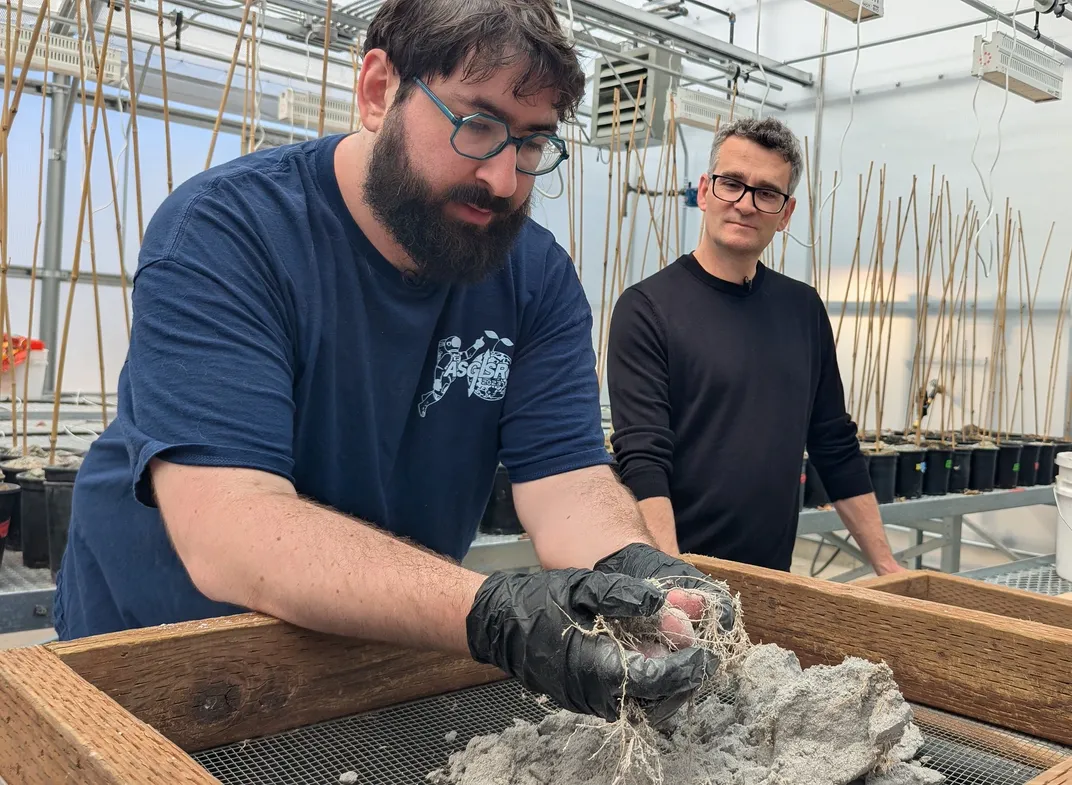
Lunar regolith isn’t the only challenge that moon-grown potatoes would face, however. Our natural satellite has only about one-sixth the gravity we experience on Earth, so researchers will need a better understanding of how that might affect plant growth, Marshall Porterfield, a biological engineer at Purdue University who did not participate in the study, tells the Washington Post’s Eric Niiler. The lunar base’s greenhouse will also need devices that mix the air into the ideal cocktail of nutrients, water and carbon dioxide for the plants. Porterfield is skeptical that moon dirt, even with additives, could ever produce plants that can provide sufficient vitamins and minerals to people.
Nevertheless, the team is moving forward one step at a time. Their next study will identify which specific potato varieties fare best in imitation moon dirt.
