
Archaeologists in England Discovered 8,000 Roman-Era Frog Bones in a Single Ditch. They Just Solved the Mystery of How the Amphibians Ended Up There
New research suggests that medium-sized birds of prey such as short-eared owls feasted on the frogs during a “short, intensive predation event” some 1,700 years ago

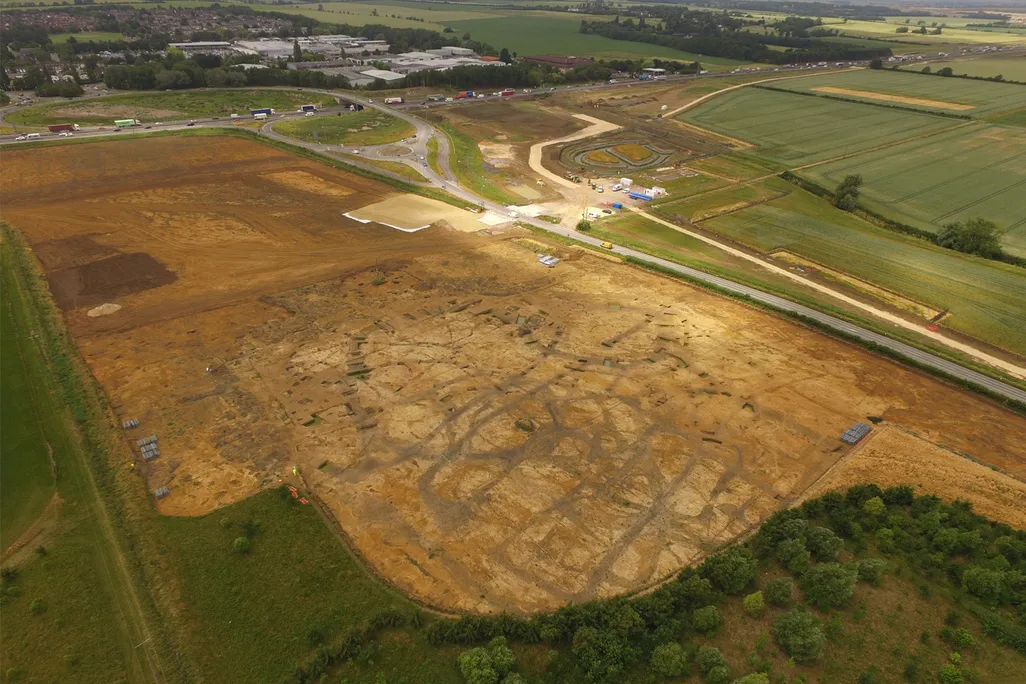
Between 2016 and 2022, archaeologists conducting excavations along a planned stretch of England’s A14 highway unearthed an array of astonishing discoveries, including a Roman amulet carved to resemble the mythical Gorgon Medusa, the earliest physical evidence of beer production in Britain and an Iron Age comb crafted from a human skull.
Comprising more than 280,000 artifacts, the finds—uncovered between modern-day Cambridge and Huntingdon—shed light on life in the region over roughly 12,000 years. But some discoveries raised more questions than answers: Why, for example, did a single ditch at the Bar Hill site in rural Cambridgeshire contain some 8,000 amphibian bones?
As Vicki Ewens, a senior zooarchaeologist at the Museum of London Archaeology (MOLA), told the Observer’s Dalya Alberge in 2022, “In my experience, mainly working on sites from London, we don’t get that many frogs. To have so many bones coming from one ditch is extraordinary.”

Ewens and her colleagues outlined several possible explanations for the unusual cache. Perhaps the amphibians fell into the ditch (also described as a gully) and found themselves trapped. Or maybe they succumbed to extreme cold during their wintertime hibernation. Alternatively, they could have served as the centerpiece of a meal—or several—enjoyed by Iron Age humans, although the absence of cut marks on the bones rendered this scenario unlikely.
Four years after MOLA first announced the find, experts have finally solved the mystery of the ancient animal cemetery. Based on a groundbreaking analysis of amphibian arm bones, researchers led by Ewens and Paul Clarkson, an archaeologist at England’s Bournemouth University, concluded that most of the frogs whose remains were found in the ditch died young, eaten by birds of prey such as short-eared owls and hen harriers in the second or third century C.E., during Britain’s Roman era.
A combination of environmental factors and human activity produced ideal conditions for this avian feast to unfold over a relatively short timeframe. As the authors write in the journal Environmental Archaeology, water levels in the Fens—the marshy wetland that houses the gully—retreated during the Roman period, enabling frogs in drying-out ponds to reproduce at a faster rate. When birds in search of their next meal arrived, they had no trouble spotting their prey: Locals had felled the trees in the area to make way for grazing livestock, leaving the amphibians with limited woodland protection from aerial predators.
Did you know? Frogs and toads
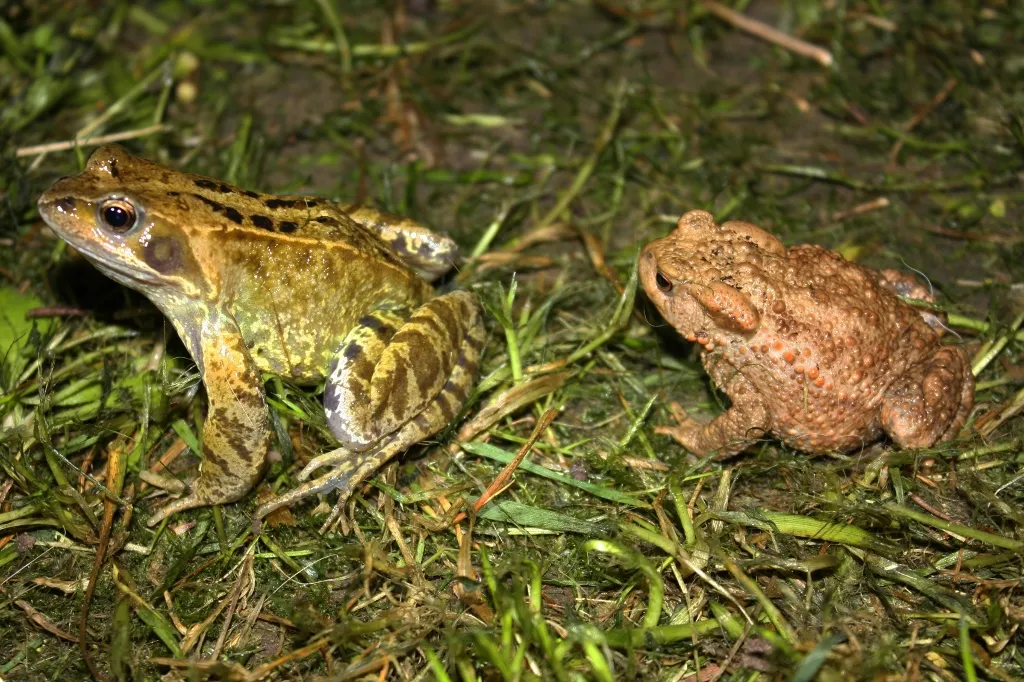
- All toads are frogs, but not all frogs are toads. Both animals belong to the Anura order, meaning they are amphibians that lack tails.
- According to the University of Michigan’s Animal Diversity Web database, “There is no scientific distinction between ‘frogs’ and ‘toads,’ although most anurans are usually referred to as one or the other.”
“We don’t often get an owl’s eye view of what it was like in the past from archaeological sites,” Clarkson says in a statement. “These bones not only tell us about life for people living near the Roman Fens, but they also give insights into the natural world—what wild animals were getting up to in the past, and what life was like for them.”
The majority of the bones belonged to frogs and toads (specifically common frogs), but shrews, voles and mice were also present in the assemblage. The remains represented no fewer than 469 individual animals.
To estimate the frogs’ ages at their time of death, the researchers measured the amphibians’ distal humeri, or arm bones—a method previously described by Clarkson and several co-authors in a 2025 paper. According to the study, the team determined that a large number of the frogs died in either their first or second year of life, during a “short, intensive predation event” spanning autumn to the following spring, “probably along migration routes to and from hibernation sites.” An abundance of frogs likely attracted “local and migrant predators to the area to feed on them and also, coincidentally, on other locally available prey, such as voles, insectivores, birds and fish.”
Based on breakage patterns and physical traces of digestion seen on the bones, the paper’s authors ruled out several species that typically prey on amphibians, including otters, gray herons and grass snakes. Instead, they suggest that the “lightly digested and relatively unbroken bones” are more consistent with medium-sized birds such as short-eared owls.
Initially, the archaeologists identified the gully as a roundhouse in an enclosure dating to Britain’s Iron Age, which began around 750 B.C.E. and ended with the Roman invasion in 43 C.E. But radiocarbon dating of the bones shifted this timeline forward by several hundred years.
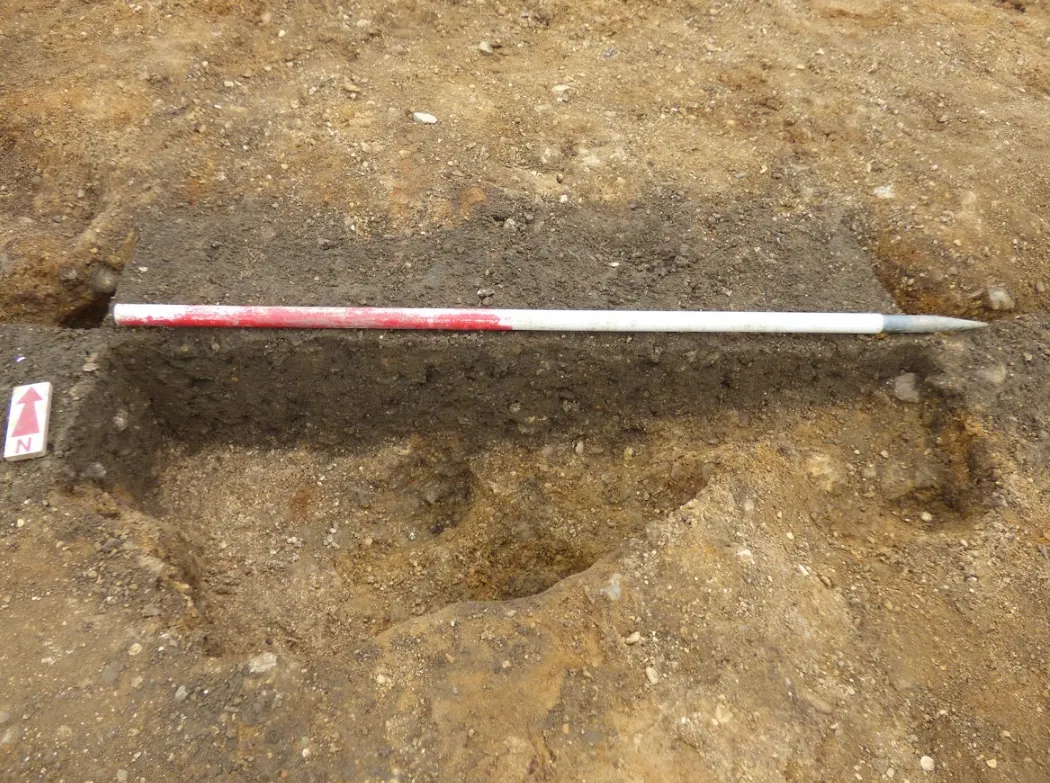
How did humans fit into this puzzle? Although the researchers considered the possibility that ancient people intentionally deposited the bones in the ditch, the only evidence for this scenario was the presence of a Roman-era brooch among the animal remains. In all likelihood, the authors argue in the paper, the mass predation event only took place because humans weren’t in the area at the time: Short-eared owls “only choose quiet roosting sites, so people must have rarely visited this area, particularly with dogs.”
Why locals steered clear of this specific spot in the autumn and winter remains unclear, but the scientists posit that “the most probable explanation is seasonal movement of livestock.” Avoidance tied to social or ritual reasons is also possible.
“I had so many theories as to why such [a] large collection of frog bones were recovered from this small feature,” Ewens says in the statement. “This research shows how even the smallest animal recovered on a site can help us to understand not only past environmental conditions but human activity within a wider landscape.”
