
/https://tf-cmsv2-smithsonianmag-media.s3.amazonaws.com/filer_public/cd/a9/cda924fc-2458-454b-bbec-70022e51f046/smithmag-attenborough-v2.jpg)
David Attenborough Has Inspired Countless Scientists. To Mark His 100th Birthday, Here Are Ten Living Things They’ve Named After Him
Researchers around the planet grew up watching documentaries hosted by the English broadcaster and naturalist, which sparked their love of the natural world. Now, their discoveries become tributes to his legacy
/https://tf-cmsv2-smithsonianmag-media.s3.amazonaws.com/accounts/headshot/21428_origin_thumbnail.png)
:focal(750x500:751x501)/https://tf-cmsv2-smithsonianmag-media.s3.amazonaws.com/filer_public/cd/a9/cda924fc-2458-454b-bbec-70022e51f046/smithmag-attenborough-v2.jpg)
David Attenborough begins the documentary segment by describing the remarkable success of jungle ants. In only about 2.5 acres of land, he explains, as many as eight million of the insects could live and thrive.
But an eerie sound signals that something is about to change. Spores of the parasitic fungus Cordyceps, Attenborough reveals, have taken over the onscreen creatures’ minds and are acting as puppeteers, forcing the ants to travel upward. Eventually, one ant stills, and the fruiting body of the fungus erupts from its head.
This famous portion of an episode of BBC’s “Planet Earth” came out in 2006 and changed the trajectory of mycologist João Araújo’s career. Attenborough “was the most influential person to inspire me to switch from mushrooms to Cordyceps,” says Araújo, of the Natural History Museum of Denmark.
In part because of this connection, Araújo and his colleagues decided to name a fungus that zombifies cave spiders after the naturalist, dubbing it Gibellula attenboroughii in a paper published last year.
G. attenboroughii is one of the latest of about 50 organisms—including plants, beetles and birds—to gain an eponym that honors Attenborough, one of the most famous broadcasters and naturalists of all time. Scientists across the globe recognize his voice, after he took them on journeys through the TV screen that inspired them to explore and conserve the natural world.
To celebrate Attenborough’s 100th birthday on May 8, here are ten of those living (or once living) things that bear his name.
Parasitic fungus: Gibellula attenboroughii
/https://tf-cmsv2-smithsonianmag-media.s3.amazonaws.com/filer_public/8d/aa/8daa6b3f-ac8d-46e4-98e0-62353f9c3523/parasiticfungus1-timfogg.jpeg)
Some species of orb-weaving spiders spend their days hidden away in dark corners of caves. But when the parasitic fungus G. attenboroughii takes over their bodies, it forces the reclusive arachnids out into the open. They take a death march to their final resting spots, typically ending up on rocky walls or moss near cave entrances. That’s probably so that the hosts die in drier areas with more airflow, which helps disperse the fungal spores to new victims.
Scientists reported the newly discovered species in January 2025, but they weren’t the ones who first spotted it. In 2021, a film team working on the BBC “Winterwatch” nature documentary series saw a dead spider covered in whitish fuzz on the ceiling of an abandoned gunpowder store in Northern Ireland. Since then, researchers have found the freaky fungus elsewhere in the United Kingdom and in the Republic of Ireland.
The zombifying species was named after Attenborough because he played a pivotal role in developing the BBC’s natural history unit, “leading, indirectly, to the present nature series during which the new species was first discovered,” Harry Evans, a mycologist at the environmental nonprofit Center for Agriculture and Biosciences International who worked on the paper describing the fungus with Araújo, said in a 2025 statement.
Fossil bird: Imparavis attenboroughi
/https://tf-cmsv2-smithsonianmag-media.s3.amazonaws.com/filer_public/37/99/3799bb3d-5966-45d0-a186-0c55c4ac5503/1-s20-s0195667124000405-gr2.jpg)
Around 120 million years ago, a little bird—odd-looking among those of its time—flitted around the skies of what’s now northeastern China. Unlike the feathered creatures alive today, many early avians had beaks full of tiny, razor-sharp teeth. Not this one.
/https://tf-cmsv2-smithsonianmag-media.s3.amazonaws.com/filer_public/f6/6b/f66bf0c4-e32c-4efd-8815-8d4d884347be/illustration_of_imparavis_attenboroughi_c_ville_sinkkonen.png)
The prehistoric animal belonged to a now-extinct group of proto-birds called enantiornithines, known as “opposite birds” for their shoulder joints that are reversed from those of birds today. Before the mass extinction that killed all non-avian dinosaurs, toothlessness did eventually evolve in opposite birds. But a fossil described in 2024 pushed back the timeline by about 48 million years. Researchers named the newfound creature Imparavis attenboroughi, which translates to “Attenborough’s strange bird.”
Study co-author Alex Clark, an evolutionary biologist at the University of Chicago and Field Museum, grew up watching the BBC’s “Trials of Life” series, hosted by Attenborough. “I most likely wouldn’t be in the natural sciences if it weren’t for David Attenborough’s documentaries,” he said in a statement when the paper was published.
“In some form, [Attenborough has] either shaped people’s perspective on the natural world, or he’s been this huge voice for waking up to the issues that are happening globally with the planet,” Clark told the Chicago Sun-Times’ Erica Thompson in 2024.
Marine worm: Marphysa davidattenboroughi
/https://tf-cmsv2-smithsonianmag-media.s3.amazonaws.com/filer_public/11/3d/113de185-3411-4e5e-b141-eb426e7da4f8/marineworm.jpg)
Off the coast of southeast Australia, a roughly three-inch-long marine worm that shimmers in rainbow colors lies buried in sediment. It has two tiny eyes, five antennae and a segmented body lined with red, bristle-like gills filled with blood. Its rosy hue marks it as a member of a group called bloodworms—mostly carnivorous ocean creepy-crawlies with lots of hemoglobin, the protein that gives blood a crimson color.
“They’re not the most beautiful animals on Earth, but they are important,” says Nicolas Lavesque, a taxonomist at the French National Center for Scientific Research. All kinds of marine worms live in the ocean, where they play important roles in food webs. Many recreational fishers use bloodworms as bait.
In 2023, Lavesque and his colleagues described the iridescent Australian species and named it Marphysa davidattenboroughi. Attenborough “is undoubtedly one of the people who inspired me to become a biologist,” Lavesque says. He even sent the paper to the famous naturalist, who responded with a handwritten letter to thank the team for honoring him.
Now, Friday nights for Lavesque often involve a cozy meal at home with his tween children and a documentary narrated by Attenborough.
When Lavesque showed the broadcaster’s note to his kids, he says, “they were jumping all over the house shouting, ‘Mom, he’s replied to Dad! David Attenborough has sent a letter!’”
Miniature orchid: Lepanthes attenboroughii
/https://tf-cmsv2-smithsonianmag-media.s3.amazonaws.com/filer_public/b7/b2/b7b2e020-f7be-447c-b08a-ec81e7166b63/screenshot_2026-05-07_at_104347am.png)
For years, botanists mistook a tiny orchid for another closely related species. Both varieties have yellow and maroon striped petals that form dime-size, balloon-shaped flowers. But orchid researcher Luis Baquero, of the University of the Americas in Ecuador, thought that some of the plants sported rounder blossoms.
Upon investigation, he and his colleagues found clear structural differences. The previously described species, for instance, had a specialized internal petal that was smaller than that of the newly identified one. Baquero and his team described the novel orchid species in a 2022 study and dubbed it Lepanthes attenboroughii.
The team traced some of these orchids from museum and private collections to their origin at a nursery in Ecuador, where workers claimed the plants were native to the western Andes mountains, near the country’s border with Colombia. But the species had rarely been seen in the wild, and in 2025 the researchers published a genetic investigation that traced it instead to a restricted part of the eastern Andes, from southern Colombia to Peru.
That discrepancy is “worrying,” because the International Union for Conservation of Nature—which guides conservation measures—requires clear documentation of where at-risk plants grow, Baquero says. “If this is happening more times, very threatened species could be not correctly assessed” by the organization, he adds, leading to insufficient protections. L. attenboroughii currently has too little data to be assessed for the IUCN’s threatened species list.
Because Attenborough is an iconic science communicator and has done a lot of conservation work around issues like this, Baquero says, “we thought [L. attenboroughii] was a good name.”
Did you know? So nice, knighted twice
For his contributions to television broadcasting and conservation, Attenborough was knighted by Queen Elizabeth II in 1985. In 2022, he received an even higher honor, the Knight Grand Cross.
Fossil cnidarian: Auroralumina attenboroughii
/https://tf-cmsv2-smithsonianmag-media.s3.amazonaws.com/filer_public/05/8b/058bf3b7-bbb6-4efd-9fd4-279b715779ab/screenshot_2026-05-07_at_104858am.png)
/https://tf-cmsv2-smithsonianmag-media.s3.amazonaws.com/filer_public/96/4c/964ca5bc-9761-4e40-aeb2-29035ca8af85/auroralumina_attenboroughii_reconstruction.jpg)
While it might not look like a fearsome predator, a roughly 560-million-year-old jellyfish ancestor may have been one of the first meat-eating animals. A fossil discovered in England holds a roughly eight-inch-tall impression of the creature in its polyp stage, the part of its life cycle when it was stuck to the ocean floor. The specimen preserves a stalk that branches into two arms, and atop each is a goblet-like structure containing tentacles that were probably used to nab small prey that swam by.
This fossil is special because it’s “the oldest animal that we can confidently say belongs to any living animal group,” says Frankie Dunn, a paleontologist at the Oxford University Museum of Natural History.
The creature was a cnidarian, one of a group of invertebrates whose modern-day members include jellyfish, corals and sea anemones. But the long-extinct ancient cnidarians, which predate more complex animals, can teach us about evolution, Dunn says. “Figuring out when they appeared is important for understanding how modern animal diversity was assembled and what early animal ecosystems looked like.”
/https://tf-cmsv2-smithsonianmag-media.s3.amazonaws.com/filer_public/02/a3/02a36e1e-f75f-443f-997d-85068655eb71/screenshot_2026-05-07_at_105711am.png)
Paleontologists found the specimen in 2007 in England’s Charnwood Forest, famed for its spectacular fossils from the Ediacaran period, when some multicellular life was beginning to evolve around 539 million to 635 million years ago. Attenborough grew up exploring the site and has raised awareness of its scientific importance. So, Dunn and her colleagues named the archaic animal Auroralumina attenboroughii when they reported it in 2022.
Phytoplankton: Syracosphaera azureaplaneta
/https://tf-cmsv2-smithsonianmag-media.s3.amazonaws.com/filer_public/2a/cf/2acf5641-b94c-4484-aaa0-7b8724f730ff/247-05-262-20m-azurapl.jpg)
Phytoplankton are tiny but mighty single-celled organisms that act somewhat like plants. Among the most well-known phytoplankton are coccolithophores, which float in the ocean’s upper layers and absorb sunlight to help produce their own food. Each cell is a few thousandths of a millimeter wide and surrounded by dozens of bowl-shaped shields of calcite, called coccoliths.
The organisms are crucial components of the base of marine food webs, and they produce oxygen and remove carbon from the atmosphere. But the coccolith-making process also generates carbon dioxide, so they have a complicated relationship with the environment and climate change.
In 2018, researchers noted differences in coccolith shapes within one species. The largest, outermost shields on some organisms, for instance, were rounder and had wider central divots than others did. While the distinctions are subtle, they are consistent and have no intermediates, hinting at two separate species, says Jeremy Young, a micropaleontologist at University College London.
/https://tf-cmsv2-smithsonianmag-media.s3.amazonaws.com/filer_public/21/1f/211fce75-3fae-42c6-a4c8-116b396a74d4/screenshot_2026-05-07_at_110159am.png)
Young and his colleagues named the new discovery Syracosphaera azureaplaneta—from Latin for “blue planet”—to recognize the Attenborough-presented BBC series with the same name, which has promoted an “understanding of the marine realm,” the study authors write.
Most people would be “astonished” to hear that phytoplankton are “more important to our atmosphere than the whole of the rainforest,” Attenborough said in 2018 when he was told about the new species’ name, per BBC News’ David Shukman.
What did he think of S. azureaplaneta? “They’re stunning; they’re beautiful,” he said.
Fossil crustacean: Cascolus ravitis

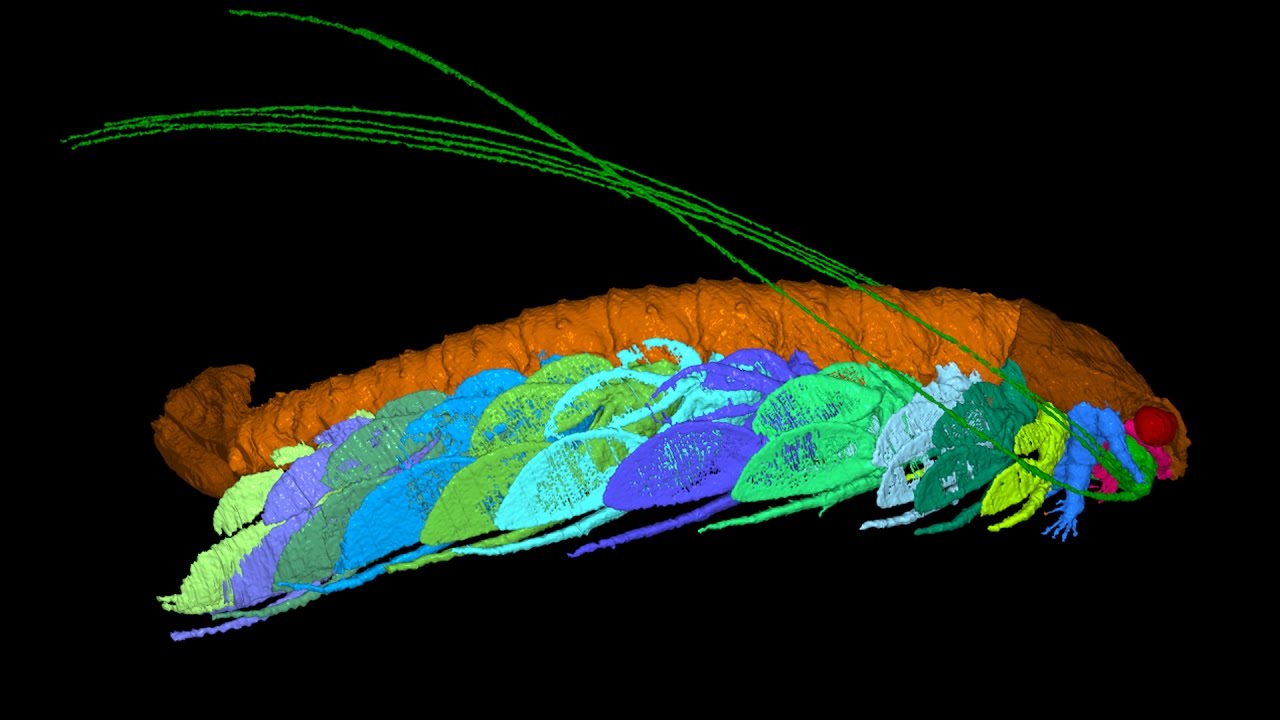
Some 430 million years ago, a tiny shrimp-like crustacean swam in an ancient ocean. Strange, petal-shaped appendages, which were probably gills for breathing, lined its body and may have acted as paddles for locomotion. The creature had one eye on each side of its head and a segmented body with five pairs of limbs and a few long, thread-like strands protruding from its front limbs.
The animal was only about 0.35 inches long, and researchers described it in 2017 thanks to a remarkable fossil found in Herefordshire, England. “Our nickname for this fossil was ‘Pretty,’ because it was so pretty,” says study co-author David Siveter, an emeritus paleontologist at England’s University of Leicester.
Its body was so well preserved that the scientists created a virtual version to help them better examine the ancient animal. The digital model is important for understanding the evolution of modern-day shrimp, crabs, lobsters and other crustaceans.
Attenborough grew up at the University of Leicester, where his father worked. To celebrate the broadcaster’s 90th birthday, Siveter was asked to come up with a way to honor him. “The obvious thing was to get a beautiful fossil and name it after David,” he says.
Instead of taking a more conventional path, the study authors went to the Attenborough family’s roots. The surname stems from Old and Middle English for “someone who lives in a stronghold, in a fort,” Siveter says. Latinizing the meaning resulted in the fossil crustacean’s genus name Cascolus. The species name, ravitis, comes from the Latin words for Leicester, life and messenger.
Siveter’s fascination with the natural world is, in part, thanks to Attenborough. As a child, he and his twin brother, Derek—also a paleontologist and study co-author—watched one of the broadcaster’s first programs, “Zoo Quest.” “It just grabbed me,” Siveter recalls. “He took us to Borneo, to the Philippines, to these exotic places where we could only dream about.”
Butterfly: Euptychia attenboroughi
/https://tf-cmsv2-smithsonianmag-media.s3.amazonaws.com/filer_public/5b/dc/5bdc0555-6e4f-4b97-8dee-c1f7c2a6c5de/oo_67130.jpg)
A rare butterfly graces the lowland tropical forests of the upper Amazon basin. It sports cream-colored wings with light brown stripes and edges, as well as round “eyespots” of black ringed with yellow.
The pattern seemed pretty unusual, as did the shapes of these fluttering appendages. In fact, they looked so strange that researchers initially thought the odd insect might belong to an undescribed genus.
So, they conducted genetic analyses on the creature and in 2015 reported it as a new butterfly species belonging to the established Euptychia genus. At the time, the team had found only six specimens, all within about 310 miles of one another in Venezuela, Colombia and Brazil, hinting that the butterflies live in a relatively restricted area.
The study authors named the creature E. attenboroughi to honor Attenborough “in gratitude for opening the eyes and hearts of millions to the natural world through his inspiring and edifying work,” they write in the paper.
“Other animals and plants have previously been dedicated to Sir David, but it makes us happy and proud to be the first to dedicate a butterfly species in his name,” study co-author Andrew Neild, an entomologist now at the Florida Museum of Natural History, said in a statement at the time. “Although we are a large team from several countries from across four continents and speaking different languages, we have all been deeply influenced and inspired by Sir David’s fascinating and informative documentaries.”
Echidna: Zaglossus attenboroughi
/https://tf-cmsv2-smithsonianmag-media.s3.amazonaws.com/filer_public/f4/c1/f4c1a616-6483-4a28-8136-3d6854c2f77c/webimage-attenborough-s-echidna-expedition-2_1.jpg)
In the 1990s, mammalogist Tim Flannery and the late biologist Colin Groves examined dozens of museum specimens of long-beaked echidnas. The species in this group—along with the short-beaked echidna and platypus—are the only egg-laying mammals alive today. The pair wanted to better classify the long-snouted animals, which belong to the genus Zaglossus, to improve conservation programs. But the endangered creatures—which reside only on the island of New Guinea—were extremely rare.
“I’ve worked in New Guinea for 46 years now, and I’ve seen living echidnas exactly once,” says Flannery, currently at the Australian Museum.
The museum specimens revealed three distinct species of Zaglossus, one of which the researchers named Z. attenboroughi, or “Attenborough’s long-beaked echidna.” It’s about 16 inches long and has dense, fine, short fur that’s earthy brown on most of its body but lighter on its belly.
However, the team identified the species based on just one specimen, collected from the Cyclops Mountains in 1961. “It is possible that this species is already extinct,” Flannery and Groves wrote in a study published in 1998.
/https://tf-cmsv2-smithsonianmag-media.s3.amazonaws.com/filer_public/61/e7/61e7b4e2-8e38-4a11-ae0c-def0c744ac36/download.png)
Twenty-five years later, an expedition team traversing the Cyclops Mountains captured the first-ever images of Z. attenboroughi. Before the public announcement in 2023, Flannery happened to learn of the rediscovery while visiting London.
“The next morning, I went to David’s house with the footage on my phone and said, ‘Attenborough’s echidna is alive and well,’” Flannery recalls. “He was almost in tears.”
Plesiosaur: Attenborosaurus conybeari
/https://tf-cmsv2-smithsonianmag-media.s3.amazonaws.com/filer_public/c9/d0/c9d0c76b-fa58-4222-a2fb-4df29ac090df/025075_hjpgthumb19201920.png)
When meat-eating dinosaurs like Tyrannosaurus rex roamed the land, terrifying marine reptiles stalked the ancient seas. Some were plesiosaurs, a group of long-necked predators that lived between 66 million and 215 million years ago. They had four flippers to propel themselves through the water, and many may have aggressively snatched prey by ambushing unsuspecting animals from below.
A remarkable plesiosaur specimen was found in 1880 on the southern English coast. It was a mostly complete skeleton dubbed Plesiosaurus conybeari. But the wrath of World War II destroyed it—in 1940, Nazis bombed its home in the Bristol City Museum and Art Gallery in the United Kingdom. Luckily, researchers had made plaster casts prior to the fossil’s destruction, allowing scientists and museum patrons to continue admiring the 190-million-year-old creature.
Decades later, paleontologist Robert Bakker realized the animal differed from others in its genus—so much so that it deserved a new one. So, in 1993, he granted it the genus Attenborosaurus because of the broadcaster’s childhood fascination with plesiosaurs that Bakker has said “sparked a brilliant career in scientific journalism,” as BBC News’ Bethan Jinkinson reported in 2012.
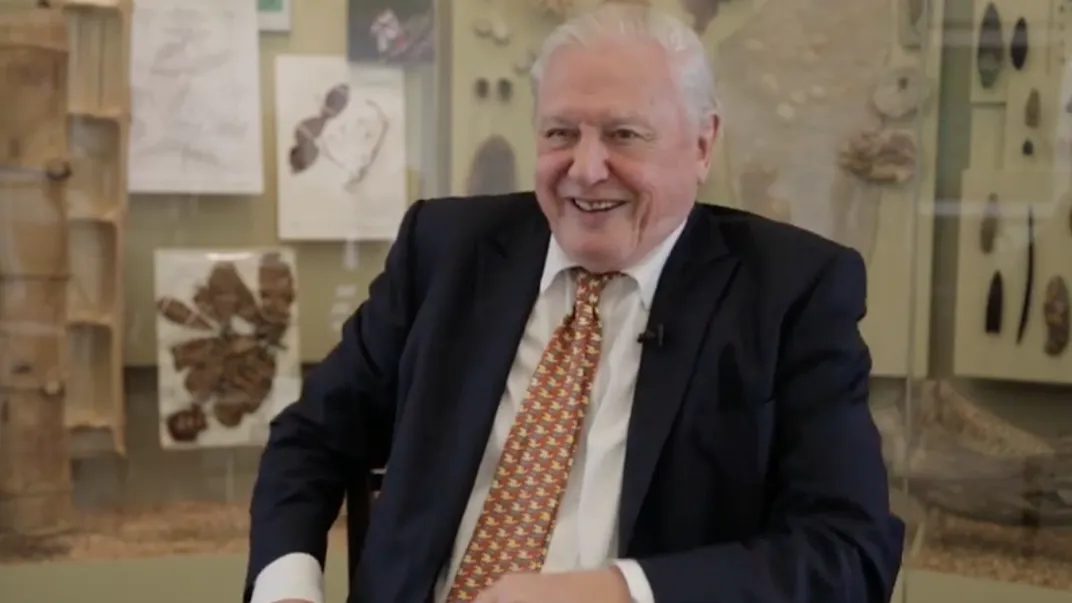
The type specimen of Attenborosaurus—the cast representing the entire group—is currently housed in the Natural History Museum in London. When the museum changed the label to include Attenborough’s name, the naturalist “leant nonchalantly” by the display, waiting for visitors to see, he told the Washington Post’s Abby Ohlheiser in 2015. Unfortunately, “people walked by and didn’t take any notice at all. So, that put me in my place.”
During that interview, Attenborough hinted that Attenborosaurus was his favorite of the organisms named after him. “To have a species named after you … that’s quite nice,” he said. “But to have a genus named after you is really something else.”
Main image credit: Illustration by Emily Lankiewicz. Images from: Danny Martindale / WireImage via Getty Images; Expedition Cyclops; J. Yeager et al., Phytotaxa, 2022 / Ron Parsons; A. F. E. Neild et al., ZooKeys, 2015; Trustees of the Natural History Museum, London; X. Wang et al., Cretaceous Research, 2024; F. S. Dunn et al., Nature Ecology & Evolution, 2022
/https://tf-cmsv2-smithsonianmag-media.s3.amazonaws.com/accounts/headshot/21428_origin_thumbnail.png)