
America at 250: The Revolutionary Spark
A Smithsonian magazine special report
How the Hashtag Became the Way to Instantly Invite Literally Everyone Into the Conversation
In the nascent days of Twitter, users wanted a quick way to cluster posts about a single subject. Someone suggested using a pound sign, and #TheRestIsHistory
/https://tf-cmsv2-smithsonianmag-media.s3.amazonaws.com/filer_public/e8/16/e816737c-af5b-481c-812d-1ab59b2e62f4/hashtag_textured_rgb_150.jpg)
At first, there wasn’t much to it. In the summer of 2007, Twitter was barely a year old. It didn’t yet have pictures, video, animated GIFs or even retweets. Users could post teensy 140-character updates and hope one of their followers saw them.
But Chris Messina, a tech consultant, had an idea about how to improve it. He wanted a way for users, including total strangers, to cluster around a subject—the weather, the Super Bowl, last night’s TV show—and discuss it. He often went to “BarCamp” meetups, where tech nerds got together in real life to exchange technological ideas; it’d be fun, he thought, to have ongoing conversations online about the gatherings.
On August 3, at 3:25 p.m., he tweeted a suggestion: “How do you feel about using # (pound) for groups. As in #barcamp [msg]?”
Messina didn’t realize it, but he’d just changed the way people would communicate online. He had invented a modern-day web use for the hashtag.
His idea was a clever borrowing of older, early internet behavior. In the ’90s, users of “Internet Relay Chat”—a form of real-time messaging—would deploy the pound sign, as it’s called on landline phones, to create separate rooms for specific subjects, such as #microsoft or #linux.
/https://tf-cmsv2-smithsonianmag-media.s3.amazonaws.com/filer_public/b2/ba/b2ba5a2e-574e-41bd-aa07-98f00085278d/h_14996981.jpg)
But on Twitter, hashtags quickly grew into something new: a powerful way for everyday users to kick-start conversations on a global scale. “It would show what the zeitgeist was and show the conversation that was happening digitally in real time,” as Messina, now an investor and a product designer, told me recently. The folks at Twitter hated it: “It’s ugly,” Biz Stone, a co-founder, told him.
The doubters were wrong. Hashtags exploded on the platform as users discovered they were a brilliant way to connect people and ideas. Using a hashtag meant participating in any fast-moving conversation, especially regarding news events. Indeed, only a few weeks after Messina shared his idea, a ferocious fire erupted in San Diego; Twitter users began adding #sandiegofire to updates to allow others to follow what was going on. Within hours, Messina recalls, it was clear that monitoring #sandiegofire was “better than trying to tune in to the police or firefighters’ radio channels to figure out where the evacuations were happening.” What followed was a new form of citizen journalism. When major events, such as the 2009 democratic uprising in Iran (#iranelection), the #superbowl or Barack Obama’s State of the Union address (#sotu), occurred, users could follow not just what the mainstream media was reporting but updates and opinions from everyday people in real time.
Did you know? Bye, bye birdie
-
Twitter, the platform that spawned the modern hashtag, shuttered in 2022, replaced with a rebranded site, known as X.
-
At its peak that same year, about 370 million users were registered on Twitter worldwide.
-
The former brand’s blue bird logo is no longer used, and terms such as “retweet” are slowly disappearing from the lexicon.
Because anyone could post a hashtag about literally anything, Twitter users created millions of tiny, bespoke communities, says Jean Burgess, digital media professor at the Queensland University of Technology. In Australia, where she lives, local farmers—not necessarily the most digitally savvy users—began using the hashtag #agchatoz to virtually meet weekly and “just chat about rural policy or what’s going on with the weather.”
Hashtags offered the magical feeling of being in a huge crowd, where you could watch history unfold right in front of you. (An airplane landed in the Hudson River? Let’s talk about it!) They also let you be funny and playful, like adding #icantbelieveimsayingthis after an embarrassing admission. “It was like the thing we’re saying in the aside whispered in someone’s ear,” says Gretchen McCulloch, a linguist who specializes in online communication.
After the 2008 presidential election, the hashtag became inextricable from political organizing. Tea Party members relied on hashtags (from #teaparty to #TCOT, for “top conservatives on Twitter”) to spread their message, as did the denizens of #OccupyWallStreet. In the wake of the 2013 acquittal of Trayvon Martin shooter George Zimmerman, activists began using the tag #BlackLivesMatter to discuss policing in Black communities. Not long after came #MeToo—coined by the writer and organizer Tarana Burke—which spread wildly when women began using it to discuss sexual predation and assault. With hashtags, the political sphere became shaped not just by elites, but by all. “No longer did you have to wait to be interviewed on the 6 p.m. or the 10 p.m. news,” says Andre Brock, associate professor of Black digital media at Georgia Tech. “You could write your little utterance, put the hashtag in there, and it could be seen by millions of people.”
In 2014, Scrabble made “hashtag” a playable word, and the Oxford English Dictionary added it. Tags were prominent on movie posters, ads and graffiti murals.
The hashtag’s success had pros and cons. It allowed people to spread messages promoting social change—for world-shaking rebellions like #ArabSpring, or even manufactured moments like the #icebucket-challenge. But it also offered new ways to harass and bully at scale, and to supercharge conspiracy theories; it helped cluster like-minded folks into online echo chambers. And the hashtag’s popularity ultimately led, ironically, to its decline: As more services—Instagram, Facebook, LinkedIn and YouTube—adopted hashtags, influencers and marketers began jamming dozens of tags onto each post, hoping to maximize their audiences. This cluttered the screen and began to annoy users, who nowadays are more likely to ignore them. Meanwhile, trolls increasingly “hijacked” popular hashtags by using them to target and insult people. In the 2020s, social networks began relying more heavily on an algorithmic sorting of their feeds; hashtags lost their power to draw attention.
Still, the hashtag isn’t dead. Creators continue to sprinkle them in posts, and they still festoon posters. But the blazing period when they single-handedly channeled global conversation has come to an end. They’re a reminder, though, of what was so experimental, chaotic and thrilling about the early days of social media—when a stray suggestion by a random user could change how the internet worked.
Memes: Stupid or Hilarious?
They can be dumb and inspired, vanilla and shocking. Most of all, they’re everywhere
/https://tf-cmsv2-smithsonianmag-media.s3.amazonaws.com/filer_public/f3/24/f324c59b-ed80-4e80-9edf-debfe3e6dd38/grumpy_cat__copyjeff_copy.jpg)
by Ted Scheinman
Much of the internet’s terrible beauty comes from watching strangers imitate one another—particularly via internet memes. Evolutionary biologist Richard Dawkins coined the term “meme” in 1976, defining it as “a unit of cultural transmission ... or imitation.” For Dawkins, memes—including beliefs, catchphrases and fashion trends—behaved rather like genes or viruses, reproducing and mutating. By 1991, the philosopher and cognitive scientist Daniel Dennett observed that cultural memes were “replicat[ing] at rates that make even fruit flies and yeast cells look glacial in comparison.” Things were about to accelerate further, as early internet memes—often simple images superimposed with text—emerged in the mid-’90s. Exploding on upstart American platforms like Reddit, eBaum’s World and Something Awful, these were deadpan little handshakes extended by weird individuals to other weird individuals.
/https://tf-cmsv2-smithsonianmag-media.s3.amazonaws.com/filer_public/18/6c/186c2e07-52be-47b3-9573-1fa1fe16fd87/shutterstock_297886754_copyjeff_copy.jpg)
Subscribe to Smithsonian magazine now for just $19.99
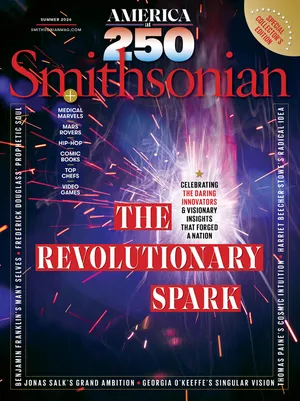
This article is a selection from the Summer 2026 issue of Smithsonian magazine
/https://tf-cmsv2-smithsonianmag-media.s3.amazonaws.com/accounts/headshot/Clive_Thompson_photo_credit_is_Tom_Igoe.jpg)