
/https://tf-cmsv2-smithsonianmag-media.s3.amazonaws.com/filer_public/f8/c6/f8c6c426-628a-4133-beac-bc8e5dce1071/coolidge2.png)
This American Commando Parachuted Behind Enemy Lines in Both the European and Pacific Theaters of World War II
A direct descendant of Thomas Jefferson, Francis Lowell Coolidge was an agent with the Office of Strategic Services, a predecessor to the CIA. Read his goodbye letter to his wife, published here for the first time
/https://tf-cmsv2-smithsonianmag-media.s3.amazonaws.com/accounts/headshot/katie.png)
:focal(750x500:751x501)/https://tf-cmsv2-smithsonianmag-media.s3.amazonaws.com/filer_public/f8/c6/f8c6c426-628a-4133-beac-bc8e5dce1071/coolidge2.png)
When Francis Lowell Coolidge parachuted into Nazi-occupied France on a secret mission in August 1944, he understood the risks.
Then 37 years old, the great-great-great-grandson of President Thomas Jefferson was a captain in the United States Army Air Forces and a combat veteran of the French Foreign Legion. Eager to put his skills as a French-speaking, parachute-trained officer to use in the Allies’ fight to liberate Western Europe from the Nazis, Coolidge had requested a transfer to the Office of Strategic Services (OSS), America’s World War II forerunner to the CIA, the previous year.
By the summer of 1944, Coolidge was a member of the OSS’s elite Special Operations branch in England. There, he reconnected with a familiar face: Peter J. Ortiz, a fellow enlisted officer from his French Foreign Legion days in North Africa. A Marine Corps major attached to the OSS, Ortiz had recently returned to England after supporting the French Resistance behind enemy lines on a mission code-named Union I. Now, he was planning his next deep-penetration operation, Union II—and he wanted Coolidge to join him.
/https://tf-cmsv2-smithsonianmag-media.s3.amazonaws.com/filer_public/3f/d7/3fd7330f-8a31-47bd-8d01-21450770823f/e92-f16908-coolidge_francis-photo-1943-caption.jpg)
Coolidge, Ortiz and five other OSS operatives planned to jump out of a B-17 heavy bomber flying less than 500 feet above the ground—a perilously low altitude—and land on a drop zone in the Col des Saisies mountain pass, inside occupied France. They would be accompanied by an armada of 78 B-17s transporting 864 containers of munitions and supplies to a resistance unit known as the Bulle Battalion, after its leader, the Free French officer Jean Bulle.
Before Coolidge left, he wrote a five-page letter to his wife, Helen Curtis Coolidge, to be given to her if he failed to come home. The couple had married in their hometown of Concord, Massachusetts, four years earlier. While Coolidge parachuted into France, Helen stayed behind in Concord with their young daughters, Georgina (nicknamed “Nina”) and Mary (nicknamed “Cuppy”).
Because of the clandestine nature of the OSS, Coolidge was limited in what he could reveal to his wife. His missive, now published by Smithsonian magazine for the first time, is a poignant testament to the trials faced by families separated by war.
/https://tf-cmsv2-smithsonianmag-media.s3.amazonaws.com/filer_public/ad/96/ad96a659-1293-48f4-a9e9-a2da4b1dc79c/coolidge-letter.png)
“You will only get this letter in case something has happened to me,” Coolidge wrote. “You have made my life. You gave me so much, and I gave so little in return. You gave me a purpose and a meaning that I never had before. Thank you, darling, for all that you have done.”
He added:
This job for which I gave my life was a worthy one. It was mixed up with the liberation of France and the defeat of the [Germans]. I felt so strongly that Cuppy and Nina had the right to grow up and live in freedom and in the way they may choose that I was willing to pay any price to help in the defeat of the [Germans].
Coolidge’s secret mission in Europe
On July 31, 1944, the BBC broadcast a French message that translated to: “In the garden, the gardener is watering his lettuce.” Bulle’s resistance fighters heard the phrase on their radios and knew that it was a coded dispatch from the OSS, instructing them to be at the drop zone the following day.
The French, who were elated to receive the Allied arms and agents, raced to greet the American paratroopers with kisses on the cheek, in accordance with local custom. But Union II ran into several complications.
/https://tf-cmsv2-smithsonianmag-media.s3.amazonaws.com/filer_public/a8/b9/a8b90d64-5b11-430b-af30-5e7da4ff2961/1_funeral1944_aug_union_2_members_at_perrys_gravesite.jpg)
Sergeant Charles Perry was killed when his parachute failed to deploy on the jump. Marine Robert LaSalle also had a rough jump, losing consciousness and severely injuring his back and ankle when landing.
The morning after the jump, the Bulle Battalion and the surviving members of Union II held a funeral for Perry, with Bulle saying a few words about the 22-year-old American agent who had given his life for France. Time was short, with much work still to be done ahead of Operation Dragoon, the imminent Allied invasion of southern France. The men pressed on, training the resistance fighters to use their newly acquired weapons before leading reconnaissance patrols of occupied territory.
/https://tf-cmsv2-smithsonianmag-media.s3.amazonaws.com/filer_public/f6/86/f6860392-f969-4d7c-ba14-240a41412b2c/capitaine_jean_bulle_1913-1944.jpg)
On August 15, more than two months after the Allied invasion of northern France on D-Day, American, British, French and Canadian forces landed on the French Riviera, opening up a new front in the battle against the retreating Germans. Operation Dragoon also sparked a wave of fierce resistance by Adolf Hitler’s troops, some of whom spotted the Union II agents as they made their way to the village of Centron the following morning.
“Pete, we have been seen,” Coolidge shouted to Ortiz. A German convoy of more than 100 troops armed with machine guns began attacking the OSS team, which now included the Free French officer Joseph Arcelin, wearing an American uniform that previously belonged to Perry. Under intense enemy fire, the Allied group split in two.
Coolidge took a bullet to the right thigh but escaped capture, along with OSS Marine Frederick Brunner. Ortiz and three of his men, finding themselves surrounded in the French village of Centron, surrendered on the condition that the Germans agree to spare the locals from Nazi reprisals.
In brief: Peter J. Ortiz’s fate
With Ortiz captured, Coolidge stepped in as Union II’s leader. Over the next several weeks, he moved through France with the Bulle Battalion as the Allies successfully drove the Axis Powers out of the country. But the liberation came at a cost for the resistance fighters: On August 21, German forces in Albertville executed Bulle as he attempted to negotiate their surrender.
By late September, Coolidge had returned to the OSS’s London office. He was awarded a Purple Heart and a Silver Star, with a citation stating that he’d led the operation “with great coolness and ability.”
Coolidge reunited with his wife and daughters in Massachusetts. Although his goodbye letter wasn’t needed, it remained a family heirloom of sorts. Coolidge’s granddaughter Lucy Coolidge Trout never met him, but she appreciates the window that his 1944 letter provides into what he felt was worth fighting—and dying—for. Stories shared by relatives “painted the picture of someone who preferred adventurous pursuits [over] the comparatively quiet life one might have expected,” Trout says.
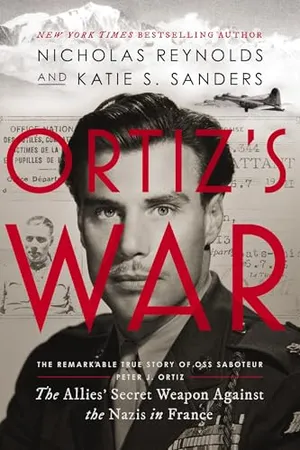
Ortiz’s War: The Allies’ Secret Weapon Against the Nazis in France
Peter J. Ortiz’s path to becoming the most battle-decorated member of America’s first spy agency—and one of the most decorated Marines of World War II—was unlike any other.
Coolidge in the Pacific
Coolidge’s service didn’t end with the war in Europe. Newly promoted to major and recovered enough from his injuries to parachute behind enemy lines, he said goodbye to his family once again, volunteering as the leader of an operation in Japanese-held China.
The OSS mission, code-named Operation Spaniel, sought to make contact with Chinese “puppet” generals who could aid the Allies in their fight against the Japanese. The OSS hoped that guerrilla forces led by Mao Zedong would help Coolidge and his team contact the generals, continuing the agency’s generally positive relationship with the Chinese Communists.
On the night of May 28, 1945, Coolidge and his four team members parachuted into China’s Fuping region, which was then under Communist control. Instead of partnering with the OSS agents to help American POWs, the Chinese forces apprehended and disarmed them, detaining them in caves. The men weren’t technically POWs, but they weren’t free to leave either. The Communists claimed that they were protecting the American commandos from the Japanese, despite all evidence to the contrary.
/https://tf-cmsv2-smithsonianmag-media.s3.amazonaws.com/filer_public/7c/89/7c895b5c-3521-4be9-8ebd-34eca2d82560/unioniiteam.jpeg)
On August 4, while Coolidge was still imprisoned in China, his wife gave birth to twins: a daughter and a son (Lucy’s father). Around this same time, as the captain battled a malarial fever, American officials worked to secure the release of the Spaniel team, eventually negotiating the men’s freedom in exchange for a truck, according to Lucy.
Coolidge returned to the U.S. in September 1945. By then, World War II was over; President Harry S. Truman disbanded the OSS, effective October 1. Two years later, however, Truman established the Central Intelligence Agency, which would employ many OSS veterans. So began America’s formal entry into peacetime espionage, including clandestine intelligence missions.
Coolidge and the CIA
Coolidge is one of an incredibly small number of Americans who parachuted behind enemy lines in both the European and Pacific theaters of World War II. Yet his story hasn’t been widely publicized, in part because he was working for America’s first spy agency and the details of his wartime exploits weren’t declassified until half a century later, but also because he went on to have a postwar career at the CIA.
Coolidge’s obituary suggests that he moved to Washington, D.C. to join the CIA in 1950. But former CIA operations officer and historian Randy Burkett, speaking on behalf of the agency, tells Smithsonian that the earliest employment record it can confirm for him dates to 1954.
/https://tf-cmsv2-smithsonianmag-media.s3.amazonaws.com/filer_public/76/4b/764bd39d-8fe7-4246-b9aa-40f524ebe0a5/coolidgefamily.jpg)
Either way, Coolidge rose through the CIA’s ranks, possibly serving in Switzerland before relocating to Tunisia. Burkett disclosed that Coolidge served as the CIA’s chief of station for North Africa between January 1958 and November 1959 and was employed by the CIA until 1963, but the historian was unable to confirm details of his roles over several multiyear periods. “He’s a very challenging individual because he pops up and disappears more than once,” Burkett explains.
Coolidge moved back to the U.S. in 1960, when the CIA reassigned him to a division chief position at headquarters. He became “head of a major part of the organization,” according to Burkett, who adds that Coolidge’s records make clear that he yearned to be in the field rather than an office.
According to his obituary, Coolidge retired from the CIA in 1963 and became deputy director of the United States Post Office’s international postal service, retiring from that role in 1967. Coolidge died in 1972 at age 65.

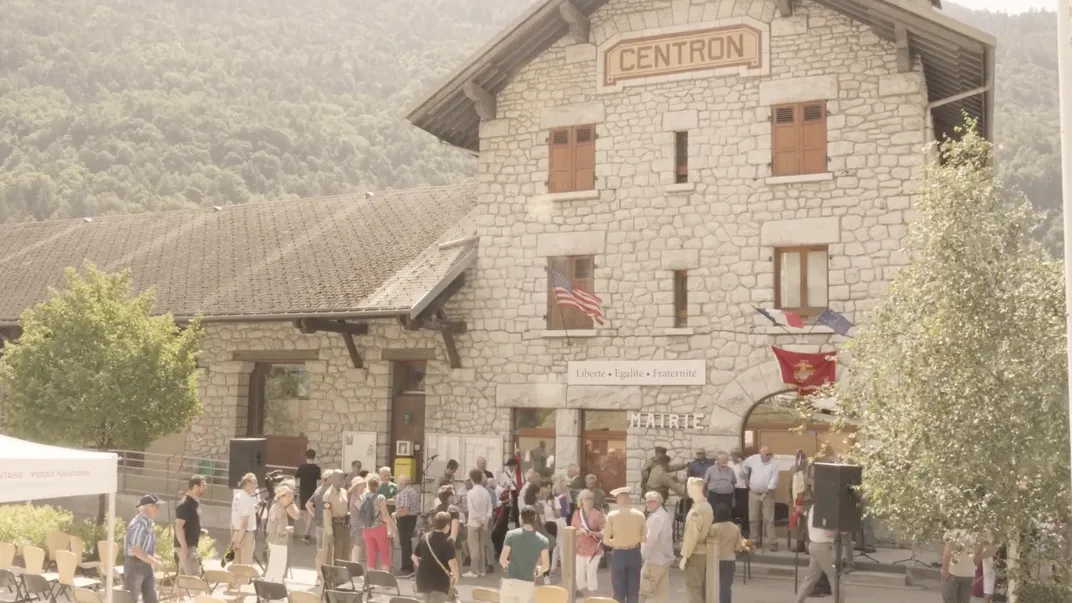
Today, Coolidge’s grandson Curtis Lowell Bogetto owns and operates an English-language bookshop in Turin, Italy. Although he was born a year after his grandfather died, Bogetto grew up hearing stories from his mother, Nina, about her childhood in Switzerland and Tunisia. She was supposed to tell anyone who asked about her father’s occupation that he was a mailman.
Bogetto recently read Coolidge’s goodbye letter for the first time and has been reflecting on his grandfather’s potentially final message to his grandmother:
The essence of it all is that I loved you very sincerely and truly.
Someday tell the girls about me and how sorry I was not to have known them better. Tell them also that in them I live. That has always been my creed.
In closing, I know you will face bad times and good times. I might have been able to help during the bad ones. But I believe that by stamping out this growth of oppression by the [Germans], I have been of the greatest help to all.
On August 1, Bogetto—a U.S. Navy veteran—joined American and French military officials in France for several days of ceremonies honoring Coolidge, his fellow Union II commandos and Bulle’s resistance fighters. Held in the area where Coolidge and his fellow OSS agents parachuted into France exactly 82 years earlier, the events were well attended by historians, French and American officials, and locals.
Bogetto was equally surprised and moved by the comprehensive nature of the tributes. As he told the crowd, “I have to think that my grandfather would have really appreciated this.”
/https://tf-cmsv2-smithsonianmag-media.s3.amazonaws.com/filer_public/53/e7/53e7bf65-b843-458b-8176-63f0bff66fd5/01_07-1944beaufortmaquis-byraymondbertrand.jpg)
/https://tf-cmsv2-smithsonianmag-media.s3.amazonaws.com/accounts/headshot/katie.png)